PMMA, also known as acrylic, is one of the most widely used plastic materials in modern manufacturing. Because of its high transparency, lightweight structure, and smooth appearance, it is commonly used in display products, industrial panels, protective covers, lighting components, signage, and decorative parts.
However, one of the biggest challenges during PMMA processing is melting during cutting. experience problems such as burnt edges, melted chips, rough surfaces, or cloudy transparency when machining acrylic sheets. These issues not only affect appearance quality but can also increase polishing costs and material waste.
What Is PMMA and Why Does It Melt During Cutting?
PMMA (Polymethyl Methacrylate) is a thermoplastic material. Unlike metal, acrylic softens when exposed to excessive heat. During cutting, friction between the cutting tool and the material generates heat very quickly. If the heat cannot escape fast enough, the acrylic edge begins to soften, melt, or even stick to the cutting tool.
This problem is especially common when:
- Cutting speed is too slow
- Spindle speed is too high
- Chips cannot evacuate properly
- The cutting tool is not sharp enough
- Cooling airflow is insufficient
When PMMA melts during processing, several visible defects usually appear:
- Burnt or yellow edges
- Sticky chips around the cut
- Rough surface finish
- White stress marks
- Loss of transparency
In professional acrylic machining, preventing heat buildup is the most important part of achieving high-quality results. The goal is not simply “cutting the material,” but removing material while maintaining edge clarity and structural stability.This is why CNC acrylic machining requires proper tooling, optimized parameters, and experience with plastic materials rather than metal-only machining methods.
How To Cut PMMA Without Melting?
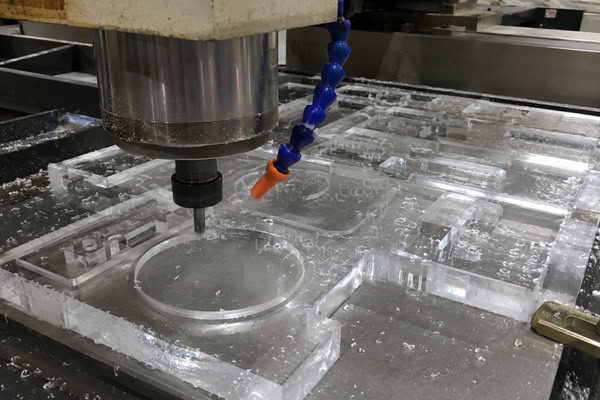
Successfully cutting PMMA without melting requires balancing cutting speed, spindle rotation, cooling, and tool geometry. Even small parameter changes can dramatically affect final edge quality.
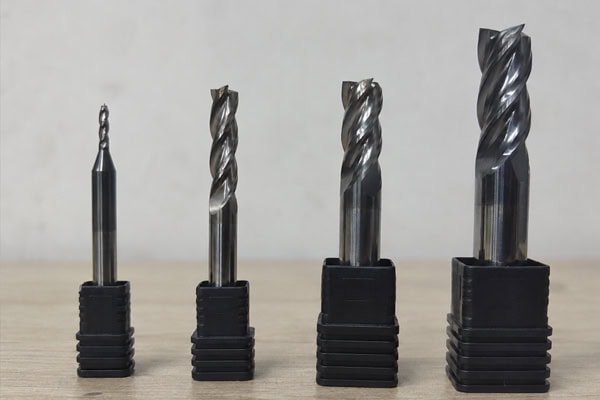
Use Sharp Single-Flute Tools
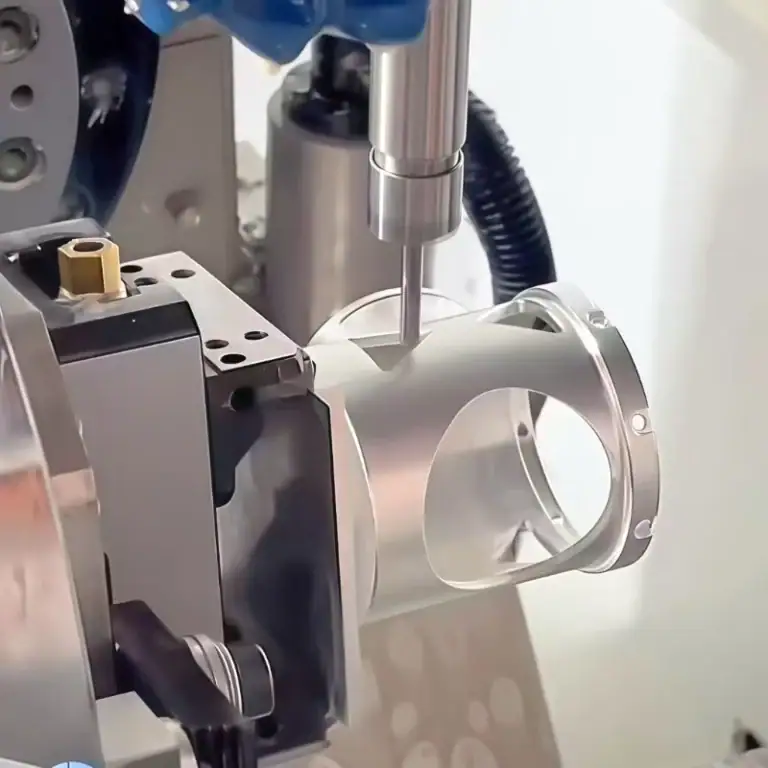
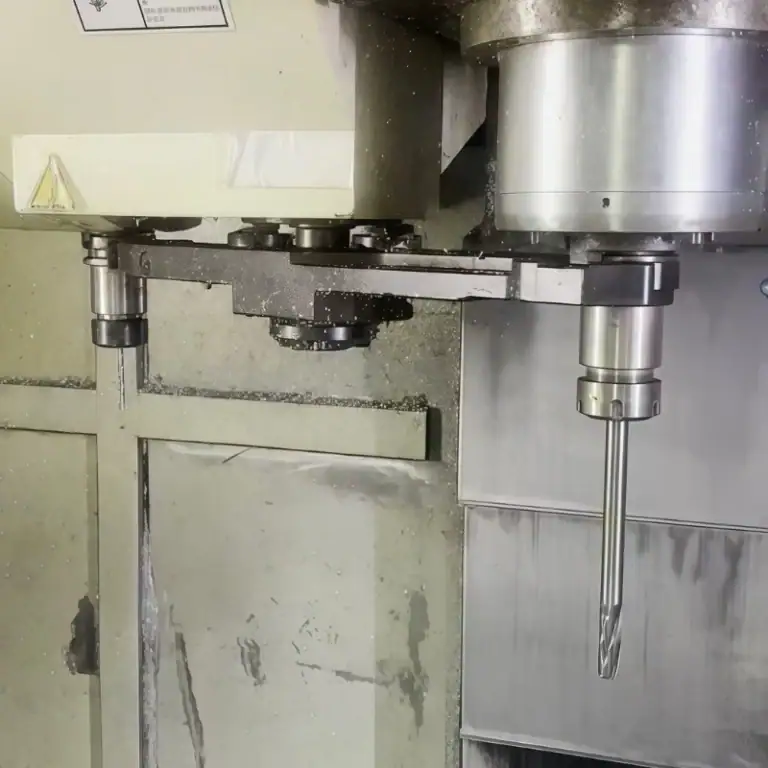
For acrylic CNC machining, single-flute or specialized plastic-cutting tools are commonly recommended. These tools create larger chip evacuation channels, allowing heat to leave the cutting area more efficiently.Sharp cutting edges help reduce friction, which lowers the risk of melting.
Using worn-out tools often causes:
- Excessive heat buildup
- Chipped edges
- Cloudy finishes
- Material sticking to the cutter
For thicker acrylic sheets, longer flute tools may also help improve cutting stability.
Optimize Feed Rate and Spindle Speed
One common mistake is assuming slower cutting produces cleaner results. In acrylic machining, cutting too slowly can actually create more heat.
A balanced setup usually includes:
| Parameter | Too Low | Too High |
| Feed Rate | Melting risk | Edge chipping |
| Spindle Speed | Rough cuts | Burnt edges |
| Depth of Cut | Vibration | Tool overload |
Professional operators continuously adjust parameters depending on:Acrylic thickness、Material type、Tool diameter、Machine rigidity、Surface finish requirements.
This is why experienced CNC shops often produce significantly better results than general machining workshops.
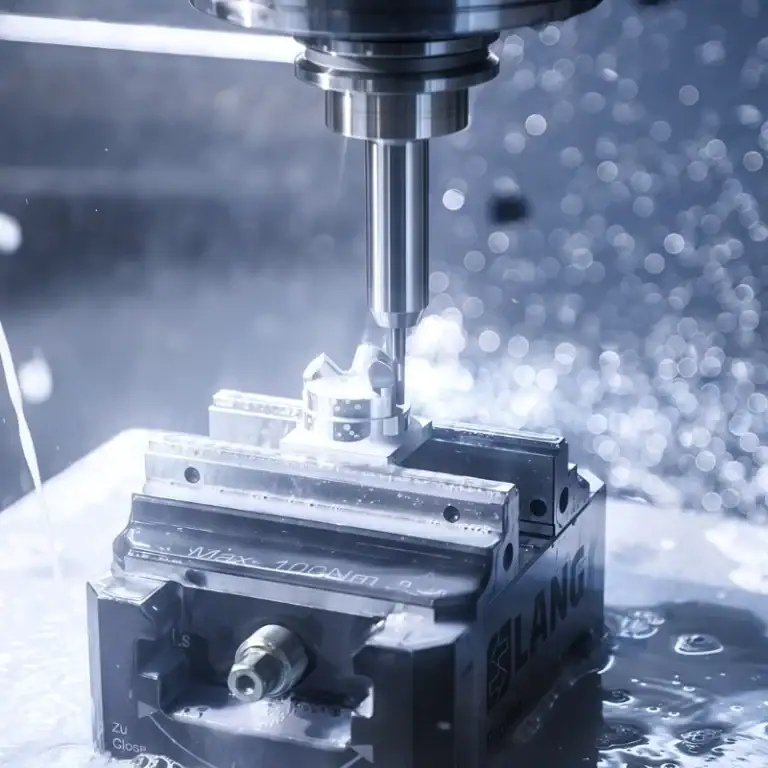
Improve Cooling and Chip Removal
Unlike some metals, acrylic is usually not processed with heavy liquid coolant because coolant may affect transparency or create contamination issues. Instead, manufacturers often use:
- Compressed air cooling
- Air blast systems
- Mist cooling systems
- Vacuum chip extraction
Good chip evacuation prevents hot chips from repeatedly rubbing against the material surface, which helps maintain edge clarity.For high-transparency display products, cooling quality directly affects visual appearance.
Cast vs. Extruded Acrylic
Not all acrylic sheets behave the same during machining. One of the most important decisions is choosing between cast acrylic and extruded acrylic.Both materials have advantages, but they perform differently during CNC processing.
| Feature | Cast Acrylic | Extruded Acrylic |
| Manufacturing Method | Liquid casting | Continuous extrusion |
| Surface Quality | Higher optical clarity | Good but less premium |
| Machining Performance | Better for CNC machining | Easier to melt |
| Internal Stress | Lower | Higher |
| Edge Finish | Cleaner polished edges | More prone to burrs |
| Cost | Higher | More economical |
| Thickness Consistency | Slight variation | More uniform |
| Best Application | Premium displays, precision parts | Budget projects, simple fabrication |
Why Cast Acrylic Is Better for CNC Machining?
Cast acrylic is generally preferred for precision CNC work because it handles heat more effectively and produces cleaner edges after machining.
It is also better for:Flame polishing\Engraving\Deep milling\Transparent edge finishing.
Because cast acrylic contains lower internal stress, it is less likely to crack after machining or bonding.
When Extruded Acrylic Is Useful?
Extruded acrylic is more affordable and works well for simpler fabrication tasks.
It is commonly used for:
- Basic signage
- Protective panels
- Simple covers
- Lightweight display components
However, because extruded acrylic softens faster under heat, parameter control becomes even more important during CNC cutting.
Benefits of Acrylic CNC Machining
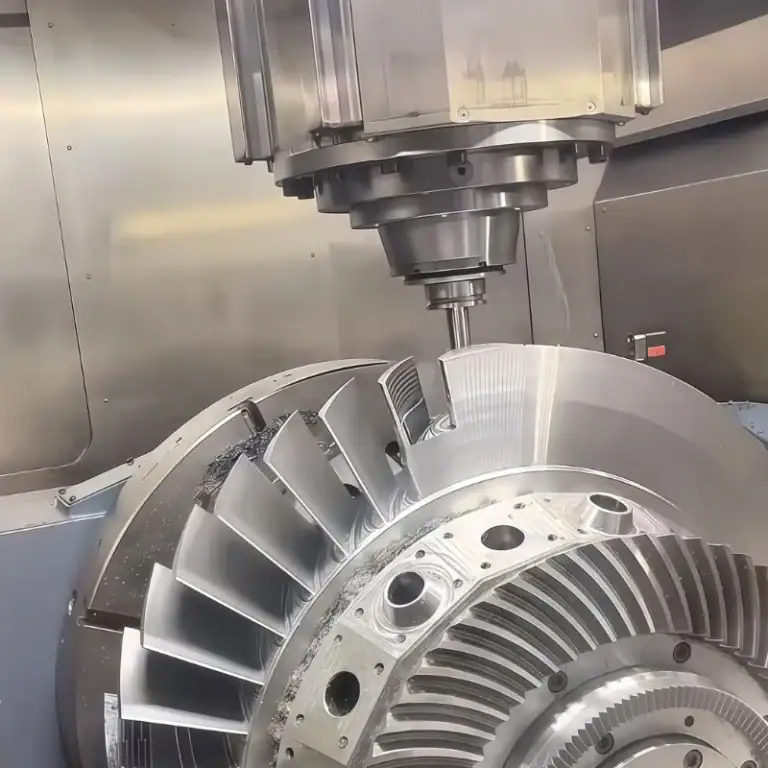
Acrylic CNC machining offers far more than simple cutting. Modern CNC systems allow manufacturers to produce complex, high-precision acrylic parts with excellent consistency and repeatability.
High Precision for Complex Designs
CNC machining allows accurate production of:
- Curved shapes
- Precision holes
- Transparent panels
- Interlocking components
- Deep pockets and grooves
This level of precision is difficult to achieve consistently with manual fabrication methods.For industrial applications, CNC machining also improves assembly accuracy and product stability.
Better Edge Quality and Surface Finish
Compared with traditional sawing or rough cutting methods, CNC machining creates smoother edges and more refined surfaces.
With proper parameters, manufacturers can achieve:
- Clear polished edges
- Reduced post-processing
- Lower sanding requirements
- Better visual presentation
This is especially important for luxury retail displays and transparent product housings.
Excellent Repeatability for Mass Production
One major advantage of CNC machining is consistency.Once the program is optimized, the machine can reproduce identical parts repeatedly with minimal variation.
This helps :
- Reduce production errors
- Improve delivery efficiency
- Maintain stable product quality
- Lower long-term manufacturing costs
For companies producing large quantities of acrylic parts, repeatability is extremely valuable.
Flexible Customization Capabilities
CNC acrylic machining also supports customized manufacturing.
Manufacturers can quickly produce:
- Prototype samples
- Small-batch orders
- Custom industrial parts
- Personalized display products
This flexibility is important for industries that require rapid product updates or customer-specific designs.
Choosing the Right Acrylic CNC Machining Partner
Even with advanced equipment, successful PMMA machining still depends heavily on technical experience.A professional acrylic machining supplier should understand:Material behavior、Heat management、Tool selection、Machining stability、Surface finishing techniques、Equipment Quality Matters、High-quality CNC machines provide:、Stable spindle rotation、Better positioning accuracy、Reduced vibration、Cleaner cutting results.
Machine rigidity becomes especially important when machining thick acrylic sheets or complex geometries.
Post-Processing Capability Is Also Important
Acrylic products often require additional finishing after machining.
Professional manufacturers usually provide:
- Flame polishing
- Diamond polishing
- UV bonding
- Silk printing
- Assembly services
An integrated production process helps reduce lead times and improve final product quality.
Experience Reduces Production Risk
Experienced CNC machining teams can identify potential problems early, such as:
- Stress cracking risks
- Tool path issues
- Weak structural points
- Overheating areas
This reduces material waste and improves manufacturing efficiency.
Conclusion
Cutting PMMA without melting requires much more than simply running a CNC machine. It involves understanding acrylic behavior, selecting the right material type, optimizing machining parameters, and controlling heat throughout the process.From choosing between cast and extruded acrylic to improving cooling systems and edge finishing, every detail affects the final product quality.With the advantages of precision, repeatability, customization, and clean surface finishing, acrylic CNC machining has become one of the most important manufacturing solutions for modern display, industrial, and decorative applications.