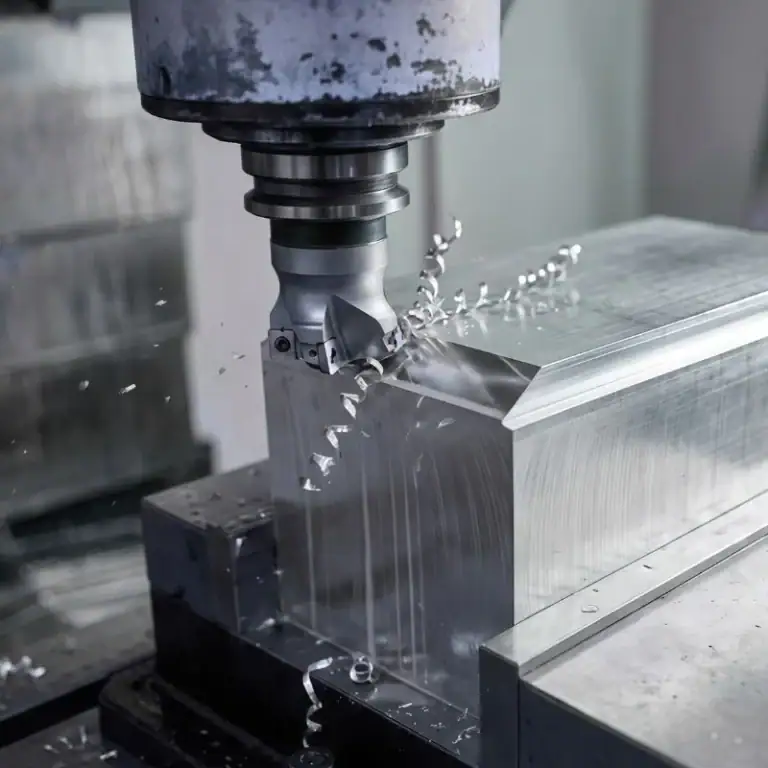
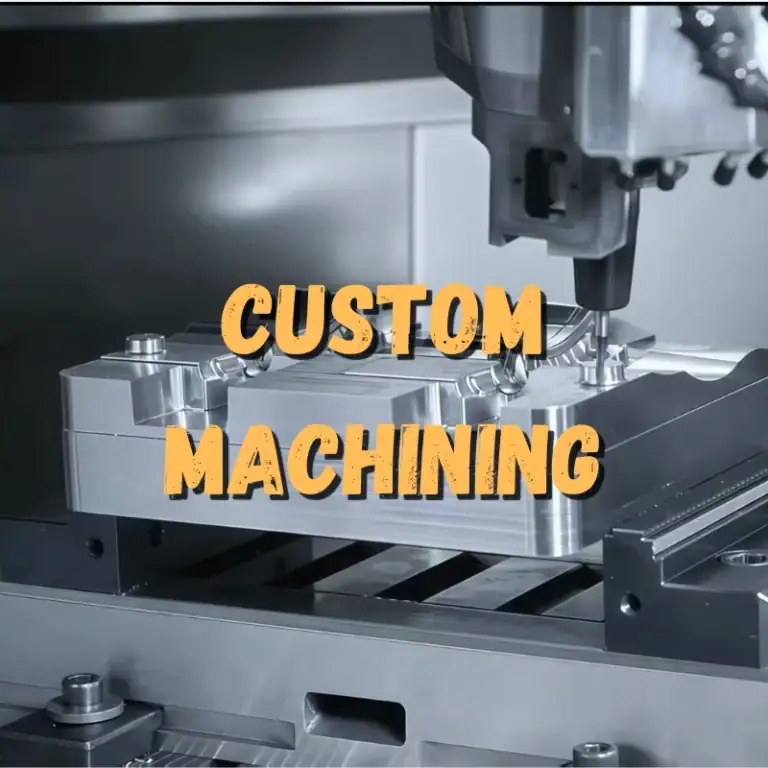
When purchasing machining equipment, what many companies worry about most is not whether the budget is sufficient, but whether the equipment can truly fit their products and production line after it is bought. Especially as high-precision parts, complex structural components, and batch orders become more common, choosing the wrong CNC milling equipment can easily lead to precision fluctuations, low machining efficiency, frequent maintenance, and other problems, ultimately affecting lead times, costs, and customer satisfaction. If you want to choose truly suitable equipment, you cannot just look at the price and specification sheet; you must also make a comprehensive judgment based on machining requirements, structural performance, control capability, and long-term usage cost, so that the equipment can truly serve production instead of becoming a management burden later on.
Start from Machining Requirements to Avoid Buying the Wrong Equipment
Before selecting equipment, it is often more effective to first sort out your product characteristics and production goals than to blindly compare specifications. Only by clarifying the requirements first can the subsequent selection avoid deviating from the actual production scenario.
First Clarify Part Type and Precision Requirements
Different products have very different requirements for CNC milling equipment. Ordinary structural parts and high-precision mold parts are not at the same level in terms of machine rigidity, positioning accuracy, and stability. Before selecting equipment, companies should ideally organize the material, dimensions, tolerance range, and surface quality requirements first, so they can more accurately determine whether the equipment truly matches the production task and avoid rework or delivery delays caused by insufficient machine capability.
- If the parts are mainly ordinary structural components, you can prioritize models with strong versatility, high cost-effectiveness, and relatively simple maintenance, which makes it easier to balance daily production efficiency and procurement cost control.
- If the parts involve precision mating surfaces, complex curved surfaces, or thin-wall structures, you should focus on the equipment’s repeat positioning accuracy, vibration resistance, and stable performance during long-term operation, as these factors directly affect the final machining result.
- If the product has high requirements for surface roughness, you also need to further evaluate spindle stability, tool compatibility, and thermal control during cutting to avoid surface quality falling short of standards.
Defining part requirements first keeps the later equipment screening from going off track and also helps companies quickly identify the CNC milling solution that truly fits their production scenario, reducing cost waste caused by selection mistakes from the source.
Determine Whether the Focus Is Batch Production or Single-Piece Production
If the business involves small-batch, multi-variety orders, the equipment needs more flexibility and faster changeover capability; if it is long-term batch production, then continuous operation capability and automation level become more important. Many customers only look at single-piece machining performance when selecting equipment, while ignoring batch consistency and cycle efficiency, which later often leads to high labor costs and insufficient capacity, and may even affect the stable operation of the entire production line.
- Small-batch production is better suited to equipment with fast changeover, flexible operation, and convenient programming, as such machines can more easily adapt to frequent product switching and process adjustments.
- Batch production is better suited to models with strong stability, high automation, and continuous operation capability, so they can maintain consistent quality output and higher capacity utilization over long machining periods.
- If order volume fluctuates significantly, it is recommended to prioritize equipment solutions that balance flexibility and scalability, so they can handle short-term changes while leaving room for future capacity upgrades.
Only by considering the production model can equipment selection truly be implemented, and it becomes easier to ensure stable CNC milling efficiency under different order rhythms, allowing the equipment to become a support for the production line rather than a bottleneck.
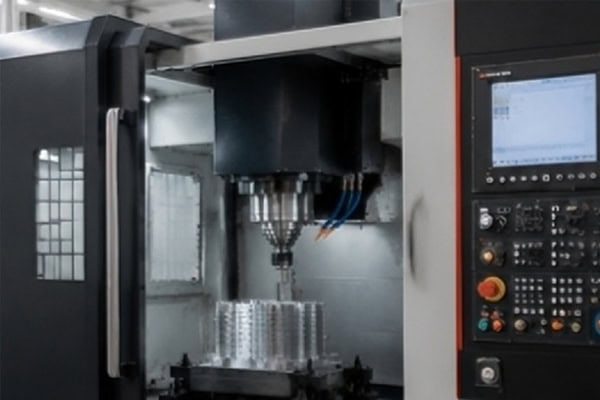
Equipment Structure Determines Machining Stability
Whether the equipment itself is stable directly determines whether CNC milling can maintain precision and consistency over the long term. No matter how good the process is, if the equipment foundation is unstable, it is difficult to achieve ideal results.
The Stronger the Machine Rigidity, the More Stable the Cutting
During CNC milling, machine rigidity directly affects vibration control and surface quality. Equipment with insufficient rigidity tends to shake during heavy cutting or high-speed machining, which not only affects dimensional accuracy but also accelerates tool wear. For companies that need long-term stable production, structural strength is a key indicator that must be carefully evaluated. High-rigidity structures can better resist cutting forces and reduce deformation during machining. In deep cavities, thin-wall parts, and heavy-cutting scenarios, the stronger the rigidity, the less likely the equipment is to produce chatter marks and dimensional deviations. A structurally stable machine is also usually more conducive to extending tool life and reducing overall machining costs. Machine rigidity is not a parameter that merely “looks important”; it is a core factor that directly affects actual machining results, and in high-precision CNC milling scenarios, it often determines whether the equipment can truly perform stably.
Spindle Performance Should Not Be Judged by Speed Alone
Many people only focus on spindle speed when selecting equipment, but spindle accuracy, torque, and thermal stability are equally important. High speed does not mean it is suitable for all materials; aluminum and steel parts have different spindle requirements. Truly suitable equipment should maintain stable output across different materials rather than simply pursuing attractive specifications. Good-looking specifications do not necessarily mean excellent actual machining performance.
- High-speed spindles are more suitable for efficient machining of light metals such as aluminum alloys and copper alloys, as these materials rely more on speed and fine surface finish.
- High-torque spindles are more suitable for difficult-to-machine materials such as stainless steel, mold steel, and titanium alloys, which require sustained cutting capability and stable output.
- The better the spindle thermal stability, the smaller the precision fluctuation during long-term operation, and the better the consistency and reliability in batch machining.
Choosing the right spindle allows the equipment to truly deliver value in different machining scenarios and helps CNC milling achieve a better balance among efficiency, precision, and stability, avoiding overall performance limitations caused by insufficient spindle capability.
Control Systems and Automation Affect Efficiency
If structure determines whether the equipment can be “stable,” then the control system and automation capability determine whether the equipment can be “fast,” and they also determine whether the production process is smooth and controllable enough.
The CNC System Must Be Stable and Intelligent
A good control system can make tool paths smoother, reduce machining errors, and improve the forming quality of complex curved surfaces. For companies that require high-precision CNC milling, system response speed, interpolation accuracy, and program compatibility are all critical. The more stable the system, the easier it is to set up and produce later on. A system with fast response speed can reduce command delay and make the machining rhythm more continuous. A system with high interpolation accuracy is more suitable for fine machining of complex contours and curved parts. A system with strong program compatibility can better adapt to different CAM software and process plans. The more mature the control system, the stronger the controllability of the equipment in actual production, and the better it can help companies maintain stable output and higher yield in complex CNC milling tasks, thereby reducing hidden costs caused by system issues.
Automation Configuration Determines Labor Cost
Automatic tool changing, automatic loading and unloading, and online monitoring are no longer just “bonus features”; for many factories, they are key to improving efficiency. Equipment with a high degree of automation can reduce manual intervention, lower operating errors, and make the machine more suitable for long continuous operation, which is especially important for projects with tight delivery schedules. It not only improves efficiency but also makes the production rhythm more stable.
- Automatic tool changers can reduce downtime and improve continuous machining capability, allowing the equipment to maintain higher utilization in multi-process machining.
- Automatic loading and unloading systems can reduce dependence on labor, improve batch production efficiency, and reduce errors and safety risks caused by manual handling.
- Online monitoring functions help detect abnormalities in time, reduce downtime and scrap risk, and help managers understand equipment operating status more quickly.
The stronger the automation capability, the more obvious the advantage in high-cycle production, and the easier it is to upgrade CNC milling from “single-machine machining” to “stable production line capability,” allowing the equipment to truly integrate into modern manufacturing systems.
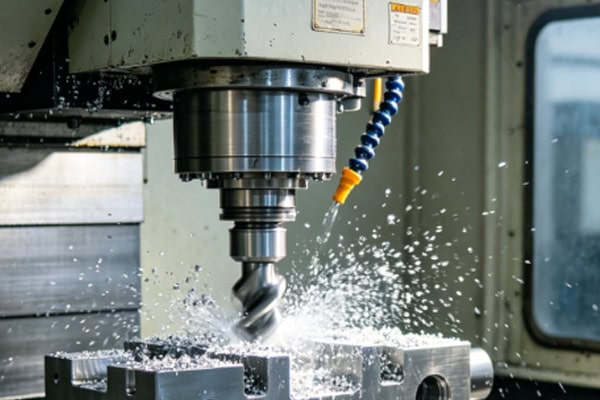
Do Not Ignore Material Compatibility and Long-Term Cost
No matter how advanced the equipment is, if it does not match the material characteristics, the actual machining result will still be difficult to meet expectations. The cutting characteristics of the material itself directly affect equipment performance.
Different Materials Require Different Equipment Capabilities
If the main material is aluminum alloy, you can prioritize high-speed, high-efficiency machines; if you often machine mold steel, stainless steel, or titanium alloys, you need to pay more attention to torque, rigidity, and tool life. If the material compatibility is wrong, even advanced equipment will struggle to deliver its true value, and may even result in low efficiency, rapid tool wear, and unstable surface quality.
- Aluminum machining places more emphasis on speed, chip evacuation, and surface quality, and is suitable for high-efficiency cutting and higher spindle speeds.
- Steel and titanium machining place more emphasis on spindle torque, structural rigidity, and cutting stability, as these materials impose higher demands on machine load and tool performance.
- If there are many material types, it is recommended to choose a more versatile general-purpose machine so that product switching is more flexible and overall cost is easier to control.
The more accurately the material and equipment are matched, the more stable the machining result will be, and the better CNC milling can maintain high production efficiency and consistency when switching between different products, reducing additional losses caused by poor material compatibility.
Beyond Procurement Cost, Long-Term Investment Also Matters
The equipment price is only the first investment. Maintenance, tool consumption, downtime losses, and staff training costs are the parts that truly affect total cost. Many companies choose low-end equipment to save money at the beginning, but later they face more rework and more failures, which makes the overall cost even higher and may even slow down the entire project schedule.
- Low procurement cost does not necessarily mean low total cost; later maintenance and downtime losses are equally important, and these hidden expenses often accumulate continuously during long-term operation.
- The poorer the equipment stability, the higher the rework rate and tool consumption tend to be, which not only increases material waste but also affects production rhythm and delivery efficiency.
- Choosing equipment that is easy to maintain and has stable spare parts supply is usually more beneficial for long-term operation and can reduce losses caused by waiting for repairs during downtime.
The truly cost-effective equipment is not the cheapest one to buy, but the one that is the easiest to use with peace of mind. Especially in long-term CNC milling production, stability often determines the final return more than the initial price.
Choosing a Supplier That Can Provide Process Support Is Even More Important
What truly affects CNC milling results is not only the equipment itself, but also whether the supplier has sufficient process experience and problem-solving capability. The equipment is only a tool; the process is the key to bringing out the value of the tool.
Good Equipment Does Not Mean Good Results Automatically
CNC milling results depend not only on the equipment itself, but also on process experience, parameter settings, and quality control capability. For complex parts, whether the supplier understands machining and can quickly optimize the solution is often more important than the equipment specifications alone. Many problems are not caused by the equipment itself, but by poor process matching.
- Experienced suppliers are better able to adjust machining strategies according to material and structure, thereby reducing trial-and-error costs and improving first-pass success rates.
- Reasonable parameter optimization can significantly improve precision, efficiency, and surface quality, allowing equipment performance to be truly converted into actual machining results.
- Teams with quality control capability are more likely to ensure consistency in batch delivery and better meet customer expectations for stability.
The equipment is only the foundation; what truly determines the result is often process capability. Mature process support can help CNC milling projects avoid many detours and reach customer expectations faster, making it especially suitable for projects with high delivery quality requirements.
Look at Delivery Capability as Well as Service Capability
A supplier that is truly suitable for long-term cooperation with a company should not only be able to machine parts, but also be able to deliver stably, communicate promptly, and respond quickly to problems. Especially in new product development and urgent orders, service capability often directly determines project progress. What customers need in many cases is not only the machining result, but also professional support during the process.
- Suppliers with strong delivery stability are more suitable for long-term cooperation and batch projects, because stable delivery means less production risk and higher schedule controllability.
- Teams with high communication efficiency can solve design and process issues more quickly, reducing time loss caused by repeated confirmations.
- Fast response service capability can help companies reduce project delay risks and allow customers to get solutions more quickly when problems arise.
When choosing a supplier, service capability and technical capability are equally important, and in many projects even more critical, because they directly affect whether the CNC milling project can smoothly move into mass production and whether the cooperation experience is stable enough.
Conclusion
When choosing CNC milling equipment, the key is not to pursue the most expensive option, but to find the solution that best fits your own products, production volume, and precision requirements. Only by considering machining requirements, equipment structure, control systems, material compatibility, and long-term cost together can you truly choose equipment that improves efficiency and reduces risk. If you are evaluating CNC milling solutions, TiRapid can provide you with more professional machining advice and stable delivery support.