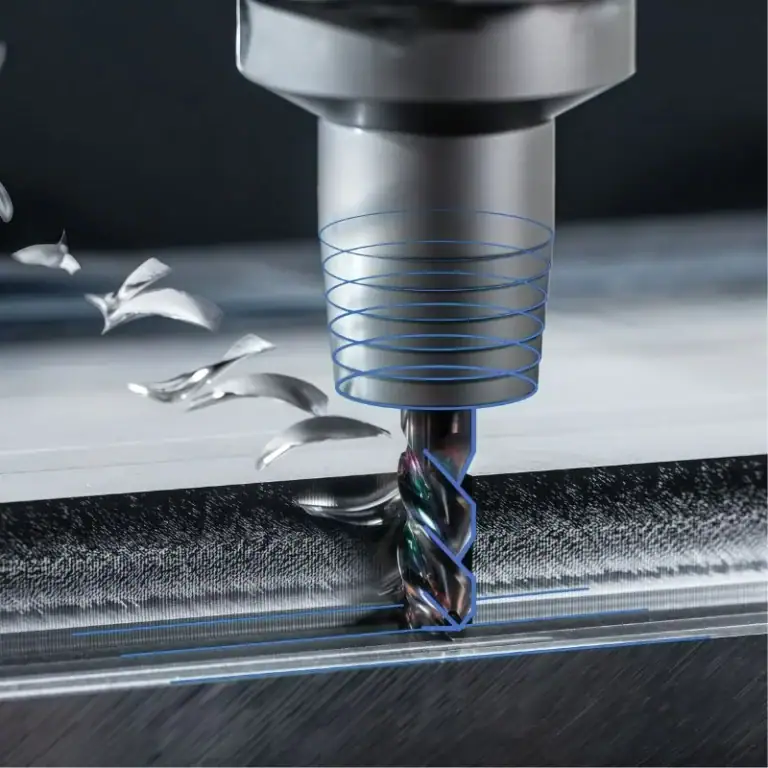
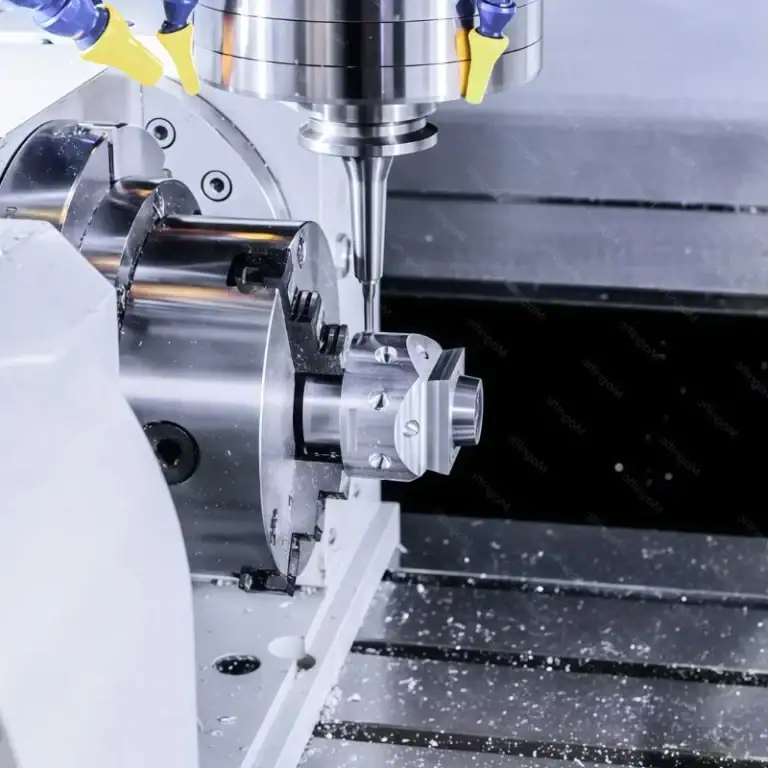
POM vs PC is an important material comparison for engineers and buyers who need precision CNC machined plastic parts. POM is known for low friction, wear resistance, and dimensional stability, while PC offers excellent impact resistance, toughness, and transparency. Choosing the right material can affect part performance, machining cost, surface quality, and long-term reliability.
This guide explains the key differences between POM and PC, including material properties, CNC machining performance, advantages, limitations, applications, cost, and material selection. You will also learn when to choose POM for mechanical movement and when to choose polycarbonate for transparent or impact-resistant parts.
What Are POM And PC Plastics?
POM and PC are two common engineering plastics used for CNC machined parts, but they solve different problems. POM is often chosen for low friction, wear resistance, and precise mechanical movement, while PC is valued for impact resistance, toughness, and transparency. Understanding their basic differences helps engineers choose the right plastic before production.
What Is POM?
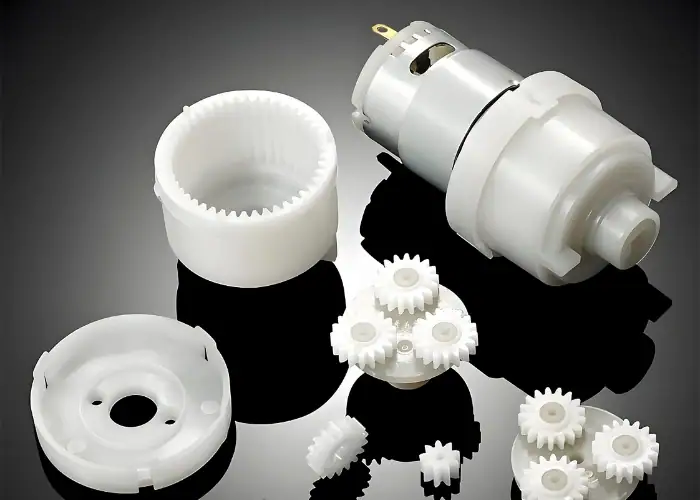
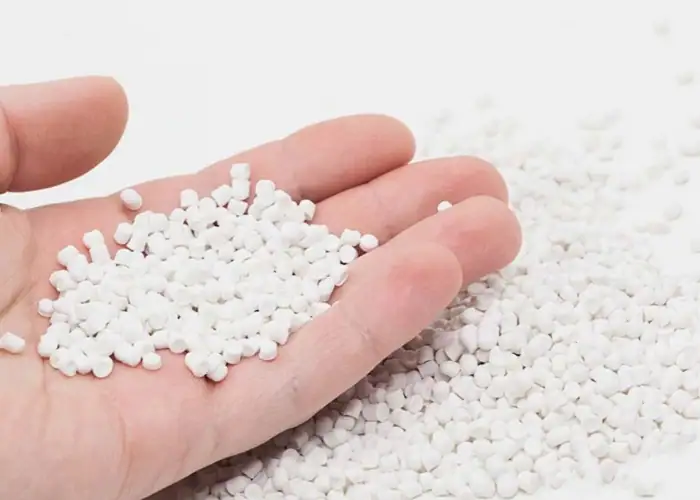
POM stands for polyoxymethylene. It is also called acetal or polyacetal in many engineering applications. POM is a strong, stiff, and low-friction thermoplastic that performs well in moving parts, sliding components, gears, rollers, bushings, and precision mechanical parts.
One major advantage of POM is its dimensional stability. It has low moisture absorption compared with many other plastics, so CNC machined POM parts can maintain accurate size and shape during assembly and use. This makes POM machining suitable for parts that require tight fits, smooth movement, and repeatable performance.
POM is usually opaque and is commonly available in natural white, black, and other industrial colors. It is not the best choice when transparency is required, but it is very useful when the part needs wear resistance, low friction, good machinability, and stable mechanical performance.
What Is PC?
PC stands for polycarbonate. It is a tough engineering plastic known for high impact resistance, good transparency, and strong toughness. Compared with many standard plastics, polycarbonate can absorb impact better, which makes it useful for protective covers, transparent panels, housings, guards, lenses, and structural plastic parts.
Polycarbonate machining is also possible, and PC can be CNC milled, cut, drilled, and routed into custom parts. However, CNC polycarbonate parts require proper cutting tools and controlled machining parameters because excessive heat or stress may cause cracking, melting, or surface marks.
Unlike POM, PC can be transparent, which gives it an advantage in visual or protective applications. When a part needs both strength and visibility, polycarbonate is often a better option than opaque engineering plastics.
Main Difference Between POM And PC
The main difference between POM and PC is their performance focus. POM is better for wear resistance, low friction, and precision mechanical movement, while PC is better for impact resistance, toughness, and transparent protective parts.
For CNC machining, POM is usually easier to machine and can hold stable dimensions well. PC can also be machined, but it needs more careful control to avoid heat buildup, stress cracking, or rough edges. This is why the final choice should depend on the part function, not only the material name.
In simple terms, choose POM when the part needs smooth movement, wear resistance, and accurate mechanical fit. Choose PC when the part needs impact strength, transparency, and protective performance.
POM Vs PC: Key Properties And Performance Compared
POM and PC are both engineering plastics, but their performance advantages are different. POM is stronger in wear resistance, low friction, and dimensional stability, while PC performs better in impact resistance, toughness, and transparency. For CNC machined parts, the right choice depends on how the part will be loaded, moved, assembled, and used in the final environment.
Strength And Rigidity
POM, also called polyoxymethylene, has good stiffness and mechanical strength. Typical POM tensile strength is around 60-70 MPa, and its flexural modulus is often about 2.5-3.0 GPa. This makes it suitable for gears, bushings, rollers, spacers, and precision mechanical parts that need a firm structure and stable fit.
PC, or polycarbonate, also has good strength, with typical tensile strength around 55-70 MPa. However, PC is usually chosen more for toughness than rigidity. It can handle impact better than many common plastics, but it may not be as suitable as POM for low-friction mechanical movement.
Impact Resistance And Toughness
PC has a clear advantage in impact resistance. It is widely used for protective covers, safety panels, transparent guards, lenses, and impact-resistant housings because it can absorb sudden force without breaking easily.
POM is strong and stiff, but it is not as impact-resistant as PC. It performs better in controlled mechanical movement rather than sudden shock. If the part needs to resist drops, hits, or protective impact, PC is usually the better choice. If the part needs smooth motion and mechanical accuracy, POM is often more suitable.
Wear Resistance And Friction
POM performs very well in wear and sliding applications. It has a naturally low coefficient of friction, which makes it suitable for gears, guide blocks, pulleys, rollers, bushings, and other moving parts. In many mechanical assemblies, POM can reduce noise, friction, and wear without requiring heavy lubrication.
PC is not usually selected for wear parts. It can work in structural and protective components, but it is more likely to scratch, wear, or develop surface marks under repeated sliding contact. For parts that rub, rotate, or slide against other components, POM machining is usually the better option.
Heat, Moisture, And Chemical Resistance
POM offers good dimensional stability and low moisture absorption, which helps machined parts keep accurate dimensions over time. It also resists many fuels, oils, and common solvents, but strong acids, strong oxidizers, and some harsh chemicals can damage it.
PC has better toughness and can handle moderate heat, but it is more sensitive to some chemicals and cleaning agents. Certain solvents may cause stress cracking in polycarbonate parts. For applications involving chemicals, the exact fluid, temperature, concentration, and exposure time should be checked before choosing either material.
Transparency And Appearance
One of the biggest differences between POM and PC is transparency. POM is usually opaque and commonly available in natural white, black, and other industrial colors. It is mainly used for functional mechanical parts, not transparent components.
PC can be clear, tinted, or colored, making it suitable for parts that need visibility or light transmission. For transparent covers, inspection windows, protective guards, and optical-looking components, polycarbonate is usually the better choice. For hidden mechanical parts that need low friction and wear resistance, POM is more practical.
How Do POM And PC Perform In CNC Machining?
POM and PC can both be CNC machined into custom plastic parts, but their machining behavior is different. POM machining is usually easier and more stable because the material cuts cleanly and holds dimensions well. Polycarbonate machining needs more careful control because heat, tool pressure, or internal stress may affect the surface and final accuracy.
POM Machining Performance
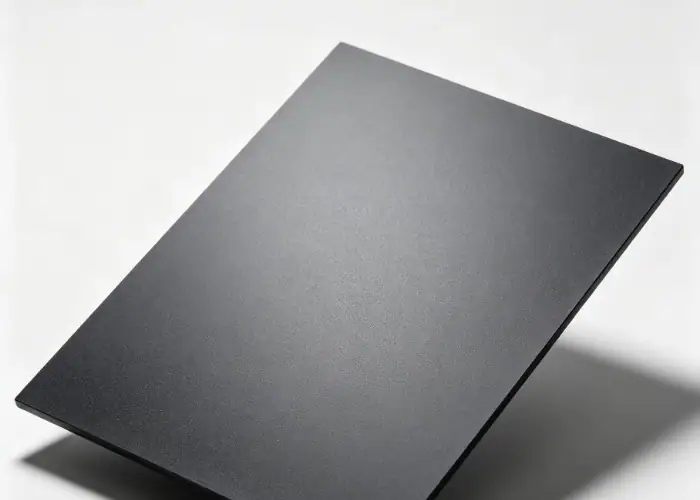
POM is one of the easier engineering plastics to machine. It has good stiffness, low friction, and stable cutting behavior, so it works well for CNC milling, turning, drilling, boring, and tapping. In many cases, POM can produce smooth surfaces and accurate dimensions without complex post-processing.
For precision parts, POM is often selected because it holds tight fits well and has low moisture absorption. This makes it suitable for gears, bushings, rollers, spacers, guide blocks, fixtures, and other mechanical components that require repeatable movement or stable assembly.
Polycarbonate Machining Performance
Polycarbonate can also be CNC machined, but it requires more attention than POM. PC is tough and impact-resistant, but it can be sensitive to cutting heat and stress. If the tool is dull or the feed rate is not controlled properly, the part may develop melted edges, rough surfaces, cracking, or stress marks.
For cnc polycarbonate parts, sharp tools, proper chip removal, moderate cutting speed, and stable clamping are important. When machined correctly, PC can be used for clear covers, protective panels, transparent housings, guards, lenses, and impact-resistant components.
CNC Milling, Cutting, And Routing Considerations
POM is well suited for CNC milling and turning because it cuts cleanly and creates less machining stress. It is also easier to hold stable dimensions in small holes, slots, pockets, and moving features. For high-volume mechanical parts, POM CNC machining can be efficient and cost-effective.
Polycarbonate CNC milling, cutting, and routing require more heat control. Operators should avoid excessive spindle speed, poor chip evacuation, and aggressive tool pressure. For clear PC parts, surface protection is also important because scratches and tool marks are easier to notice.
Surface Finish And Tolerance Control
POM usually achieves a clean machined finish with good dimensional repeatability. It is suitable for functional parts where smooth movement, stable tolerance, and low-friction surfaces are more important than appearance.
PC can also achieve a good finish, but the final surface depends heavily on machining strategy. Clear polycarbonate parts may require polishing or additional finishing if optical clarity is important. For tight-tolerance PC parts, stress control should be considered, especially for thin walls, deep cuts, or complex shapes.
Which Material Is Easier To Machine?
In general, POM is easier to machine than PC. It cuts more predictably, holds dimensions well, and is less sensitive to heat during CNC machining. PC is still machinable, but it needs more careful process control.
Choose POM when the part needs smooth mechanical movement, stable tolerance, and good wear performance. Choose PC when the part needs impact resistance, transparency, or protective function, and make sure the machining process is planned to reduce heat and stress.
Advantages And Limitations Of POM And PC
POM and PC are both useful engineering plastics, but each material has clear strengths and weaknesses. POM is better for low-friction mechanical parts, while PC is better for transparent and impact-resistant parts. Understanding these trade-offs helps engineers avoid material mismatch during CNC machining and final use.
Advantages Of POM
POM has excellent wear resistance and a naturally low friction surface, making it suitable for gears, bushings, rollers, sliders, guide blocks, and other moving parts. It also has good stiffness and dimensional stability, so machined POM parts can maintain accurate fits during assembly and repeated use.
Another advantage is machinability. POM cuts cleanly, holds tolerances well, and usually produces a smooth surface finish with fewer machining difficulties. For precision mechanical parts that need reliable movement and stable dimensions, POM machining is often a practical and cost-effective choice.
Limitations Of POM
POM is not transparent, so it is not suitable for clear covers, windows, lenses, or visual inspection parts. It also does not offer the same impact resistance as polycarbonate, especially when the part is exposed to sudden shock or high impact loads.
POM also has chemical limitations. It performs well with many oils, fuels, and common solvents, but strong acids, strong oxidizers, and some harsh chemicals may damage the material. For chemical-exposed parts, the working fluid, temperature, and exposure time should be confirmed before production.
Advantages Of PC
PC offers excellent impact resistance and toughness. It is commonly used for protective covers, machine guards, transparent housings, lenses, panels, and safety-related parts. When a part needs to resist impact while keeping visibility, polycarbonate is usually a strong choice.
Another major advantage is transparency. PC can provide good light transmission while still offering better toughness than many clear plastics. This makes it useful for CNC polycarbonate parts where strength, appearance, and visual access are all important.
Limitations Of PC
PC is more difficult to machine than POM. During polycarbonate machining, excessive heat, poor chip removal, dull tools, or high clamping pressure may cause stress marks, cracking, melted edges, or rough surfaces. For clear PC parts, scratches and tool marks are also easier to see.
PC is also more sensitive to some chemicals than POM. Certain solvents, cleaners, and oils may cause stress cracking, especially if the part is under load. If the part will contact chemicals or cleaning agents, material compatibility should be checked carefully before choosing PC.
Common Applications And Industries For POM And PC Parts
POM and PC are used in different types of CNC machined plastic parts. POM is better for mechanical parts that need smooth movement, wear resistance, and stable dimensions. PC is more suitable for parts that need transparency, impact resistance, and protective performance.
POM Applications In Precision Mechanical Parts
POM is widely used for precision mechanical parts because it has low friction, good wear resistance, and stable machining performance. Common examples include gears, bushings, rollers, pulleys, spacers, sliders, guide blocks, and positioning fixtures.
These parts often need repeated movement and accurate fitting. Since POM absorbs little moisture and holds dimensions well, it is a practical choice for assemblies where smooth motion, low noise, and long-term stability are important.
PC Applications In Transparent And Impact-Resistant Parts
PC is commonly used for transparent and impact-resistant components. Typical parts include protective covers, clear housings, machine guards, lenses, display windows, transparent panels, and safety shields.
Compared with POM, polycarbonate is better when the part needs visibility and toughness at the same time. It is often selected for CNC polycarbonate parts that must protect internal components while allowing inspection, light transmission, or visual access.
Industries Using POM And PC CNC Parts
In semiconductor and automation equipment, POM is often used for fixtures, guide parts, rollers, and positioning components, while PC is used for guards, covers, and clear inspection windows. In electronics and communications, POM can support mechanical movement, and PC can protect sensitive components with transparent or impact-resistant housings.
In robotics, aerospace, medical devices, automotive, and consumer products, both materials have useful roles. POM is preferred for wear parts, sliding components, and precision mechanical assemblies. PC is preferred for protective covers, impact-resistant panels, transparent housings, and lightweight safety parts.
POM Vs PC: Cost, Availability, And Material Selection
Cost and availability are important when choosing between POM and PC for CNC machined parts. POM is often selected for cost-effective mechanical parts with low friction and good dimensional stability, while PC is usually chosen when impact resistance, transparency, or protective performance is more important than wear resistance.
Raw Material And Machining Cost
POM is usually a cost-effective engineering plastic for precision mechanical parts. It machines efficiently, cuts cleanly, and often requires less post-processing, which can help reduce total machining cost. For gears, bushings, spacers, rollers, and fixtures, POM is often a practical choice when the design needs stable function at a reasonable price.
PC may cost more in some projects because it requires more careful machining control. Clear polycarbonate parts may also need additional finishing if the surface must look clean or remain transparent. For protective covers, guards, and transparent housings, the higher cost can be justified by its strong impact resistance and visual performance.
Stock Forms And Lead Time
Both POM and PC are widely available in sheets, rods, plates, and blocks for CNC machining. POM is commonly available in natural white and black, while PC is often available in clear, tinted, and colored forms.
For urgent prototypes or small-batch parts, standard sheet or rod sizes are usually easier to source. If the project requires special colors, large thicknesses, optical-grade PC, or modified POM grades, lead time and MOQ should be confirmed before production.
Choose POM For Wear, Low Friction, And Precision Fit
Choose POM when the part needs smooth movement, low friction, wear resistance, and stable dimensions. It is a strong option for gears, sliding parts, bushings, rollers, guide blocks, spacers, and mechanical fixtures.
POM is also suitable when the part has tight fitting requirements and does not need transparency. For CNC machining, it is often easier to process than PC, making it a good choice for functional mechanical parts where accuracy and cost control both matter.
Choose PC For Impact Strength, Transparency, And Protection
Choose PC when the part needs impact resistance, toughness, or transparency. It is commonly used for protective panels, clear covers, machine guards, lenses, transparent housings, and safety-related components.
PC is not the best choice for sliding or wear parts, but it performs well when the part must resist impact while allowing visibility. If the design requires clear appearance, strong protection, or high toughness, polycarbonate is usually more suitable than POM.
Ask For DFM Support Before Final Selection
If you are not sure whether POM or PC is better, it is best to review the drawing, tolerance, working temperature, load, chemical exposure, and surface requirements before production. Small design details, such as thin walls, tight holes, sharp corners, or transparent surfaces, can affect material choice.
At TiRapid, I can help compare POM and PC based on your 2D drawings, STEP files, quantity, and application needs. This helps reduce machining risk, control cost, and choose the right material for prototypes or production parts.
FAQs
Is POM softer than PC?
POM is usually stiffer and better for low-friction mechanical parts. PC is tougher and has better impact resistance. Choose POM for wear and precision fit, and choose PC for transparent or impact-resistant parts.
What is the difference between PP and PC vs POM?
PP is lightweight and cost-effective, PC is tough and transparent, and POM is stiff, wear-resistant, and dimensionally stable. For CNC machined moving parts, POM is usually better than PP and PC.
Is POM plate better than PC plate reddit?
POM plate is better for gears, bushings, sliders, and wear parts. PC plate is better for clear covers, guards, panels, and impact-resistant parts. The better choice depends on the part function.
Is POM plastic food safe?
Some POM grades can be food safe, but not all. For food-contact parts, confirm FDA, EU, or other required certifications before CNC machining.
Conclusion
POM and PC are both useful engineering plastics, but they are suitable for different CNC machined parts. POM is a better choice for wear resistance, low friction, dimensional stability, and precision mechanical movement. PC is better for impact resistance, toughness, transparency, and protective components. The best material depends on the part function, working environment, tolerance, appearance needs, and cost target.
At TiRapid, I can help you compare POM and PC based on your drawings, STEP files, quantity, and application requirements. Whether you need POM machining for mechanical parts or polycarbonate machining for transparent protective components, the right material and machining plan can help improve part performance and reduce production risk.