Alloy steel is a medium-to-high strength metal material commonly used in automotive components, shaft parts, gear blanks, and heavy-duty industrial equipment. During turning operations, it often exhibits unstable cutting resistance, localized work hardening, and concentrated cutting heat. These characteristics place higher demands on tool selection. If the tool does not match the material, even with correct cutting parameters, issues such as chipping, dimensional deviation, poor surface quality, or increased vibration may still occur, requiring proper optimization.
How to Select Cutting Tool Materials for Alloy Steel Turning
Alloy steel machining places high demands on cutting tool materials. The selection is not only related to hardness and wear resistance, but also closely tied to thermal stability, impact resistance, and chip control behavior during continuous or interrupted cutting. In real machining environments, alloy steel often generates uneven cutting loads and fluctuating thermal conditions, which means the tool must maintain stable performance under both high temperature and variable stress conditions. A proper material selection strategy can significantly reduce tool failure risk, improve surface consistency, and extend machining cycles, making it a critical foundation for stable production.
Carbide Tool Application Techniques
Carbide tools are the most widely used solution in alloy steel turning due to their balanced mechanical properties and cost efficiency. In industrial production, they provide a stable compromise between hardness, toughness, and thermal resistance. Their performance becomes especially reliable when combined with advanced coatings and optimized cutting parameters, allowing them to handle both roughing and semi-finishing operations under continuous production environments.
- Suitable for medium to high-speed continuous cutting with stable performance
- Withstands relatively high cutting temperatures for long machining cycles
- Applicable to quenched steel, medium carbon steel, and low alloy steel
- High rigidity reduces deformation during cutting
- Coatings such as TiAlN or AlCrN significantly extend tool life
- Suitable for mass production and standardized processes
- Covers both roughing and semi-finishing operations
- Produces stable and consistent surface quality
Carbide tools are widely used due to their cost-effectiveness and stable performance, making them a fundamental solution for alloy steel turning.
CBN Tool Application Scenarios
CBN tools are designed for extreme machining conditions, particularly in hardened alloy steel with high hardness levels. They maintain structural stability even under high cutting temperatures, where conventional carbide tools may fail. In precision manufacturing, CBN tools are often used in finishing operations where dimensional accuracy and surface integrity are critical. Their ability to maintain sharp cutting edges under severe thermal stress makes them essential in high-end machining applications where consistency and reliability are more important than cost considerations.
- Suitable for materials above HRC45 hardness
- Excellent thermal stability under extreme cutting conditions
- Reduces grinding operations and improves efficiency
- High surface consistency and low variation
- Suitable for high-consistency batch production
- Long tool life for extended machining cycles
- Requires high machine rigidity and stability
- Higher cost but strong efficiency advantages
CBN tools are widely used in high-value precision manufacturing where consistency is critical.
Coated Tool Selection Methods
Coated tools enhance base material performance by modifying surface friction behavior and thermal resistance characteristics. In alloy steel machining, coatings play a major role in reducing adhesion, improving chip flow, and extending tool life under high-temperature conditions. The effectiveness of a coating depends not only on its material type but also on its thickness, adhesion strength, and compatibility with cutting conditions. Proper coating selection allows stable machining performance even under aggressive cutting parameters.
- TiAlN coating suitable for high-temperature high-speed cutting
- DLC coating suitable for low-friction finishing
- Multi-layer coatings enhance wear resistance
- Reduces built-up edge formation
- Improves chip evacuation performance
- Applicable to different hardness levels of alloy steel
- Extends tool life by 30%–80%
- Coating integrity directly affects machining stability
Coated tools have become essential in modern precision machining.
Tool Geometry Parameter Adjustment
Tool geometry plays a decisive role in alloy steel turning. It affects cutting force distribution, chip formation, chip evacuation, and final surface quality. Improper geometry design can easily lead to vibration, unstable cutting forces, and localized tool overload.
Rake Angle and Clearance Angle Adjustment
Rake and clearance angles determine how material is removed and directly influence friction and cutting forces. In alloy steel machining, a balance between sharpness and strength must be maintained. Excessive sharpness may cause chipping, while too small angles increase friction and heat.
- Increasing rake angle reduces cutting resistance
- Small clearance angle increases friction and heat generation
- Hard materials require lower rake angles for edge strength
- Finishing operations may use sharper edges for better surface quality
- Geometry must balance chip flow and heat distribution
- Adjust based on material toughness
- Avoid excessive angles that weaken the cutting edge
- Maintain balance between stability and heat dissipation
Proper geometry reduces vibration and improves dimensional stability.
Nose Radius Selection
Nose radius strongly influences surface roughness and cutting force distribution. It determines the contact condition between tool and workpiece.
- Large radius improves surface finish and continuity
- Small radius suits complex geometries
- Excessive radius may increase vibration
- Finishing requires balance between stability and smoothness
- Select based on machine rigidity
- Ensures uniform cutting force distribution
- Prevents premature tool wear
- Improves machining path continuity
Proper selection improves surface texture quality and dimensional stability.
Chip Breaker Structure Optimization
Chip evacuation directly affects machining stability and tool life. Poor chip control may cause chip entanglement or secondary cutting.
- Chip breakers control long chip formation
- Prevent chip wrapping around tool or workpiece
- Improve heat dissipation efficiency
- Optimize chip flow paths
- Enhance coolant-assisted evacuation
- Different designs for roughing and finishing
- Reduce secondary cutting damage
- Maintain a clean cutting zone
Optimized chip control improves continuity and tool life.
Tool Wear Control in Alloy Steel Machining
Alloy steel generates high cutting heat, resulting in relatively fast and complex tool wear. Without proper monitoring, machining accuracy and consistency will be affected.
Common Tool Wear Types
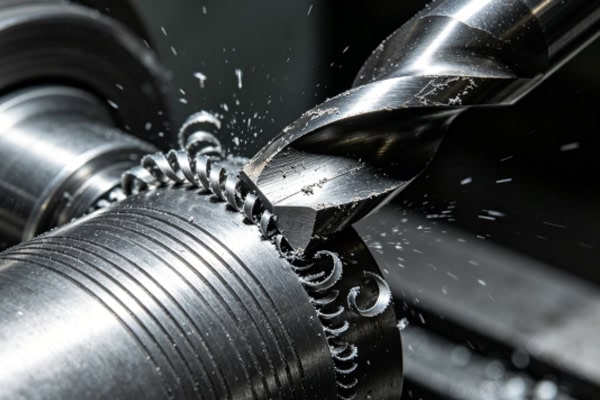
Tool wear in alloy steel machining is highly variable and often progresses through multiple stages, including initial abrasion, steady wear, and accelerated failure phases. Understanding these stages is essential for maintaining process stability and avoiding sudden breakdowns that can affect production quality.
- Flank wear causes dimensional deviation
- Crater wear increases cutting resistance
- Chipping damages surface quality
- Built-up edge affects surface finish
- Thermal cracks may cause sudden failure
- Uneven wear increases vibration
- Oxidation reduces tool life
- Long-term wear changes cutting dynamics
Early detection prevents quality loss.
Tool Life Extension Techniques
Tool life is influenced by a combination of cutting conditions, thermal load, and mechanical stress. Proper optimization can significantly extend usable life while maintaining stable machining quality.
- Optimize cutting parameters to reduce impact load
- Improve cooling efficiency
- Avoid overload machining
- Maintain stable cutting conditions
- Adjust parameters based on hardness
- Standardize tool replacement cycles
- Control machining environment
- Use suitable coating systems
Proper management improves production stability.
Tool Monitoring and Maintenance
Continuous monitoring ensures machining stability and reduces unexpected tool failure. In modern CNC environments, tool condition tracking has become an essential part of intelligent manufacturing systems.
- Detect cutting sound changes
- Inspect tool wear regularly
- Track dimensional deviation trends
- Use online monitoring systems
- Maintain stable tool clamping
- Prevent looseness-induced vibration
- Establish maintenance schedules
- Avoid abnormal cutting conditions
A structured system improves stability and consistency.
Cutting Parameters and Cooling System Matching
Cutting parameters and cooling systems jointly determine temperature, cutting force, and chip evacuation behavior. Poor matching leads to reduced tool life and dimensional instability.
Cutting Speed and Feed Adjustment
Cutting parameters must be dynamically adjusted based on material and tool condition.
- Reduce cutting speed for hard materials
- Lower feed for finishing operations
- Increase depth of cut for roughing
- Maintain stable cutting load
- Avoid sudden parameter changes
- Adjust based on tool wear
- Ensure continuous machining
- Balance efficiency and tool life
Stable and properly balanced cutting speed and feed settings help maintain consistent chip formation and reduce unexpected cutting force fluctuations during alloy steel machining, ensuring long-term dimensional stability and improved tool performance.
Coolant Usage Techniques
Coolant affects both cooling and lubrication performance.
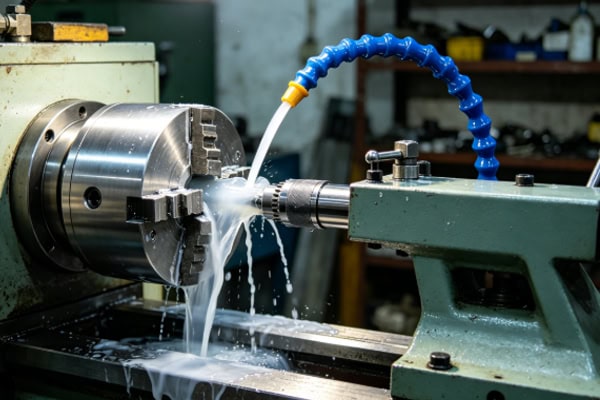
- High-pressure coolant improves heat removal
- Proper nozzle positioning is required
- Regular coolant replacement prevents contamination
- Suitable coolant selection based on material
- Stable pressure control
- Improves lubrication and chip evacuation
- Reduces thermal tool damage
- Prevents localized overheating
A well-optimized coolant system ensures stable thermal control and efficient chip evacuation, which directly contributes to extended tool life and more reliable machining accuracy under continuous production conditions.
Vibration and Thermal Deformation Control
Vibration and thermal deformation strongly affect machining accuracy.
- Improve machine rigidity
- Reduce workpiece overhang
- Avoid resonance speed zones
- Control heat accumulation
- Maintain fixture stability
- Optimize machining rhythm
- Reduce force fluctuations
- Minimize thermal distortion
Effective vibration suppression combined with controlled thermal behavior ensures stable cutting conditions, reduces surface waviness, and significantly improves dimensional consistency in precision alloy steel turning operations.