CNC turning speed calculation is an essential part of machining process planning in modern manufacturing. It determines how fast the workpiece rotates and how efficiently material is removed during cutting operations. Proper speed calculation directly affects machining quality, tool life, production efficiency, and surface finish. In industries such as automotive manufacturing, aerospace engineering, mold processing, and precision mechanical production, correct spindle speed selection is critical for stable and accurate machining results. CNC turning speed is not chosen randomly but calculated based on tool material, workpiece material, cutting diameter, and machining conditions. Understanding how speed is calculated helps improve process stability and reduce machining errors.
Fundamental Formula Used in CNC Turning Speed Calculation
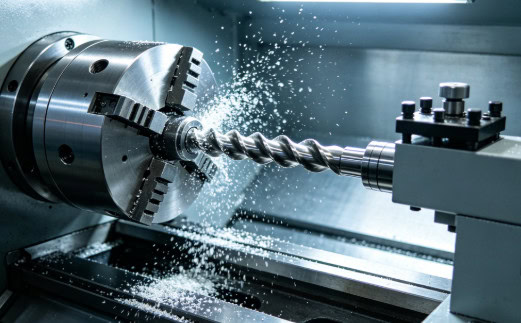
The calculation of CNC turning speed is based on the relationship between cutting speed, workpiece diameter, and spindle rotation speed. This relationship ensures that the cutting tool operates under suitable conditions for different materials and machining requirements. Cutting speed is usually expressed in meters per minute, while spindle speed is expressed in revolutions per minute. The conversion between these values allows engineers to determine the correct machine settings for efficient cutting. Proper calculation ensures stable chip formation, reduces tool wear, and maintains consistent machining performance during production.
Basic Spindle Speed Formula
The core formula used in CNC turning speed calculation is based on cutting speed and workpiece diameter. It is widely applied in machining planning and CNC programming. n = (1000 Vc) / (π D)
In this expression, spindle speed depends on cutting speed and workpiece diameter. Larger diameters result in lower rotational speed, while higher cutting speeds increase spindle rotation. This relationship ensures that the cutting edge maintains optimal contact conditions during machining. Correct application of this formula helps maintain stable machining conditions and improves tool performance.
Cutting Speed Definition and Importance
Cutting speed refers to the linear speed at which the cutting tool engages the surface of the rotating workpiece. It is influenced by material hardness, tool coating, and machining conditions. Harder materials require lower cutting speeds, while softer materials allow higher speeds. Selecting appropriate cutting speed ensures stable machining and reduces excessive tool wear. It also affects surface finish quality and chip formation behavior during cutting.
Diameter Influence on Speed Calculation
Before listing key points, it is important to understand how diameter changes machining conditions.
- Larger workpiece diameter reduces spindle speed to maintain stable cutting speed.
- Smaller diameter allows higher spindle rotation for efficient machining.
- Diameter changes during machining may require dynamic speed adjustment.
These relationships ensure CNC turning maintains consistent cutting performance across different workpiece sizes.
Material Type Influence on Speed Selection
Material properties significantly affect CNC turning speed calculation. Different materials have different hardness, toughness, and thermal resistance, which influence how they respond to cutting forces. Steel, aluminum, copper, and titanium alloys all require different spindle speeds to achieve stable machining conditions. Selecting incorrect speed for a given material can lead to tool damage, poor surface quality, or inefficient production. Proper material-based speed adjustment is essential for achieving balanced machining performance.
Hard Materials Require Lower Cutting Speed
Hard materials such as stainless steel and titanium alloys generate higher cutting resistance. Lower spindle speed is required to reduce tool stress and heat buildup. This helps maintain tool life and prevents premature wear. Stable cutting conditions are especially important when machining high-strength components.
Soft Materials Allow Higher Speed Operation
Soft materials such as aluminum and plastic-based materials allow higher cutting speeds due to lower resistance. Higher speed improves material removal rate and reduces machining time. However, excessive speed may still affect surface quality if not properly controlled. Balanced adjustment ensures both efficiency and finish quality.
Material-Based Speed Adjustment Rules
Before listing key points, it is important to highlight material behavior differences.
- High-strength materials require reduced spindle speed for stability.
- Low-resistance materials support faster machining cycles.
- Heat-sensitive materials require controlled speed to avoid deformation.
These rules help maintain machining consistency across different industrial applications.
Tool Condition and Its Effect on Speed Calculation
Tool condition plays a direct role in determining suitable CNC turning speed. Even if theoretical calculations are correct, worn or damaged tools cannot maintain stable machining performance at high speeds. Tool material, coating type, and wear condition must be considered when setting spindle speed. Proper tool selection ensures that calculated speeds can be applied safely and effectively in real machining environments.
Tool Material Strength Defines Speed Limit
Carbide tools and coated tools support higher cutting speeds due to improved hardness and heat resistance. High-performance tools allow more aggressive machining conditions. Lower-grade tools require reduced speed to prevent damage and maintain stability.
Tool Wear Reduces Safe Operating Speed
As tools wear during machining, cutting resistance increases and heat generation becomes more intense. This reduces the maximum safe spindle speed. Regular inspection helps identify wear conditions and adjust speed settings accordingly.
Tool Geometry Affects Cutting Efficiency
Before listing key points, it is important to recognize geometry influence.
- Sharp cutting edges allow higher speed operation with stable performance.
- Poor geometry increases friction and limits safe speed range.
- Optimized rake angles improve chip flow and machining stability.
Proper tool design supports efficient and safe speed utilization.
Machine and Process Factors in Speed Control
Machine capability and process conditions also influence CNC turning speed calculation. Even with correct formulas and tool selection, machine rigidity, spindle stability, and cooling conditions determine whether high-speed machining can be achieved safely. CNC machines with higher rigidity and advanced spindle systems can support faster cutting speeds. Process planning also affects how speed is applied during roughing, semi-finishing, and finishing stages.
Machine Rigidity Supports High-Speed Cutting
High rigidity reduces vibration during machining, allowing stable operation at higher speeds. Weak machine structures may require reduced speed to avoid instability. Structural strength directly affects machining capability.
Spindle Performance Limits Maximum Speed
Spindle systems define the upper limit of safe rotational speed. High-quality spindles support smoother rotation and higher speed operation. Poor spindle conditions restrict speed due to vibration risk.
Cooling System Enhances Speed Stability
Before listing key points, it is important to highlight thermal control.
- Effective cooling reduces heat buildup during high-speed cutting.
- Stable coolant flow improves tool life under continuous operation.
- Thermal control allows higher speed without damaging workpiece.
Cooling systems support consistent machining performance at calculated speeds.
Speed Adjustment in CNC Programming Practice
In CNC programming, calculated speed values are not always fixed. Adjustments are made based on machining conditions, tool feedback, and production requirements. Operators may increase or reduce spindle speed depending on cutting stability and surface quality results. Adaptive speed control systems in modern CNC machines also allow automatic adjustments during machining, improving efficiency and reducing human intervention. This flexibility ensures that theoretical calculations are effectively applied in real production environments.