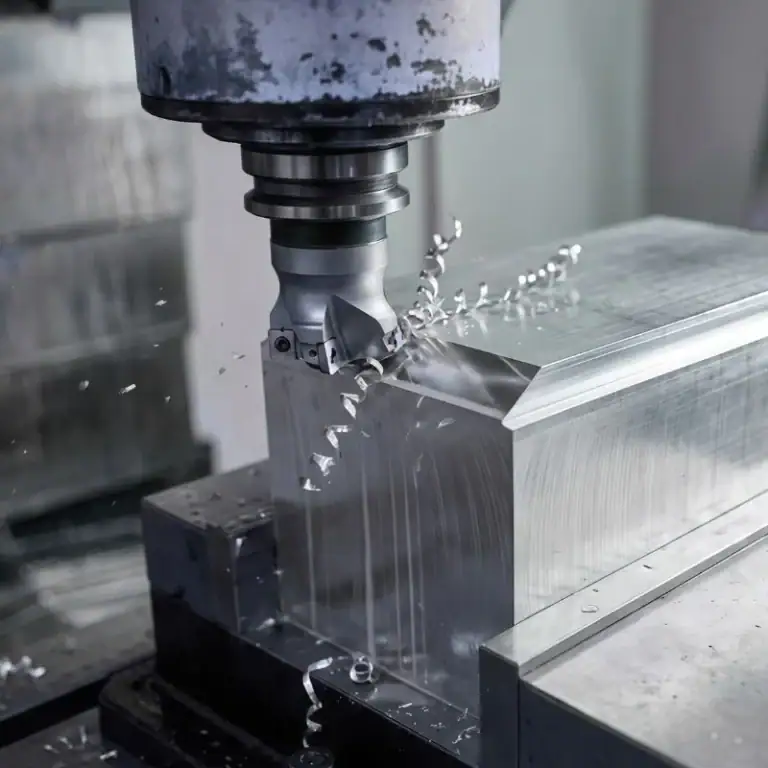
When sourcing precision mechanical components, CNC turning cost is one of the key factors considered by engineers, purchasing teams, and product development companies. Even when parts have similar dimensions, their final prices can vary significantly due to differences in material, geometry, tolerances, order quantity, surface treatment, and machining requirements. For companies looking for custom precision CNC turning, simply comparing the unit price offered by different suppliers is not enough to determine the most cost-effective manufacturing solution. Machining accuracy, tooling costs, production efficiency, inspection requirements, lead time, and long-term production capacity should also be considered. Search terms such as “CNC turning quote,” “precision CNC turning,” “CNC turning manufacturer,” “CNC turned parts,” “CNC turning prototype,” “small batch CNC machining,” and “custom CNC turning” are commonly associated with clear purchasing and sourcing requirements. Choosing a supplier that can provide engineering review, DFM support, prototype validation, and volume production can help companies move smoothly from engineering drawings to manufacturing while reducing rework, delays, and unnecessary production costs.
What Factors Affect CNC Turning Cost?
CNC turning pricing is not determined simply by the weight of a part. Material type, machining time, geometric complexity, tolerance requirements, production volume, and finishing processes all contribute to the final quotation. For purchasing teams, understanding these cost drivers makes it easier to evaluate supplier quotations and compare different manufacturing solutions. Precision CNC turning is particularly suitable for shafts, sleeves, pins, connectors, threaded components, flanges, and other rotational parts. When a component is well suited to turning, the continuous cutting capability of a CNC lathe can be fully utilized, making machining time easier to control. TiRapid currently supports common CNC turning operations such as facing, grooving, drilling, and threading, while offering a broad selection of metals and engineering plastics.
Material Type Directly Affects Machining Cost
Material is one of the most important factors affecting CNC turning prices because raw material costs, machinability, cutting resistance, and tool wear vary significantly between materials. Aluminum alloys generally offer excellent machinability and are suitable for high-speed machining. Brass and copper alloys are frequently used for precision connectors, electrical components, and instrumentation parts. Stainless steel provides excellent corrosion resistance but usually requires more careful control of tooling and cooling conditions. Titanium alloys and high-performance materials such as Inconel require more specialized machining strategies and tighter process control. TiRapid currently supports materials including 6061, 6063, 6082, and 7075 aluminum alloys, 304 and 316 stainless steel, Ti-6Al-4V titanium, brass, copper alloys, 4340 alloy steel, as well as engineering plastics such as POM and PEEK.
Part Geometry Determines Machining Time
The more complex the part geometry, the more time may be required for programming, workholding, tool selection, positioning, and machining. A basic cylindrical shaft can often be produced efficiently through continuous turning, while parts containing deep holes, internal threads, narrow grooves, thin walls, multiple steps, or demanding tolerance requirements may require additional operations and more careful process control. When requesting a CNC turning quote, providing complete 2D engineering drawings and 3D CAD models allows the manufacturing engineer to evaluate machining difficulty more accurately and reduces repeated quotation revisions caused by missing information.
Tighter Tolerances Require Greater Machining Capability
Standard dimensional requirements and precision mating dimensions require different machining conditions. When a component requires tight dimensional tolerances, concentricity, roundness, or controlled surface roughness, more stable machines, tooling, inspection methods, and process controls may be required. TiRapid currently states CNC turning tolerance capability of up to ±0.005 mm and supports surface quality requirements with surface roughness control, making the service suitable for precision turned components with demanding dimensional and finish specifications.
Why Is CNC Turning Prototyping Suitable for New Product Development?
For companies developing new products, moving directly into high-volume production can create unnecessary manufacturing risks. CNC turning prototyping allows manufacturers to produce a small number of real components for dimensional verification, assembly testing, functional evaluation, and application testing. Compared with relying only on digital models, physical prototypes can reveal problems involving hole locations, thread fit, mating dimensions, wall thickness, and available assembly space at an early stage. TiRapid’s CNC prototyping services emphasize the use of real metal and plastic materials for validation and support a smooth transition from prototype development to subsequent production.
Small-Batch Prototypes Reduce Development Risk
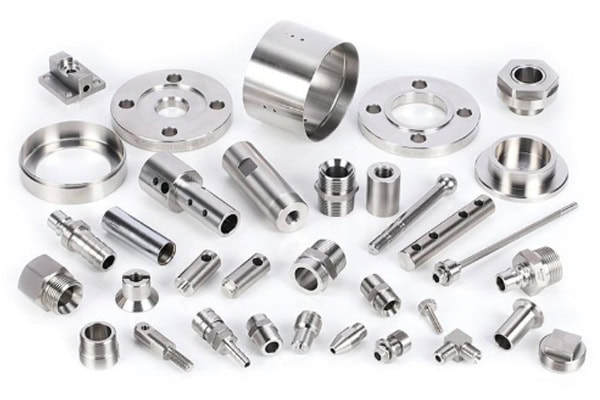
CNC turning prototyping is well suited to new product development, engineering validation, equipment upgrades, and custom component projects. Manufacturers can produce a limited number of parts, evaluate actual assembly performance, and modify dimensions or geometry according to test results. For shafts, threaded fittings, precision sleeves, and mechanical components, this approach can reduce the likelihood of design problems reaching full-scale production.
- Verify actual component dimensions
- Check assembly and mating performance
- Evaluate real material performance
- Confirm threads and hole locations
- Validate surface treatment
- Reduce risks before volume production
Prototype validation creates a more reliable transition between product development and manufacturing.
CNC Turning Prototypes Can Transition to Small-Batch Production
Once prototypes pass testing, companies may require dozens, hundreds, or thousands of components for initial production. CNC machining can continue to support these small-batch requirements without requiring dedicated tooling or molds. After the machining program and process have been validated, the same manufacturing strategy can often be adapted for subsequent orders, reducing repeated engineering work. TiRapid supports precision machining from individual prototypes and low-volume production through larger production requirements, including CNC turning and CNC milling.
This production model is particularly useful for companies with multiple product versions, changing order volumes, frequent design updates, or ongoing product development requirements.
What Parts Are Suitable for Precision CNC Turning?
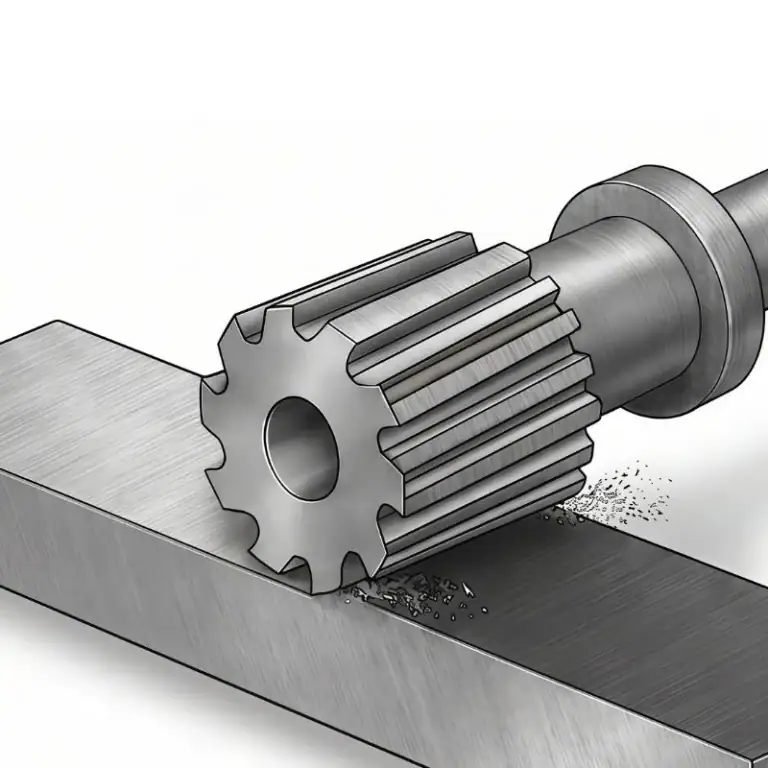
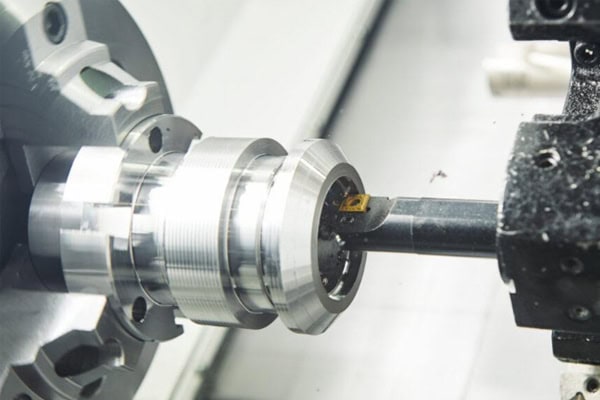
CNC turning is particularly suitable for components with rotational features. During machining, the workpiece rotates while the cutting tool follows a programmed path to control external diameters, internal diameters, lengths, grooves, threads, and other critical dimensions. For purchasing teams, components based primarily on cylindrical, conical, stepped-shaft, or rotational geometries can often benefit from CNC turning’s efficiency and dimensional consistency. TiRapid currently provides precision CNC turning for components such as shafts, bushings, and housings, with multi-axis turning and sub-spindle capabilities available for demanding applications.
Shafts and Precision Pins
Shafts are among the most common CNC turned components and include transmission shafts, positioning pins, connecting shafts, stepped shafts, and precision rotating shafts. These parts often require tight control of external diameters, concentricity, roundness, and surface roughness. Stable turning processes can combine external turning, facing, grooving, and threading operations to improve dimensional consistency and production efficiency.
Sleeves, Bushings, and Connectors
Sleeves, bushings, bearing components, and metal connectors commonly include both external and internal cylindrical features. Their dimensional accuracy is important for achieving proper mating and assembly. During internal turning, tool rigidity, vibration control, and chip evacuation need to be carefully managed. Deep-hole and thin-wall components can require additional process planning to maintain dimensional stability.
Threaded Components and Precision Fittings
Threaded components are widely used in automotive systems, automation equipment, hydraulic systems, electronics, and industrial machinery. CNC turning can produce metric threads, imperial threads, pipe threads, and customized thread configurations. For precision fittings, thread dimensions, sealing features, and end-face quality can all affect final performance. When requesting a quotation, the engineering drawing should clearly specify the thread standard, tolerance class, and inspection requirements.
How Can You Choose a CNC Turning Manufacturer for Long-Term Sourcing?
When selecting a CNC turning manufacturer, purchasing teams should not focus exclusively on the lowest quoted price. A reliable long-term supplier should provide stable machining accuracy, engineering support, material availability, inspection capabilities, production capacity, and dependable delivery. For industries such as medical devices, automotive manufacturing, aerospace, robotics, and industrial automation, dimensional variation can affect assembly operations and delivery schedules. TiRapid provides CNC turning, precision machining, prototyping, and production services while highlighting engineering review, DFM support, and ISO-certified quality management.
Evaluate Precision and Inspection Capabilities
Precision component sourcing requires confidence that the supplier can consistently control dimensions and verify critical features. Depending on component requirements, suppliers may use calipers, micrometers, height gauges, roundness inspection equipment, CMM systems, and other measurement tools. Critical dimensions should be clearly associated with inspection standards, sampling requirements, and quality documentation before production begins.
- Ability to meet drawing tolerances
- Availability of dimensional inspection reports
- Inspection capability for critical features
- Established quality management systems
- Batch traceability capability
- Prototype approval and validation support
A reliable quality control system reduces dimensional variation during volume production and improves supply chain stability.
Evaluate Engineering and DFM Support
A capable CNC turning manufacturer should do more than simply manufacture parts according to drawings. The engineering team should also be able to identify potential manufacturing risks, such as excessively thin walls, deep holes, extremely small internal radii, or tolerances that are unnecessarily strict for the intended application. DFM review can identify these issues before production and recommend practical design modifications without compromising functionality. TiRapid currently provides free design and DFM support to help customers optimize components before manufacturing.
Evaluate Lead Time and Production Capacity
Lead time is critical for product development, equipment manufacturing, and production planning. A supplier that can produce prototypes but cannot support subsequent production orders may force purchasing teams to search for another manufacturing partner. Selecting a CNC turning manufacturer capable of supporting prototypes, small batches, and larger production volumes can reduce supplier transitions. TiRapid states that standard CNC turned parts can typically be completed within 2–3 working days, with urgent projects potentially receiving delivery within one day, depending on project requirements.
What Information Is Required for a CNC Turning Quote?
An accurate CNC turning quotation depends on complete technical information. If a purchasing team provides only a component photograph or a few basic dimensions, the supplier may not be able to accurately determine machining difficulty, tooling requirements, inspection needs, or production time. Complete CAD files, engineering drawings, material grades, quantities, surface treatments, critical tolerances, and delivery requirements allow manufacturing engineers to evaluate the project more efficiently and provide a quotation that more closely reflects actual production requirements. For complex components, it is also useful to identify critical mating areas, functional requirements, and key quality specifications.
2D Drawings and 3D CAD Models
2D engineering drawings provide important information about dimensions, tolerances, surface roughness, thread standards, and technical requirements. A 3D CAD model helps engineers understand the overall geometry and relationship between different features. Using both formats together can reduce misunderstandings during quotation and production.
Material and Surface Treatment Requirements
Quotation documents should clearly identify the material grade and heat-treatment condition when applicable, together with required surface treatments such as anodizing, blasting, passivation, plating, or other finishing processes. TiRapid currently supports machined surface finishes, sandblasting, Type II anodizing, and Type III anodizing, while also supporting controlled surface roughness requirements.
Quantity and Purchasing Plan
Part quantity affects programming preparation, workholding, tooling costs, production scheduling, and unit pricing. A single prototype, small-batch order, and recurring production program require different manufacturing strategies. Providing both the current order quantity and estimated future demand can help the supplier develop a more efficient production plan and provide more useful pricing information.
How Can You Reduce CNC Turning Costs?
Reducing CNC turning costs does not always mean asking a supplier to lower the unit price. Optimizing part geometry, setting realistic tolerances, selecting machinable materials, and increasing production quantities can all contribute to lower manufacturing costs. For long-term production programs, prototype validation, standardized processes, and volume manufacturing can reduce repeated engineering and setup costs. TiRapid supports a manufacturing workflow covering design support, prototyping, and production delivery, making this model suitable for companies that require continuous development and long-term sourcing of precision turned parts.
Optimize Unnecessary Tight Tolerances
Not every dimension on a component requires extremely tight tolerances. If a dimension has little impact on assembly or functionality, its tolerance can often be specified according to actual application requirements. Excessively tight tolerances increase machining difficulty, inspection requirements, and manufacturing costs. Engineers can distinguish critical dimensions from standard dimensions and apply appropriate tolerances based on functional requirements.
Optimize Part Geometry and Machining Processes
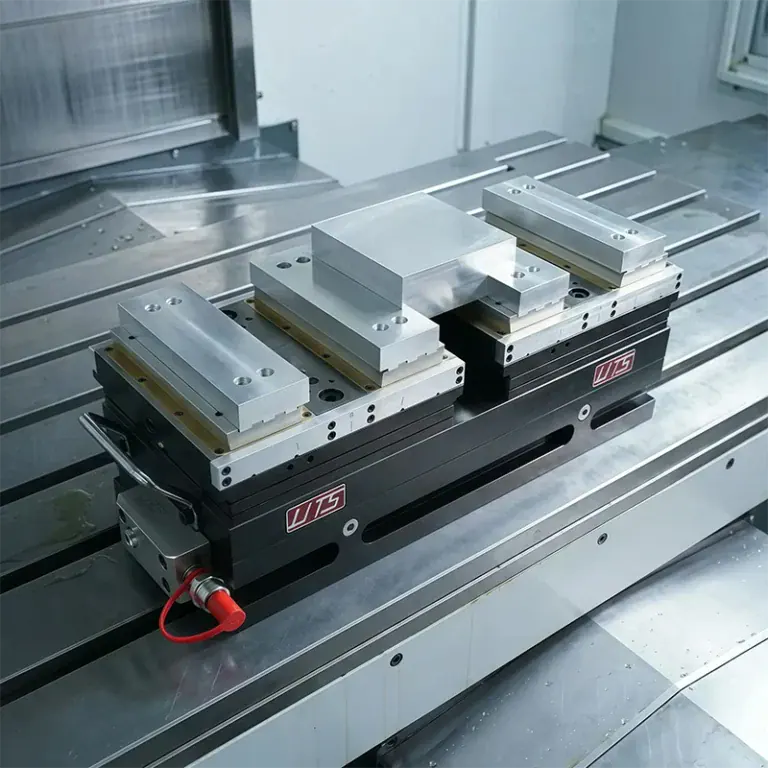
Appropriate chamfers, radii, wall thicknesses, and hole configurations can make components easier to manufacture. For rotational components, unnecessary geometric complexity should be minimized so that cutting tools can maintain efficient machining paths. For parts requiring both turning and milling operations, a mill-turn or multi-axis machining solution may reduce repeated setups and process transfers.
Reduce Unit Cost Through Production Volume
During volume production, fixed costs such as programming, workholding preparation, and process setup can be distributed across a larger number of components, making the unit manufacturing cost more competitive. Companies with stable recurring demand can provide quarterly or annual purchasing forecasts so suppliers can prepare materials and production capacity in advance, helping achieve more predictable lead times and cost control.
For companies sourcing custom precision CNC turning, the lowest quotation is not always the most valuable choice. Component quality, engineering support, delivery capability, and long-term supply stability should all be considered when selecting a manufacturing partner. Providing complete drawings, material specifications, quantities, tolerances, surface treatments, and delivery requirements during the quotation stage can improve pricing accuracy, reduce communication time, and make subsequent production more efficient. TiRapid provides precision CNC turning, DFM engineering support, a broad range of metal and engineering plastic materials, and manufacturing capabilities from prototypes through production, making it a potential sourcing option for companies requiring custom precision turned components.