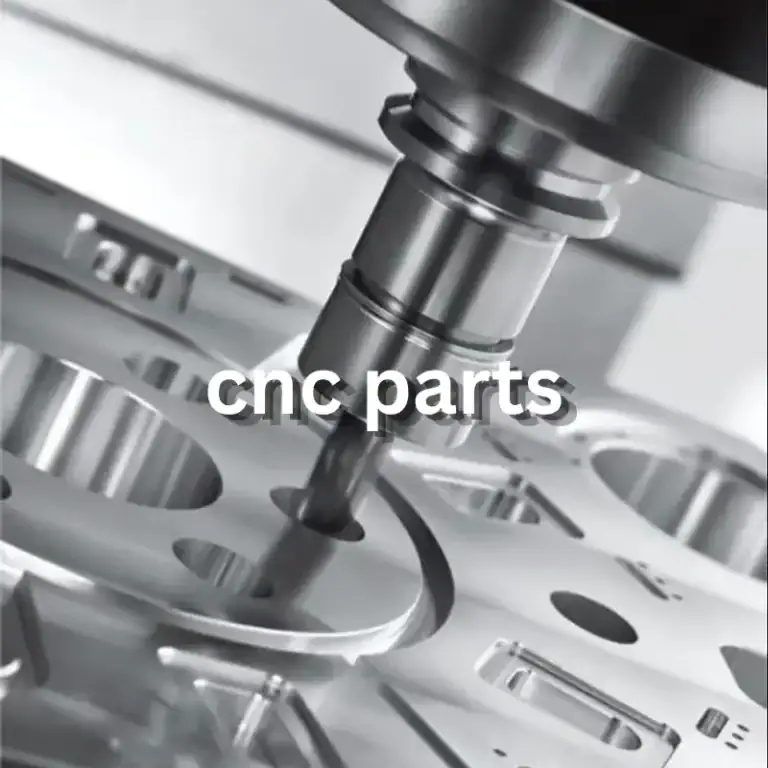
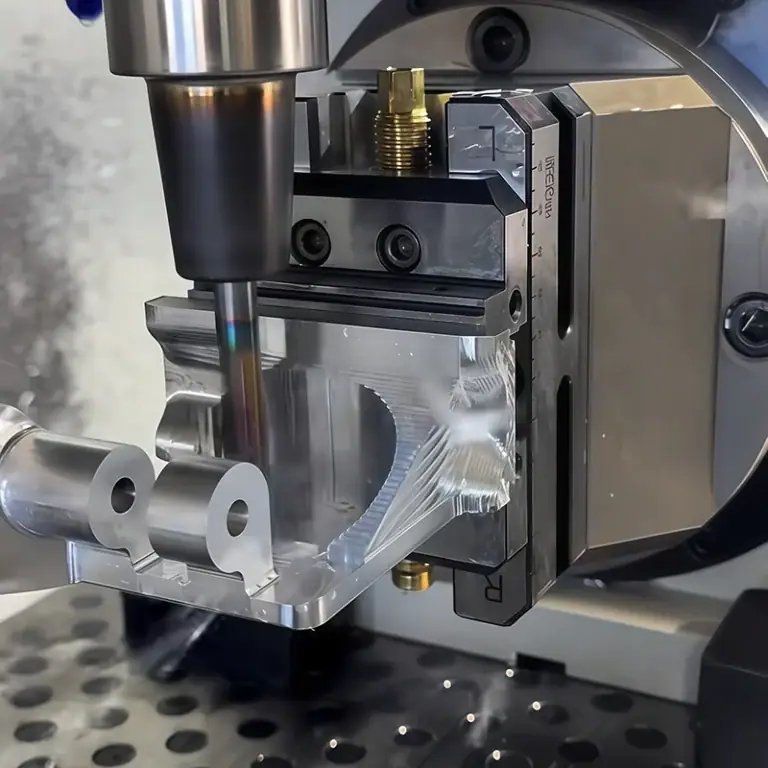
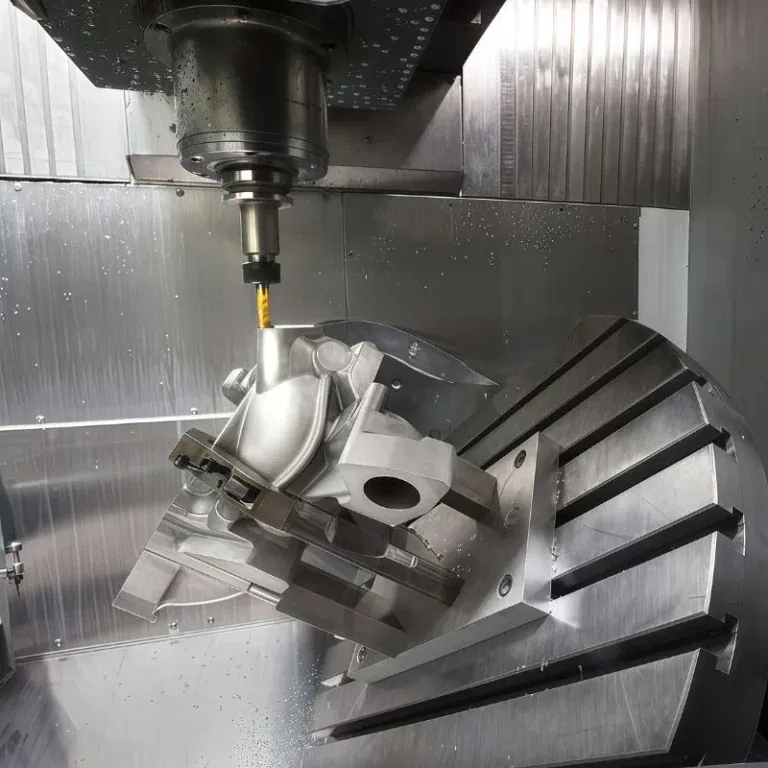
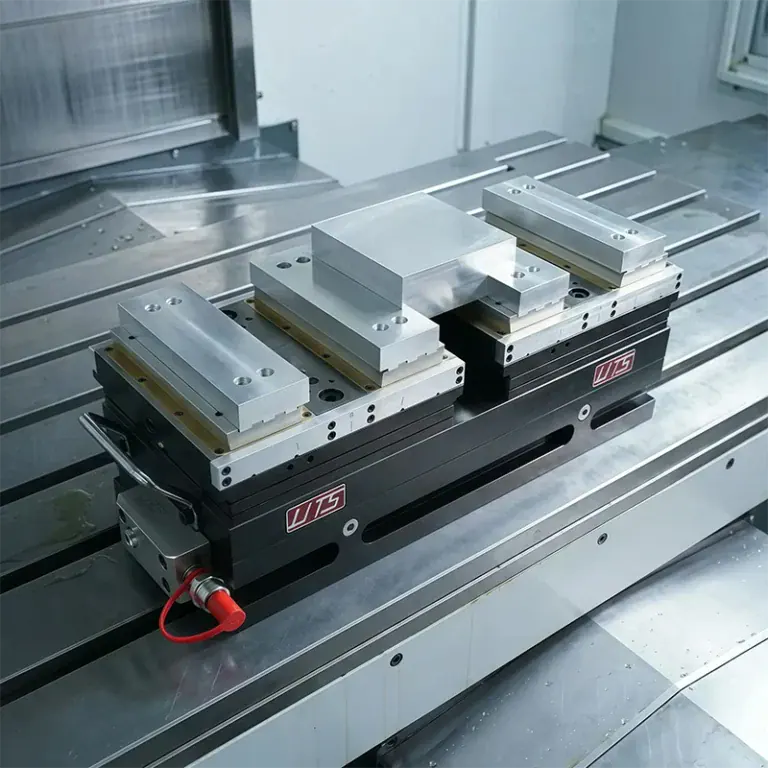
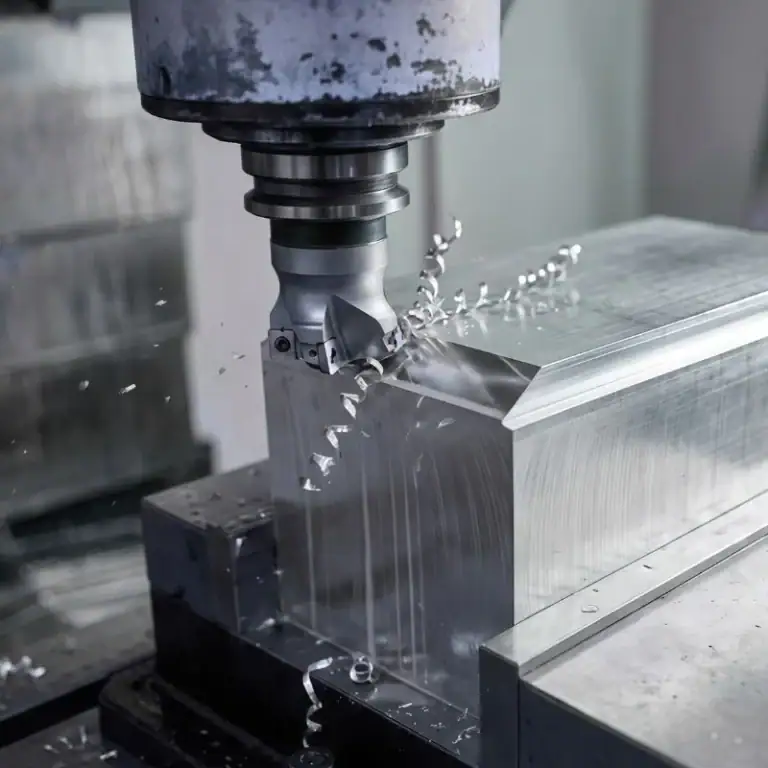
In precision manufacturing systems, the accuracy of turning machining directly affects component assembly quality and equipment stability. With continuously increasing manufacturing demands, traditional manual experience-based machining can no longer meet requirements for high consistency and high production rhythm. High-precision automated turning integrates CNC systems, servo control technology, and intelligent inspection systems to ensure stable and continuous machining, thereby improving dimensional accuracy, surface quality, and production efficiency.
The machining process shifts from operator-dependent judgment to a combination of program instructions and real-time feedback control. Key parameters such as tool path, spindle speed, and feed rate remain fully controllable. At the same time, error compensation and condition monitoring mechanisms enhance stability and repeatability, significantly improving consistency in batch production.
Role of CNC Systems in High-Precision Turning Control
The CNC system is the core foundation for achieving automated and high-precision turning. Through program-based control, machining paths and process parameters are centrally managed, enabling stable machine execution. During operation, the system continuously coordinates mechanical components to maintain consistent rhythm, reduce deviation caused by human intervention, and decompose and optimize complex tool paths.
In practical operation, the CNC system is responsible not only for instruction execution but also for process logic management, ensuring smooth transitions between roughing and finishing stages, forming a continuous and stable machining chain while reducing repeated positioning errors and accumulated deviations.
Tool Path and Motion Control Logic
The CNC system defines tool motion trajectories through a coordinate-based model, ensuring high repeatability and consistency while maintaining stable control in complex contour machining.
- Tool paths are generated based on a 3D coordinate system to ensure precision
- Spindle and feed axes operate synchronously for multi-axis control
- Segment interpolation reduces trajectory accumulation errors
- Automatic compensation for mechanical backlash and deviation
- Path smoothing optimization for complex surface machining
Stable path control ensures consistent machining execution and prevents error amplification in complex geometries, providing a solid foundation for high-precision output.
Parameter Standardization and Execution Consistency
Machining parameters are defined through unified programming, ensuring consistent standards across batches while enabling fast switching between materials and working conditions.
- Unified settings for spindle speed, feed rate, and cutting depth
- Automatic parameter templates for multi-process workflows
- Material database supports automatic parameter matching
- Process version control ensures batch consistency
- Parameter locking prevents human-induced deviations
Standardized parameter systems improve machining stability and ensure higher consistency in mass production while reducing human-induced variation.
Servo Drive and Error Control Mechanism
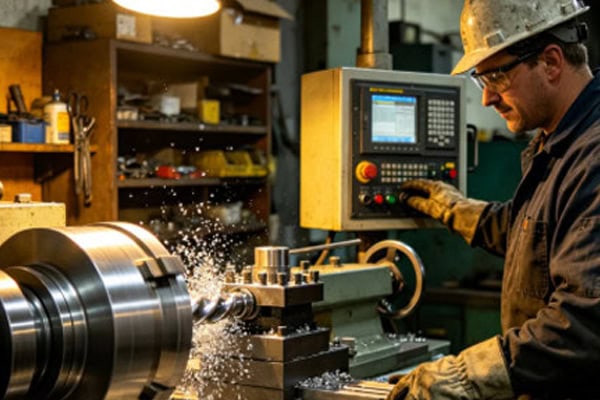
Servo systems play a dynamic adjustment role in high-precision turning. Through real-time monitoring and feedback correction, machining errors are continuously minimized, ensuring stable machine operation. This mechanism effectively suppresses vibration, thermal deformation, and load fluctuations, improving dimensional accuracy and surface quality.
Servo control systems not only execute motion commands but also continuously correct execution results, ensuring that theoretical and actual tool paths converge over time, reducing cumulative error.
Real-Time Error Compensation Mechanism
The system detects machining deviations via sensors and encoders and performs dynamic correction during motion to continuously align actual tool paths with theoretical models.
- Real-time position deviation detection with closed-loop correction
- Thermal deformation compensation based on temperature changes
- Dynamic torque adjustment for load variations
- Vibration suppression of spindle system
- Multi-axis synchronization error correction
Real-time compensation minimizes error accumulation and maintains stable precision during long-duration machining.
Vibration Suppression and Stability Control
Servo optimization and structural rigidity work together to reduce machining vibration, improving surface quality and tool stability.
- Adaptive feed rate adjustment to reduce impact loads
- Dynamic spindle balancing for high-speed operation
- Cutting force prediction for optimized load distribution
- Tool path optimization to reduce intermittent impact
- Structural damping design to suppress resonance
Vibration control improves both surface quality and overall machining stability.
Automated Tool Management and Machining Stability Improvement
Tool condition directly affects machining accuracy and efficiency. Automated systems use monitoring and intelligent replacement mechanisms to ensure continuous stable machining and prevent quality degradation caused by tool wear.
Tool management systems combine load data and usage time models to predict tool condition, enabling proactive intervention and preventing unexpected failures that could interrupt production.
Tool Life Monitoring System
The system continuously collects tool usage data, evaluates wear conditions, and builds predictive life models for dynamic management.
- Monitoring tool wear trend curves
- Tool life prediction modeling
- Load-based life estimation adjustment
- Automatic warning and replacement triggering
- Prevention of sudden tool breakage
Automated tool management ensures machining continuity and significantly reduces precision fluctuations caused by tool degradation.
Multi-Tool Turret Coordination Mechanism
Multi-tool structures enable seamless switching between machining stages, allowing roughing and finishing processes to be continuously connected.
- Automatic tool switching reduces downtime
- Separate tool configuration for roughing and finishing
- Continuous process linkage reduces repositioning errors
- Process scheduling optimization improves rhythm
- Reduced human adjustment errors
Coordinated tool systems improve efficiency while maintaining long-term machining precision stability.
Digital Inspection and Intelligent Control Technology
Digital systems optimize machining in real time through data acquisition and intelligent analysis, enabling automatic adjustment of machine states to improve precision and consistency.
By shifting from experience-based control to data-driven decision-making, machining accuracy becomes more stable and controllable.
Data Acquisition and Process Feedback
Sensors collect machining data and feed it back to the control system for dynamic adjustment and closed-loop control.
- Temperature and thermal deformation monitoring
- Vibration frequency and stability tracking
- Real-time spindle load acquisition
- Automatic parameter deviation correction
- Multi-dimensional data fusion analysis
Data-driven control improves machining stability and precision consistency, making processes more controllable.
Intelligent Path Optimization and Predictive Control
Algorithms optimize tool paths and machining strategies to improve efficiency and precision while reducing risk.
- Tool path optimization reduces idle movement
- Adaptive feed control improves efficiency
- Predictive anomaly detection enables early adjustment
- Vibration suppression optimizes cutting process
- Adaptive strategy tuning for different materials
Intelligent algorithms enhance machining efficiency while strengthening precision control.
Performance of High-Precision Automated Turning
High-precision automated turning is widely used in automotive components, aerospace structures, and precision mechanical manufacturing. In mass production environments, it ensures stable dimensional output and reduces variation caused by human intervention. In complex part machining, multi-system coordination improves consistency and reliability, resulting in stable production rhythm and higher product yield.
Over long-term operation, the system continuously optimizes machining strategies through accumulated data, maintaining stable performance across varying conditions and further improving overall manufacturing capability and productivity.