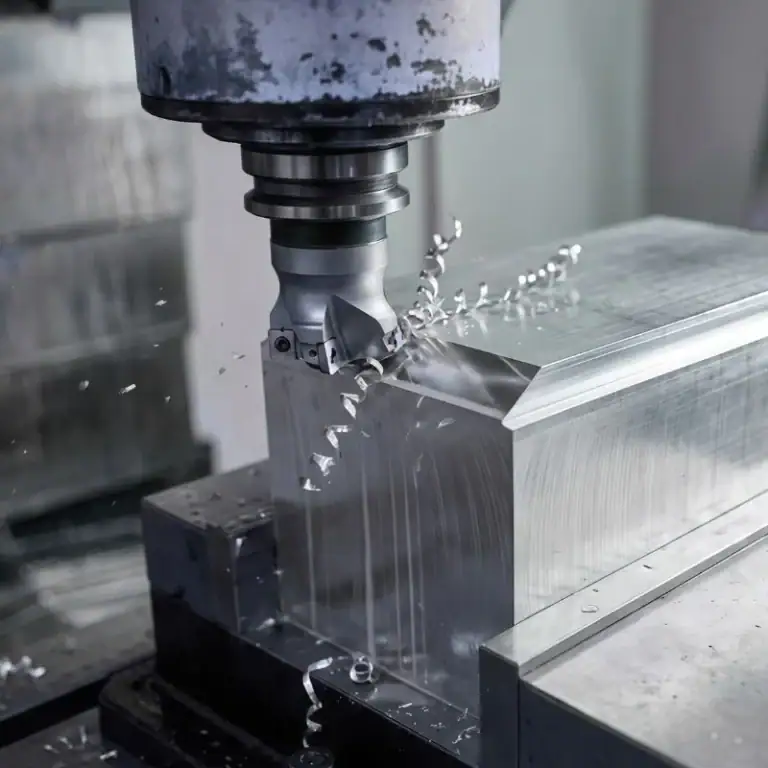
Surface roughness in turning operations directly affects assembly accuracy, friction performance, and fatigue life of components. The key factors influencing roughness come from the combined effects of cutting parameters and machining conditions. During CNC turning, cutting speed, feed rate, depth of cut, and tool wear jointly determine the stress state and material deformation behavior in the cutting zone. Under the action of tool compression and shearing, metal undergoes plastic flow, and different parameter combinations change chip formation patterns and fracture behavior, leaving different microscopic surface textures on the workpiece.
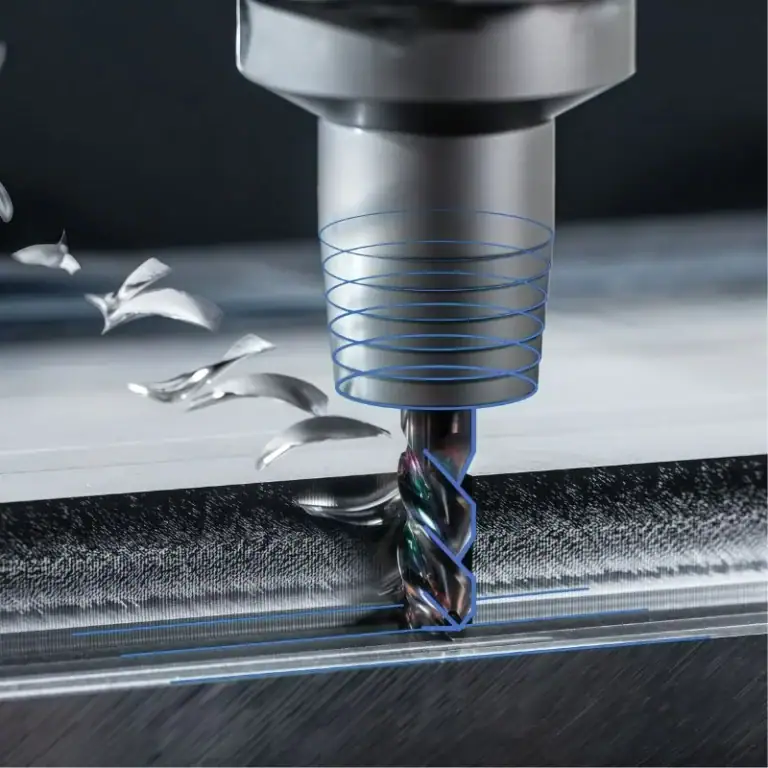
Surface roughness is essentially a visible result of cutting stability. When the cutting process is stable, vibration is low, and heat distribution is uniform, the surface exhibits fine and regular texture structures. When the process fluctuates, surface defects such as waviness, tearing marks, or local smearing are more likely to appear. Therefore, parameter control is not only a geometric issue but also a dynamic stability control problem.
Influence of Cutting Speed on Surface Quality
Cutting speed determines the relative motion state between tool and workpiece and significantly affects cutting temperature, material softening behavior, and chip formation. At different speed ranges, metal flow behavior changes noticeably, altering the surface formation mechanism. Cutting speed also influences tool wear patterns: at high speed, wear is mainly diffusion and oxidation wear, while at low speed, adhesion wear is more common. These wear forms indirectly affect surface roughness.
Surface Changes at High Cutting Speed
At higher cutting speeds, material shear deformation time is shortened, chips are more likely to form continuously, and the cutting process becomes smoother with reduced vibration tendency. As a result, surface quality is usually improved. Meanwhile, cutting heat is mostly carried away by chips, reducing thermal impact on the workpiece surface. However, if the speed exceeds a reasonable range, tool temperature rises sharply, accelerating wear and causing fluctuations in surface quality.
Typical characteristics include:
- Finer and more uniform surface texture
- Improved continuity of cutting marks
- Reduced plastic deformation on the surface
- Lower vibration during machining
- Increased heat concentration in the cutting zone
High-speed machining requires stable cooling and lubrication; otherwise, surface discoloration or local burning may occur.
Surface Characteristics at Low Cutting Speed
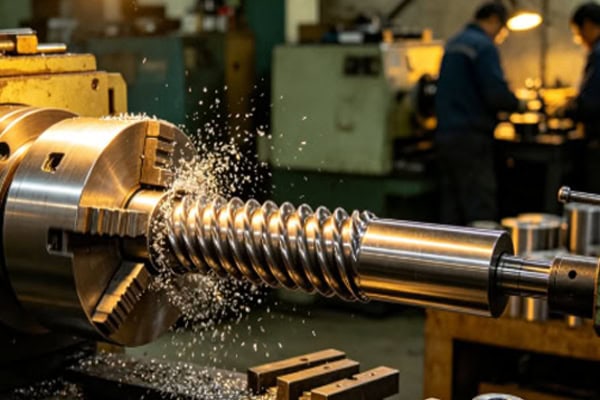
At low cutting speeds, the material remains in contact with the tool longer, leading to more complete plastic deformation but larger fluctuations in cutting force. This often results in irregular tool marks. Chips are also more likely to accumulate and scratch the machined surface, increasing roughness. Built-up edge formation is more common at low speeds, which can create periodic surface protrusions.
Direct Effect of Feed Rate on Surface Texture
Feed rate determines the spacing of tool paths on the workpiece surface and is one of the most direct geometric factors affecting surface roughness. A higher feed rate increases the distance between cutting marks, resulting in higher roughness values. Feed rate also affects cutting force magnitude and system rigidity load, indirectly influencing vibration behavior.
Fine Surface from Low Feed Rate
At low feed rates, tool movement per revolution is shorter, resulting in denser surface texture and smoother finish. This condition is suitable for precision machining and tight-tolerance parts.
Typical results include:
- Lower surface peak-to-valley height
- Reduced tool path spacing
- Improved contact consistency
- Lower friction resistance
- Higher dimensional consistency
However, excessively low feed rates may cause rubbing between tool and surface, increasing local heat generation and reducing surface quality.
Surface Effects of High Feed Rate
A higher feed rate increases cutting load and enlarges tool mark spacing, forming clear but rough surface patterns. It is suitable for rough machining where efficiency is prioritized but not for high-precision surfaces.
Influence of Depth of Cut on Stability
Depth of cut determines the thickness and width of material engaged by the tool, directly affecting cutting force and machine rigidity requirements. As depth increases, cutting force rises significantly and system rigidity demand increases. If machine rigidity is insufficient, vibration may occur, leading to surface waviness.
Depth of cut also affects chip thickness and heat distribution, changing process stability. Large depths are suitable for rapid material removal, while small depths are preferred for stable surface quality and dimensional control.
Hidden Influence of Tool Condition on Surface Roughness
Tool wear is a critical hidden factor affecting surface quality. Even with correct parameters, severe tool wear can degrade surface finish. Wear on the rake face increases friction and heat, while flank wear changes effective cutting geometry, leading to unstable cutting conditions.
As wear progresses, surface quality typically shows:
- Increased roughness
- Visible tearing marks
- Dimensional variation
- Abnormal cutting sound
In mass production, tool condition monitoring is essential for maintaining stable surface quality.
Amplifying Effect of Vibration on Surface Roughness
Vibration is one of the main causes of poor surface quality. It disrupts stable contact between tool and workpiece, causing deviations in cutting paths and forming waviness patterns. Vibration sources may include insufficient machine rigidity, poor clamping, or mismatched cutting parameters.
Surface Behavior Under Stable Cutting Conditions
Under stable conditions, tool paths are continuous and uniform, producing consistent texture and low roughness variation, suitable for precision surfaces.
Surface Characteristics Under Vibration
Under vibration, periodic waviness or irregular patterns appear on the surface, significantly increasing roughness and affecting assembly accuracy.
Differences in Parameter Sensitivity Across Materials
Different materials respond differently to parameter changes due to variations in hardness, thermal conductivity, and microstructure. Aluminum alloys are more sensitive to cutting speed, stainless steel is more sensitive to feed rate, and hardened steels are more sensitive to depth of cut. Grain structure and work hardening behavior also influence cutting stability and surface formation. Therefore, parameter optimization must be material-specific to achieve consistent surface quality.
Overall Effect of Parameter Interaction on Surface Quality
Surface quality in turning is not determined by a single parameter but by the combined interaction of multiple factors. When cutting speed, feed rate, depth of cut, and tool condition are properly matched, the cutting process becomes stable, chip formation becomes regular, vibration decreases, and surface texture becomes consistent. In high-precision manufacturing, this multi-parameter coordination directly determines part consistency and production quality stability.