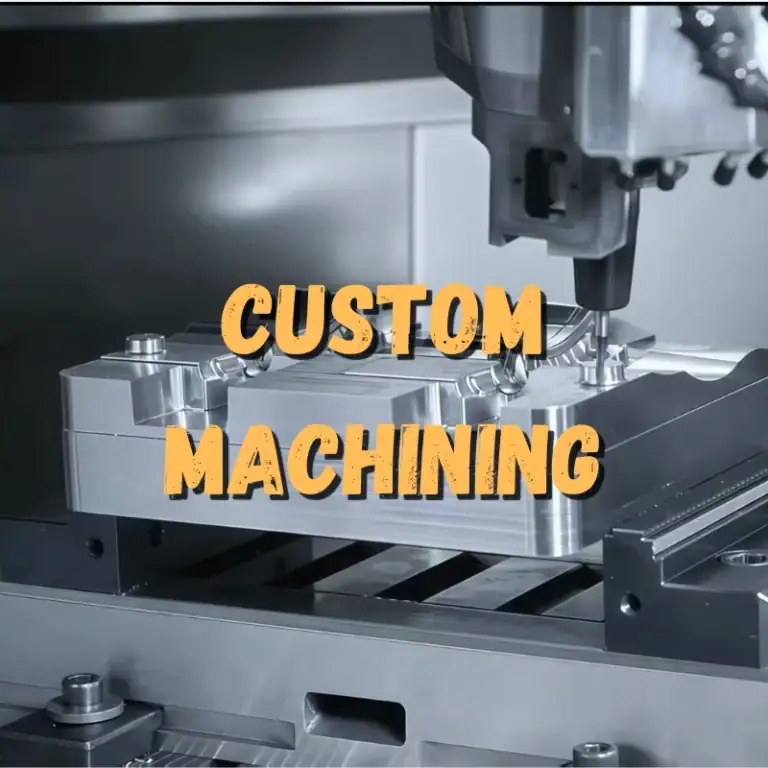
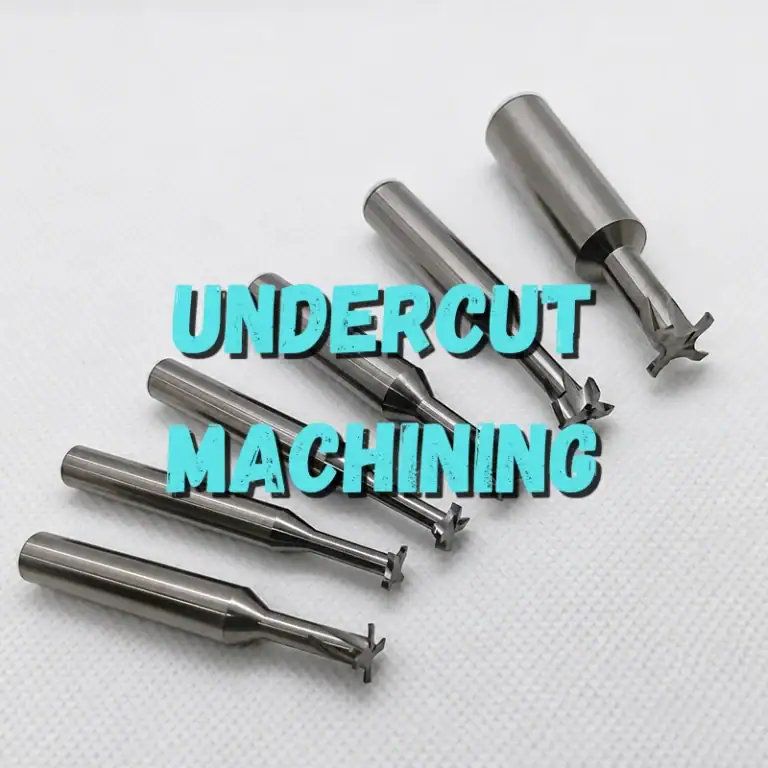
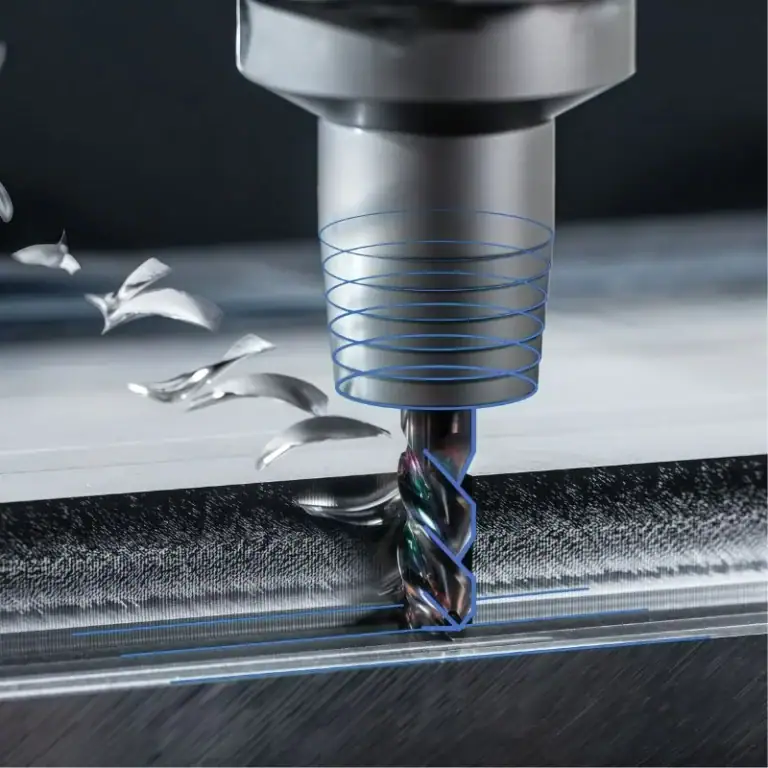
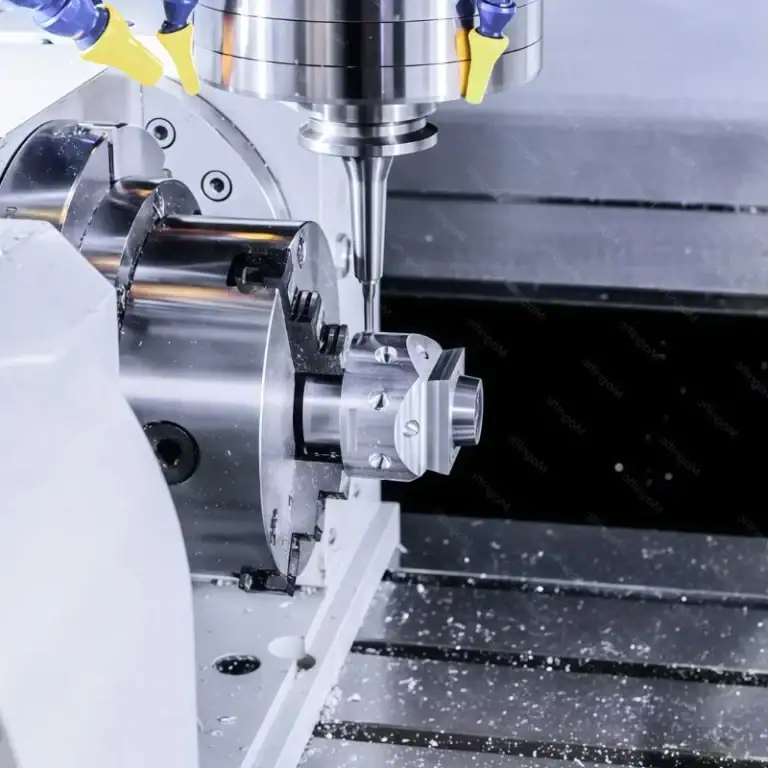
What frustrates customers most in mold processing is often not how complex the part itself is, but rather repeated delivery delays, frequent rework, and rising costs. For injection molds, die-casting molds, and stamping molds, low efficiency means longer project cycles, which affects both sample validation and mass delivery. To truly improve efficiency, you cannot just focus on machine spindle speed. Instead, you need to optimize the process, tooling, parameters, fixtures, and management methods together, so that CNC milling can use every minute for effective machining while still ensuring precision. Only by connecting upfront planning, process control, and post-process management can mold processing efficiency be improved in a truly stable way.
Get the Machining Route Right
Improving mold efficiency does not mean blindly increasing speed; it requires first clearly defining the machining sequence and path. A well-designed route ensures smoother subsequent cutting, inspection, and adjustments, while also reducing unnecessary delays and rework.
Separate Roughing and Finishing
If roughing and finishing are mixed together, it is easy to get unstable tool load, fluctuating surface quality, and repeated cutting problems. This becomes especially obvious when the mold cavity is deep and the stock allowance is large.
- In the roughing stage, focus on removing large amounts of stock quickly and forming the basic contour so that later processes have a clear machining reference.
- In the finishing stage, only handle critical dimensions and surface quality, avoiding repeated cutting and unnecessary trimming so that time is concentrated on the areas that truly affect final quality.
- After separating the stages, tool load becomes more stable, machine operation becomes smoother, and the probability of rework drops significantly.
Breaking the process into clear stages often improves overall efficiency more than blindly increasing speed, because it allows each operation to be completed under the most suitable conditions and reduces ineffective machining and later corrections from the source.
Optimize Toolpaths to Reduce Air Cutting
A large portion of mold machining time is not spent on cutting, but on lifting, retracting, and air moves. These seemingly minor actions can add up and significantly extend the total machining cycle.
- Use CAM software to optimize the path, reducing tool lifts, returns, and air moves so the tool follows a shorter and smoother route.
- Keep the tool moving continuously in effective cutting areas as much as possible, reducing time loss caused by frequent stops and repeated positioning.
- For deep cavities and complex surfaces, prioritize smoother path planning to avoid repeated back-and-forth movement in narrow areas.
The more reasonable the toolpath, the less time CNC milling wastes, and the higher the efficiency. It also reduces wear caused by unnecessary machine motion, making the machining rhythm more stable and easier to control.
Start with the Difficult Areas to Reduce Later Corrections
In mold processing, if critical areas are left until later, any deviation in earlier steps may affect the entire part, or even the delivery schedule of the whole mold set.
- Machine critical cavities, deep grooves, and high-precision areas first to confirm early whether the core structure meets design requirements.
- Then process the outer shape, chamfers, and non-critical surfaces, focusing effort on the parts most likely to affect function and assembly.
- This allows problems to be discovered early, avoids full-part rework later, and reduces chain corrections caused by local errors.
A reasonable machining sequence can control risks at the earliest stage, allowing problems to be found and handled before they spread, thereby significantly reducing the overall time loss of the mold project.
Tooling and Parameters Must Match the Mold Material
Mold materials are hard and structures are complex. If the tooling and parameters are not selected correctly, even high speed will easily cause problems. Only when tooling, material, and parameters are matched can CNC milling truly accelerate stably and maintain consistency during long machining cycles.
Choosing the Right Tool Matters More Than Choosing the Most Expensive One
Many customers tend to look only at price or brand when selecting tools, but what matters more is whether the tool is suitable for the current material and structure. A properly selected tool often improves efficiency more than simply buying a more expensive one.
- Choose different tool materials for steel, aluminum, and copper, because each material has different cutting resistance, chip evacuation characteristics, and heat accumulation behavior.
- For deep cavity machining, prioritize tools with strong chip evacuation capability to prevent chip buildup at the bottom of the groove from affecting surface quality and tool life.
- High-hardness mold materials are better suited to wear-resistant coated tools, which can reduce wear speed and extend continuous machining time.
When the tool is chosen correctly, cutting becomes smoother and surface quality is easier to achieve in one pass. It also reduces downtime caused by frequent tool changes, making the entire machining process more continuous.
Parameter Settings Must Balance Speed and Stability
Aggressive parameters can cause chatter and tool breakage, while overly conservative parameters slow down the cycle. Real efficiency comes from balance. Mold processing is not about pursuing speed alone, but about maximizing effective cutting efficiency under stable conditions.
- Spindle speed, feed rate, and cutting depth should be adjusted according to the material. Different mold steels and different tool diameters require corresponding parameter combinations.
- Overly aggressive parameters can easily cause chatter, tool breakage, or even tool failure and workpiece scrap, which increases rework costs.
- Overly conservative parameters slow down the cycle, reduce machine utilization, and extend delivery time.
True efficient CNC milling is not the fastest, but the fastest that remains stable, because only a stable machining process can continuously deliver consistent efficiency and quality in long-cycle projects.
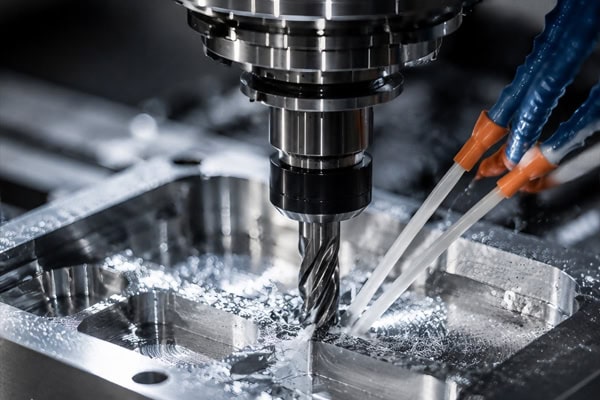
Cooling and Chip Removal Cannot Be Ignored
In mold processing, if chips and heat are not handled properly, they will directly affect tool life and machining accuracy, and may even make otherwise reasonable parameters ineffective.
- Chip buildup in mold processing directly affects surface finish and dimensions, especially in deep cavities, narrow grooves, and complex curved surfaces.
- Coolant must remove heat in time to reduce thermal deformation and prevent dimensional drift during machining.
- When chip evacuation is poor, tool wear accelerates significantly and cutting resistance rises, ultimately affecting machining rhythm and part consistency.
When cooling and chip removal are handled well, tool life and machining efficiency become more stable, and hidden rework caused by thermal deformation and chip adhesion can also be reduced, making the machining result more controllable.
Machine Rigidity and Fixture Design Set the Upper Limit
No matter how good the process is, if the machine and fixture are unstable, it is difficult to truly achieve high efficiency. The machine and fixture are the foundation of mold processing efficiency. Only when the foundation is stable does efficiency have room to improve, and only then do higher-parameter machining strategies make sense.
High-Rigidity Machines Are Better Suited for Mold Processing
Molds often involve deep cavities, long tool overhangs, and heavy cutting, which place high demands on machine rigidity. If the machine lacks rigidity, many efficiency-improvement methods cannot be implemented effectively.
- Mold processing often involves deep cavities, long tool overhangs, and heavy cutting, so machine rigidity requirements are high, especially in high-precision cavity machining.
- Insufficient rigidity causes vibration, which affects surface quality and dimensional accuracy, and also accelerates tool wear.
- A stable machine can support higher parameters, reduce adjustment downtime, and make the machining process more continuous.
The more stable the machine is, the easier it is for CNC milling to maintain continuous high efficiency, because it can withstand higher loads, run for longer periods, and keep machining errors within a smaller range.
Fixture Design Should Minimize Interference
If the fixture is poorly designed, it will not only occupy machining space, but also increase the number of clamping operations and positioning errors, and even restrict the tool from entering certain critical areas.
- Fixtures should not occupy too much effective machining area, otherwise toolpaths and machinable range will be affected.
- Try to complete more-sided machining in one setup so that repeated positioning and multiple disassemblies can be reduced.
- The clamping method should balance stability and accessibility, ensuring the workpiece does not loosen while allowing the tool to enter the machining area smoothly.
A well-designed fixture reduces repeated clamping and positioning errors, and also allows the tool to enter critical areas more freely, so more time is truly spent on effective cutting.
Automatic Tool Change and In-Process Measurement Improve Continuity
Mold processing usually involves many operations and frequent tool changes. Automation can significantly reduce waiting time and lower fluctuations caused by manual operation.
- Automatic tool change reduces manual waiting time, allowing the machine to switch quickly between operations and maintain a higher uptime rate.
- In-process measurement can detect deviations in time, preventing dimensional drift from accumulating until later operations before being discovered, thereby reducing batch rework.
- For multi-operation molds, these functions can also significantly improve machining rhythm and bring the entire production process closer to continuous production.
The higher the level of automation, the more stable mold processing efficiency becomes, and the easier it is to achieve high-quality continuous production, because many steps that originally depended on manual judgment are turned into controllable, traceable, and repeatable processes.
Use Digital Methods to Reduce Rework and Trial-and-Error
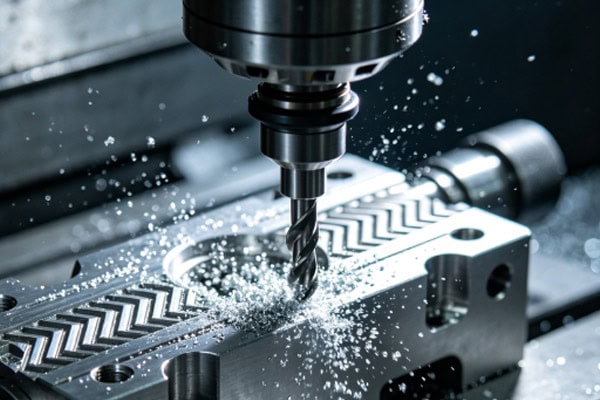
Low mold processing efficiency is often not because cutting is slow, but because too much time is spent on corrections. The value of digital methods is to detect problems as early as possible and minimize rework, making the process more controllable and stable.
Simulate Before Machining to Reduce Trial-and-Error Costs
The more complete the pre-machining simulation, the lower the risk during actual machining. For molds with complex structures and dense toolpaths, this step is especially important.
- Use machining simulation to detect interference and collisions in advance, preventing accidental contact between the tool, fixture, and workpiece.
- Check whether the toolpath has overcutting, missed cutting, or remaining stock issues; correcting the path in advance saves more time than on-site rework.
- Eliminating risks before formal machining can significantly reduce trial-and-error costs and material waste.
The more detailed the simulation, the less rework is needed later, because many problems that would otherwise appear on the shop floor are resolved in advance, making formal machining much closer to first-pass success.
Standardized Processes Make Efficiency More Stable
If mold processing starts from scratch every time, efficiency is hard to stabilize. Standardized processes allow experience to be replicated quickly and reduce differences between operators. By fixing parameter templates for common materials, mature solutions can be directly applied for similar materials, avoiding repeated trial-and-error. By fixing the machining sequence for common mold structures, time loss caused by temporary decisions can be reduced and the machining rhythm becomes more continuous. By fixing inspection checkpoints, human variation can also be reduced, allowing quality control and efficiency improvement to advance together. Standardization does not limit flexibility; it makes efficiency more repeatable, because it preserves mature experience, reduces repeated trial-and-error, and keeps every machining job closer to the optimal state.
Real-Time Monitoring Helps Correct Problems Promptly
If abnormalities can be detected during machining, small issues can be prevented from turning into large-scale losses, which is critical for mold project delivery control.
- Monitor tool wear, vibration, and spindle condition to understand whether the machine is operating within a stable range.
- Once an abnormality is detected, adjust parameters or replace the tool in time to prevent the problem from expanding further.
- Avoid letting small issues turn into large-scale scrap, and reduce later re-machining and repair time.
Correcting problems in time protects delivery schedules and costs better than fixing them afterward, because it keeps issues within the smallest possible scope and prevents them from affecting the production rhythm and final delivery of the entire mold set.
Conclusion
Improving mold processing efficiency cannot rely only on machine spindle speed or single-pass cutting speed. More importantly, it requires overall optimization from process planning and tooling configuration to production coordination, compressing every link into a more reasonable state. For companies that need both precision and delivery control, the advantage of CNC milling lies in making mold processing more stable, more efficient, and easier to replicate in batches. TiRapid can provide professional CNC milling support for mold projects, helping customers complete delivery faster.