Industrial robots are required to operate continuously on automated production lines, while components such as robot joints, connection flanges, shafts, reducer mounting parts, bases, guide components, and end-effector structures are exposed to repeated motion, mechanical loads, and continuous friction. Any dimensional deviation, abnormal assembly clearance, or deterioration in surface quality can affect robot positioning accuracy, motion stability, and service life. High-reliability robot component manufacturing requires the integration of precision CNC machining, material selection, structural requirements, workholding, and quality inspection to ensure stable compatibility between individual components and the complete robotic system. CNC turning, milling, drilling, boring, tapping, and precision surface machining can be used to manufacture robot metal components with different structures and specifications. These processes also support prototype production, small-batch customization, and volume manufacturing, providing dependable component solutions for industrial automation, smart manufacturing, assembly lines, and robotic equipment upgrades.
High-Reliability CNC Machining Technology for Robot Components
Robot components often require tight dimensional tolerances, particularly joint connectors, shafts, bearing housings, reducer mounting components, and end-effector interface parts. These components need stable control of hole positions, concentricity, flatness, and mating dimensions. Precision CNC machining uses digitally controlled tool paths to manufacture complex structures according to predefined machining processes. Aluminum alloys, alloy steels, stainless steels, and other materials can be processed with cutting tools and parameters selected according to their hardness, toughness, and thermal conductivity.
Reliable manufacturing also requires effective control of machining deformation, vibration, and heat accumulation. Proper workholding methods can reduce deformation in thin-wall components and long shafts, while multi-stage machining allows roughing and finishing operations to perform different functions. For critical mounting surfaces and mating bores, dedicated finishing operations and dimensional inspections can be arranged to improve consistency and ensure stable mechanical relationships after robot assembly.
Precision CNC Machining Processes for Robot Components
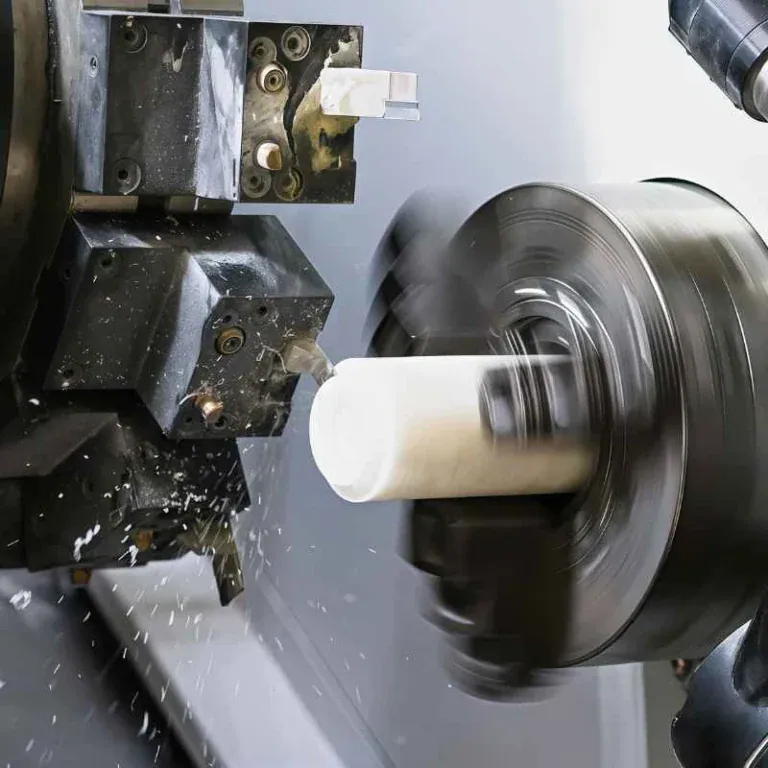
Robot components can be manufactured using CNC turning, milling, turn-mill machining, and three-axis or five-axis machining depending on their geometry. Shafts can be turned to produce external diameters, end faces, steps, and threads, while mounting bases and connection plates can be milled to create holes, grooves, and positioning surfaces. Complex curved structures can be manufactured efficiently with multi-axis machining.
The machining process should distinguish between roughing, semi-finishing, and finishing operations. Roughing removes excess material efficiently, semi-finishing stabilizes the component geometry, and finishing focuses on critical mating areas and dimensional tolerances. For robot components exposed to high loads and repeated movement, additional processes such as grinding, anodizing, coating, or heat treatment can be selected according to the application requirements to improve wear resistance and surface stability.
CNC Machining Workflow for High-Reliability Robot Components
Robot component reliability depends not only on machine accuracy but also on the stability of the entire manufacturing workflow. From engineering drawing verification to final inspection, dimensional data and technical requirements need to remain consistent throughout production. For critical components used in robot joints and transmission systems, it is important to control not only individual dimensions but also the relationships between multiple mating surfaces and positioning features.
- Technical document verification: Check 2D engineering drawings, 3D models, material grades, dimensional tolerances, surface roughness, and special processing requirements.
- Material preparation: Select aluminum alloy, alloy steel, stainless steel, or other engineering materials according to the component’s load and operating environment.
- Process planning: Establish the sequence of turning, milling, drilling, boring, tapping, and finishing operations.
- CNC programming: Create machining programs with CAM software and simulate tool paths before production.
- Precision workholding: Select suitable fixtures according to the component datum structure to reduce movement and deformation during machining.
- CNC machining: Manufacture major profiles, holes, mounting surfaces, and mating structures according to the approved process.
- Dimensional inspection: Use micrometers, bore gauges, height gauges, thread gauges, and coordinate measuring machines to verify critical dimensions.
- Surface and final treatment: Perform deburring, cleaning, surface treatment, corrosion protection, and packaging according to application requirements.
A complete manufacturing workflow helps reduce manual errors and maintain dimensional consistency across different production batches of robot components.
Common Materials and Performance of Robot Components
Material selection for robot components should consider weight, strength, rigidity, wear resistance, and operating conditions. Lightweight materials can reduce moving inertia in high-speed robotic structures, while high-strength materials can provide better structural support for joints and load-bearing components.
| Material | Machining Characteristics | Common Robot Components | Main Performance |
| Aluminum Alloy | Low cutting resistance and suitable for high-speed machining | Arm connectors, mounting bases, housings | Lightweight, high strength, good heat dissipation |
| Alloy Steel | High strength and requires carefully controlled machining parameters | Shafts, joint components, transmission parts | High strength, fatigue resistance |
| Stainless Steel | Relatively high toughness and requires effective tool wear control | Connectors, actuator components | Corrosion resistance, durability |
| Tool Steel | High hardness and relatively difficult to machine | Wear-resistant structural parts | High hardness, wear resistance |
| Engineering Copper Alloy | Good thermal and electrical conductivity | Bushings, conductive connectors | Wear resistance, electrical conductivity |
Material selection needs to be properly matched with the machining process to maintain mechanical strength and operational stability while achieving an appropriate balance between structural weight and performance.
Applications, Functions, and Performance of Robot Component Manufacturing
High-reliability CNC robot components can be used in industrial robots, collaborative robots, automated assembly equipment, material-handling robots, welding robots, and intelligent production lines. Different systems have different requirements for load capacity, motion accuracy, and mounting configurations, making customized machining highly suitable for specific equipment structures. For newly developed robots, CNC machining can quickly produce prototypes that can be tested and modified. For robots already in service, replacement and upgraded components can be manufactured according to original drawings or physical dimensions.
Manufacturing quality directly affects robotic arm trajectories and end-effector positioning. Connection components need stable assembly accuracy, shafts require reliable rotational accuracy, mounting bases need sufficient structural support, and guide components must maintain dimensional stability during repeated movement. CNC machining enables manufacturers to develop specific processes according to the function of each component, helping robot parts achieve reliable performance during long-term automated operation.
Industrial Robot Joints and Transmission Components
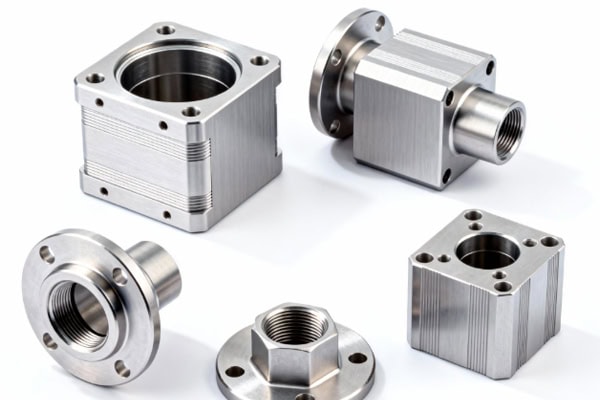
Robot joints are critical structures that enable robotic arms to rotate, swing, and position accurately. They commonly include shafts, bushings, mounting discs, bearing housings, and other transmission components. These components must maintain appropriate mating relationships; otherwise, excessive clearance, vibration, or positioning errors may occur during operation.
CNC turning is suitable for manufacturing robot shafts and sleeve-type components, while precision milling can produce mounting holes, positioning grooves, and complex interfaces. Robot joint housings also require accurate control of multiple mounting holes so that motors, reducers, and other mechanisms can be installed correctly. Precision machining helps improve the mechanical stability of robot joints during repeated movement.
Robot Mounting Bases and Connection Structures
Robot mounting bases and structural connection components provide fixation, support, and load transfer. Common components include bases, flange plates, connection plates, adapter mounts, and support blocks. These parts often contain multiple mounting and positioning holes, making hole-position accuracy critical to overall robot assembly.
For large industrial robots, high-strength alloy steel or aluminum alloys can be selected according to load requirements. For high-speed robotic equipment, lightweight structures can reduce moving loads and improve response. CNC machining can manufacture mounting structures according to specific equipment interfaces while controlling flatness, hole spacing, and positioning dimensions through precision milling.
Robot End Effectors and Functional Components
End effectors are the components that directly interact with workpieces. They include gripping mechanisms, vacuum handling structures, welding accessories, inspection mounting components, and specialized tooling. Since production lines handle workpieces with different dimensions and geometries, end-effector components are frequently customized.
CNC machining can manufacture fixture bodies, positioning blocks, guide components, connection plates, and mounting interfaces according to workpiece geometry. For automated production lines that frequently change tools, standardized interface structures can also be incorporated to improve tool replacement efficiency.
Functions and Performance Requirements of Robot Components
High-reliability robot components need to maintain stable performance under repeated movement and continuous mechanical loads. Different components perform different mechanical functions and therefore have different requirements for dimensional accuracy, rigidity, weight, and wear resistance. Precision CNC machining can provide the dimensional control needed to establish a reliable mechanical foundation for robotic systems.
| Component Type | Main Function | Key Performance Requirements | Common Machining Method |
| Robot Shaft | Transmit motion and loads | Concentricity, roundness, strength | CNC turning, grinding |
| Joint Housing | Mount and protect internal mechanisms | Hole-position accuracy, rigidity | CNC milling, drilling |
| Mounting Flange | Secure robotic mechanisms | Flatness, hole spacing | CNC milling |
| Connection Plate | Structural connection | Dimensional stability, strength | Milling, drilling |
| Bushing | Reduce movement friction | Inner/outer diameter accuracy, wear resistance | Turning, precision finishing |
| End-Effector Component | Position and grip workpieces | Profile accuracy, repeatability | Milling, drilling |
Combining appropriate materials, structural design, machining processes, and inspection procedures helps robot components maintain reliable mechanical performance during long-term repetitive operation.
High-Reliability Custom Robot Component Manufacturing and Quality Control
Robotic equipment has a strong degree of customization. Even the same robot platform may use different components depending on payload, working range, end tooling, and production environment. CNC custom machining can manufacture components according to customer drawings, 3D models, physical samples, or dimensional data and is suitable for individual parts, prototypes, small batches, and volume orders. For robot development companies, rapid CNC prototyping can shorten structural validation cycles. For automation equipment manufacturers, stable batch production can help reduce fluctuations in component supply.
High-reliability manufacturing also requires clear quality control standards. In addition to checking individual component dimensions, manufacturers need to verify mounting interfaces, critical holes, threads, surface roughness, and mating relationships between components. For parts exposed to continuous movement, wear-resistant treatments or surface strengthening processes can be added according to operating conditions to improve durability.
How CNC Machining Improves Robot Component Reliability
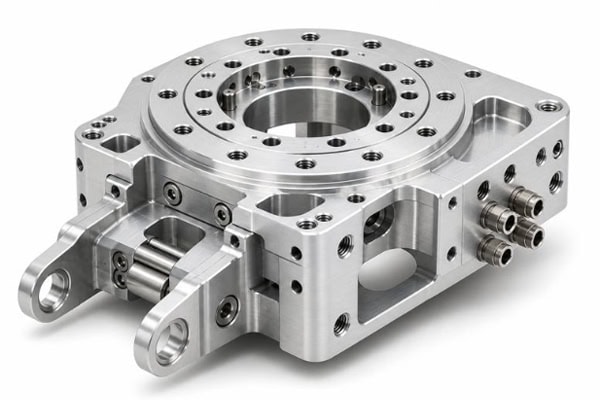
Robot component reliability is closely related to machining accuracy, material properties, structural stability, and inspection methods. During production, critical dimensions should have clearly defined tolerance requirements, while inspection frequency can be established according to component importance. Proper process planning can also reduce the effects of thermal deformation, tool wear, and workholding errors on final component quality.
- Control critical dimensions: Establish clear tolerances for shaft diameters, bore diameters, hole spacing, threads, and mounting surfaces.
- Reduce machining deformation: Select appropriate workholding methods and machining sequences according to component geometry.
- Improve surface quality: Use suitable cutting tools, machining parameters, and finishing operations to reduce surface defects.
- Increase assembly accuracy: Carefully inspect positioning holes, bearing seats, and interface structures.
- Strengthen in-process inspection: Perform dimensional checks after critical operations to identify deviations at an early stage.
- Optimize post-processing: Select anodizing, coating, heat treatment, or corrosion protection according to the actual operating environment.
A stable quality control system can reduce the likelihood of abnormal wear, loosening, and mating failure during robot operation, providing more dependable mechanical support for continuous production.
Small-Batch Custom Manufacturing Method for Robot Components
Robot development projects frequently require small quantities of prototype components for assembly and functional testing. Traditional mass-production methods may involve high tooling costs and long modification cycles. CNC machining does not require dedicated molds for every component geometry and can directly use digital engineering data to create machining programs, making it suitable for robot development, structural verification, and product upgrades.
During customization, customers can provide 2D engineering drawings or 3D CAD models together with material specifications, quantities, tolerances, surface treatment requirements, and special inspection criteria. After machining, inspection data can be used to verify whether the components meet design requirements. If structural modifications are needed after prototype testing, the digital model and machining program can be updated without creating a new mold, helping shorten the product iteration cycle.
Quality Inspection for High-Reliability Robot Components
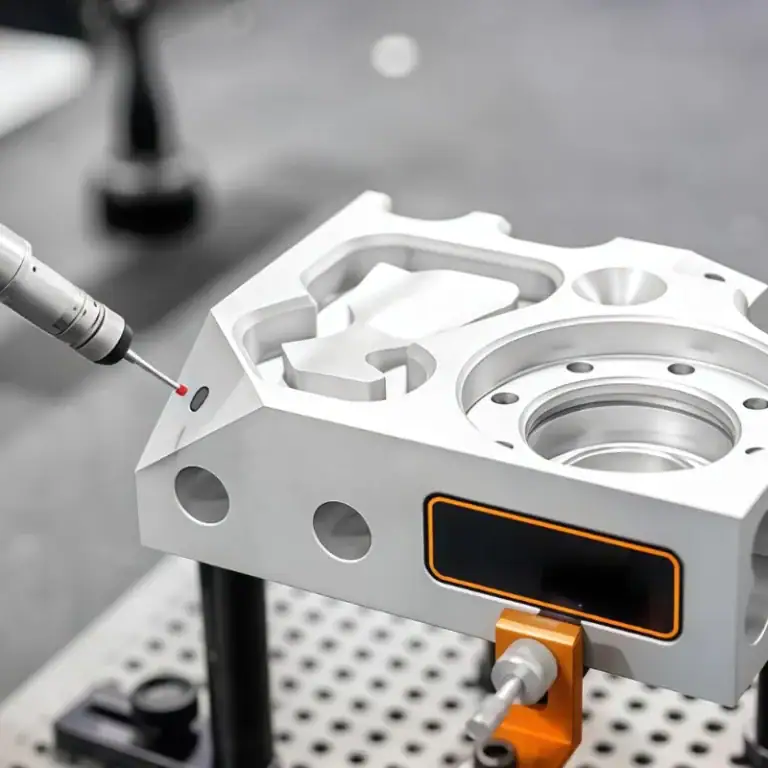
Quality inspection is an essential part of reliable robot component manufacturing. Standard dimensions can be checked using calipers and micrometers, while critical hole positions, complex profiles, and spatial relationships can be verified using coordinate measuring machines. Threaded structures can be checked with appropriate thread gauges to confirm dimensional compatibility.
Inspection items may include dimensional tolerances, hole-position accuracy, concentricity, flatness, perpendicularity, surface roughness, and appearance quality. For volume production, critical inspection data can be recorded and compared across different batches to identify dimensional changes. Continuous quality records combined with process optimization help maintain consistent manufacturing quality for robot components.
High-reliability robot component manufacturing requires a stable production system covering materials, structural requirements, CNC processes, workholding, surface treatment, and quality inspection. Precision CNC machining can meet the customized manufacturing requirements of robot shafts, joint structures, mounting bases, flanges, connection components, and end-effector parts while balancing accuracy, strength, wear resistance, and production efficiency. For robot development, automation equipment manufacturing, and intelligent production line upgrades, reliable CNC components provide a solid mechanical foundation for long-term and stable robotic operation.