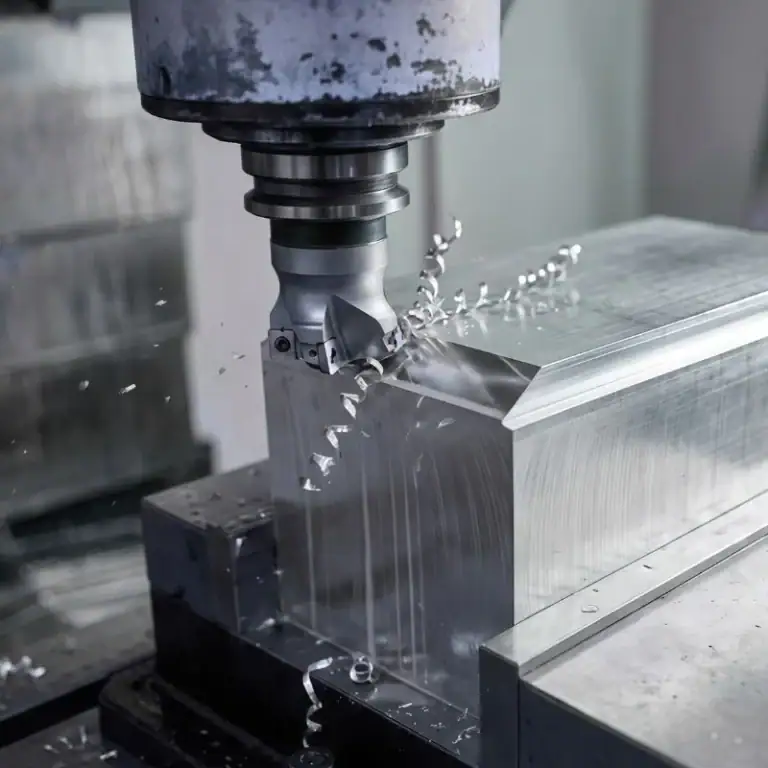
During the CNC plastic machining process, material properties directly affect machining quality, machining efficiency, and the final performance of the finished parts. Among these factors, plastic hardness is a very important one. Many people believe that plastics are softer than metals, so they should be easier to machine. However, the hardness differences between different plastics are quite significant. For example, materials such as POM, PA, PEEK, PC, and PVC behave completely differently during cutting. Hardness not only affects tool selection and cutting parameters but also influences surface quality, dimensional stability, and machining costs. Plastics that are too soft are prone to deformation, burrs, and dimensional deviations, while overly hard or reinforced plastics may increase tool wear and machining difficulty.
Why Does Plastic Hardness Affect CNC Machining Results?
Plastic hardness represents the material’s ability to resist external forces, deformation, scratches, and cutting actions. During CNC machining, the cutting tool continuously enters the material and removes unnecessary sections. Different hardness levels directly change cutting resistance, machining stability, and surface conditions. Therefore, understanding how hardness affects the machining process is an important foundation for developing a reasonable machining strategy.
Hardness Affects Cutting Process Stability
Different plastic hardness levels result in different cutting resistance when the tool is working. Softer plastics are easier to cut, but because the material is more likely to undergo elastic deformation, the material may rebound after the tool passes, causing differences between the actual dimensions and the designed dimensions.
For example:
- PE material has low hardness and is more likely to produce burrs during machining
- PP material has strong flexibility and requires control of clamping force
- POM has moderate hardness and provides better machining stability
For plastic parts with lower hardness, cutting speed and fixture pressure need to be controlled during machining to prevent deformation caused by compression. If cutting parameters are not set properly, problems such as oversized dimensions, edge collapse, or uneven surfaces may occur. On the other hand, high-hardness engineering plastics such as PEEK and PPS provide better dimensional stability but create greater cutting resistance. They require higher-performance tools and adjusted machining parameters. Therefore, material hardness directly affects the stability of the CNC machining process.
Hardness Affects Surface Machining Quality
When machining low-hardness plastics, the cutting tool may easily pull up the material, causing issues such as stringing, turned edges, and burrs. In some cases, the surface may even look as if it has been “wiped” and lacks a clean finish. Materials with higher hardness usually maintain smoother surfaces more easily, but if the material itself is brittle or the cutting method is inappropriate, problems such as edge chipping and cracks may still occur.
When plastic hardness is low:
- Stringing is more likely to occur
- Cutting edges are easier to curl or deform
- Surface scratches are more likely to appear
When plastic hardness is high:
- Surfaces are easier to keep smooth
- Dimensional control becomes more stable
- Machining textures become more uniform
For example, acrylic (PMMA) has an attractive surface appearance and relatively high hardness, but it is also brittle. If the cutting speed is too high or the tool is not sharp enough, edge chipping or even tiny cracks may appear. Another example is nylon (PA), which has certain toughness. During machining, chips can easily form long continuous strips and are not easy to break. If chip removal is poor, the surface can easily be scratched again. Therefore, achieving better-looking plastic parts cannot rely only on post-processing. The cutting method must also be adjusted according to material hardness so that the final machining effect becomes more stable and visually consistent.
Hardness Affects Tool Life
Whether a tool can be used for a long time is closely related to material hardness. Ordinary plastics generally do not cause severe tool wear, and cutting is relatively easy. However, once materials contain glass fibers, carbon fibers, or are high-hardness engineering plastics themselves, tool wear speed increases significantly. In many cases, the problem is not poor tool quality, but rather that the material itself is too “hard.” During cutting, it creates greater impact and friction on the cutting edge. Over time, the tool becomes dull, and surface quality declines accordingly.
For example:
- Ordinary POM machining has relatively low tool requirements
- FR4 fiberglass boards can easily wear cutting tools
- Carbon fiber reinforced plastics require highly wear-resistant tools
When machining high-hardness materials, conventional machining methods are no longer sufficient. Tool materials need to be more wear-resistant, cutting edge angles need to be more suitable, and cutting depth should be properly reduced. Otherwise, tools may easily overheat, chip, or become unusable. Especially in batch production, tool life directly affects production efficiency and costs. If a tool can only be used for a short period, frequent tool changes not only create inconvenience but also affect part consistency. Therefore, in practical machining, material hardness and tool performance must be properly matched. The goal is to avoid excessive tool load while maintaining machining quality, allowing both efficiency and cost to be effectively controlled.

What Are the Differences in CNC Machining Performance Between Plastics with Different Hardness Levels?
Different plastics have significant differences in hardness ranges, so their performance during CNC machining is also completely different. Some materials are soft and easy to cut but are prone to deformation; some materials are hard and provide better dimensional stability but are more difficult to machine. There are also materials with moderate hardness that may behave differently depending on factors such as humidity, temperature, or internal structure.
Characteristics of Soft Plastic Machining
Soft plastics are generally more flexible and easier to deform under pressure. Materials such as PE, PP, and soft PVC belong to this category. Their advantage is that they have low cutting resistance, allowing tools to enter the material more easily, and machining speeds can often be relatively high. However, the problems are also obvious. Because the material is too soft, it can easily be marked or deformed during clamping. During cutting, edges may become rough, and dimensional accuracy may become unstable due to material rebound.
Machining difficulties include:
- Easy deformation during clamping
- Significant dimensional recovery after machining
- Burrs are easily generated on cutting edges
For soft plastics, the following methods are usually required:
- Use sharp cutting tools
- Reduce clamping pressure
- Improve chip removal efficiency
- Control cutting depth
When machining these materials, the biggest concern is applying too much force. If the fixture pressure is too high, the part may deform before machining even begins. If the cutting depth is too large, edges may curl or deform. If chips cannot be removed smoothly, the surface may also be scratched by accumulated cutting debris. Therefore, machining soft plastics requires a more delicate approach. The cutting action should be lighter and cleaner, allowing the tool to cut through the material smoothly instead of forcing the material to deform through excessive pressure.
Characteristics of Medium-Hardness Plastic Machining
Materials such as POM, ABS, and PA are very common engineering plastics used in CNC machining. Their hardness is neither particularly high nor particularly low, making them relatively easy to process. This is why many manufacturers prefer these materials. The advantage of medium-hardness plastics is their balance. They are not as easily deformed as soft plastics, and they are not as difficult to cut as high-hardness materials. In many cases, as long as the machining parameters are properly set, both surface quality and dimensional accuracy can remain stable.
These materials usually provide:
- Stable cutting performance
- Easier dimensional control
- Better surface quality
For example, POM has excellent mechanical properties and low friction characteristics, making it commonly used for precision parts such as gears, bushings, and sliders. However, nylon (PA) can absorb moisture, so the material condition needs to be considered before machining; otherwise, the final dimensional accuracy may be affected.The wide application of these materials comes from their balance between machining performance and practical use. Medium-hardness plastics are often a reliable choice in many CNC machining applications. With proper preparation in the early stages, the machining process is usually much smoother and more predictable.
Characteristics of High-Hardness Plastic Machining
High-performance plastics usually have higher hardness and better heat resistance. Materials such as PEEK, PPS, and PI belong to this category. Their common characteristics include excellent performance and strong stability, making them essential in demanding industries such as aerospace, medical equipment, and semiconductor manufacturing. However, the stronger the material performance, the higher the machining difficulty usually becomes. Since these materials are harder, cutting resistance increases, and cutting heat is more likely to accumulate, requiring more careful machining control.
Attention should be paid during machining:
- Tool wear resistance
- Cutting temperature control
- Release of machining stress
- Precision dimensional inspection
These materials are commonly used in high-demand fields such as aerospace, medical devices, and semiconductor equipment, where machining requirements are much stricter. Although machining is more challenging, proper process design can achieve extremely high dimensional accuracy and stable performance.When machining these materials, the focus should not only be on whether they can be cut, but also whether they remain stable after machining. High-hardness materials are often expensive, and once machining problems occur, the cost of rework can be very high.For example, PEEK parts must maintain accurate dimensions, excellent surface quality, and controlled heat generation during machining; otherwise, the material properties may be affected.Therefore, when machining high-hardness plastics, every step—including tool selection, cutting parameters, cooling, chip removal, and inspection—requires more careful control. Although the process is more complicated, when the machining strategy is properly designed, parts made from these materials often have strong competitiveness, excellent performance, and outstanding stability.

How Can CNC Machining Processes Be Adjusted According to Plastic Hardness?
Different plastic hardness levels require different machining strategies. Many machining problems are not caused by poor material quality itself, but because the machining process was not adjusted according to the material characteristics. For example, soft materials should not be clamped too tightly, hard materials should not be cut too aggressively, brittle materials should not be machined at excessive speeds, and tough materials require special attention to chip removal.
Selecting Suitable Cutting Tools Based on Hardness
Whether the correct cutting tool is selected directly affects machining results. Different plastic hardness levels have different requirements for tools. Ordinary plastics do not necessarily require extremely advanced tools, but the cutting edge must be sufficiently sharp. Unlike metals, plastics are not typically machined through strong cutting forces; instead, they rely more on clean and smooth cutting. If the tool is not sharp enough, the material can easily be pulled or dragged, resulting in poorer surface quality.
For ordinary plastics:
- Sharp high-speed steel tools can be used
- Suitable for high-speed cutting
For high-hardness plastics:
- Carbide tools are recommended
- Diamond tools may be used when necessary
The sharper the tool edge, the lower the cutting resistance and the less heat generated during machining, which helps improve surface quality.In actual machining operations, the most expensive tool is not always the best choice. The key is matching the tool with the material. For example, ordinary materials such as POM and ABS can achieve good results with suitable high-speed steel tools. However, when machining materials such as PEEK or glass fiber reinforced plastics, standard tools may quickly become dull, requiring more wear-resistant tool materials.Choosing the right tool not only makes machining smoother but also improves surface appearance and reduces the need for rework and additional edge finishing. Therefore, when performing CNC machining on plastics, checking material hardness first and then selecting the appropriate tool type is a very practical step.
Adjusting Cutting Parameters According to Material Hardness
Different plastic hardness levels require different spindle speeds, feed rates, and cutting depths. These parameters cannot simply be copied from one material to another. Softer materials can usually be machined at relatively higher speeds, but excessive cutting force should still be avoided. Harder materials require more stable machining conditions to prevent excessive cutting heat or excessive tool load.Machining parameters need to be adjusted according to material hardness.
The main factors include:
- Spindle speed
- Feed rate
- Cutting depth
- Tool path
Softer plastics can generally use higher feed rates, while harder materials require reduced machining loads to avoid excessive cutting temperatures. When adjusting parameters, the focus should not only be on whether machining is “fast,” but also whether it is “stable.”For example, if soft plastics are machined at excessively high speeds, problems such as overheating and stringing may occur. If hard materials are machined with overly high feed rates, the tool may experience excessive stress, resulting in edge chipping or uneven tool marks. Tool path design is also very important, especially for complex parts. A properly planned tool path can make cutting smoother and distribute material stress more evenly.
Strengthening Inspection During the Machining Process
Plastic machining is different from metal machining. Many plastics are affected by temperature, pressure, and humidity during processing, making dimensional changes more noticeable. Therefore, it is not ideal to wait until the entire batch is completed before checking quality. It is better to perform inspections throughout the machining process. Especially for plastics with different hardness levels, performance differences can be significant, so first articles, in-process parts, and finished products should all be carefully monitored.Different plastic hardness levels can lead to different dimensional changes during machining.
Therefore, the following inspections should be strengthened:
- First article inspection
- Dimensional measurement
- Surface inspection
- Process adjustment
For high-precision parts especially, identifying dimensional changes in time can reduce quality problems during mass production.In many cases, inspection is not simply about “finding problems,” but about discovering issues early and making adjustments quickly. For example, if the first finished part shows that a hole position is slightly oversized or the edge has minor burrs, machining parameters can be adjusted immediately instead of waiting until the entire batch is completed and then performing costly rework.
What Is the Relationship Between Plastic Hardness and CNC Machining Costs?
Plastic hardness not only affects machining results but also directly influences overall costs. Many people only consider material performance when selecting materials and overlook machining difficulty. As a result, although the selected material may offer excellent properties, it may require more machining time, more tool consumption, and more labor, causing the overall cost to increase significantly.Material hardness and machining cost are closely connected. In general, the higher the hardness, the more precise the machining requirements and the greater the investment required. Therefore, when selecting materials, it is not enough to simply choose the “strongest” material. It is also necessary to consider whether the material is suitable for the current machining conditions and application requirements.
Machining Costs of Low-Hardness Materials
Soft plastics are generally easier to cut and place less stress on cutting tools, so machining speeds are often faster and overall costs are usually lower. For parts with simple structures and moderate precision requirements, these materials are highly practical because they can be processed quickly and usually require less post-machining adjustment.As long as the design is reasonable, soft plastics can meet the requirements of many applications.
For example:PE、PP、PVC
These materials are suitable for manufacturing general structural components and can be machined efficiently.The lower cost of soft materials does not only come from the material price itself, but also from the simplicity of the machining process. Lower tool wear, fewer tool changes, and shorter cutting times can improve the efficiency of the entire production process.However, it is important to note that lower cost does not mean these materials can be machined without proper control. If soft plastics are improperly clamped or incorrect machining parameters are used, rework can still increase overall costs.Therefore, the real way to reduce costs is not simply choosing cheaper materials, but selecting the right material and applying the correct machining method.
Machining Costs of High-Hardness Materials
Although high-hardness engineering plastics provide excellent performance, their machining costs are usually higher. The reason is simple: these materials are more difficult to cut, cause faster tool wear, require more precise parameter adjustments, and demand more time and attention throughout the machining process.Especially in batch production, tool life, inspection frequency, and process stability directly affect the final cost.
The reasons include:
- Lower machining speed
- Increased tool consumption
- Higher inspection requirements
- More strict process control
For example, although PEEK has outstanding performance, it requires more precise process management during machining, so its machining cost is usually higher than that of ordinary plastic parts.The higher cost of high-hardness materials is not only reflected in tool expenses but also throughout the entire machining process. For example, more inspections may be required to ensure dimensional accuracy and surface quality. Cutting speeds may need to be reduced to prevent excessive heat and deformation.Higher-grade tools may also be required to reduce tool wear.All these factors increase machining time and production costs. Therefore, although high-performance materials provide excellent advantages, they are not suitable for every application. Especially for projects that are sensitive to cost, the overall machining requirements should be carefully evaluated in advance.
Reasonable Material Selection Can Reduce Machining Difficulty
During the product design stage, material selection is extremely important. In many cases, a harder material or a higher-performance material is not always the best choice. The key is whether the material can meet the actual application requirements.If ordinary POM can solve the problem, there is no need to choose PEEK, because although PEEK provides stronger performance, it also brings significantly higher machining difficulty and cost.Selecting the right material can make the later machining process much easier.During product design, higher hardness is not always better. The material should be selected according to the actual working environment and application requirements. If ordinary POM meets the performance requirements, there is no need to select a material with higher machining difficulty such as PEEK.
Reasonable material selection can:
- Reduce machining costs
- Shorten production cycles
- Improve machining stability
- Ensure product performance
Material selection is often about finding the right balance between performance, cost, and machining difficulty. For example, ordinary support components usually do not require extremely advanced materials, while parts that need long-term wear resistance or high-temperature resistance cannot simply focus on low cost.
Frequently Asked Questions
Does Higher Plastic Hardness Always Mean Better CNC Machining Results?
Not necessarily. Higher-hardness materials usually provide better dimensional stability and wear resistance. The finished parts may be more durable during use, but these materials are often more difficult to machine and require higher tool performance and stricter process control.On the other hand, low-hardness plastics are easier to machine but are more likely to experience problems such as deformation, burrs, and edge curling.Therefore, when selecting materials, hardness should not be the only factor considered. The application purpose, working environment, precision requirements, and machining conditions should all be evaluated together.The truly suitable material is not necessarily the hardest one, but the one that best matches the part requirements, machining process, and cost range. Only with the right material choice can parts achieve a balance between quality and production efficiency.
Conclusion
The influence of plastic hardness on CNC machining results is very significant. It directly affects cutting stability, surface quality, tool durability, and overall machining costs.Different hardness levels of plastics have different characteristics. Soft materials are easier to deform and require careful control of clamping methods and cutting conditions. Medium-hardness materials are generally easier to process and are suitable for many common applications. High-performance hard plastics provide better stability and stronger performance, but they also require more precise machining processes and stricter control.In actual production, producing high-quality plastic CNC parts requires more than simply identifying the material type. It is necessary to consider hardness, part structure, and application environment together.With the right material selection, suitable cutting tools, optimized machining parameters, and effective process inspection, CNC plastic machining can achieve high-precision, attractive, and stable parts while keeping production costs within a reasonable range.