Copper and copper alloys play an essential role in modern manufacturing due to their excellent electrical conductivity, thermal conductivity, corrosion resistance, and outstanding machinability. From electronics and telecommunications to new energy vehicles, medical devices, automation equipment, aerospace, power systems, and precision instruments, numerous critical components are manufactured from copper materials. As industrial products continue moving toward miniaturization, tighter tolerances, and higher reliability, conventional machining methods are no longer sufficient for today’s production requirements. CNC turning has become one of the most important manufacturing processes for copper components because it provides exceptional precision, high productivity, and consistent quality during both prototype and mass production.
Although copper is generally considered an easy-to-machine material, different copper alloys vary significantly in hardness, ductility, chip formation, and wear resistance. If machining parameters are not properly optimized, problems such as built-up edge, accelerated tool wear, dimensional instability, and poor surface finish may occur. By selecting the appropriate material, optimizing cutting tools, adjusting machining parameters, and applying stable production processes, manufacturers can maximize the advantages of CNC turning while achieving superior dimensional accuracy, excellent surface quality, and efficient production.
Copper Material Properties Have a Significant Impact on CNC Turning
Copper materials offer excellent ductility and high thermal conductivity, resulting in relatively low cutting resistance during machining. This is one of the primary reasons copper components can be machined efficiently at high cutting speeds. However, different copper alloys exhibit unique machining characteristics. Pure copper provides excellent conductivity but high ductility, while brass offers outstanding machinability. Bronze and beryllium copper provide higher strength and wear resistance. Understanding these material characteristics allows manufacturers to develop more effective machining strategies, improve efficiency, and reduce production costs.
Copper Provides Excellent Machining Performance
Copper generates relatively low cutting forces, allowing cutting tools to operate under lighter loads and enabling higher spindle speeds during machining. Modern CNC turning centers can process copper components with excellent efficiency and stable cutting performance. However, pure copper tends to produce continuous chips because of its high ductility. Without proper chip control, machining stability may decrease. Optimized cutting tool geometry and effective coolant application help improve chip evacuation and maintain consistent machining quality.
- Low cutting resistance
- Reduced tool loading
- High machining efficiency
- Excellent chip evacuation
- High dimensional accuracy
- Suitable for continuous production
By fully utilizing the machining characteristics of copper, manufacturers can improve material removal rates, reduce equipment loading, minimize tool wear, and maintain consistent quality throughout high-volume production.
Different Copper Alloys Require Different Machining Strategies
The copper family includes pure copper, brass, bronze, tin bronze, beryllium copper, and copper-nickel alloys. Each material is designed for specific industrial applications. Brass is widely recognized for its outstanding machinability and is commonly used in precision components. Pure copper is preferred for electrical applications because of its superior conductivity. Beryllium copper combines high strength with excellent elasticity for demanding engineering products. Selecting machining parameters based on alloy characteristics significantly improves machining performance.
- High ductility in pure copper
- Excellent machinability of brass
- Outstanding wear resistance of bronze
- High strength of beryllium copper
- Excellent corrosion resistance of copper-nickel alloys
- Specialized alloys for demanding environments
Matching machining processes to specific copper alloys improves cutting stability while ensuring components meet strength, conductivity, wear resistance, and corrosion resistance requirements.
Cutting Tool Selection Directly Determines Copper Machining Quality
Cutting tools are among the most important factors influencing CNC turning performance. Tool material, insert geometry, cutting edge sharpness, and coating technology all affect machining efficiency, dimensional accuracy, and surface finish. Because copper has excellent thermal conductivity and relatively high ductility, improper tool selection may result in built-up edge formation or surface scratching, reducing finished product quality.
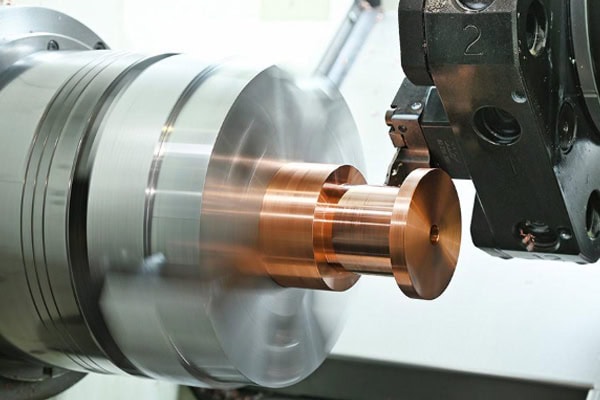
Sharp Cutting Tools Improve Machining Stability
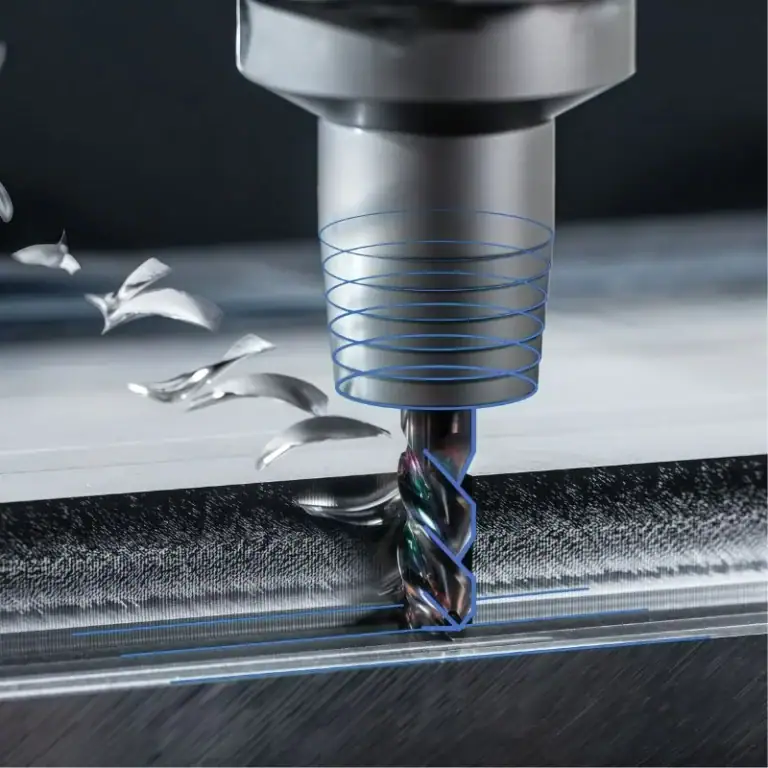
Copper is best machined using sharp cutting edges that minimize cutting resistance. Sharp tools reduce material deformation during cutting while improving chip formation and surface finish. Modern CNC machining commonly utilizes premium carbide tools or diamond cutting tools to maximize machining efficiency and extend tool life.
- Maintain sharp cutting edges
- Reduce cutting resistance
- Improve chip evacuation
- Minimize built-up edge
- Enhance surface finish
- Extend tool life
Sharp cutting tools increase machining speed while reducing the need for secondary polishing and finishing operations.
Select Tool Materials Based on Production Requirements
Different machining operations require different cutting tool materials. Rough machining emphasizes high material removal rates, while finishing focuses on precision and superior surface quality.
- Carbide cutting tools
- Diamond cutting tools
- Coated cutting tools
- High-speed steel tools
- Micro-machining tools
- Form cutting tools
Proper tool selection improves machine utilization, reduces long-term production costs, and increases manufacturing profitability.
Optimized Cutting Parameters Improve Production Efficiency
Cutting parameters directly affect machining quality, productivity, and tool life. Proper adjustment of spindle speed, feed rate, and depth of cut allows copper components to be machined efficiently while maintaining excellent dimensional accuracy.
Optimize Cutting Speed for Higher Productivity
Copper’s excellent thermal conductivity makes it suitable for high-speed machining. However, excessively high cutting speeds may reduce tool life. Manufacturers should balance material properties, tool performance, and machining accuracy when selecting cutting speeds.
- Increase machining efficiency
- Reduce production cycles
- Lower manufacturing costs
- Improve machine utilization
- Control heat generation
- Maintain stable machining
Proper cutting speed provides an excellent balance between productivity and machining quality while supporting continuous production.
Optimize Feed Rate and Depth of Cut
Proper feed rates and cutting depths improve machining stability while maintaining dimensional accuracy and surface quality. Rough machining typically uses larger cutting depths, whereas finishing operations prioritize precision through lower feed rates.
- Maintain dimensional accuracy
- Improve machining stability
- Control tool wear
- Enhance surface finish
- Reduce vibration
- Improve production consistency
Optimized machining parameters significantly increase production yield while reducing overall manufacturing costs.
Copper CNC Turning Is Widely Used in Advanced Manufacturing Industries
As manufacturing technologies continue advancing, copper components have become indispensable in numerous industries. CNC turning satisfies demanding precision requirements while maintaining consistent quality and high production efficiency.

Electronics and Telecommunications
Electronic equipment contains numerous conductive components and connection structures requiring excellent dimensional accuracy and electrical performance. CNC turning provides reliable production of precision copper components.
- Electrical connectors
- Communication interfaces
- Conductive terminals
- Heat dissipation components
- Precision contact pins
- Electromagnetic shielding parts
High-quality copper components improve electronic product reliability and long-term operating stability.
Automotive and Industrial Equipment Manufacturing
Electric vehicles, power equipment, and industrial automation systems rely extensively on copper components to improve electrical conductivity, corrosion resistance, and long-term operational reliability.
- Electric motor components
- Hydraulic system parts
- Valve assemblies
- Precision sleeves
- Sealing connectors
- Automation equipment components
Stable CNC turning capability supports the continuously increasing demand for precision copper components across modern industrial manufacturing.
Copper CNC Turning Continues Advancing Precision Manufacturing
As smart manufacturing, production automation, and digital manufacturing continue evolving, copper CNC turning has become an essential technology in modern precision engineering. Through proper material selection, optimized cutting tool design, carefully adjusted machining parameters, and advanced CNC equipment, manufacturers can achieve outstanding dimensional accuracy, superior surface quality, higher production efficiency, and lower manufacturing costs while meeting the growing demand for complex precision components.
Looking ahead, innovations such as high-speed spindles, in-process measurement systems, automatic tool changers, intelligent machining control, and digital manufacturing technologies will continue improving copper CNC turning capabilities. These developments will deliver greater machining precision, higher productivity, and improved process stability for industries including electronics, telecommunications, automotive manufacturing, renewable energy, medical devices, and industrial automation.