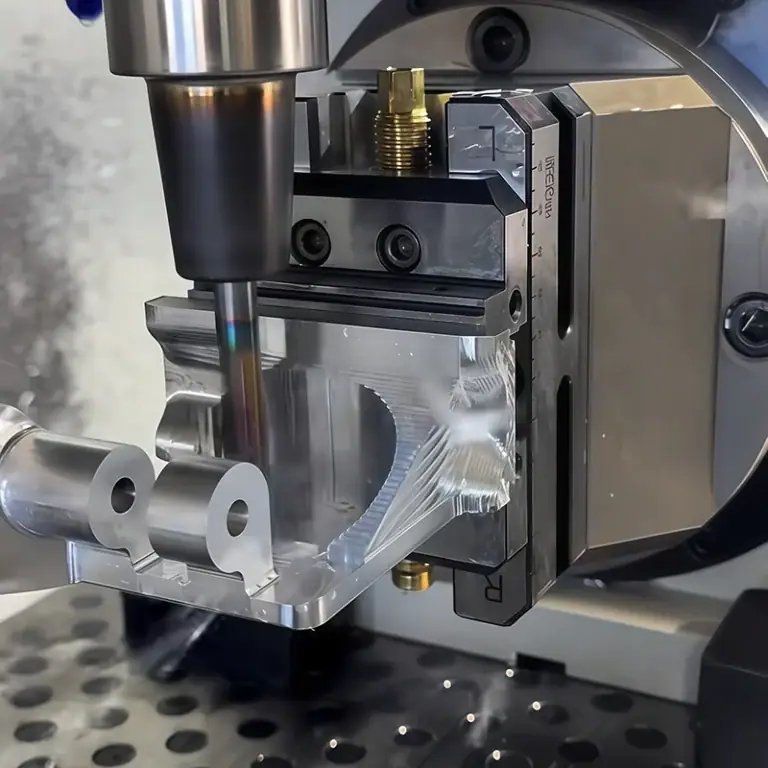
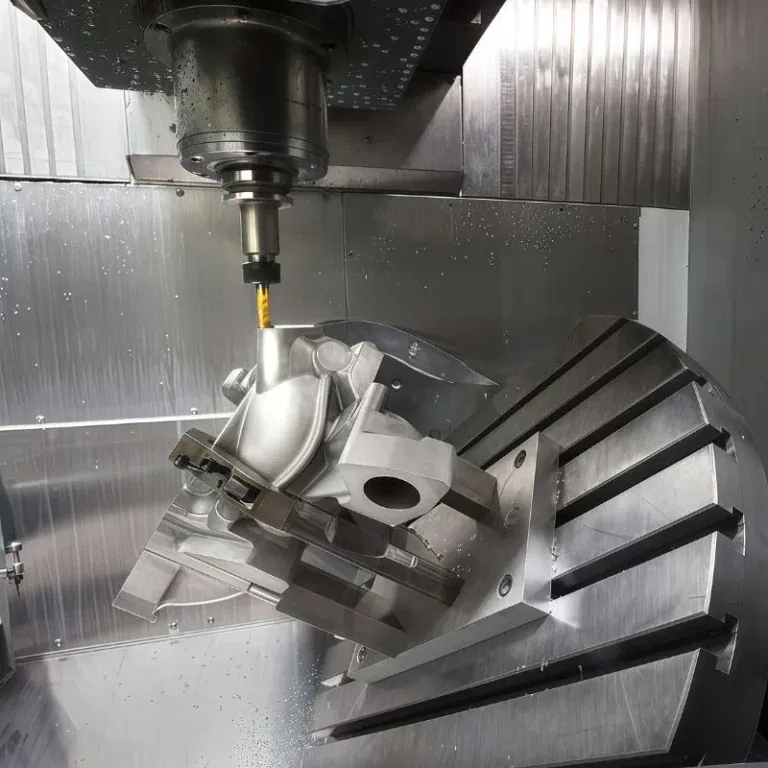
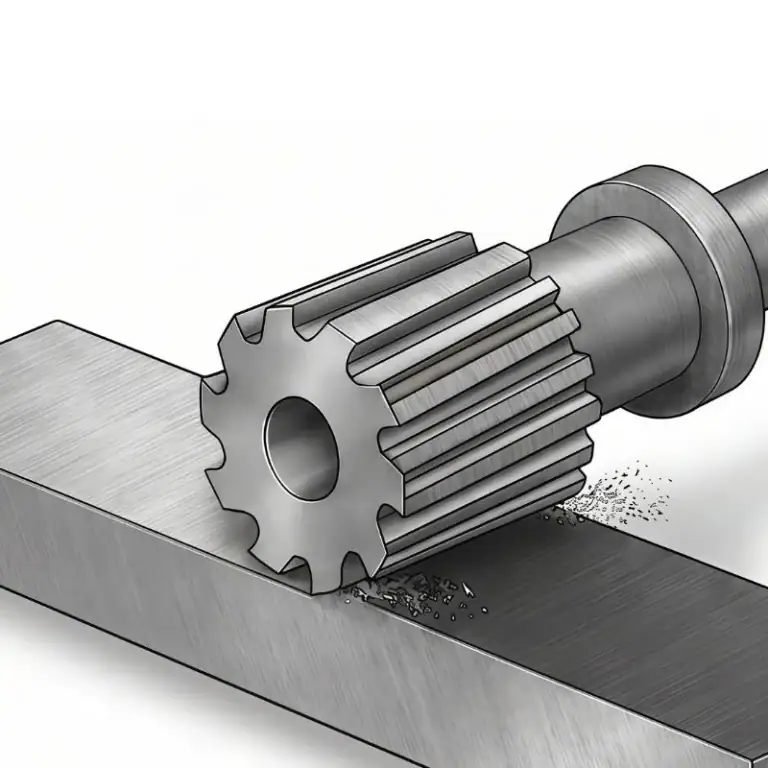
A semiconductor end effector may look like a simple component used to pick up, move, and position wafers, but machining one properly takes careful attention to detail. It needs to stay lightweight while maintaining enough stability, with mounting holes, locating holes, outer contours, and critical surfaces all kept within the required dimensions. Thin-wall designs can be especially tricky. A part may look fine while it is clamped on the machine, then slightly deform after being removed. Once installed, that small change can lead to positioning errors or interference during movement. For customers looking for CNC machining of semiconductor components, the real concerns are usually machining accuracy, thin-wall stability, surface condition, cleanliness, and consistency across production batches.
What Are the Most Common Problems When CNC Machining Semiconductor End Effectors?
End effectors often use lightweight structures and may include long slots, irregular contours, mounting holes, and locating holes. There may be many dimensions on the drawing, but the harder part to control is often the positional relationship between these features.

How Can Thin-Wall Structures Be Machined With Less Deformation?
To reduce the load on the robotic handling system, end effectors are often designed with thin walls, openings, or elongated structures. This helps reduce weight, but it also makes machining more demanding. Excessive clamping pressure can deform the part, while insufficient clamping can cause vibration, eventually affecting flatness and contour accuracy.
Key machining details include:
- Clamping pressure should not simply be increased for the sake of stability. Too much pressure on a thin-wall area can cause the part to spring back after the fixture is released.
- Avoid removing too much material during rough machining. Leaving a reasonable allowance gives the finishing process more room to control the final dimensions.
- Keep cutting loads steady around thin-wall areas and avoid sudden changes in tool engagement.
- Long and narrow structures may require additional support to reduce vibration and unsupported movement during machining.
- Inspect critical surfaces during the process rather than waiting until every operation is finished.
In simple terms, the biggest challenge with thin-wall parts is not just getting the part machined, but making sure it keeps its intended shape after machining. Proper tooling, fixturing, and inspection can greatly reduce rework.
Why Can a Small Hole Position Error Become Obvious After Assembly?
Mounting and locating holes on an end effector are normally connected directly to the equipment interface. A single hole may have the correct diameter, but that does not mean the entire hole pattern is correct. Changes in hole spacing, center position, or the relationship between holes and datum surfaces can still cause assembly problems.
These relationships should be controlled during machining:
- Establish a clear and consistent datum for mounting and locating holes.
- Check overall hole spacing rather than measuring only individual hole diameters.
- Confirm thread specifications, effective depth, and hole-mouth condition.
- Consider machining sequence and stress changes when holes are close to thin-wall areas.
- Use stable coordinate references for multi-hole structures to reduce accumulated positioning errors.
This is a common situation in precision machining: every individual dimension may look acceptable, yet the parts still do not fit together properly. For semiconductor end effectors, hole positions and contour relationships are just as important as individual dimensions.
Why Does Surface Finishing Matter for Final Performance?
Semiconductor equipment can be sensitive to contamination. After CNC machining, burrs, chips, machining residue, and surface scratches all need attention. Areas such as slots, hole openings, and edges may look insignificant but can easily retain small particles or residues.
- Deburr the edges of the outer contour carefully.
- Avoid leaving noticeable burrs around holes.
- Pay extra attention to narrow and deep slots during cleaning.
- Match the cleaning process with the material and surface treatment requirements.
- Prevent parts from rubbing against each other during packaging.
For semiconductor components, machining is only one stage of delivery. Cleaning, inspection, and packaging can also affect the condition of the final part.
Different Materials Require Different Machining Approaches for Semiconductor End Effectors
Material selection for an end effector is closely related to the equipment and operating environment. Aluminum alloys are common in lightweight structures, while ceramics, stainless steel, and other materials may also be used. Since materials differ in hardness, thermal behavior, and machining characteristics, the same tools, parameters, and fixturing approach cannot simply be applied to every job.
Aluminum Alloy: Lightweight, but Thin Walls Need Careful Control
Aluminum alloy is well suited to lightweight structures and is relatively efficient to machine. However, the thinner the part becomes, the more attention needs to be paid to clamping and machining stress.
- Control clamping force around thin-wall areas.
- Watch for vibration when machining long slots.
- Keep finishing allowances under control to avoid sudden dimensional changes.
- If anodizing or another surface treatment follows machining, consider possible dimensional changes in advance.
Ceramic: Stability Matters More Than Speed
Ceramic materials are hard and relatively brittle, making them more susceptible to edge chipping and local damage during machining. Holes, edges, and thin sections require careful control, while tool condition and machining parameters need to remain stable.
Stainless Steel: Higher Cutting Loads Require Better Process Control
Stainless steel can generate considerable cutting loads and heat during machining. When the structure is complex or contains many holes, tool wear can gradually affect dimensional accuracy. This may not be obvious in a small batch, but the effect can become much more noticeable as production volume increases.
| Material | CNC Machining Focus | Main Concern |
| Aluminum Alloy | Thin walls, vibration, surface condition | Weight and dimensional stability |
| Ceramic | Edge chipping, cracks, hole accuracy | Edge integrity and operating stability |
| Stainless Steel | Cutting load, tool wear | Strength and batch consistency |
Once the material is confirmed, surface treatment, cleaning, and packaging should also be planned together. This keeps the production process connected from machining through final delivery instead of adding requirements at the last minute.
How Can Rework Be Reduced From Prototyping to Mass Production?
The first prototype is often not the hardest part. The bigger headache can come later when dimensions begin to shift during batch production. End effectors are lightweight and precision-sensitive, so if the machining process is not stabilized during prototyping, later production may show variations in hole position, flatness, or overall contour.
Get the Prototype Details Right and Production Becomes Easier
A prototype should do more than simply provide one finished sample. It is a chance to verify whether the machining approach actually works. Thin-wall areas, complex contours, and critical holes should all be tested during this stage.
- Keep drawing versions consistent. The 2D drawing and 3D model should not contain conflicting information.
- Clearly define material, quantity, tolerances, and surface treatment.
- Mark critical holes and datum surfaces separately when needed.
- Evaluate thin walls, cantilever structures, and long slots before production begins.
- Confirm interface dimensions when matching assembly components are involved.
- Do not wait until mass production to add cleaning and packaging requirements.
Taking care of these details early can make machining smoother while also reducing repeated communication during quotation, scheduling, and delivery.
In-Process Inspection Is More Practical Than Checking Everything at the End
End effectors are not always suitable for a single final inspection after every machining operation is complete. Datum surfaces can be checked as soon as they are finished, critical holes can be measured after machining, and thin-wall structures can be inspected for flatness before moving too far into the process. This makes it easier to identify where dimensional changes occur.
- Check the datum condition after the datum surface is machined.
- Measure hole diameter and position after critical holes are completed.
- Confirm key mating dimensions after finishing.
- Perform a complete dimensional and visual inspection at the end.
These additional checks may seem like extra work, but they can prevent a small deviation from becoming a batch-wide problem. Catching one issue early is much easier than discovering the same issue across dozens of finished parts.
Cleaning, Deburring, and Packaging Need to Match Semiconductor Requirements
If the end effector will be installed inside wafer-handling equipment, cleaning cannot be treated as a quick final wipe. Machining residue, metal chips, edge burrs, and even scratches caused during transportation may affect later assembly. Bringing cleaning and packaging requirements into the production plan early helps keep the delivered parts in a more consistent condition.
| Inspection Item | What Is Checked | Main Purpose |
| Dimensions | Length, thickness, hole diameter | Confirm basic dimensions |
| Flatness | Mounting and working surfaces | Support stable assembly |
| Hole Position | Hole spacing and center position | Maintain accurate positioning |
| Contour | Outer profile, slots, edges | Reduce movement interference |
| Surface | Burrs, scratches, edge chipping | Maintain part condition |
| Cleanliness | Residue, particles, chips | Meet semiconductor equipment requirements |
Key Advantages of CNC Machining Semiconductor End Effectors
For precision components like these, machining capability is not simply about whether a supplier can produce one finished part. The real value lies in controlling lightweight structures, dimensional stability, and batch consistency at the same time. A well-planned process should remain stable from prototyping through production instead of requiring a new approach for every batch.

Precision CNC Machining Helps Control Complex Contours and Hole Positions
End effectors are rarely just simple flat plates. An individual part may include irregular outer contours, long slots, mounting holes, and locating holes. CNC machining allows these features to be processed according to the 3D model and drawing requirements, reducing dimensional variation caused by manual operations.
- Complex contours can be machined with a high level of consistency.
- Hole and slot positions can be controlled using a common coordinate system.
- Toolpaths can be optimized specifically for critical areas during finishing.
- The same machining datum can be maintained more easily across production batches.
For semiconductor customers placing repeat orders, this kind of consistency is often more valuable than simply making one individual part look perfect.
Lightweight Machining Balances Weight and Structural Stability
A lighter end effector can help reduce the load on the motion system, but weight reduction does not mean removing as much material as possible. Openings, thin walls, and long slots still need enough remaining structure to maintain stability.
A well-planned roughing and finishing sequence can remove material more evenly while reducing sudden loads on thin sections. This helps preserve the lightweight design while limiting shape changes after machining.
Stable Batch Production Makes Equipment Assembly Easier
- Lock in a proven process after first-piece approval to reduce repeated trial and error.
- Monitor tool wear during batch production to prevent dimensions from gradually drifting.
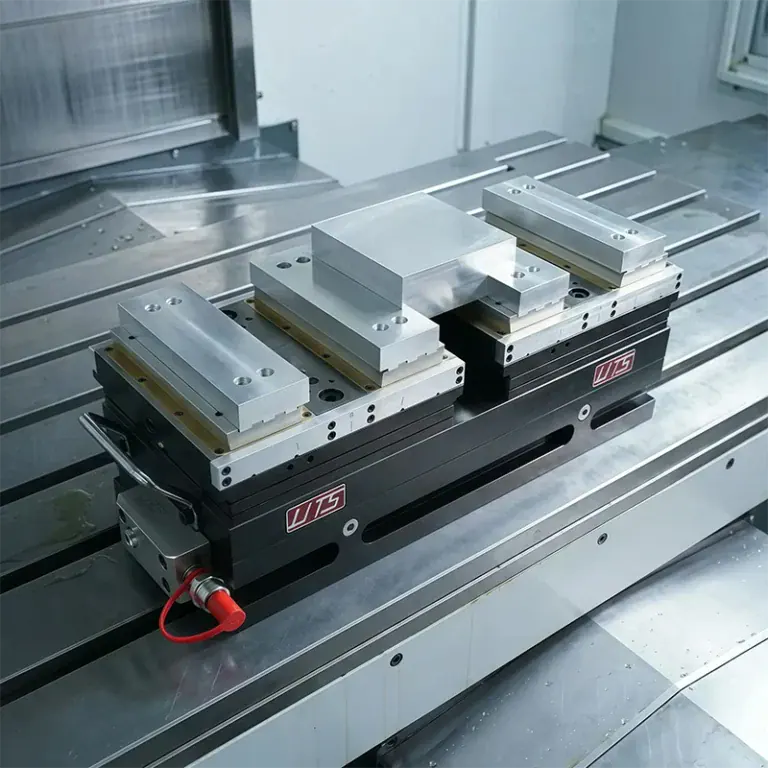
- Keep the fixturing method consistent to reduce differences caused by repeated repositioning.
- Perform process sampling on critical dimensions to catch batch variations early.
- Keep machining, cleaning, inspection, and packaging connected to reduce quality variation between stages.
For semiconductor equipment customers, the real convenience is not how quickly one part is produced, but whether the next batch—and the batch after that—can still be installed with the same level of consistency.
Although a semiconductor end effector is a relatively small functional component, it directly supports wafer handling, positioning, and transfer. Thin-wall deformation, hole-position errors, contour changes, and surface residue can all affect final assembly. With a suitable CNC machining process, in-process inspection, and controlled cleaning, prototype validation, batch production, and delivery can connect more smoothly. TIRAPID provides CNC machining services for semiconductor end effectors, with customized machining based on different materials, structures, and precision requirements.