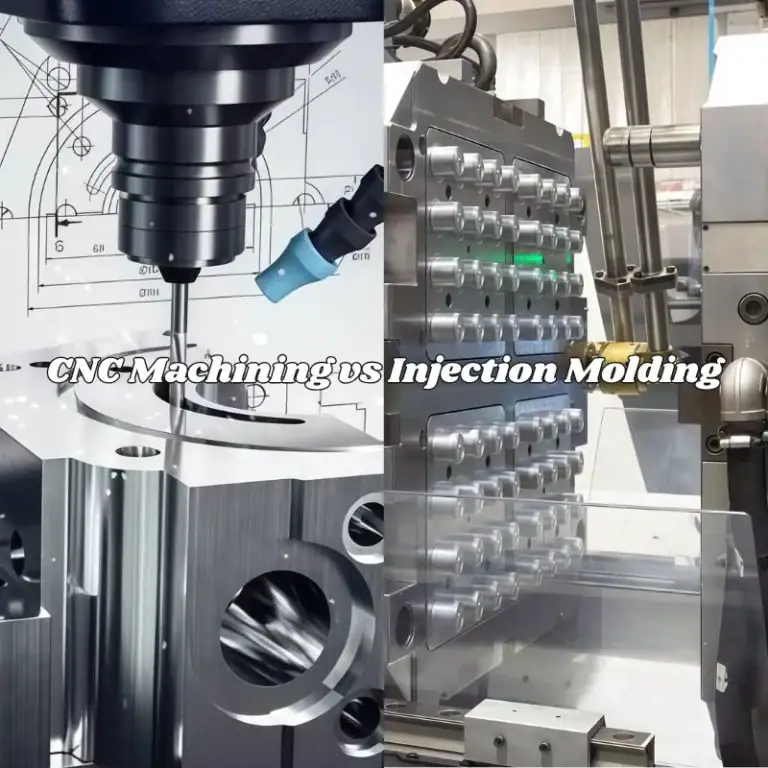
With the continuous expansion of the new energy vehicle market, automotive manufacturers have shown increasingly strong demands for lightweight components, high-performance materials, and rapid product development. Plastic materials, with advantages such as low weight, flexible processing, excellent insulation performance, and corrosion resistance, are gradually being applied in many important areas of new energy vehicles, including power battery systems, electronic control systems, vehicle interiors, and intelligent driving-related components. However, plastic parts for new energy vehicles are not simply ordinary plastic products. They need to meet strict requirements for dimensional accuracy, stable assembly, safety performance, and long-term reliability. Especially during the operation of new energy vehicles, components may be exposed to continuous temperature changes, mechanical vibration, and complex environmental conditions. Therefore, machining accuracy and material selection directly affect the overall vehicle performance.
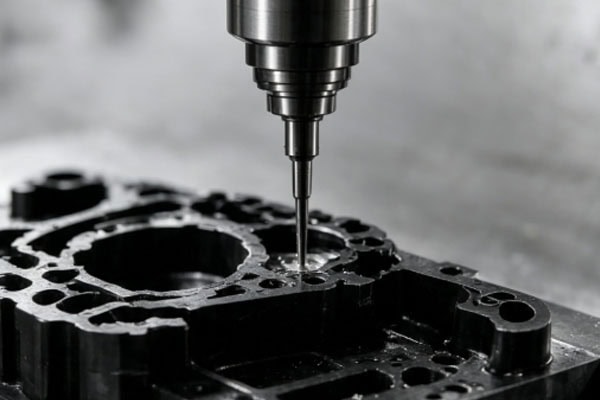
Processing Requirements for New Energy Vehicle Plastic Parts
Application Scenarios of New Energy Vehicle Plastic Parts Continue to Expand
With the continuous upgrade of new energy vehicle structures, plastic parts are being used in an increasingly wider range of automotive applications. In the past, automotive components mainly relied on metal materials, while new energy vehicles place greater emphasis on vehicle weight reduction, battery efficiency improvement, and protection of electronic systems. As a result, engineering plastics have gradually become an important material choice. Plastic parts in new energy vehicles not only perform functions such as fixation, protection, and connection, but also need to meet safety and durability requirements.
Common CNC machined plastic parts for new energy vehicles include:
Battery pack insulation brackets: They need to provide excellent insulation performance while maintaining dimensional stability to prevent installation deviations during battery module assembly.
Motor controller housings: They need to protect internal electronic components and provide heat resistance, impact resistance, and dust protection.
Charging interface protection components: They need to operate reliably under different environmental conditions for a long time and require good weather resistance.
Automotive interior structural components: They need to balance appearance quality, assembly accuracy, and passenger comfort.
These components usually have complex structures. Traditional manufacturing methods may require long preparation times, while CNC machining can directly manufacture parts based on 3D models, making it more suitable for the rapid development requirements of new energy vehicles.
New Energy Vehicle Plastic Parts Require Higher Machining Accuracy
New energy vehicle components usually require precise matching between different parts. Even a small dimensional deviation may affect the overall assembly performance. For example, battery module positioning structures, electronic control equipment connection holes, and sensor mounting structures all require high accuracy. Compared with ordinary plastic products, new energy vehicle components have stricter requirements for machining stability. During processing, attention should not only be paid to dimensional accuracy but also to surface quality, edge finishing, and assembly positions. TiRapid selects suitable machining methods according to different component characteristics, including 3-axis CNC machining, 5-axis CNC machining, and precision milling processes, ensuring stable quality for complex structural parts.
| Processing Requirements | CNC Machining Solutions |
| Complex curved structures | 5-axis CNC machining improves processing flexibility and reduces errors caused by repeated clamping |
| Precision mounting holes | High-precision drilling and milling ensure accurate component installation |
| Small-batch validation | Rapid production of functional prototypes helps customers complete product testing |
| Batch component production | Stable machining processes improve part consistency |
Through digital manufacturing processes, customers can complete new energy vehicle component development more efficiently while reducing adjustment time during production.
CNC Machining Process for New Energy Vehicle Plastic Parts
Manufacturing Evaluation Starts from Design Files
New energy vehicle components usually require manufacturing considerations during the design stage. A well-designed product can not only meet application requirements but also reduce machining difficulty and improve production efficiency. Before formal machining begins, the engineering team needs to review the CAD 3D models provided by customers and analyze the part structure, material selection, and machining methods. If there are areas that are difficult to process in the design, adjustments can be made in advance to avoid modification problems after production. TiRapid provides free DFM reports and helps customers optimize designs based on practical machining experience, such as:
- Whether the wall thickness is suitable for CNC machining;
- Whether deep groove structures may affect tool movement;
- Whether the fillet design is convenient for machining;
- Whether the installation position meets assembly requirements.
Through early manufacturing evaluation, the design solution can better meet production requirements while helping customers save time and reduce costs.
Selecting Suitable Plastic Materials Based on Part Performance Requirements
Different plastic parts used in new energy vehicles have different requirements for material performance. Some components need to withstand high temperatures, some require higher mechanical strength, and others need to maintain excellent insulation properties. Therefore, selecting the right material before CNC machining is extremely important. TiRapid supports the machining of various engineering plastics and can provide professional material recommendations according to customers’ application environments.
| Plastic Material | Common Applications |
| PEEK | High-temperature components and insulation parts, suitable for applications with higher performance requirements |
| POM | Gears and sliding structural components, featuring excellent wear resistance |
| ABS | Housings and display prototypes, suitable for rapid product model production |
| PC | Transparent protective parts and protective structures, providing good impact resistance |
| PA (Nylon) | Mechanical components requiring high strength |
Selecting suitable materials can improve the service life of components while reducing future maintenance costs.
Completing Part Manufacturing Through Precision Machining
After design confirmation and material selection, the project enters the formal CNC machining stage. Based on the digital models provided by customers, machining equipment uses programmed tool paths to accurately cut plastic materials. During the machining process, parameters need to be adjusted according to the characteristics of different plastic materials, including cutting speed, tool selection, and machining methods. If machining parameters are not properly set, problems such as part deformation and reduced surface quality may occur. TiRapid has extensive professional machining experience and can develop customized processing solutions according to the characteristics of different plastic materials. After machining is completed, dimensional inspection, appearance inspection, and functional verification are also performed to ensure that each component meets customer design standards.
Advantages of TiRapid’s New Energy Vehicle Plastic Part Machining Solutions
Supporting Prototypes, Small-Batch Production, and Mass Manufacturing
The development of new energy vehicle products usually goes through multiple stages, from initial design verification and testing adjustments to official production. Each stage has different requirements for component quantities and machining methods. Traditional manufacturing methods may require molds to be produced in advance, resulting in higher investment costs. CNC machining does not require complicated mold preparation and can directly manufacture parts based on design files, making it more suitable for the research and development process of new energy vehicles.
TiRapid supports:
- Single-piece prototype production;
- Small-batch trial production;
- Medium and large-scale manufacturing.
Whether customers need to test a new design or find a long-term manufacturing partner, TiRapid can provide flexible production solutions based on project requirements.
Professional Machining Capabilities Meet Complex Structural Requirements
The design of new energy vehicle components is becoming increasingly complex. Many plastic components include snap-fit structures, mounting grooves, thin-wall designs, and special curved surfaces, creating higher requirements for machining technology. Traditional manufacturing methods may have difficulty achieving precise details, while CNC machining can accurately complete complex structural manufacturing based on digital models. TiRapid has professional machining capabilities to meet requirements including:
- High-precision dimensional control;
- Complex structural machining;
- Rapid prototype production;
- Stable batch manufacturing.
Through mature machining processes and extensive manufacturing experience, TiRapid helps customers reduce trial-and-error during product development and improve overall production efficiency.
Rapid Response to Customer Project Requirements
The new energy vehicle industry updates products quickly, and companies usually need to complete design verification and component testing in a short period of time. Therefore, supplier response speed is also an important factor affecting project progress. TiRapid focuses on efficient customer communication and provides fast support:
- Fast response within 3 minutes;
- Free quotation provided within 4 hours;
- Free DFM design analysis;
- Dedicated project support.
From design communication and machining recommendations to production delivery, TiRapid does not only provide individual part processing but also helps customers complete the entire manufacturing process.
Frequently Asked Questions
Can Plastic Parts for New Energy Vehicles Be Manufactured Using CNC Machining?
Plastic parts for new energy vehicles can absolutely be manufactured through CNC machining, and this method has already been widely used for prototype development, small-batch production, and functional testing components. The biggest advantage of CNC machining is that it does not require molds to be manufactured in advance. Parts can be produced directly according to customers’ 3D drawings. When new energy vehicle products are still in the development stage and designs need continuous adjustments, this manufacturing method can respond quickly to changes. For components with complex structures, low production quantities, or requirements for rapid verification, CNC machining can help companies shorten development cycles and improve testing efficiency.
How Long Does CNC Machining of New Energy Vehicle Plastic Parts Take?
The machining cycle for new energy vehicle plastic parts depends on factors such as component size, structural complexity, material type, and production quantity. Simple structural parts usually have shorter machining times, while complex components require additional steps including programming, machining adjustments, and quality inspection. TiRapid develops reasonable manufacturing schedules according to customer project requirements and provides fast quotations, allowing customers to understand production timelines in advance and better arrange product development plans.
Can TiRapid Provide Design Optimization for New Energy Vehicle Plastic Parts?
Yes. In addition to CNC machining services, TiRapid can provide design optimization suggestions based on practical manufacturing experience.
The engineering team helps customers evaluate whether part structures are suitable for manufacturing, such as reducing unnecessary machining steps, optimizing structural designs, and improving assembly performance. By combining design and manufacturing expertise, products can better meet actual production requirements from the development stage, improving the success rate of projects.
New energy vehicles have continuously increasing requirements for lightweight design, safety performance, and component precision. Plastic parts have become an essential part of modern automotive manufacturing. From power battery protection structures and electronic system housings to interior functional components, all require stable and reliable machining solutions. TiRapid provides comprehensive manufacturing support for new energy vehicle companies through precision CNC machining, sheet metal fabrication, and 3D printing technologies. We can offer material selection, design analysis, prototype production, and batch manufacturing services according to different project requirements.
During the development of new energy vehicle components, choosing a professional machining partner can reduce wasted time during product development, improve testing efficiency, and ensure stable component quality. TiRapid follows ISO9001 quality management standards and focuses on customer requirements to provide high-precision, efficient, and flexible plastic part machining solutions for the new energy vehicle industry. Whether you are developing prototype components for new energy vehicles or looking for a long-term plastic part manufacturing supplier, TiRapid can provide professional support. After submitting your 3D drawings or project requirements, we will provide a free DFM report, fast quotation, and customized manufacturing recommendations to help your new energy vehicle project complete the transition from design to production faster.
Email: projects@tirapid.com
Phone: +86 760 8999 8536