Tirapid

Inspection Standards for CNC Machined Plastic Parts

What Are the Quality Inspection Standards for Thermoset Plastic Parts?

Thermoset plastics are widely used in electronics, electrical equipment, automation systems, semiconductors, new energy, rail transit, and industrial machinery due to their excellent insulation properties, heat resistance, mechanical strength, and dimensional stability. As industrial products continue to develop toward higher precision and greater reliability, quality requirements for components are becoming increasingly strict. From raw material

What Are the Quality Inspection Standards for Thermoset Plastic Parts? Read More »
Aerospace components

What Is the Role of CNC Turning in the Aerospace Industry?

The aerospace industry is one of the most technologically advanced sectors in global manufacturing, requiring extremely high standards for component precision, material performance, product reliability, and production consistency. From commercial aircraft and military jets to aerospace engines and satellite propulsion systems, every critical component must undergo strict manufacturing and quality control processes. As aerospace equipment

What Is the Role of CNC Turning in the Aerospace Industry? Read More »

High-tech parts manufacturing

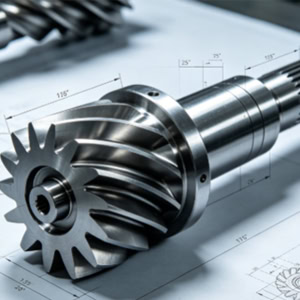
How are precision gears manufactured?

When many users learn about gear products, they often focus only on the module, number of teeth, and material, while rarely understanding how a gear is gradually manufactured from a metal blank into a high-precision transmission component. In reality, the manufacturing process of precision gears involves multiple stages, including material selection, blank forming, gear cutting,

How are precision gears manufactured? Read More »

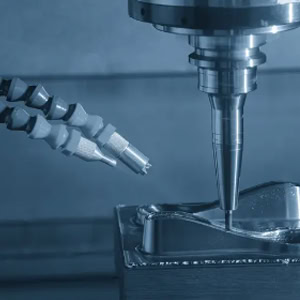
Cutting mold parts

What Is the Custom Part Machining Process?

Many companies encounter the need for custom part machining during new product development. Whether it is prototype manufacturing in the R&D stage or later small-batch production, parts must be produced according to drawings and real application requirements. Unlike standard components, custom parts often have unique structures, dimensions, and performance requirements, which place higher demands on

What Is the Custom Part Machining Process? Read More »

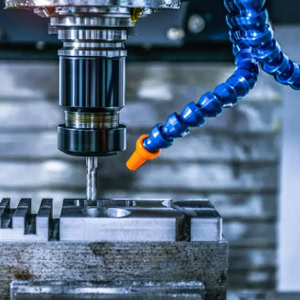
CNC vertical machining center metal milling.

Why Is CNC Milling Suitable for High-Precision Mold Manufacturing?

In the modern manufacturing industry, mold quality often directly determines product forming results, production efficiency, and final market competitiveness. Whether for automotive parts, consumer electronics, or medical devices and industrial equipment housings, high-precision molds play an important role in ensuring product dimensional consistency and appearance quality. For mold manufacturing companies, how to improve machining accuracy,

Why Is CNC Milling Suitable for High-Precision Mold Manufacturing? Read More »

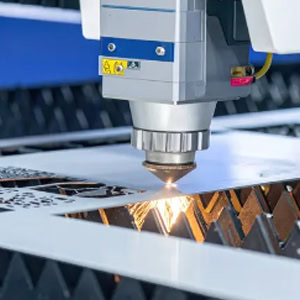
Precision industrial laser cutting machine

Why Do Thin-Walled Parts Often Fail During Machining?

Thin-walled parts are widely used in aerospace, medical devices, consumer electronics, and automation equipment because of their lightweight design, efficient material utilization, and compact structures. However, compared with conventional components, thin-walled parts present much greater manufacturing challenges. Many companies encounter situations where the design is correct and the equipment meets accuracy requirements, yet the finished

Why Do Thin-Walled Parts Often Fail During Machining? Read More »

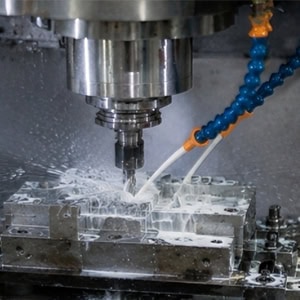
Vertical CNC machining center for metal milling.

How Does CNC Milling Ensure Precision for Complex Parts?

In modern manufacturing, complex parts are widely used in industries such as aerospace, medical devices, automotive, and electronics. These components often feature intricate geometries and stringent precision requirements. During machining, they can be affected by factors such as vibration, thermal deformation, tool wear, and fixturing errors, which may lead to dimensional deviations. How to ensure

How Does CNC Milling Ensure Precision for Complex Parts? Read More »

Precision metal bolts and screws

What Factors Affect Part Machining Accuracy?

Many users researching part machining often focus only on equipment models or processing methods, while overlooking a key question: what actually determines machining accuracy? Machining accuracy generally refers to the degree of conformity between the finished part and the design drawing, including dimensional deviation, geometric tolerance, and surface condition. In precision machining, even when using

What Factors Affect Part Machining Accuracy? Read More »

Can Thermoset Plastics Be CNC Machined

Can Thermoset Plastics Be CNC Machined?

As industrial manufacturing continues to advance toward higher precision and higher performance, more and more companies are focusing on the processing applications of engineering plastics and composite materials. Among various materials, thermoset plastics are widely used in electronics, electrical engineering, semiconductors, new energy, and automation equipment industries due to their excellent mechanical properties, dimensional stability,

Can Thermoset Plastics Be CNC Machined? Read More »

How does tool selection affect CNC turning quality

How Does Tool Selection Affect CNC Turning Quality?

In CNC turning operations, cutting tools are responsible not only for material removal but also for determining dimensional accuracy, surface finish, machining efficiency, and production costs. Even when a machine tool offers high precision, improper tool selection can still result in dimensional deviations, rough surfaces, increased vibration, and shortened tool life. As modern manufacturing demands

How Does Tool Selection Affect CNC Turning Quality? Read More »

What Causes CNC Turning Tool Wear

What Causes CNC Turning Tool Wear?

In CNC turning operations, cutting tools play a critical role in material removal, dimensional accuracy, and surface finish quality. As machining time increases, tool wear becomes inevitable. Excessive tool wear can reduce machining accuracy, increase surface roughness, raise cutting forces, and lead to higher production costs. For manufacturers, understanding the causes of tool wear helps

What Causes CNC Turning Tool Wear? Read More »

Precision machining on a CNC milling and turning machine tool.

How to Reduce Thermal Deformation in CNC Milling?

In precision part manufacturing, dimensional accuracy and surface quality often determine whether a product can meet its intended application requirements. During actual CNC milling operations, thermal deformation is one of the key factors affecting machining accuracy. As the cutting tool continuously engages with the workpiece, a significant amount of heat is generated. If this heat

How to Reduce Thermal Deformation in CNC Milling? Read More »

Scroll to Top
Simplified Table

To ensure successful upload, please compress all files into one .zip or .rar file before uploading.
Upload CAD files (.igs | .x_t | .prt | .sldprt | .CATPart | .stp | .step | .pdf).