Tirapid

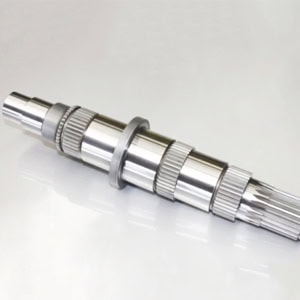
Applications of CNC Turning in Robotic Components

Applications of CNC Turning in Robotic Components

The robotics industry is experiencing rapid growth, with industrial robots, collaborative robots, medical robots, logistics robots, and service robots being widely adopted in smart manufacturing, healthcare, warehousing, transportation, and automated production. Every robot consists of numerous precision mechanical components that require excellent dimensional accuracy, assembly precision, and long-term operational stability. As robots continue to achieve

Applications of CNC Turning in Robotic Components Read More »
Precision Engineering

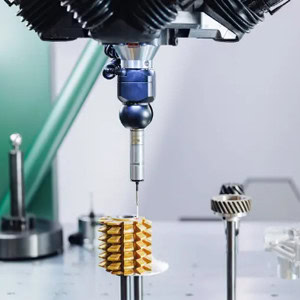
How Does Precision Machining Improve Robot Performance?

When people talk about robots, they often think first about intelligent systems, programming control, or sensors. However, the ability of a robot to operate accurately, quickly, and reliably also depends heavily on the quality of its mechanical components. Especially in industrial robots, automation equipment, and collaborative robots, even a small part error can affect arm

How Does Precision Machining Improve Robot Performance? Read More »

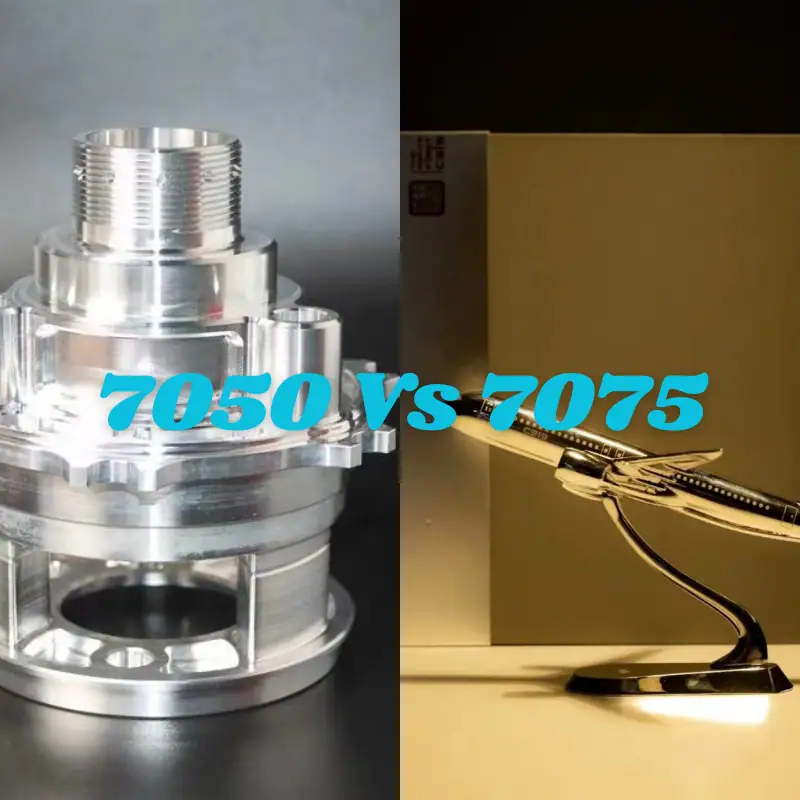
7050 vs 7075 aluminum comparison for CNC machining, strength, toughness, and aerospace applications

7050 vs 7075 Aluminum: Key Differences and Applications

7050 and 7075 are heat-treatable 7000-series aluminum alloys developed for parts requiring high strength without the weight of steel. Although their compositions and mechanical properties are similar, they are not interchangeable. 7075 is commonly associated with high peak strength, while 7050 is valued for fracture toughness, stress-corrosion resistance, and reliable performance in thick plate. This

7050 vs 7075 Aluminum: Key Differences and Applications Read More »

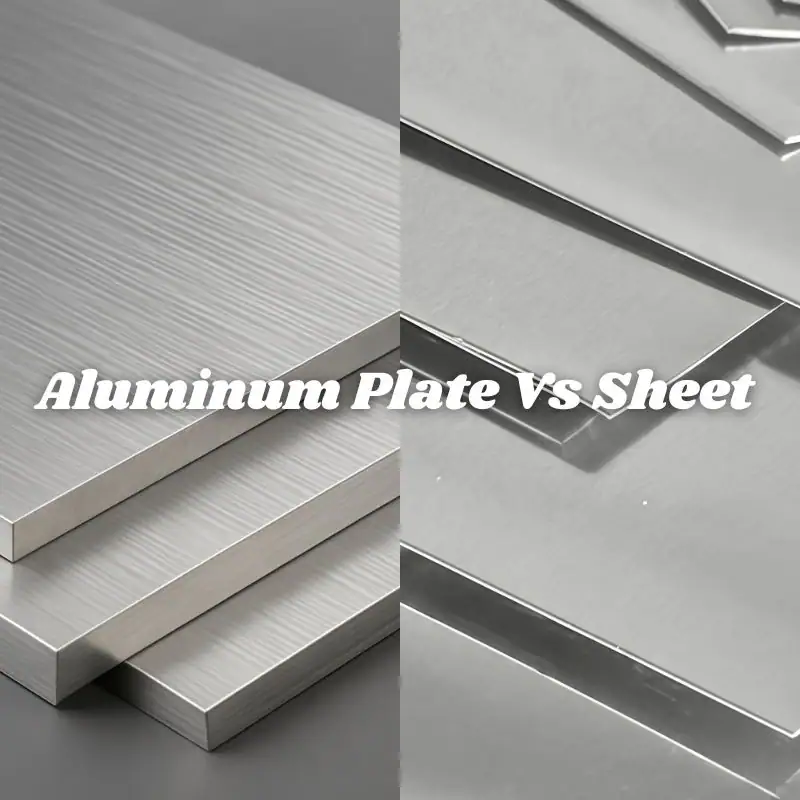
Aluminum plate vs sheet raw material display cover showing differences in thickness, strength, formability, and best uses

Aluminum Plate Vs Sheet: Differences And Best Uses

Aluminum plate vs sheet is mainly a comparison of thickness, strength, forming behavior, machining performance, and final application. Aluminum sheet is usually thinner and better for bending, forming, panels, enclosures, and lightweight covers, while aluminum plate is thicker and better for structural parts, CNC machining, fixtures, tooling plates, and load-bearing components. This guide explains the

Aluminum Plate Vs Sheet: Differences And Best Uses Read More »

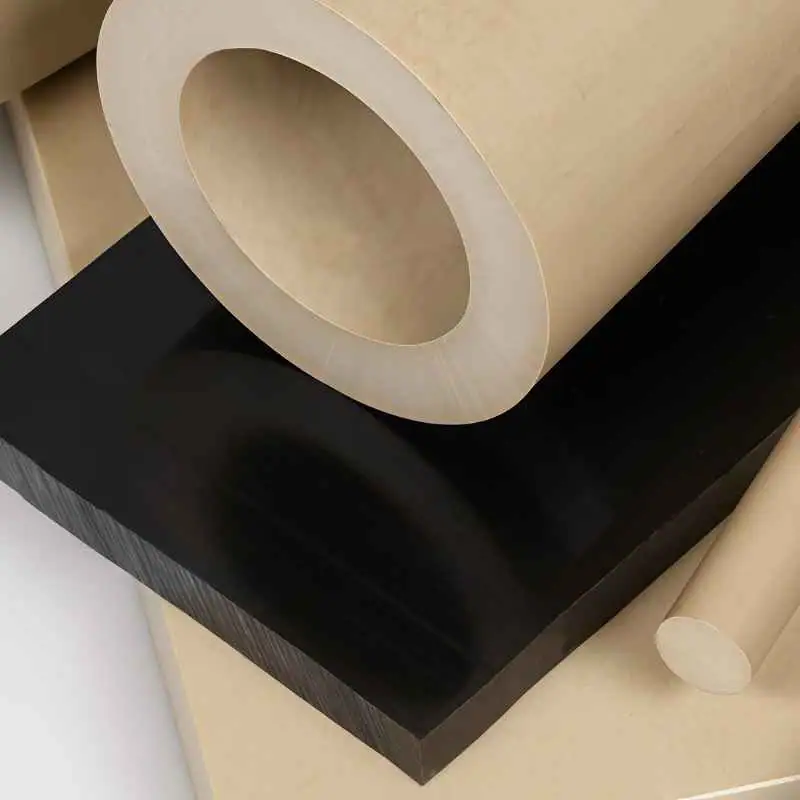
Yellow and black PEEK material display showing high-performance plastic stock for precision CNC machining

What Is PEEK Material? Properties And Applications

PEEK material is a high-performance thermoplastic used when ordinary plastics cannot handle heat, load, wear, chemicals, or dimensional requirements. Its full name is polyether ether ketone, and it belongs to the PAEK family of advanced engineering polymers. PEEK is often selected for aerospace, automotive, medical, electronics, oil and gas, semiconductor, and precision CNC machined parts.

What Is PEEK Material? Properties And Applications Read More »

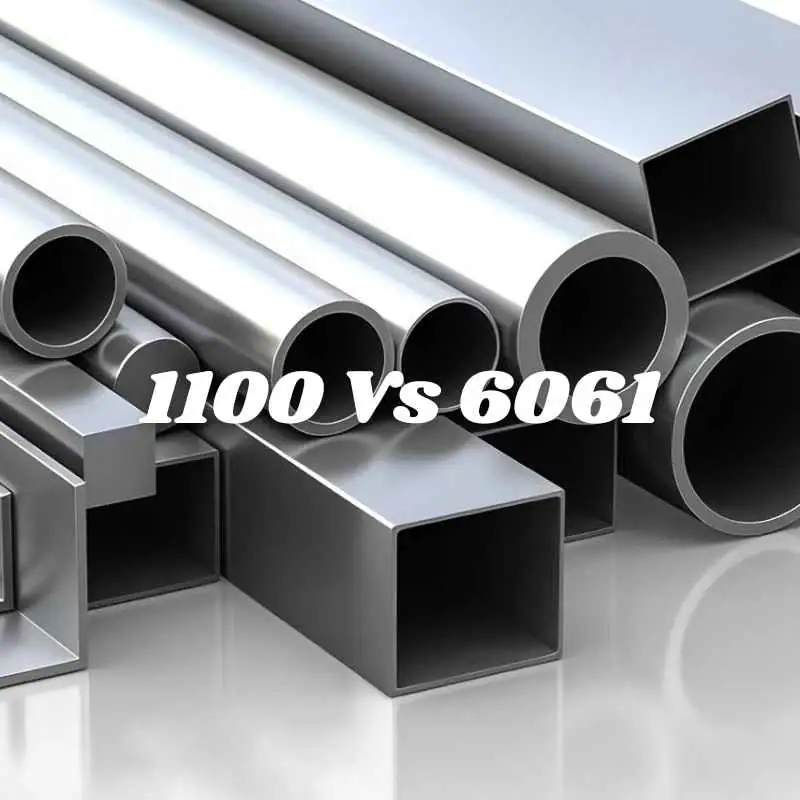
Aluminum 1100 vs 6061 raw material cover showing aluminum ingots for alloy comparison and material selection

Aluminum 1100 Vs 6061: Properties And Best Uses

Aluminum 1100 vs 6061 is a material comparison between a commercially pure aluminum grade and a heat-treatable structural aluminum alloy. 1100 aluminum is better for formability, corrosion resistance, conductivity, reflective surfaces, and non-structural sheet metal parts, while 6061 aluminum is better for CNC machining, higher strength, load-bearing parts, fixtures, frames, and precision components. This guide

Aluminum 1100 Vs 6061: Properties And Best Uses Read More »

6082 Aluminum Round Bar vs 6061 Aluminum Square Block

Aluminum 6082 vs 6061: Properties and Selection Guide

Aluminum 6082 and 6061 are heat-treatable 6000-series alloys commonly used for CNC-machined components, equipment frames, transportation structures, automation systems, electronic housings, and welded assemblies. Both provide a practical combination of strength, low weight, corrosion resistance, machinability, and surface-finishing capability. However, differences in alloy chemistry, mechanical strength, stock availability, fabrication behavior, and regional supply can affect

Aluminum 6082 vs 6061: Properties and Selection Guide Read More »

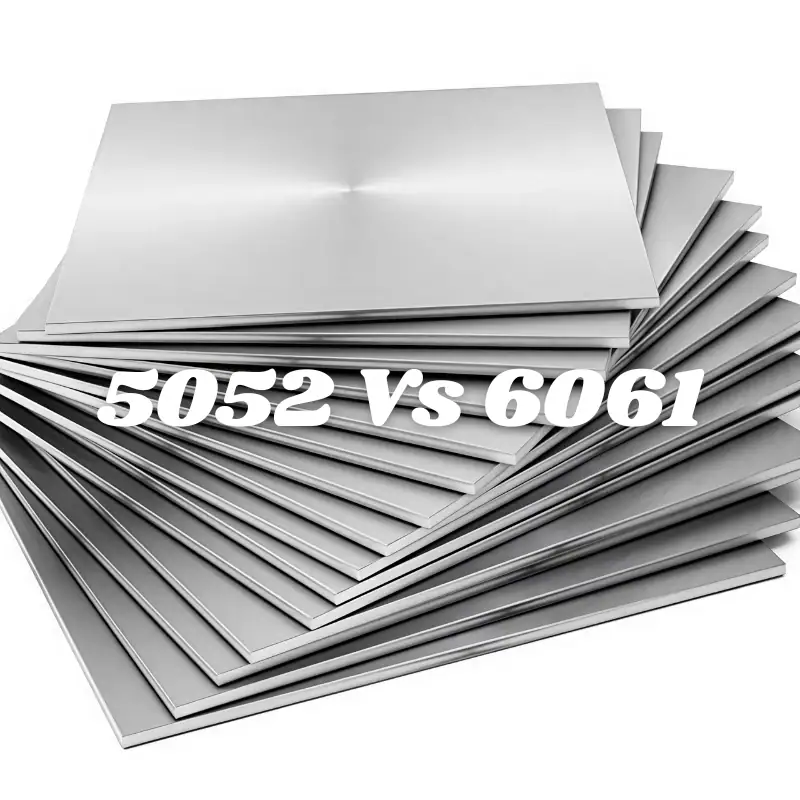
Aluminum 5052 vs 6061 comparison cover showing differences in strength, corrosion resistance, machining, and applications

Aluminum 5052 Vs 6061: Properties And Best Uses

Aluminum 5052 vs 6061 is a common material comparison because both alloys are lightweight, corrosion-resistant, and widely used in manufacturing, but they are designed for different priorities. 5052 aluminum is better for corrosion resistance, bending, forming, and welding, while 6061 aluminum is better for strength, CNC machining, structural rigidity, and general-purpose mechanical parts. This guide

Aluminum 5052 Vs 6061: Properties And Best Uses Read More »

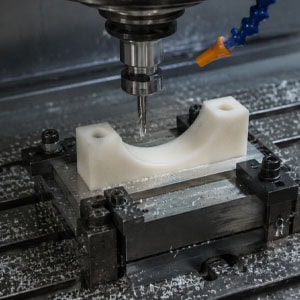
CNC Machining Process for Nylon Positioning Blocks

CNC Machining Process for Nylon Positioning Blocks

Nylon positioning blocks are widely used in automation equipment, workholding fixtures, and inspection jigs, where they perform part-locating, guiding, and limiting functions. These components typically carry stringent requirements for dimensional accuracy and geometric tolerances—flatness of the locating surface, parallelism relative to datums, and positional accuracy of mounting holes. Any one of these exceeding tolerance can

CNC Machining Process for Nylon Positioning Blocks Read More »

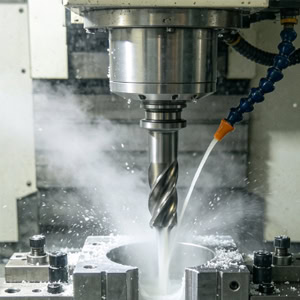
What to Do When Chip Evacuation Is Poor in Deep Cavity Milling

What to Do When Chip Evacuation Is Poor in Deep Cavity Milling?

In precision part machining, deep cavity structures have always been one of the more challenging aspects of CNC milling due to their complex internal walls, deep machining areas, and high precision requirements. Among these challenges, poor chip evacuation is a critical factor affecting machining quality. If chips cannot be removed in time, it may not

What to Do When Chip Evacuation Is Poor in Deep Cavity Milling? Read More »

6061 vs 6063 aluminum comparison for strength, machining, extrusion, and appearance

6061 vs 6063 Aluminum: Strength, Machining, and Uses

6061 and 6063 are both heat-treatable 6000-series aluminum alloys containing magnesium and silicon. They offer low weight, corrosion resistance, weldability, and good manufacturing flexibility, but they serve different priorities. 6061 is normally chosen for strength and precision machining, while 6063 is preferred for complex extrusion profiles and high-quality visible surfaces. This guide explains the key

6061 vs 6063 Aluminum: Strength, Machining, and Uses Read More »

Applications of CNC Turning in the New Energy Industry

Applications of CNC Turning in the New Energy Industry

The new energy industry is experiencing rapid growth, with electric vehicles, energy storage systems, wind power, photovoltaic equipment, and hydrogen energy technologies expanding their production capacity worldwide. These industries place increasingly demanding requirements on the machining quality of precision components. Many critical parts must maintain tight dimensional tolerances while providing excellent mechanical strength, corrosion resistance,

Applications of CNC Turning in the New Energy Industry Read More »

Scroll to Top
Simplified Table

To ensure successful upload, please compress all files into one .zip or .rar file before uploading.
Upload CAD files (.igs | .x_t | .prt | .sldprt | .CATPart | .stp | .step | .pdf).