Aluminum bead blasting is a mechanical surface finishing process used to create a uniform matte or satin appearance on machined aluminum parts. Fine spherical media strikes the surface under controlled air pressure, blending visible machining marks, reducing glare, cleaning light contamination, and preparing components for anodizing, painting, or other secondary finishes.
This guide explains how aluminum bead blasting works, which blasting media are suitable, how pressure and coverage affect the result, what dimensional risks must be controlled, how the process works with CNC machining and anodizing, and what engineers should specify when appearance, tolerance, cleanliness, and production consistency matter.
What Is Aluminum Bead Blasting?
Aluminum bead blasting uses compressed air to propel small spherical particles against an aluminum surface. The repeated impacts modify the outer surface texture and produce a more consistent visual finish without using a cutting tool or chemical etchant.
How Bead Blasting Changes the Aluminum Surface?
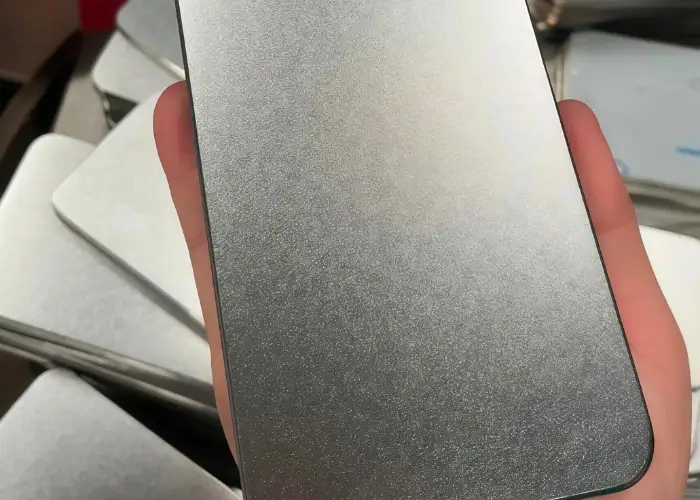
During blasting, thousands of small beads strike the aluminum from different directions. Each impact creates a very small surface deformation, gradually replacing directional milling lines or turning patterns with a diffuse texture. The finished surface reflects light more evenly and normally appears less glossy.
The process is relatively gentle compared with aggressive grit blasting, but it is not completely dimensionless. Pressure, media condition, exposure time, and nozzle distance can influence edge definition, roughness, and the amount of surface change. Thin walls and small features therefore require conservative parameters.
Bead blasting mainly affects the outer surface layer. It does not remove deep scratches, major tool marks, dents, or machining defects reliably. Parts should reach the required geometry and basic surface quality before blasting rather than depending on the finish to hide manufacturing problems.
Why Aluminum Parts Receive a Bead Blast Finish?
Many CNC-machined aluminum parts leave the machine with visible cutter paths, local gloss differences, and handling marks. These features may be acceptable functionally but inconsistent on housings, covers, control components, and products with visible exterior surfaces.
Bead blasting blends these visual differences into a controlled matte finish. It can make parts from different setups appear more consistent, reduce glare under lighting, and create a neutral surface that works well for industrial equipment, electronic housings, and consumer-facing components.
The process is also used before anodizing or coating. A blasted texture remains visible through many subsequent finishes, so bead blasting becomes part of the final appearance rather than only a cleaning operation. Its parameters should therefore be confirmed before production begins.
How the Aluminum Bead Blasting Process Works?
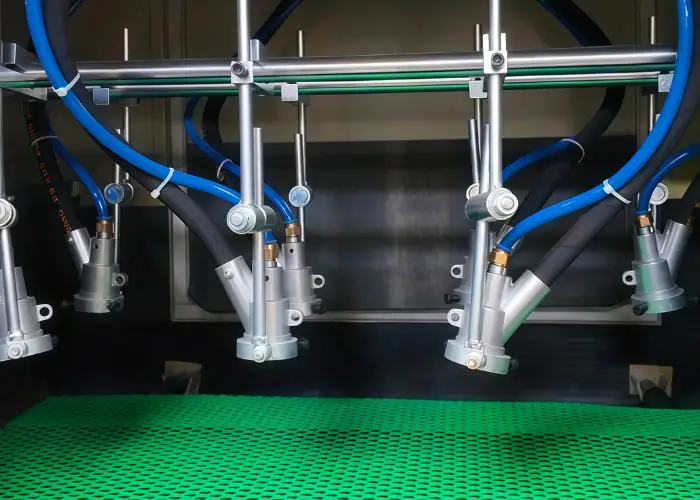
A repeatable finish depends on more than placing a part in a blasting cabinet. Cleaning, masking, media selection, nozzle movement, pressure control, coverage, and final inspection all affect the completed aluminum surface.
Part Cleaning and Pre-Blast Inspection
The aluminum part should be inspected before blasting for oil, coolant, fingerprints, oxidation, embedded chips, burrs, and visible damage. Surface contamination can block bead impact or transfer through the blasting system, causing stains, uneven texture, or poor downstream coating results.
Machining oil and coolant residue should be removed with a cleaning method compatible with the alloy and later finish. Blasting a dirty part may spread contamination across a larger area instead of eliminating it. Clean handling gloves can help prevent new fingerprints before processing.
The inspection should also identify defects that blasting cannot correct. Deep scratches, dents, chatter marks, heavy burrs, and mismatched surfaces may remain visible after finishing. Correcting these issues before blasting avoids unnecessary reprocessing and inconsistent cosmetic acceptance.
Masking Critical Features
Not every surface should receive the bead blast finish. Precision bores, bearing seats, sealing faces, threads, electrical contact areas, locating datums, polished surfaces, and identification marks may need masking to preserve their dimensions or functional condition.
Masking materials must resist media impact and remain securely attached throughout processing. Plugs, caps, tapes, custom covers, and reusable fixtures may be used depending on the geometry. The masking edge should also be positioned where any finish transition will not affect assembly or appearance.
A drawing that only states “bead blast all surfaces” can create unnecessary risk. Engineers should distinguish cosmetic faces from critical mechanical features. Clear masking instructions reduce interpretation differences between prototype and production batches.
Selecting the Blasting Media
Glass beads are frequently selected for aluminum because their rounded shape creates a diffuse matte texture with limited cutting action. Different bead sizes produce different appearances, from a finer satin surface to a stronger and more visible texture.
Ceramic beads may be used when longer media life, stable particle shape, or more repeatable automated processing is needed. Their effect depends on the specific grade and equipment settings, so ceramic media should not be treated as a direct one-for-one replacement for glass beads.
Media cleanliness is essential. Broken beads, mixed particle sizes, metal contamination, and reused media containing residue from other materials can change color or texture. Dedicated media and clean equipment are especially important for visible aluminum parts and parts that will later be anodized.
Controlling Pressure, Distance, and Angle
Air pressure determines the energy with which the beads strike the aluminum. Higher pressure generally creates a stronger texture and increases the risk of edge rounding or distortion. Lower pressure produces a softer effect but may require more time to achieve complete coverage.
Nozzle distance changes the concentration and energy of the media stream. A short distance concentrates impact on a smaller area, while a longer distance spreads the stream and reduces intensity. Operators should maintain a stable working distance rather than moving randomly toward and away from the part.
Blasting angle and gun movement influence coverage. Holding the nozzle in one location can create a dark or coarse spot, while inconsistent passes may leave visible bands. Controlled overlapping strokes or programmed automated paths improve uniformity across broad CNC-machined surfaces.
Cleaning and Inspecting the Finished Part
After blasting, loose media and dust must be removed from the part. Blind holes, internal channels, threads, pockets, and undercuts require particular attention because trapped particles can contaminate assemblies or interfere with later anodizing and coating processes.
Compressed air, vacuum cleaning, ultrasonic cleaning, or aqueous washing may be used depending on cleanliness requirements. The selected method should remove residue without scratching the fresh matte surface or introducing chemicals that affect later finishing.
Final inspection should verify texture uniformity, color consistency, masking boundaries, edge condition, cleanliness, and critical dimensions. Cosmetic parts should be evaluated under defined lighting rather than under changing workshop conditions.
Blasting Media for Aluminum Parts
Media choice determines how the aluminum surface is modified. Glass, ceramic, plastic, and angular abrasives interact with the substrate differently, so the correct selection must reflect the desired appearance, cleaning requirement, alloy, geometry, and downstream finish.
| Blasting Medium | Particle Character | Typical Surface Effect | Suitability for Aluminum |
| Glass beads | Rounded and relatively gentle | Uniform matte or satin finish | Common choice for cosmetic CNC parts |
| Ceramic beads | Rounded, durable, and consistent | Fine to defined matte texture | Suitable for controlled or automated finishing |
| Plastic media | Softer and less aggressive | Coating removal with limited substrate attack | Useful for delicate cleaning applications |
| Aluminum oxide | Angular and cutting | Rougher, etched surface with more material removal | Better for aggressive preparation than cosmetic bead finishing |
| Steel media | Dense metallic media | Strong impact and possible surface contamination | Generally avoided for clean cosmetic aluminum parts |
Glass Beads
Glass beads are widely used because their spherical shape peens the surface instead of cutting it as aggressively as angular media. They can blend light machining marks and create a soft matte appearance while preserving more of the original feature definition.
Fine beads are usually preferred for small precision components, detailed housings, and parts requiring a subtle texture. Larger beads can create a stronger visual pattern but may be too aggressive for sharp edges, engraved text, thin walls, or delicate machined features.
The condition of the beads changes with use. Repeated impact can fracture the media and introduce angular fragments, which may produce a rougher and less consistent finish. Media maintenance and replacement intervals are therefore part of process control.
Ceramic Beads
Ceramic bead media offers high durability and can maintain a stable particle shape through repeated cycles. This can support automated blasting systems where consistent media behavior and long service life are important.
The resulting finish may appear different from glass bead blasting even when the nominal particle size is similar. Density, hardness, impact energy, and machine settings all influence the texture. Sample testing is recommended before changing media type.
Ceramic beads may be useful for production housings, medical equipment components, aerospace hardware, and other parts requiring controlled cosmetic surfaces. The process still needs pressure, coverage, and contamination control to protect critical aluminum features.
Surface Finish and Dimensional Effects
Bead blasting is often described as a low-removal process, but precision parts still require dimensional planning. Surface texture, edge shape, local exposure, and the condition of thin or unsupported features can change if processing is too aggressive.
Matte Texture and Machining Mark Blending
The primary visual result is a diffuse matte or satin surface. Directional tool marks become less obvious because the blasted texture scatters light from many small surface features rather than reflecting it along a single machining direction.
Light finishing marks can be blended effectively, but deep cutter paths may remain visible beneath the texture. Bead blasting should not replace a suitable CNC finishing pass when a surface has strict cosmetic requirements.
Uniformity matters more than maximum roughness. Two parts can both appear matte but still look different when placed together because of media wear, pressure variation, operator technique, alloy condition, or blasting duration. Production samples help establish the acceptable visual range.
Edges, Thin Walls, and Delicate Features
Sharp aluminum edges can become slightly rounded after repeated media impact. The effect may be small, but it matters on knife edges, sealing lands, precision slots, fine text, and features that rely on a crisp geometric transition.
Thin walls, fins, and lightweight housings can distort if blasting pressure is high or exposure is concentrated on one side. Supporting fixtures, lower pressure, wider nozzle distance, and balanced treatment can reduce this risk.
Small holes and threads can also collect media or experience texture changes. Masking is often more reliable than attempting to clean or restore these features after blasting, especially when the part has tight fits or internal assembly requirements.
Surface Roughness Requirements
A bead blast note should not rely only on words such as “fine,” “medium,” or “matte.” These descriptions are subjective and may be interpreted differently by suppliers, operators, and inspectors.
Where function requires a roughness limit, the drawing can include a measurable surface requirement on the relevant face. However, roughness alone does not fully define visual appearance because media shape, color, gloss, and directionality also affect perception.
For cosmetic projects, an approved physical sample is often more effective than a roughness value alone. The sample can define the acceptable combination of texture, color, gloss, and uniformity for future production batches.
Aluminum Bead Blasting After CNC Machining
Bead blasting is commonly integrated after CNC milling or turning and before anodizing or final assembly. The machining strategy must anticipate the finish so that critical surfaces remain protected and cosmetic areas receive consistent exposure.
CNC Milling and Bead Blasting Workflow
CNC milling creates the final geometry, holes, pockets, interfaces, and exterior contours. Cosmetic surfaces should receive a stable finishing toolpath before the part leaves the machine, especially when broad flat faces or curved housings remain visible.
The part is then deburred and cleaned before blasting. Heavy manual sanding should be avoided unless it is part of a controlled finish plan because local sanding can produce brightness differences that remain visible after bead blasting.
Where possible, all visible surfaces should be machined with consistent cutting conditions. Bead blasting can blend minor differences, but it may not completely hide transitions between tools, setups, or repaired areas.
CNC Turning and Bead Blasting Workflow
Turned aluminum parts often show spiral feed marks along cylindrical surfaces. Bead blasting reduces the directional appearance and can create a uniform finish across diameters, shoulders, and end faces.
Bearing diameters, seal surfaces, precision threads, and mating tapers usually need protection. If these areas are blasted, increased roughness or embedded residue may affect fit, friction, sealing, or assembly.
Rotational parts should be blasted evenly around their circumference. Uneven gun movement can create bands or variations in gloss, especially on large cylindrical components viewed under directional lighting.
Masking CNC Tolerances and Datum Features
Machined parts often contain both cosmetic and functional surfaces. A housing may require a matte exterior while retaining precision bores, gasket lands, threaded holes, and electrical grounding areas in the as-machined condition.
The supplier should receive a drawing or marked model that identifies each treatment zone. Color-coded finish maps can reduce confusion on complex parts with several masking boundaries.
Masking decisions should be made before the final CNC operation when possible. Small grooves, protective shoulders, removable plugs, or custom fixtures may simplify finishing and make production results more repeatable.
How Aluminum Alloys Respond to Bead Blasting?
Different aluminum alloys and material conditions do not always produce identical colors or textures. Alloy composition, hardness, grain structure, casting quality, and previous machining or heat treatment can influence the final appearance.
6061 and Similar Wrought Aluminum Alloys
6061 is commonly used for CNC-machined housings, brackets, frames, covers, and structural components. It normally responds predictably to controlled glass bead blasting and can produce a uniform industrial matte surface.
Appearance may still vary between stock batches or between surfaces machined from different directions. Consistent material sourcing and a standardized blasting process help reduce batch-to-batch variation.
When 6061 will be anodized after blasting, the test sample should include both processes. The final anodized appearance cannot be judged accurately from the bare blasted part alone.
7075 and Higher-Strength Aluminum
7075 is frequently selected for aerospace, robotics, automation, and high-load components. Its higher strength does not eliminate the need to protect thin sections, sharp edges, precision bores, and fatigue-critical surfaces.
Bead blasting can provide a consistent cosmetic finish, but excessive exposure should be avoided on highly stressed components. Cosmetic blasting must not be confused with specification-controlled shot peening intended to create verified compressive stress.
The complete process route should follow the drawing and applicable quality requirements. If the component is fatigue-critical, the blasting media, intensity, coverage, cleaning, and approval method may require customer or engineering authorization.
Cast Aluminum Components
Cast aluminum may contain porosity, local density differences, oxide films, and surface variation that become more visible after blasting. The process can clean and unify the surface, but it cannot remove subsurface defects.
Different cast areas may respond unevenly because of material structure or previous finishing. A machined face and an as-cast face on the same component may not develop the same texture or color.
Sample processing is especially useful for cast housings and covers. It helps determine whether the selected media reveals unacceptable porosity, creates the intended appearance, and remains compatible with later coating or sealing operations.
Bead Blasting Before Anodizing and Coating
Bead blasting is often part of a multi-stage surface finishing route. It establishes mechanical texture, while anodizing, painting, or powder coating provides color, environmental resistance, or another functional surface property.
Bead Blasting Before Anodizing
When aluminum is bead blasted before anodizing, the matte texture generally remains visible beneath the anodic layer. The anodized surface appears less reflective than a polished or as-machined finish because the underlying texture scatters light.
The blasting operation does not replace the anodizer’s cleaning, deoxidizing, etching, desmutting, or other chemical preparation steps. The finishing supplier should coordinate the mechanical and chemical processes to avoid contamination and color inconsistency.
Masking requirements may also change. A surface that must remain electrically conductive or maintain a precise fit may need protection from both bead blasting and anodizing. These requirements should be defined separately on the drawing.
Color and Gloss Variation After Anodizing
The same anodizing dye can look different on polished, machined, brushed, and bead blasted surfaces. The rougher optical texture tends to reduce gloss and may make the perceived color appear darker, softer, or less saturated.
Alloy variation can also influence anodized color. Parts made from different alloys, tempers, or production lots may not match exactly even when processed together. Welding, inserts, or repaired areas can create additional visual differences.
For appearance-critical assemblies, the approved sample should use the actual alloy, machining process, bead media, blasting parameters, anodizing type, and target color. A generic color swatch is not enough to predict the final result.
Bead Blasting Before Painting or Powder Coating
Bead blasting can clean light contamination and create a uniform surface before coating, but the required adhesion profile depends on the coating system. A gentle glass bead finish may not provide the same profile as angular abrasive preparation.
The coating supplier should confirm whether bead blasting is appropriate. Some coating systems need chemical conversion treatment, aggressive abrasion, or other preparation in addition to mechanical blasting.
After blasting, parts should be handled cleanly and coated within the specified process window. Dust, fingerprints, moisture, and storage oxidation can reduce the reliability of the final coating.
Bead Blasting vs Other Aluminum Finishes
Bead blasting is only one surface treatment option. The correct finish depends on whether the part needs a matte appearance, directional texture, reflectivity, coating adhesion, corrosion protection, or minimal change to critical geometry.
| Finish | Typical Appearance | Main Engineering Purpose | Key Limitation |
| Bead blasting | Uniform matte or satin texture | Blend machining marks and reduce glare | Requires masking and strict process consistency |
| Sand or grit blasting | Coarser, more aggressively etched surface | Cleaning and coating preparation | Greater material and edge impact |
| Brushing | Directional linear grain | Decorative controlled pattern | Difficult on complex geometry |
| Polishing | Smooth and reflective | High-gloss appearance and low roughness | Shows scratches and requires more labor |
| As-machined | Visible cutter or turning marks | Lowest secondary-processing cost | Cosmetic consistency depends on machining |
| Anodizing | Clear or colored oxide finish | Surface protection and appearance | Final look depends on underlying texture |
Bead Blasting vs Sandblasting
Both processes use propelled media, but the particle shape and intended result differ. Bead blasting normally uses rounded media to create a controlled matte texture, while sandblasting or grit blasting often uses angular particles that cut into the surface more aggressively.
Bead blasting is generally selected for cosmetic CNC parts and delicate aluminum surfaces. Grit blasting is more suitable when heavy oxidation, old coating, or a stronger adhesion profile must be removed or created.
The terms are sometimes used interchangeably in commercial communication. Engineering drawings should identify the actual medium and target finish rather than relying on the general word “sandblasted.”
Bead Blasting vs Brushing
Brushing creates a directional grain using abrasive belts, wheels, or pads. It works well on flat panels and surfaces where a consistent linear appearance is part of the product design.
Bead blasting creates a non-directional texture and can reach curved or irregular surfaces more easily. It is often better for three-dimensional housings, turned parts, and components with transitions between multiple faces.
Brushing may highlight alignment differences between adjacent panels, while bead blasting may make orientation less noticeable. The assembly’s visual design should guide the selection.
Bead Blasting vs Polishing
Polishing reduces roughness and creates a reflective surface. It can support decorative parts, optical appearance, easy cleaning, or lower-friction applications when the correct polishing process is used.
Bead blasting moves the appearance in the opposite direction by creating a diffuse texture. It hides fingerprints and light reflections better but does not produce a mirror finish.
Polishing and bead blasting may also be combined selectively on one component. Clear masking boundaries are essential because even minor overspray can change the polished area permanently.
Benefits and Limitations of Aluminum Bead Blasting
The process is valuable because it creates a consistent industrial appearance and integrates well with CNC manufacturing. Its limitations become important when components have delicate features, demanding cleanliness, or tightly controlled cosmetic requirements.
Main Benefits
Bead blasting creates a uniform matte finish that reduces the visibility of light tool marks and handling variation. This makes CNC-machined parts look more consistent across complex surfaces and production batches.
The process can reduce glare, improve tactile feel, remove light contamination, and provide a suitable base texture for some anodizing or coating routes. It can also treat complex external geometry that would be difficult to brush uniformly.
Because the process is mechanical, it can be adjusted through media, pressure, distance, angle, and exposure. This flexibility allows engineers to develop different textures for prototypes, industrial products, and high-volume components.
Main Limitations
Bead blasting is line-of-sight dependent. Deep blind pockets, narrow internal channels, hidden undercuts, and enclosed cavities may receive incomplete or uneven coverage.
Manual blasting can introduce operator variation. Distance, speed, angle, and overlap may differ across the part or between shifts. Fixtures and automation improve repeatability but add process development and equipment cost.
The finish is not a substitute for corrosion protection. Bare blasted aluminum remains an exposed aluminum surface and may require anodizing, conversion coating, painting, or another treatment depending on the operating environment.
Common Failure Risks
Uneven texture can result from inconsistent pressure, worn media, irregular gun movement, poor lighting, or mixed exposure. Over-blasting can produce dark areas, excessive roughness, rounded edges, or distortion.
Contamination can come from dirty parts, reused media, ferrous residue, gloves, fixtures, or an inadequately cleaned cabinet. Contamination may become visible only after anodizing, when correction is more difficult.
Inadequate masking can damage precision surfaces or leave irregular finish boundaries. A production plan should verify plugs, tapes, fixtures, and handling methods before processing the full batch.
Applications of Aluminum Bead Blasting
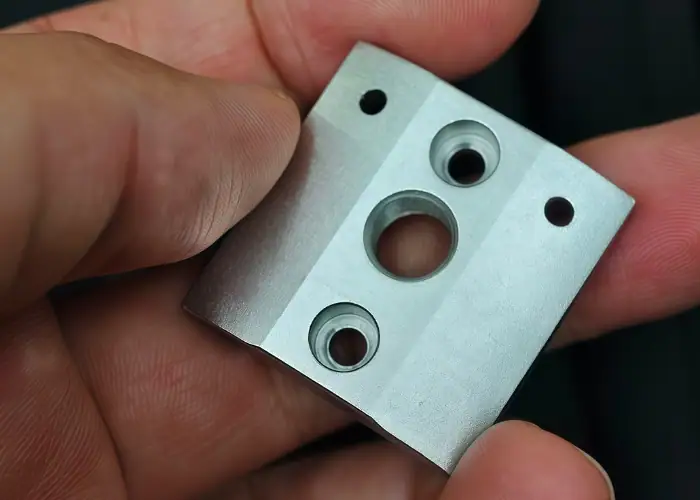
Aluminum bead blasting is used across industries where CNC-machined components need controlled appearance, reduced glare, clean surfaces, or preparation for further finishing. The process requirements vary according to function and quality standards.
Automotive and Industrial Equipment
Automotive applications include aluminum interior trim, control components, brackets, housings, knobs, and prototype parts. The matte finish reduces reflections and creates a consistent visual surface across complex machined forms.
Industrial equipment uses bead blasted aluminum for control housings, machine covers, fixtures, handles, frames, and instrument panels. These parts often need a practical non-glossy finish that remains consistent under factory lighting.
Functional bores, mounting faces, and label areas should be separated from cosmetic surfaces. Equipment components may also require anodizing or coating after blasting for improved environmental durability.
Medical and Aerospace
Medical equipment housings and instruments may use matte surfaces to reduce glare and create a clean professional appearance. Clean media, controlled equipment, and documented post-blast cleaning are important where contamination requirements are strict.
Aerospace parts may use blasting for selected housings, instrumentation components, brackets, and non-critical cosmetic surfaces. Process approval becomes more important when fatigue, cleanliness, traceability, or controlled surface condition affects performance.
Bead blasting should not be described as controlled shot peening unless the process is qualified for that purpose. Aerospace engineering drawings must distinguish cosmetic finishing from specification-based peening treatments.
Automation and Electronics
Automation systems use blasted aluminum for sensor housings, robot fixtures, control boxes, end-of-arm tooling, and machine interfaces. A matte finish reduces glare around cameras and inspection systems while giving custom components a consistent appearance.
Electronics applications include heat-sink housings, audio enclosures, instrument bodies, control panels, and protective covers. Bead blasting is frequently combined with clear or colored anodizing.
Electrical grounding points, threaded inserts, thermal interfaces, and connector locations may require masking. Surface appearance should not compromise conductivity, heat transfer, or assembly fit.
Robotics and Consumer Products
Robotic components often combine complex CNC geometry with visible aluminum surfaces. Bead blasting can unify the appearance of arms, grippers, joints, sensor covers, and lightweight structural components.
Consumer products use the finish for camera parts, audio equipment, handles, accessories, and premium enclosures. Fingerprint resistance and reduced glare are common visual goals.
Cosmetic requirements are especially strict when several parts are assembled side by side. Alloy sourcing, blasting parameters, anodizing lots, and inspection lighting should be controlled to reduce visible mismatch.
Quality Control for Bead Blasted Aluminum
Quality inspection should evaluate appearance, texture, cleanliness, geometry, and downstream compatibility. A surface can look acceptable at first glance while still containing trapped media, masking damage, or unacceptable variation between parts.
Visual Texture and Color Inspection
Visual inspection should use defined lighting, background, viewing angle, and distance. Changing these conditions can make the same matte surface appear lighter, darker, smoother, or rougher.
Parts should be compared with an approved reference sample rather than only with written descriptions. The sample provides a physical standard for texture, gloss, and acceptable cosmetic variation.
Inspection should check for streaks, dark spots, light areas, fingerprints, scratches, media impact bands, and inconsistent coverage around corners or recessed regions.
Roughness and Dimensional Inspection
Where roughness affects function or coating performance, a profilometer or suitable comparator can verify the specified surface range. Measurement direction and location should be consistent across samples.
Critical dimensions should be checked after blasting, particularly on exposed edges, thin walls, small holes, sealing surfaces, and parts that received extensive treatment.
Inspection results should be linked to process records. Media lot, pressure setting, equipment, operator or program, exposure time, and cleaning method help trace the cause of variation.
Cleanliness and Downstream Readiness
Finished parts should be free from loose media, dust, oil, and handling contamination. Internal cavities, cross holes, threads, and blind pockets require targeted inspection.
When parts proceed to anodizing or coating, excessive storage between operations may introduce oxidation or contamination. Clean packaging and controlled handling preserve the prepared surface.
For production programs, pilot samples should pass both visual inspection and the downstream finishing process. A bare bead blasted sample alone cannot confirm final anodized color, coating adhesion, or assembly performance.
FAQs
Can bead blasting change the dimensions of an aluminum part?
Bead blasting normally causes much less material removal than aggressive grit blasting, but it can still affect sharp edges, thin walls, small holes, and precision surfaces if pressure or exposure is excessive. Critical bores, threads, sealing faces, and datums should be masked and inspected after processing.
Which media is best for aluminum bead blasting?
Fine glass beads are a common choice for creating a uniform satin or matte finish on CNC-machined aluminum. Ceramic beads may offer greater durability and process stability. The best media depends on the alloy, geometry, target texture, equipment, and downstream treatment, so production samples are recommended.
Should aluminum be bead blasted before or after anodizing?
Bead blasting is generally performed before anodizing when a matte anodized appearance is required. The anodic layer follows the underlying texture. Blasting after anodizing would damage or remove part of the finished oxide layer and create an inconsistent surface.
Can bead blasting remove deep CNC machining marks?
Bead blasting can blend light tool paths and reduce their visual contrast, but it does not reliably remove deep cutter marks, chatter, scratches, or mismatched surfaces. The part should receive an appropriate CNC finishing pass before blasting when cosmetic quality is important.
Conclusion
Aluminum bead blasting creates a uniform matte surface that can blend light machining marks, reduce glare, and prepare CNC parts for anodizing or coating. Reliable results depend on clean parts, suitable media, controlled pressure, stable nozzle movement, proper masking, alloy consistency, and inspection of both cosmetic and functional surfaces.
At TiRapid, we provide precision CNC machining and surface finishing services for custom aluminum parts, helping customers control machining quality, bead blasted appearance, dimensional accuracy, and downstream finishing performance for demanding engineering applications.