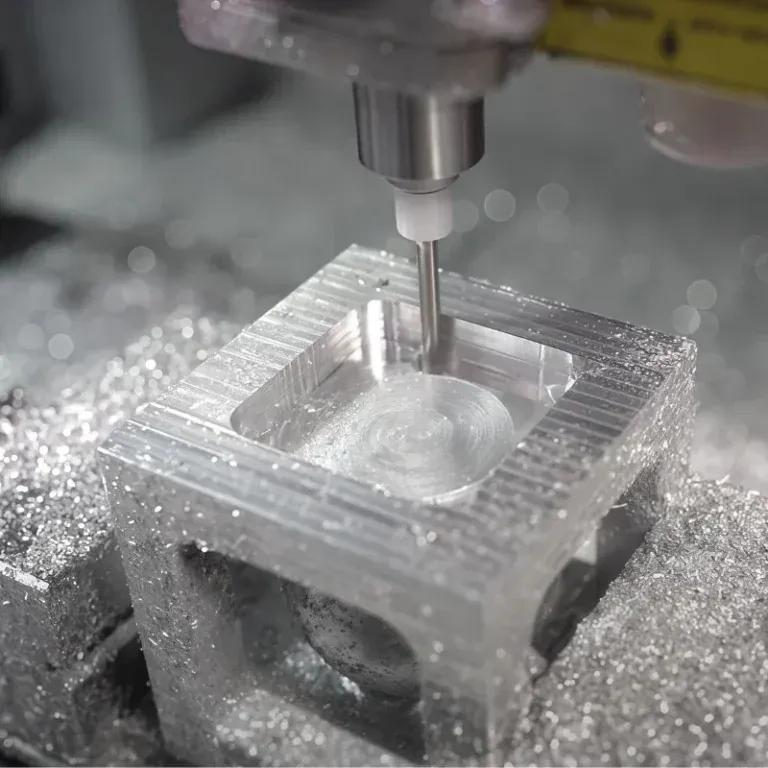
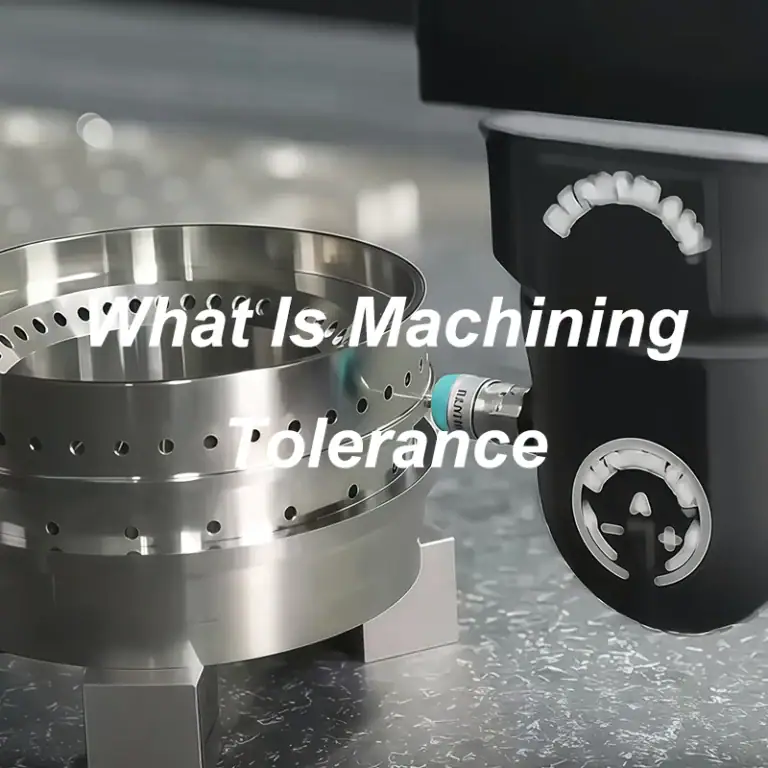
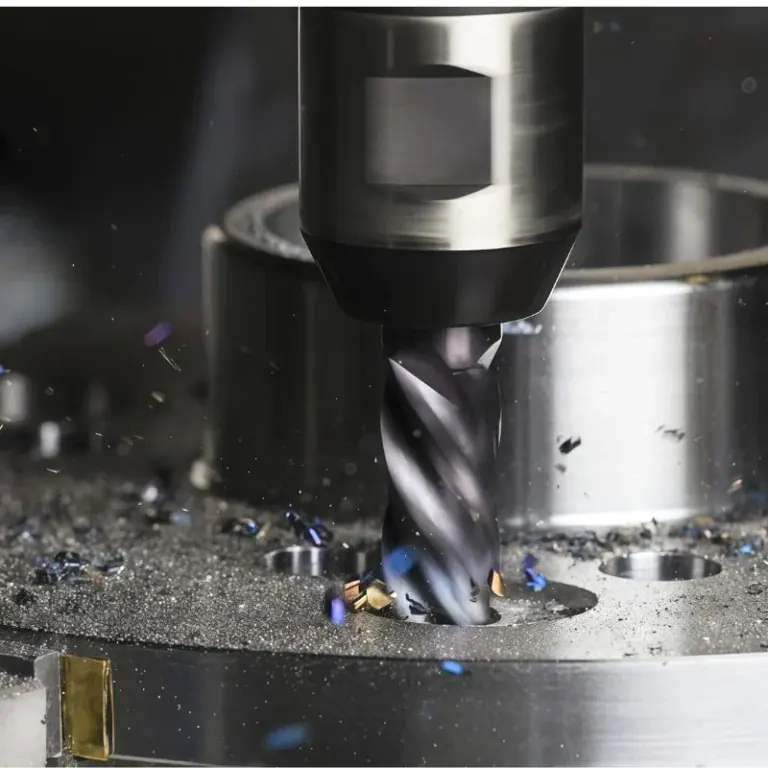
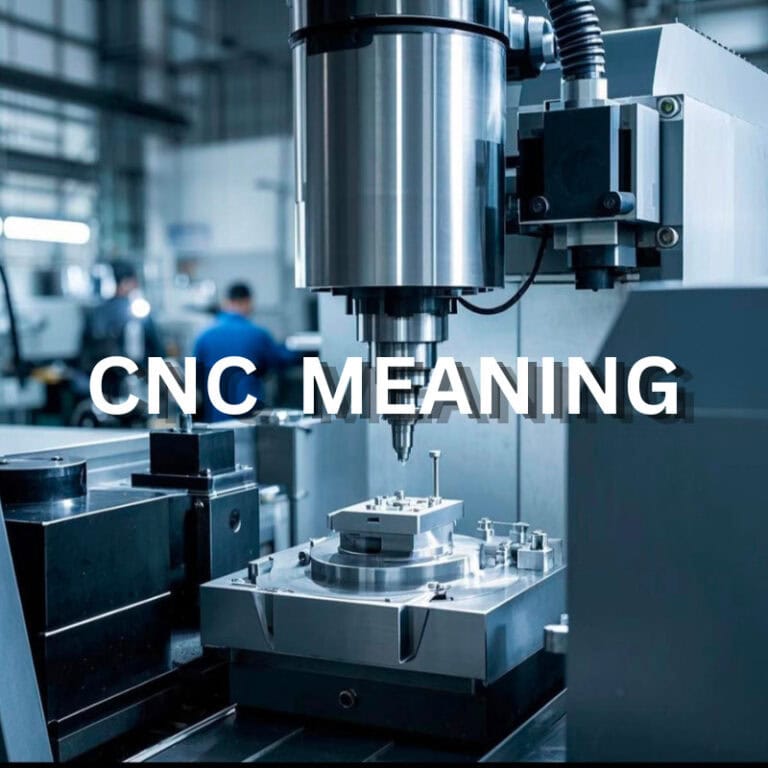
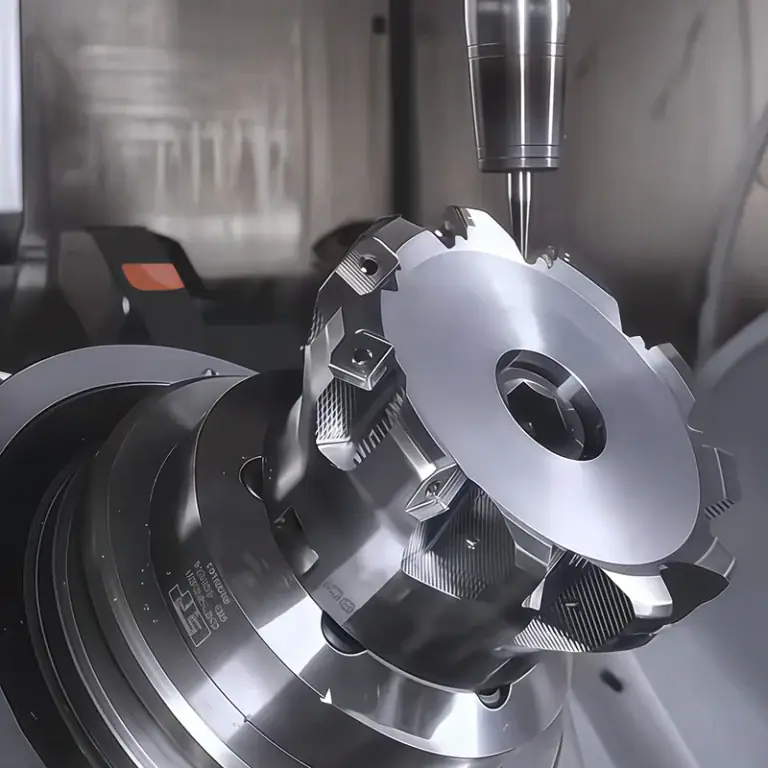
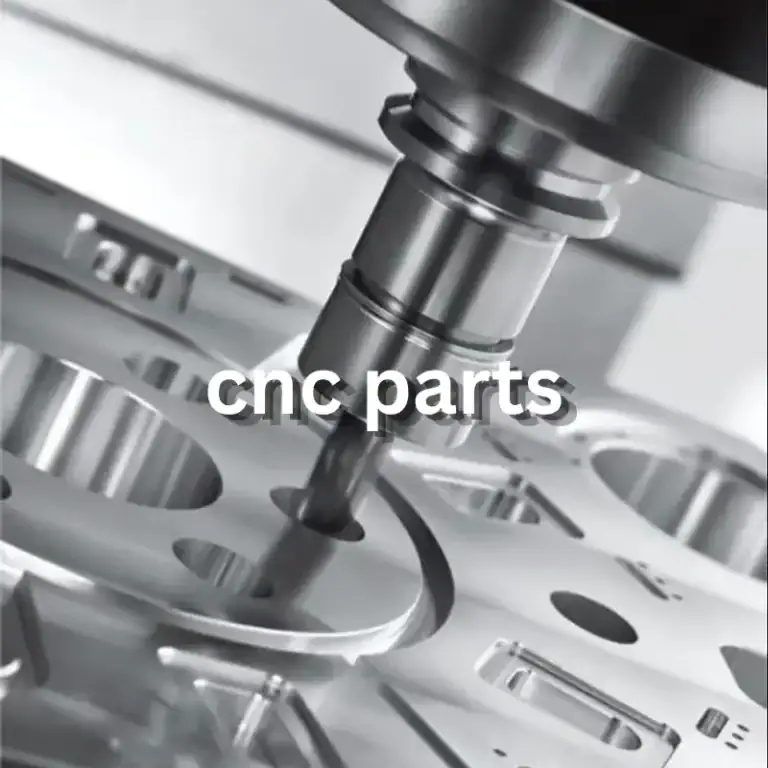
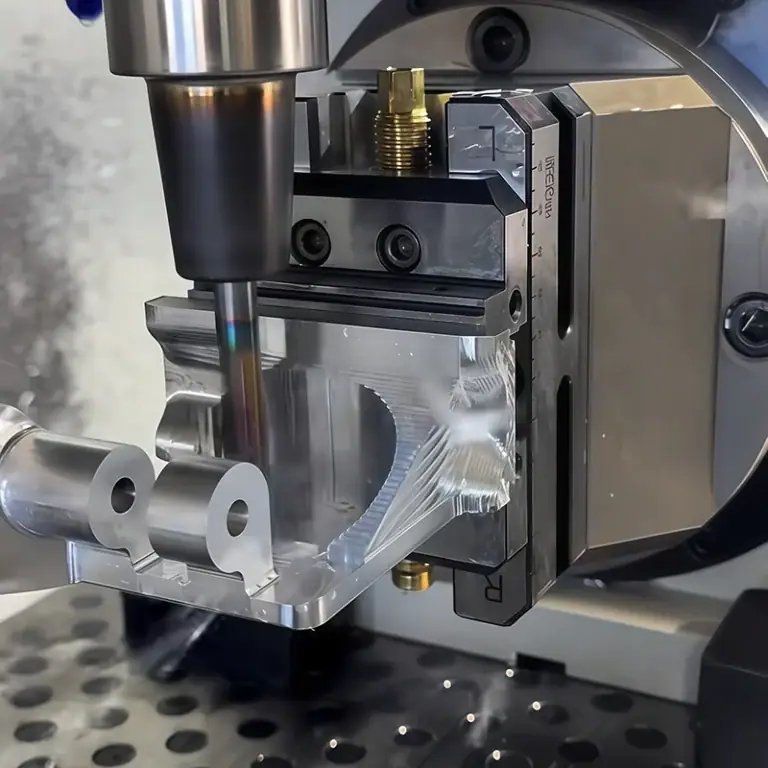
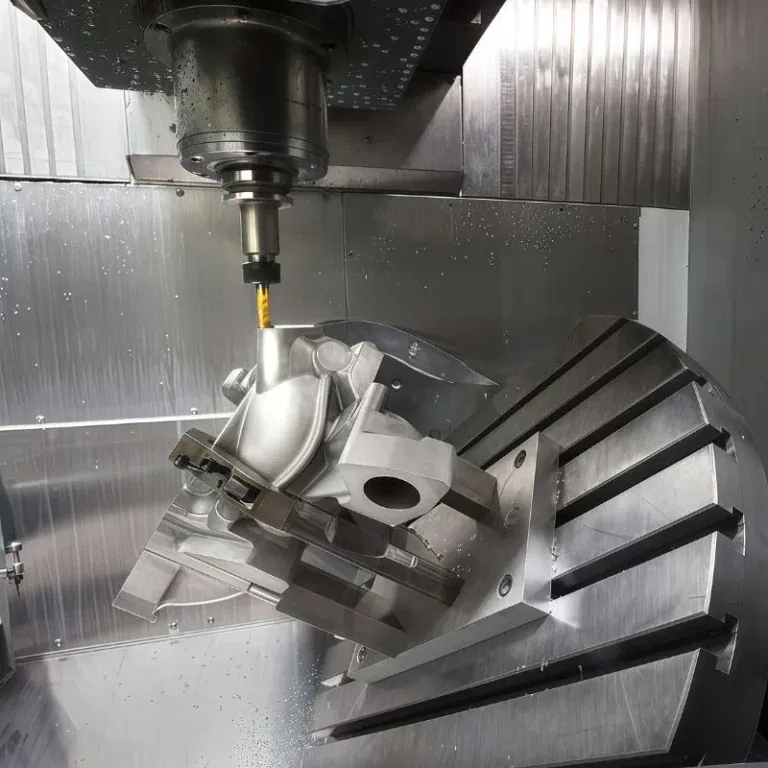
Industrial equipment parts are often far more complicated than they look. A mounting component with angled holes, a multi-surface connection part, or a complex curved transmission component can become difficult to machine if the workpiece has to be manually flipped and repositioned again and again. Every additional setup takes time and may introduce positioning errors. This is especially important in the industrial equipment industry, where many custom parts are produced in relatively small quantities but still require reliable accuracy, surface quality, and assembly performance. 5-axis CNC machining makes these jobs more manageable by allowing the cutting tool to approach the workpiece from different directions, reducing repeated setups and improving overall machining stability.
Why Is 5-Axis CNC Machining Increasingly Used in Industrial Equipment?
Industrial equipment is becoming more advanced, and part designs are no longer limited to simple flat or regular structures. Many components now require multiple machining surfaces, angled holes, and complex curved features. With conventional 3-axis machining, these parts may require repeated flipping and repositioning. 5-axis CNC machining can complete more features in a single setup, making it particularly useful for custom machinery, automation equipment, and high-precision mechanical components.
Reducing Repeated Setups for Complex Parts
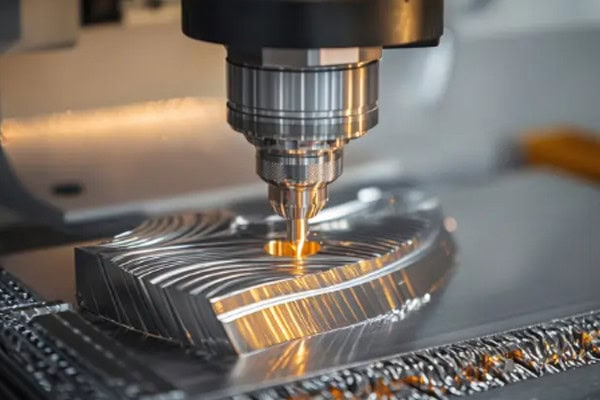
Industrial equipment parts often have machining features on several surfaces. When the workpiece has to be repositioned for every direction, the machining process becomes longer and the risk of accumulated positioning errors increases. A 5-axis machine can adjust the tool or workpiece orientation, providing greater flexibility when machining complex areas.
- A single setup can cover multiple machining surfaces, reducing manual flipping operations.
- Angled holes, inclined surfaces, and side features can be incorporated directly into the machining path.
- For precision mating areas, fewer repositioning operations help maintain dimensional relationships.
The purpose is not simply to use a more advanced machine. The real value is making a complicated machining process more efficient. For industrial equipment parts, eliminating even one unnecessary setup can remove another potential source of error.
Greater Flexibility for Complex Curved Surfaces
Automation equipment, industrial robots, and high-end machinery often contain curved, irregular, or free-form surfaces. 5-axis CNC machining allows the tool orientation to change continuously, enabling the cutter to approach the workpiece from a more suitable direction and improving machining performance in complex areas.
Maintaining Efficiency in Low-Volume Custom Production
Industrial equipment manufacturing does not always involve mass production. Many components are produced in small quantities for equipment development, testing, maintenance, or customized projects. 5-axis machining does not require large-scale mold development, while CNC programs can be adjusted relatively quickly, making it suitable for prototypes and small-batch production.
Which Industrial Equipment Parts Are Suitable for 5-Axis CNC Machining?
Not every industrial equipment component requires 5-axis machining. The process becomes particularly valuable for parts with complex structures, multiple machining surfaces, or features that would require frequent repositioning on a 3-axis machine. For purchasing teams, the key is not simply the physical size of the part, but its machining features and assembly requirements.
Precision Structural Parts for Automation Equipment
Automation equipment often contains mounting bases, robotic arm connectors, positioning components, and other precision structural parts. These components may require several surfaces to maintain accurate dimensional relationships. 5-axis CNC machining can reduce repeated positioning and keep more operations within a controlled setup, making it suitable for prototypes and small-batch production.
Multi-Surface Mounting and Connection Components
These parts may have mounting holes on one surface, positioning grooves on another, and angled holes or other features elsewhere. Using a conventional 3-axis machine may require repeated workpiece rotation. 5-axis machining can reduce these operations and help maintain better positional relationships between different features.
The following table shows common industrial equipment parts that can benefit from 5-axis machining and the key points that typically require attention:
| Part Type | Common Materials | Key 5-Axis Machining Requirements | Typical Application |
| Equipment Mounting Base | Aluminum Alloy, Steel | Multi-surface dimensions, hole positioning | Automation Equipment |
| Robotic Arm Connector | Aluminum Alloy, Stainless Steel | Curved surfaces, positioning features | Industrial Robots |
| Precision Support Component | Alloy Steel, Aluminum Alloy | Flatness, assembly dimensions | Industrial Machinery |
| Irregular Transmission Component | Steel, Stainless Steel | Curved surfaces, angular features | Transmission Equipment |
Different parts have different priorities. Some focus on hole positioning, while others are more demanding in terms of curved surfaces or assembly relationships. This is where 5-axis CNC machining can provide real value by reducing unnecessary machining steps.
Complex Curved and Irregular Parts
When a component contains continuous curves, inclined surfaces, or spatial structures, 5-axis machining allows the tool orientation to change along the programmed path. This can reduce tool interference and improve machining results in difficult areas, making it suitable for high-precision customized industrial equipment components.
Prototype Parts for Industrial Equipment Development
Equipment development often involves design changes, dimensional adjustments, and structural modifications during testing. 5-axis CNC machining provides flexible programming, allowing manufacturers to produce prototypes more quickly without excessive investment in dedicated tooling.
How Can 5-Axis CNC Machining Control Accuracy, Efficiency, and Cost?
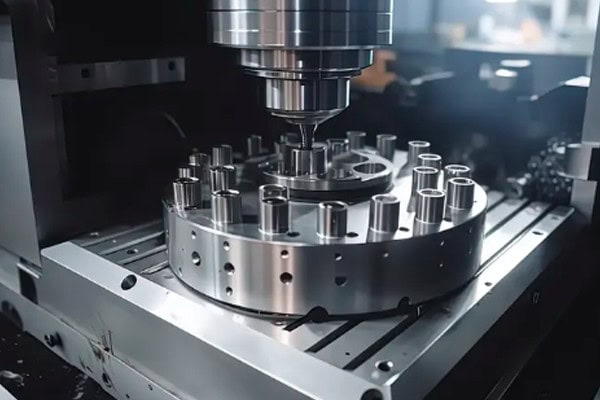
The advantages of 5-axis equipment are clear, but simply placing a part into a 5-axis machine does not automatically guarantee a good result. Toolpaths, fixture design, material condition, machining sequence, and inspection methods all affect the finished component. Industrial equipment parts can be structurally complicated, and poorly planned processes may lead to rework, longer production cycles, and higher manufacturing costs.
Controlling Errors Through Fixture Design
Although 5-axis machining can reduce the number of setups, fixture design remains extremely important. If the workpiece is not positioned securely, even a highly accurate machine cannot maintain the desired dimensions. Before production, the main reference surfaces, load-bearing areas, and tool access directions should be carefully considered so the part remains stable during cutting.
- Fixture locating points should avoid critical machining areas and leave sufficient space for tool movement.
- Thin-wall or long components should not be clamped with excessive pressure, which can cause dimensional changes after unclamping.
- For multi-surface machining, critical dimensions should share stable reference features whenever possible to reduce error transfer.
A well-planned fixture gives the machining program and inspection process a reliable foundation. Many machining problems are not caused by insufficient machine accuracy, but by the workpiece failing to remain stable throughout the process.
Toolpath Design Directly Affects Machining Efficiency
5-axis CNC programming is more complex than conventional 3-axis programming. Changes in tool orientation directly affect cutting stability. A well-designed toolpath should not only prevent interference but also maintain smooth cutting conditions and avoid sudden increases in cutting load.
Finishing Should Not Focus Only on Speed
Industrial equipment components often contain mounting surfaces, mating surfaces, and visible external surfaces, each with different surface requirements. Increasing feed rates too aggressively during finishing may leave obvious tool marks or affect final assembly performance. A balanced roughing and finishing strategy is often more effective for controlling the overall manufacturing cost.
How Should 5-Axis CNC Machined Industrial Equipment Parts Be Inspected?
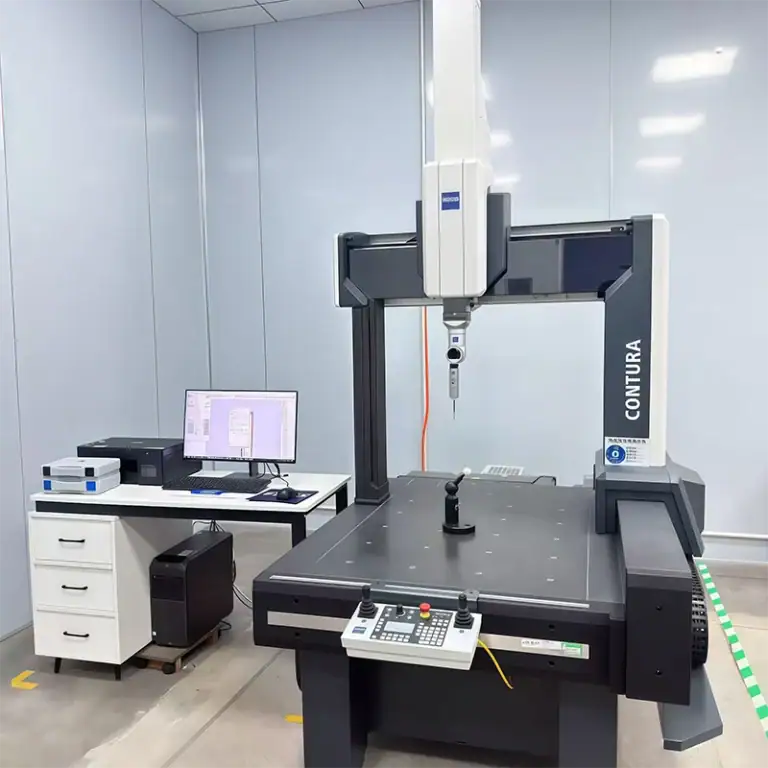
Once machining is complete, inspection determines whether the part is truly ready for delivery. Industrial equipment components are rarely used alone. They often need to work with shafts, guide rails, fixtures, transmission systems, and other components. A slightly misplaced hole or an incorrect mating surface dimension can create significant adjustment work during final assembly. Inspection should focus on critical dimensions, geometric accuracy, and surface condition.
Critical Dimensions Require Detailed Inspection
Inspection requirements vary from part to part, but hole positions, mounting surfaces, mating dimensions, and critical external features are usually among the most important items. For 5-axis machined parts, the positional relationship between different machining surfaces should also be verified rather than checking isolated dimensions only.
| Inspection Item | Common Equipment | Main Inspection Content |
| Overall Dimensions | Micrometer, Caliper | Length, thickness, diameter |
| Hole Position Accuracy | CMM, Specialized Gauges | Hole diameter, positional relationship |
| Curved Surface Accuracy | CMM, Profile Inspection Equipment | Surface profile |
| Flatness | CMM, Flatness Inspection Equipment | Mounting surface condition |
| Surface Quality | Roughness Tester, Visual Inspection | Tool marks, scratches, burrs |
Complete inspection gives purchasing teams a clearer picture of whether components meet assembly requirements. It also provides useful data for monitoring dimensional changes during batch production.
Surface Quality Affects Assembly Performance
Burrs, visible tool marks, or surface damage can cause problems during industrial equipment assembly, including interference, abnormal clearances, or poor fitting. Sliding and precision positioning areas are particularly sensitive to surface condition. Proper deburring and necessary post-processing can help components move more smoothly into the assembly stage.
Batch Production Requires Consistent Quality
When an industrial equipment project moves into long-term production, producing one good prototype is not enough. Each subsequent batch should maintain a similar quality level. Stable CNC programs, tool management, and inspection records can help manufacturers reduce dimensional variation between batches.
The real value of 5-axis CNC machining for industrial equipment is not simply having more machine axes. It is the ability to reduce workpiece flipping, repeated positioning, and unnecessary machining steps while maintaining dimensional relationships, curved surface quality, and delivery consistency. For automation equipment, industrial robots, precision machinery, and customized equipment components, 5-axis machining is particularly useful for complex parts with multiple machining surfaces. Tirapid provides professional CNC machining services for the industrial equipment industry, offering 5-axis precision machining and custom part manufacturing support to make the journey from drawing to finished component more efficient and reliable.