PVDF material is a high-performance fluoropolymer plastic known for strong chemical resistance, good mechanical strength, weather resistance, electrical insulation, and stable performance in harsh environments. Its full name is polyvinylidene fluoride, and it is widely used in chemical processing, pipes, valves, coatings, electronics, semiconductor systems, and CNC machined plastic parts.
In this guide, we explain what is pvdf material, what PVDF means, how PVDF plastic is structured, what properties of PVDF matter most, how PVDF is processed, and where it is commonly used.
What Is PVDF Material?
PVDF material is a semi-crystalline fluoropolymer made from vinylidene fluoride monomer. It is a thermoplastic plastic that can be melted, shaped, welded, extruded, molded, or machined into industrial components.
PVDF plastic is valued because it provides a strong balance of chemical resistance, toughness, purity, UV resistance, and electrical properties. Unlike some very soft fluoropolymers, PVDF has better stiffness and mechanical strength, which makes it suitable for more structural plastic parts.
In practical manufacturing, PVDF is often chosen for applications where ordinary plastics may degrade, swell, crack, or lose performance. It is common in chemical fluid systems, semiconductor equipment, lithium battery processes, architectural coatings, and precision industrial parts.
PVDF Material Composition
PVDF material is composed mainly of carbon, hydrogen, and fluorine atoms arranged in a repeating polymer chain. The strong carbon-fluorine bonds contribute to its chemical resistance, weatherability, and thermal stability.
PVDF is semi-crystalline, which means it contains both ordered crystalline regions and less ordered amorphous regions. This structure helps balance mechanical strength, toughness, and processing behavior.
Commercial PVDF grades may include additives, stabilizers, pigments, fillers, or processing modifiers depending on the application. For high-purity fluid systems, medical-related uses, or semiconductor parts, grade selection and contamination control become especially important.
PVDF Structure and Material Characteristics
PVDF structure and material characteristics explain why the material performs well in chemical, electrical, outdoor, and industrial applications. Its fluorinated polymer backbone gives it strong environmental resistance, while its semi-crystalline nature supports useful mechanical strength.
PVDF Chemical Structure
PVDF chemical structure is based on repeating vinylidene fluoride units. The polymer chain contains carbon-fluorine bonds, which are known for strong chemical stability.
This chemical structure helps PVDF resist many acids, bases, solvents, hydrocarbons, and oxidizing environments, depending on concentration and temperature. It also supports good weather resistance and low moisture absorption.
However, chemical resistance is not universal. Designers should always check PVDF material compatibility with the exact chemical, concentration, temperature, pressure, and exposure time before final selection.
Crystal Structure
PVDF has a semi-crystalline structure, which means it contains crystalline regions that improve strength and stability and amorphous regions that contribute to toughness and processing behavior.
PVDF can exist in different crystalline phases, and these phases can influence properties such as piezoelectric behavior, dielectric performance, mechanical response, and processing performance.
For most industrial machined parts, the key takeaway is simple: PVDF’s crystalline structure helps it maintain useful stiffness, stability, and chemical resistance while remaining processable as a thermoplastic.
Physical Properties
The physical properties of PVDF include good density stability, low moisture absorption, good surface quality, and strong resistance to weathering and UV exposure. These properties make PVDF useful for both indoor chemical systems and outdoor components.
PVDF does not absorb much water compared with moisture-sensitive plastics such as nylon. This helps maintain dimensional stability in humid or wet service environments.
Physical properties should still be checked by grade. Sheet, rod, molded, extruded, filled, and coating-grade PVDF may show different behavior in machining, welding, thermal expansion, and surface finish.
Mechanical Properties
The mechanical properties of PVDF include good tensile strength, toughness, abrasion resistance, stiffness, and fatigue performance compared with many chemically resistant plastics. It is not as strong as PEEK, but it is stronger and more rigid than many softer fluoropolymers.
PVDF can be used for pump parts, valve bodies, fittings, plates, housings, and structural plastic components where chemical resistance and moderate mechanical strength are required together.
For load-bearing parts, engineers should evaluate wall thickness, operating temperature, creep behavior, fastener loads, and long-term stress. PVDF is strong for a fluoropolymer, but it still needs proper design.
Electrical Properties
PVDF provides good electrical insulation and useful dielectric properties, which makes it suitable for electrical and electronics applications. It can be used in wire insulation, sensors, films, electronic parts, and high-purity equipment components.
Some PVDF forms are also valued for piezoelectric and ferroelectric behavior, especially in films and specialized sensor applications. These properties make PVDF useful beyond normal structural plastic uses.
For CNC machined electrical parts, the final selection should consider insulation requirement, voltage, humidity, heat, dimensional tolerance, and flame or regulatory requirements.
Key Properties of PVDF
The key properties of PVDF are chemical resistance, temperature resistance, mechanical strength, weatherability, low moisture absorption, purity, and good processability. These properties make PVDF useful in harsh industrial and high-purity environments.
Chemical Resistance
PVDF has strong chemical resistance against many acids, bases, halogens, solvents, hydrocarbons, and corrosive fluids. This is one of the main reasons engineers choose PVDF material for demanding industrial parts.
In chemical processing systems, PVDF is often used for pipes, valves, fittings, tanks, pump components, and fluid contact parts. It can resist many aggressive media better than common plastics such as PVC, PP, or PE.
Chemical resistance must still be verified. Strong chemicals at high temperature, long exposure times, or specific solvent systems can change performance, so compatibility charts and application testing are important.
Temperature Resistance
PVDF offers better temperature resistance than many commodity plastics and can perform in applications where PVC, PP, or PE may not be suitable. This makes it useful for warmer chemical systems, outdoor parts, and equipment near process heat.
PVDF is not a replacement for all high-temperature plastics. For extreme heat and load, materials such as PEEK, PPS, or PTFE-based compounds may be considered.
The correct question is not only maximum temperature. Engineers should also ask whether the part must hold tolerance, support load, resist chemicals, or maintain sealing performance at that temperature.
Mechanical Strength and Toughness
PVDF provides a good balance of mechanical strength and toughness for a chemical-resistant plastic. It can resist impact, vibration, and moderate load better than many soft fluoropolymers.
This makes PVDF suitable for machined blocks, fittings, valve components, pump parts, insulators, and structural fluid-handling components. It can also support fabricated or welded assemblies.
For high-load structural parts, PVDF should be evaluated carefully. It is strong for its material class, but it may not match PEEK, glass-filled nylon, or metal in demanding mechanical designs.
UV and Weather Resistance
PVDF has excellent UV and weather resistance, making it suitable for outdoor applications, architectural coatings, exterior panels, and components exposed to sunlight and weathering.
This is one reason PVDF coatings are used on building materials and exterior surfaces where long-term appearance and surface protection matter. PVDF can resist weather-related degradation better than many standard plastics.
For outdoor machined parts, designers should still confirm grade, color, thickness, stress condition, and exposure environment. UV resistance is strong, but mechanical design still matters.
Low Moisture Absorption
PVDF has low moisture absorption, which helps maintain dimensional stability and material performance in wet or humid conditions. This is valuable for fluid handling, outdoor parts, and precision components.
Compared with nylon, PVDF is much less moisture-sensitive. This makes it more predictable for parts where swelling, stiffness loss, or dimensional change would create problems.
For CNC machined PVDF parts, low moisture absorption supports more stable tolerances, but thermal expansion, machining stress, and fixture design should still be considered.
Purity and Cleanliness
PVDF can offer high purity and cleanliness in selected grades, making it valuable for semiconductor, pharmaceutical, biomedical, and high-purity fluid applications. It is often used where contamination control matters.
High-purity PVDF grades may be used in chemical delivery lines, ultrapure water systems, filters, membranes, and fluid contact components. The material can help reduce contamination risk when the correct grade is selected.
For critical applications, buyers should confirm extractables, leachables, certification, resin grade, manufacturing process, and cleaning requirements before production.
PVDF Material Compatibility
PVDF material compatibility refers to how well PVDF resists chemicals, solvents, temperature, moisture, UV exposure, and operating stress in a specific application. It is one of the most important factors in PVDF material selection.
Chemical Compatibility
PVDF chemical compatibility is generally strong across many acids, bases, salts, hydrocarbons, and industrial fluids. This makes it useful in chemical processing, laboratory systems, water treatment, and fluid handling.
PVDF is often chosen when PVC, PP, or PE cannot provide enough chemical or temperature resistance. It is also easier to fabricate in some designs than very soft fluoropolymers.
Compatibility charts should be treated as starting points, not final proof. Real-world testing may be needed when chemicals are hot, concentrated, mixed, pressurized, or used in long-term exposure.
Solvent and Acid Resistance
PVDF offers strong resistance to many solvents and acids, which makes it suitable for piping systems, pump parts, valves, linings, and chemical-resistant components. It performs well in many corrosive process environments.
However, some strong solvents, high-temperature chemicals, or special mixtures may attack or swell PVDF. For safety-critical systems, material compatibility must be confirmed before use.
When comparing materials, PVDF often provides a stronger chemical-resistance profile than PVC, while PTFE may still offer broader chemical inertness in extremely aggressive conditions.
Environmental Compatibility
PVDF has good environmental compatibility in outdoor, humid, wet, and UV-exposed conditions. Its weather resistance is one reason it is used in coatings, exterior materials, and outdoor industrial components.
PVDF can also resist many cleaning chemicals and fluid contact environments, depending on the grade and exposure conditions. This makes it valuable in industrial equipment and high-purity systems.
Environmental compatibility should include more than chemical resistance. Designers should consider UV exposure, temperature cycling, mechanical stress, cleaning method, and expected service life.
When PVDF Is Not Suitable
PVDF is not suitable when the application requires the lowest material cost, very high structural strength, extremely high temperature resistance, or universal chemical inertness. It also may not be ideal when a more flexible or lower-friction material is required.
For low-cost parts, PVC, PP, PE, or ABS may be more economical. For very high load or heat, PEEK or PPS may perform better. For the broadest chemical inertness and lowest friction, PTFE may be more suitable.
The best material is not always the highest-performance option. It is the one that matches chemical exposure, load, temperature, tolerance, cost, and production method.
PVDF Processing Methods
PVDF can be processed by injection molding, extrusion, CNC machining, welding, fabrication, coating, and film processing. The right method depends on part geometry, tolerance, volume, grade, and end-use environment.
Injection Molding PVDF
Injection molding PVDF is used for high-volume parts with complex shapes, repeatable geometry, and controlled material performance. It is suitable for fittings, housings, valve parts, connectors, and fluid-handling components.
Molding PVDF requires proper temperature control, mold design, material drying if required by grade, and attention to shrinkage. The selected grade must match flow, toughness, chemical resistance, and surface finish requirements.
Injection molding is usually best when the part design is stable and production volume justifies tooling cost. For prototypes or low-volume custom parts, CNC machining may be faster and more flexible.
Extrusion Processing
Extrusion processing is used to produce PVDF pipes, tubes, rods, sheets, films, and profiles. It is especially important for fluid systems, chemical piping, membranes, wire insulation, and stock shapes for machining.
Extruded PVDF can provide consistent long-length products with good chemical resistance and mechanical performance. Pipe and tube products are common in chemical handling and high-purity applications.
For machining projects, extruded rod or sheet stock quality affects the final part. Internal stress, voids, dimensional consistency, and grade selection should be reviewed when tight tolerances are required.
CNC Machining PVDF
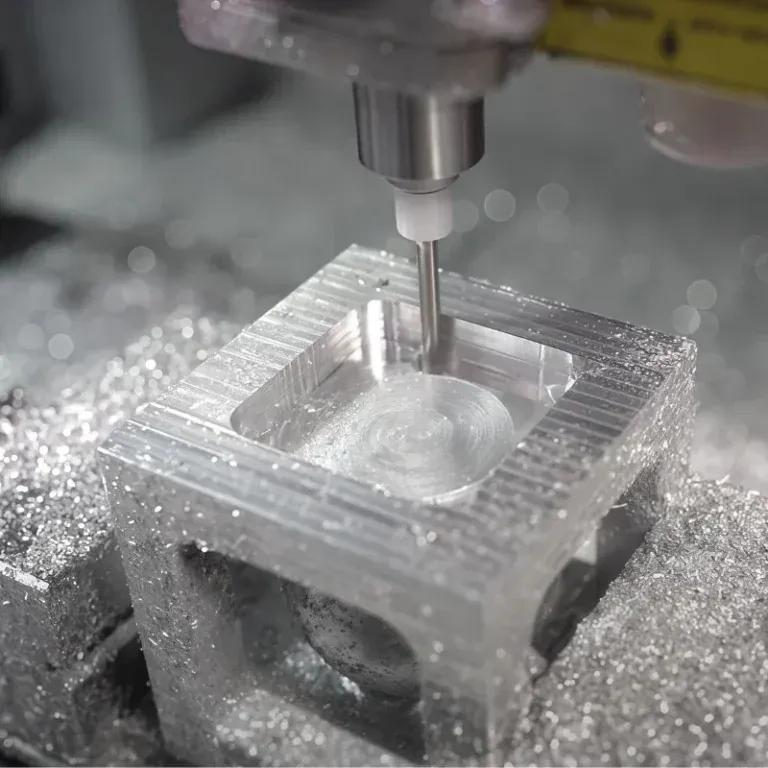
CNC machining PVDF is suitable for custom parts, prototypes, low-volume production, and precision components made from PVDF sheet, rod, or plate. It can be used for fittings, valve parts, insulators, pump components, plates, and housings.
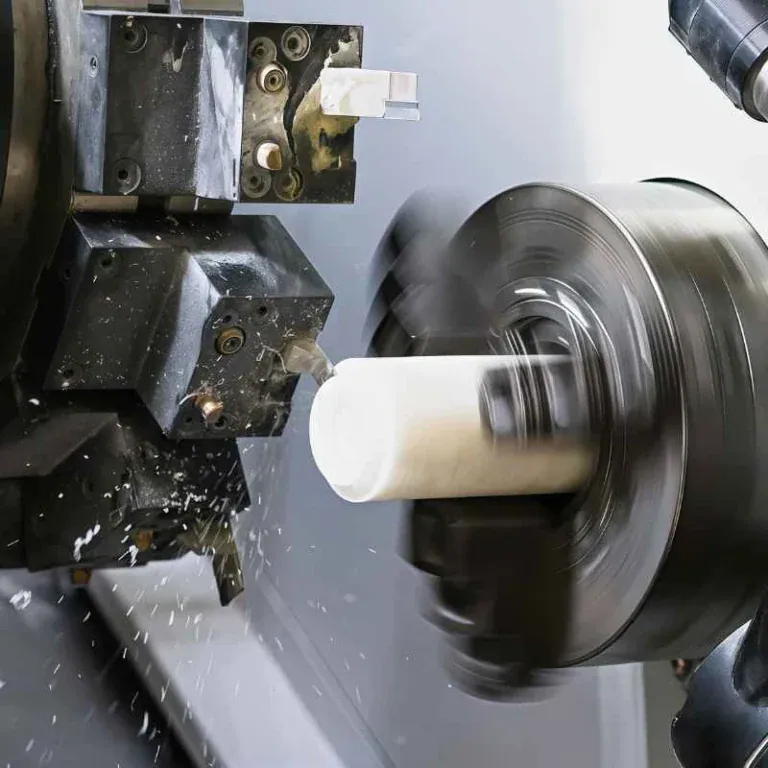
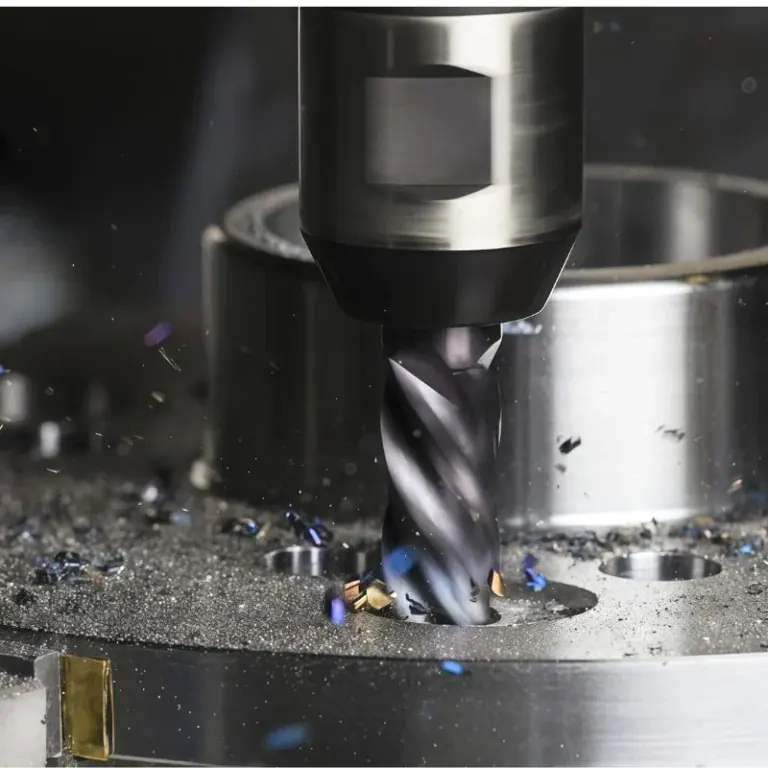
PVDF can be processed by CNC milling, turning, drilling, tapping, boring, routing, and profiling. Sharp tools, stable fixturing, moderate cutting parameters, and heat control help maintain surface quality and dimensional stability.
Compared with soft fluoropolymers such as PTFE, PVDF is generally easier to hold in shape because it is stiffer. However, designers should still avoid unrealistic tolerances, thin unsupported walls, and excessive clamping pressure.
Welding and Fabrication
PVDF can be welded and fabricated into tanks, piping systems, liners, ducts, and chemical-resistant assemblies. Welding methods may include hot gas welding, extrusion welding, butt welding, socket welding, or infrared welding depending on part type.
Fabrication is one reason PVDF is widely used in chemical processing and fluid handling. It can be assembled into systems that resist corrosive fluids and outdoor environments.
Successful PVDF welding requires compatible material grades, clean surfaces, correct temperature, proper pressure, and trained operators. Poor welding can reduce strength, leak resistance, and service life.
PVDF Coating, Paint, and Finish
PVDF coating, paint, and finish applications use PVDF’s weather resistance, UV resistance, and chemical stability to protect surfaces. PVDF coatings are common in architecture, building panels, metal roofing, outdoor structures, and industrial surfaces.
If someone asks what is PVDF coating, it usually refers to a coating system based on PVDF resin that provides durable color retention, weatherability, and chemical resistance. PVDF paint and PVDF finish are similar terms used in architectural and industrial surface protection.
For machined PVDF parts, surface finishing is usually more about machining quality, cleaning, deburring, and inspection rather than decorative coating. The finish requirement should match the application.
PVDF Grades and How to Select the Right Grade
PVDF grades should be selected based on chemical exposure, temperature, purity, processing method, mechanical load, certification, and cost. Different grades are designed for molding, extrusion, coating, high purity, reinforced performance, or special industrial use.

Standard PVDF Grades
Standard PVDF grades are commonly used for general chemical resistance, piping, fittings, sheets, rods, coatings, and industrial parts. They provide a practical balance of performance and processability.
These grades may be suitable for CNC machining, extrusion, injection molding, and welding depending on melt flow and stock form. They are often used when no special purity or reinforcement requirement exists.
For standard industrial parts, the main selection factors are chemical exposure, temperature, mechanical load, and part geometry.
Reinforced or Modified PVDF Grades
Reinforced or modified PVDF grades are designed to improve stiffness, wear resistance, conductivity, dimensional stability, or processing behavior. Fillers may be used when standard PVDF does not meet the full performance requirement.
Modified grades can be useful for special equipment parts, sliding components, electrical applications, or higher stiffness designs. However, fillers may change chemical resistance, purity, surface finish, or machinability.
Before choosing a modified PVDF grade, engineers should confirm whether the improvement is needed and whether any tradeoff affects the final application.
Medical, Food, and High-Purity Grades
Medical, food, and high-purity PVDF grades are used when cleanliness, compliance, extractables, leachables, or biological compatibility matter. These grades may be required for pharmaceutical, semiconductor, food-contact, filtration, or medical-related components.
High-purity PVDF is commonly used in ultrapure water systems, chemical delivery systems, membranes, and fluid-contact parts where contamination control is critical.
For regulated industries, material certificates, supplier traceability, processing control, and cleaning procedures should be confirmed before manufacturing.
Grade Selection Based on Application Environment
PVDF grade selection should be based on the real application environment, not only the material name. Chemical type, concentration, temperature, pressure, UV exposure, mechanical load, and required certification all matter.
For a pipe, the grade may need strong weldability and chemical resistance. For a CNC machined part, dimensional stability and machinable stock quality may be more important. For a coating, weather resistance and adhesion behavior matter most.
A practical selection process should compare the part’s function with available PVDF grades, then confirm compatibility, processing, and cost before production.
PVDF vs Other Materials
PVDF differs from other materials because it offers a balanced combination of chemical resistance, weatherability, strength, processability, and purity. It is often compared with PVC, Kynar, PTFE, and other fluoropolymers.
PVDF vs PVC
PVDF vs PVC can be summarized as higher performance versus lower cost. PVDF usually offers better chemical resistance, higher temperature capability, stronger weatherability, and better durability in harsh environments. PVC is more economical and widely used for lower-cost piping, ducts, covers, and protective parts.
PVC may be enough for many water, drainage, cable, and low-cost chemical applications. PVDF is preferred when chemicals are stronger, temperatures are higher, or long-term outdoor performance is more demanding.
Choose PVC for cost-sensitive, moderate-service applications. Choose PVDF when chemical, thermal, or environmental performance justifies the higher material cost.
PVDF vs Kynar
PVDF vs Kynar is mostly a naming comparison. Kynar is a well-known brand name for PVDF resin, while PVDF is the generic material family name. In many cases, Kynar refers to a specific branded PVDF product rather than a different polymer.
This distinction matters in purchasing. If a drawing specifies Kynar, the buyer should confirm whether the requirement is truly brand-specific or whether an equivalent PVDF grade is acceptable.
For critical applications, substitution should be approved by the customer or engineer. Even within PVDF, grade and supplier differences can affect performance.
PVDF vs PTFE
PVDF vs PTFE is a comparison between two fluoropolymers with different strengths. PTFE offers extremely low friction and broader chemical inertness, while PVDF offers better stiffness, weldability, strength, and processing flexibility.
PTFE is often better for ultra-low friction seals, gaskets, liners, and highly aggressive chemical exposure. PVDF is often better for pipes, structural fluid components, machined parts, coatings, and welded assemblies.
Choose PTFE when lowest friction or maximum chemical inertness is required. Choose PVDF when better stiffness, weldability, and balanced mechanical performance are needed.
PVDF vs Other Fluoropolymers
PVDF is one of several fluoropolymers, along with PTFE, FEP, PFA, ETFE, ECTFE, and PCTFE. Each material has different strengths in chemical resistance, temperature range, mechanical strength, processing, and cost.
PVDF is often chosen because it offers good mechanical strength and processability while still providing strong chemical and weather resistance. It is not always the highest-performing fluoropolymer, but it is often one of the most practical.
For demanding projects, engineers should compare PVDF with other fluoropolymers based on chemical exposure, mechanical load, temperature, friction, weldability, purity, and budget.
Applications of PVDF Material
PVDF material is used in chemical processing, pipes, valves, semiconductor systems, electronics, aerospace, automotive, construction, coatings, and CNC machined parts. It is selected when chemical resistance, purity, weatherability, and reliability are important.
Chemical Processing Applications
PVDF is widely used in chemical processing because it resists many corrosive chemicals while maintaining useful mechanical strength. It is common in pumps, valves, fittings, tanks, liners, pipes, and fluid-contact components.
It can help reduce corrosion, contamination, and maintenance compared with less resistant plastics or metals in certain chemical systems.
For chemical processing parts, compatibility should be checked carefully. Chemical concentration, temperature, pressure, and exposure time can change material performance.
Pipes, Valves, and Fittings
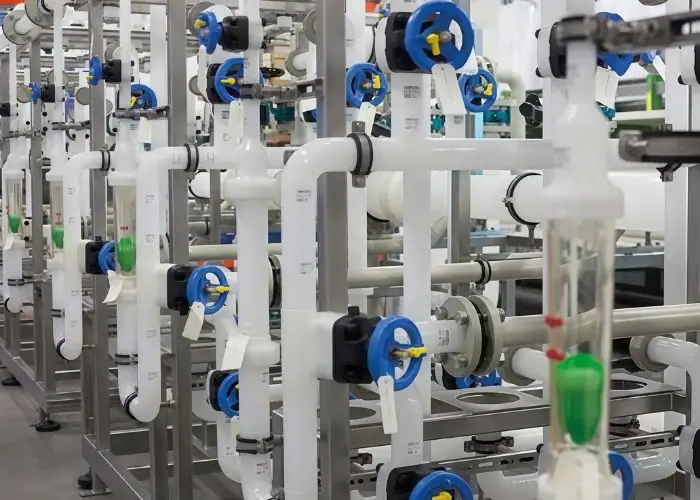
PVDF pipes, valves, and fittings are used for chemical fluid transfer, water treatment, high-purity systems, and corrosive process lines. If someone asks what is PVDF pipe, it is a pipe made from PVDF resin for chemical-resistant and high-performance fluid handling.
PVDF pipe is often used where PVC or PP may not provide enough chemical or temperature resistance. It can also be welded into reliable piping systems when the correct process is used.
For piping systems, engineers should consider pressure rating, temperature, chemical compatibility, weld quality, expansion, and installation method.
Semiconductor and High-Purity Fluid Systems
PVDF is used in semiconductor and high-purity fluid systems because selected grades offer chemical resistance, cleanliness, and low contamination risk. It is commonly used in chemical delivery, ultrapure water, filtration, and process equipment.
High-purity systems require more than chemical resistance. They also require controlled material grade, clean fabrication, traceability, and suitable cleaning procedures.
For semiconductor applications, PVDF can be a practical choice when purity, chemical resistance, and manufacturability must be balanced.
Electrical and Electronics Applications
PVDF is used in electrical and electronics applications because it provides good electrical insulation, dielectric properties, weather resistance, and chemical stability. It can be found in wire insulation, films, sensors, connectors, and electronic components.
PVDF’s piezoelectric behavior also makes it useful in specialized sensors, actuators, and energy-related devices. These applications often use films or modified PVDF structures rather than standard machined stock.
For electrical parts, material selection should consider voltage, insulation, heat, flame rating, humidity, mechanical load, and certification.
Aerospace and Automotive Applications
PVDF can be used in aerospace and automotive applications where chemical resistance, lightweight performance, weatherability, and electrical properties are needed. It may be used for coatings, insulation, tubing, fluid-handling parts, and selected machined components.
In aerospace and automotive designs, PVDF may be considered when metals are too heavy or corrosion-prone, or when common plastics cannot resist chemicals and environmental exposure.
For critical applications, engineers should confirm grade, flame behavior, temperature capability, mechanical requirements, and certification before production.
Construction, Coatings, and Architectural Uses
PVDF is widely used in construction and architectural coatings because it resists UV exposure, weathering, chemicals, and color degradation. PVDF-based coatings are common on exterior building panels, roofing, façades, and metal surfaces.
These coatings help protect surfaces and maintain appearance in outdoor environments. PVDF’s weatherability makes it valuable where long-term durability and aesthetics matter.
For coating applications, performance depends on resin content, coating system, surface preparation, curing, and environmental exposure.
CNC Machined PVDF Parts
CNC machined PVDF parts are used when custom geometry, low-volume production, or tight functional features are required. Common parts include valve components, pump parts, fittings, plates, manifolds, insulators, housings, and chemical-resistant fixtures.
PVDF is suitable for CNC machining because it has better rigidity than many soft fluoropolymers while still offering strong chemical resistance. This helps it hold machined features more reliably.
For precision PVDF machining, designers should control wall thickness, avoid excessive clamping stress, define critical tolerances clearly, and confirm stock quality before production.
PVDF Material Price and Cost Considerations
PVDF material price is higher than many common plastics because PVDF is a specialty fluoropolymer with stronger chemical resistance, weatherability, thermal stability, and performance in harsh environments. The higher price can be justified when failure risk is high.
Why PVDF Costs More Than Common Plastics
PVDF costs more than common plastics because it uses fluoropolymer chemistry, requires specialized production, and offers higher performance in chemical and outdoor environments. It is not designed to compete with PVC or PP on price alone.
The cost difference can be significant for large parts or high-volume applications. However, if PVDF prevents corrosion, leakage, contamination, downtime, or replacement, it may lower total lifecycle cost.
The best cost decision compares performance risk with material price. A cheaper material can become more expensive if it fails early.
Processing Cost Factors
PVDF processing cost depends on grade, stock form, part geometry, tolerance, machining time, welding method, tooling, and inspection requirements. CNC machined PVDF parts may cost more when tight tolerances or complex features are required.
Injection molding requires tooling investment but can reduce unit cost at high volumes. Extrusion is efficient for pipes, rods, sheets, and profiles. CNC machining is better for prototypes and low-volume custom parts.
Processing cost should be considered early in design. Simplifying geometry, standardizing thickness, and avoiding unnecessary tight tolerances can reduce cost.
When PVDF Is Worth the Higher Cost
PVDF is worth the higher cost when the part must resist aggressive chemicals, outdoor exposure, high-purity fluids, UV radiation, or demanding industrial environments. It is also worthwhile when failure would cause downtime, contamination, leakage, or safety problems.
For simple, lightly loaded, nonchemical parts, a cheaper plastic may be better. For corrosive fluid systems, PVDF may be the more reliable choice.
The correct question is not “Is PVDF expensive?” but “Will PVDF reduce risk enough to justify the cost?”
Sustainability and Safety of PVDF
PVDF sustainability and safety depend on resin type, processing method, application, waste handling, and recycling pathway. PVDF is durable and long-lasting, but it is a specialty polymer that should be used where its performance is truly needed.
Is PVDF Recyclable?
PVDF can be recyclable in suitable industrial recycling streams, but recycling depends on contamination, grade, form, and local recycling capability. Clean production scrap may be easier to reuse than contaminated chemical-service parts.
In practice, PVDF recycling is more specialized than recycling commodity plastics. Parts exposed to chemicals may require careful handling and may not be suitable for normal recycling streams.
For sustainability planning, manufacturers should reduce scrap, choose the correct grade, and discuss recycling options with material suppliers when needed.
Are PVDF Resins Toxic?
PVDF resins are generally considered stable under normal use conditions, but safe handling depends on processing temperature, ventilation, and application requirements. Like many plastics, PVDF should not be overheated beyond recommended processing limits.
During machining, normal dust control and cleanliness practices should be used. During melting, welding, or thermal processing, manufacturers should follow supplier safety data sheets and use proper ventilation.
For medical, food, or high-purity applications, the specific grade and certification matter more than the generic material name.
Environmental and Handling Considerations
Environmental and handling considerations for PVDF include processing temperature control, scrap management, chemical contamination, ventilation during thermal processing, and correct grade selection. These factors help protect workers and maintain part quality.
PVDF should be stored and machined using clean, controlled procedures when used in high-purity or regulated applications. Contamination from tools, fixtures, coolants, or packaging can affect final performance.
Good handling practices improve both safety and manufacturing quality, especially for semiconductor, medical, food-contact, and chemical fluid components.
How to Choose PVDF for Your Project?
Choose PVDF for your project when chemical resistance, weatherability, purity, dimensional stability, and moderate mechanical strength are required together. Choose another material when cost, extreme load, ultra-low friction, or very high temperature is the main requirement.
Choose PVDF for Chemical Resistance and Purity
Choose PVDF when the part must resist corrosive chemicals, maintain cleanliness, and perform in fluid-contact environments. It is especially useful for chemical piping, valves, fittings, tanks, filtration, and high-purity equipment.
PVDF is a strong option when common plastics may swell, crack, leach, or degrade. It can provide better long-term reliability in chemical systems.
Before final selection, confirm chemical type, concentration, temperature, pressure, and cleaning procedure. Compatibility is always application-specific.
Choose PVDF for Outdoor and Harsh Environments
Choose PVDF for outdoor and harsh environments when UV resistance, weatherability, chemical exposure, and long-term surface durability are important. It is common in architectural coatings, outdoor components, industrial enclosures, and exposed fluid systems.
PVDF performs well where sunlight, moisture, and chemicals may damage ordinary plastics. Its weather resistance can help maintain appearance and performance over time.
For outdoor machined parts, confirm grade, color, thickness, fastening method, and thermal expansion. Good material choice still needs good mechanical design.
Choose Another Material When Load or Cost Is the Main Concern
Choose another material when the main requirement is lowest cost, very high structural strength, extremely high temperature resistance, or lowest possible friction. PVDF is strong and chemically resistant, but it is not always the best material for every condition.
PVC, PP, or PE may be better for low-cost simple parts. PEEK or PPS may be better for high-load and high-temperature components. PTFE may be better for ultra-low friction or extreme chemical inertness.
Material selection should follow the failure risk. If the risk is chemical attack or weathering, PVDF may win. If the risk is load, heat, friction, or cost, another material may be better.
PVDF Material Selection Checklist
A PVDF material selection checklist should confirm chemical exposure, temperature, pressure, mechanical load, purity, processing method, certification, tolerance, and cost. These factors determine whether PVDF is suitable and which grade should be used.
Before production, review:
- Chemical type and concentration
- Operating temperature
- Pressure and load
- Outdoor or UV exposure
- Purity and contamination requirements
- Food, medical, or semiconductor requirements
- CNC machining or molding process
- Welding or fabrication needs
- Tolerance and surface finish
- Material price and lifecycle cost
This checklist helps avoid over-specifying PVDF for simple parts or under-specifying it for harsh environments.
Common Selection Mistakes to Avoid
Common PVDF selection mistakes happen when buyers choose the material name without checking grade, compatibility, process, or application environment. PVDF is strong and chemical-resistant, but it still has limits.
Avoid these mistakes:
- Choosing PVDF only because it sounds high-performance
- Ignoring chemical concentration and temperature
- Assuming all PVDF grades are the same
- Confusing PVDF vs Kynar as completely different polymers
- Using PVDF when PVC would be enough for low-risk parts
- Using PVC when PVDF is needed for harsh chemicals or UV exposure
- Ignoring stock form and machinability for CNC parts
- Ignoring welding requirements for piping systems
- Ignoring purity requirements in semiconductor or medical applications
- Comparing PVDF only by raw material price
- Choosing PVDF for ultra-low friction when PTFE may be better
- Choosing PVDF for high-load heat applications where PEEK or PPS may be better
FAQs
What Is PVDF Material Used For?
PVDF material is used for chemical-resistant pipes, valves, fittings, pump parts, coatings, wire insulation, semiconductor fluid systems, and CNC machined plastic parts. It is chosen for strong chemical resistance, UV resistance, low moisture absorption, and good mechanical stability. PVDF is common in chemical processing, electronics, construction coatings, water treatment, and high-purity systems where PVC, PP, or PE may not provide enough long-term performance.
What Is The Difference Between PVC And PVDF?
The main difference between PVC and PVDF is performance level. PVC is lower-cost and suitable for general pipes, ducts, covers, and insulation parts. PVDF offers better chemical resistance, UV resistance, temperature capability, and long-term durability. PVDF is usually selected for harsher chemical systems, outdoor exposure, and high-purity fluid applications. Choose PVC for cost-sensitive parts,choose PVDF when corrosion resistance and service life are more important.
Is PVDF The Same As Teflon?
No, PVDF is not the same as Teflon. PVDF is polyvinylidene fluoride, while Teflon usually refers to PTFE. Both are fluoropolymers, but PTFE has lower friction and broader chemical inertness. PVDF is stiffer, stronger, easier to weld, and easier to process into pipes, fittings, coatings, and CNC machined parts. Choose PTFE for ultra-low friction,choose PVDF for stronger structural and chemical-resistant components.
What Is The Difference Between PVDF And PVF?
PVDF and PVF are different fluoropolymers. PVDF means polyvinylidene fluoride, while PVF means polyvinyl fluoride. PVDF generally offers stronger chemical resistance, better mechanical properties, and wider use in pipes, valves, fittings, coatings, and machined parts. PVF is often known for film and surface protection applications. For industrial fluid handling or CNC machined plastic parts, PVDF is usually the more practical engineering material.
What Does 70% PVDF Mean?
70% PVDF usually means a coating or resin system contains about 70% PVDF resin in the binder portion, often used in architectural metal coatings. A higher PVDF content generally improves UV resistance, weatherability, color retention, and long-term outdoor durability. It does not mean the entire final coating is 70% PVDF by total weight. Always check the coating specification, resin content, and performance standard.
What Is PVDF Pipe?
PVDF pipe is a pipe made from polyvinylidene fluoride material for chemical-resistant and high-purity fluid handling. It is used in chemical processing, semiconductor systems, water treatment, pharmaceutical production, and corrosive fluid transfer. Compared with PVC or PP pipe, PVDF pipe usually offers better chemical resistance, higher temperature capability, and stronger durability. It can be welded into reliable piping systems when the correct grade and process are used.
Conclusion
PVDF material is a high-performance fluoropolymer plastic that provides strong chemical resistance, weatherability, electrical insulation, low moisture absorption, purity, and useful mechanical strength. It is widely used in chemical processing, pipes, valves, semiconductor systems, electronics, coatings, construction, and CNC machined parts. The right PVDF grade depends on chemical exposure, temperature, purity, processing method, tolerance, and cost.
At TiRapid, we provide precision CNC machining services for custom plastic and metal components across multiple industries. If you are considering PVDF material for a chemical-resistant or high-performance machined part, upload your drawing or share your material requirements to get a tailored manufacturing solution.