CNC turning is a precision manufacturing process that requires careful planning to achieve high accuracy, efficiency, and production stability. Before a CNC lathe begins machining, thorough production preparation directly affects the success of the entire manufacturing process. If important preparations are overlooked, even advanced CNC equipment may experience dimensional deviations, excessive tool wear, reduced machining efficiency, or unnecessary scrap. A well-organized production plan not only improves product quality but also shortens delivery times, lowers manufacturing costs, and provides a solid foundation for stable mass production.
As industries such as aerospace, automotive manufacturing, medical devices, electronics, and industrial automation continue to demand tighter tolerances and faster delivery, manufacturers must evaluate every stage of production before machining begins. Engineering drawings, material characteristics, machining processes, cutting tools, workholding systems, CNC programs, and inspection procedures should all be carefully reviewed to ensure that every operation follows a clear manufacturing standard. Proper planning minimizes production risks and improves overall machining performance.
Engineering Drawings and Machining Processes Must Be Confirmed
Before production starts, engineers should carefully review part drawings and develop machining strategies that match the product’s structural characteristics. Dimensions, tolerances, material specifications, surface finish requirements, and assembly standards all influence machining procedures. A complete understanding of product requirements allows manufacturers to establish efficient production plans while maintaining consistent quality.
Drawing Analysis Determines the Machining Strategy
Engineering drawings contain much more than dimensional information. They define critical tolerances, geometric accuracy, surface finish specifications, and technical requirements. Careful drawing analysis helps identify potential machining challenges before production begins.
- Verify dimensional requirements
- Review geometric tolerances
- Analyze complex structural features
- Develop machining sequences
- Identify critical machining areas
- Evaluate machining difficulty
Comprehensive drawing analysis enables engineers to create more efficient machining procedures while reducing unnecessary process adjustments and rework during production.
Process Planning Improves Manufacturing Efficiency
Different materials and component geometries require different machining strategies. Proper planning of rough machining, semi-finishing, and finishing operations helps maintain dimensional stability while improving production efficiency.
- Develop machining processes
- Organize machining operations
- Control machining allowance
- Optimize cutting paths
- Improve production efficiency
- Reduce manufacturing costs
Well-designed machining processes maximize equipment performance while creating a smooth and reliable production workflow.
Material and Cutting Tool Selection Directly Affect Machining Quality
The workpiece material determines machining characteristics, while cutting tools largely determine machining efficiency and finished quality. Materials such as aluminum alloys, stainless steel, titanium alloys, copper alloys, and engineering plastics each require different cutting conditions and tool materials to achieve optimal results.
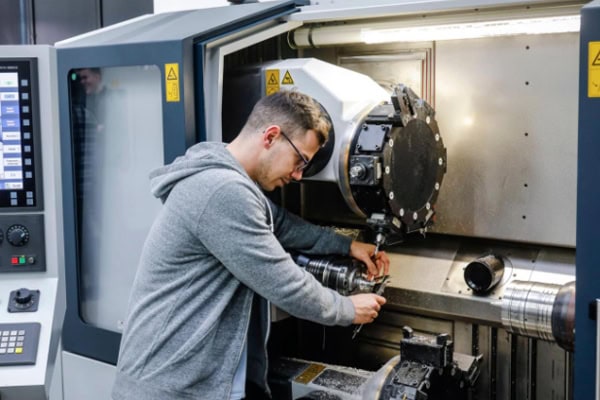
Select the Right Cutting Tool for Each Material
Every material has unique hardness, toughness, thermal conductivity, and wear characteristics. Selecting suitable cutting tools according to material properties ensures stable machining performance and longer tool life.
- Select carbide cutting tools
- Use CBN cutting tools
- Apply PCD cutting tools
- Choose wear-resistant coated inserts
- Improve heat resistance
- Maintain stable cutting performance
Proper tool selection minimizes tool wear, improves machining efficiency, and maintains consistent dimensional accuracy throughout production.
Inspect Tool Condition Before Production
Before machining begins, every cutting tool should be thoroughly inspected to ensure it remains suitable for production. Using excessively worn tools increases the risk of poor surface finish, dimensional errors, and unexpected machine downtime.
- Inspect cutting edge wear
- Check tool holder condition
- Verify installation accuracy
- Confirm tool offsets
- Record tool life
- Prepare replacement tools
A well-managed tooling system reduces production interruptions and supports continuous machining operations.
Workholding Systems and Machine Condition Ensure Stable Production
Reliable workholding systems and properly maintained CNC machines provide the stability required for precision machining. Accurate positioning and rigid clamping allow components to maintain dimensional consistency throughout production.
Design Proper Workholding Solutions
Fixtures not only secure the workpiece but also maintain accurate positioning throughout the machining cycle. Stable workholding minimizes vibration while improving machining accuracy.
- Increase clamping rigidity
- Ensure repeatable positioning
- Prevent workpiece deformation
- Reduce setup errors
- Shorten setup time
- Improve machining efficiency
Well-designed fixtures improve production stability while reducing unnecessary setup adjustments.
Verify CNC Machine Condition
Before every production run, CNC equipment should undergo a complete inspection to ensure every system operates correctly.
- Check spindle accuracy
- Inspect guideways
- Verify ball screw precision
- Examine lubrication systems
- Inspect coolant systems
- Confirm CNC program readiness
Well-maintained equipment reduces unexpected downtime while consistently producing high-quality components.
Machining Parameters and Quality Control Should Be Established
Stable production requires carefully planned machining parameters together with comprehensive quality control procedures. Every machining operation should follow predefined cutting conditions while maintaining consistent inspection standards throughout production.

Optimize Machining Parameters
Cutting speed, feed rate, and depth of cut directly influence machining efficiency, tool life, and finished part quality. These parameters should always be optimized according to material properties and machining requirements.
- Set spindle speed
- Adjust feed rate
- Control cutting depth
- Optimize tool paths
- Maintain effective chip evacuation
- Improve machining efficiency
Proper machining parameters reduce vibration, maintain stable cutting conditions, and improve dimensional consistency.
Establish a Complete Quality Inspection Process
Before production begins, manufacturers should clearly define inspection standards, measurement methods, and quality checkpoints to ensure that every critical dimension is properly controlled.
- Define inspection standards
- Confirm critical dimensions
- Prepare measuring equipment
- Perform first article inspection
- Schedule in-process inspections
- Maintain inspection records
A structured quality inspection system quickly identifies machining deviations and prevents large-scale production defects.
Comprehensive Production Preparation Improves Manufacturing Performance
Successful CNC turning depends not only on advanced equipment but also on systematic production planning. Every stage—including drawing review, material selection, tooling preparation, fixture design, machine inspection, CNC program verification, and quality planning—directly influences machining efficiency and final product quality. Thorough preparation before production begins helps maintain stable machining performance while reducing machine downtime and costly rework.
As smart manufacturing technologies continue to evolve, more companies are integrating digital production management, automatic tool changers, in-process inspection systems, and manufacturing data analysis into CNC turning operations. A comprehensive production preparation process improves dimensional accuracy, surface quality, production efficiency, and delivery performance while lowering manufacturing costs. These advantages make CNC turning an ideal manufacturing solution for aerospace, medical devices, automotive components, electronics, precision machinery, and many other industries requiring consistent, high-quality precision machining.