CNC turning is a core process in modern precision manufacturing. It uses computer numerical control systems to precisely control tool paths and spindle movement, enabling high-efficiency and high-accuracy machining of rotational parts. The entire process consists of multiple tightly connected stages, forming a complete workflow from preparation to final delivery. Each stage directly affects dimensional accuracy, surface quality, and production stability.
Process Planning and Technical Preparation Stage
Before machining begins, systematic process planning and technical preparation must be completed. This stage focuses on converting engineering drawings into executable machining plans while preparing materials, fixtures, and tools to ensure stable and controllable production conditions.
Drawing Analysis and Process Route Planning
Drawing analysis is the starting point of the entire machining workflow. It requires a detailed breakdown of part geometry, focusing on dimensional accuracy, geometric tolerances, and surface finish requirements. For complex structures, potential machining interference and deformation risks must be evaluated in advance to determine a reliable process route.
- Identify key dimensions and tolerance requirements
- Analyze complex structural areas
- Evaluate tool accessibility
- Identify potential interference risks
- Define machining sequence
- Predict possible deformation issues
After drawing analysis is completed, machining logic becomes clearer, improving process stability and reducing adjustments during production.
Material Selection and Blank Design
Material properties directly influence cutting performance and tool life. Different materials vary in hardness, toughness, and thermal behavior. Blank design must balance machining allowance and cost efficiency to ensure stable processing.
- Select material grade and performance
- Analyze cutting characteristics
- Define proper machining allowance
- Reduce material waste
- Consider heat treatment conditions
- Optimize cost structure
Optimized material planning improves machining stability and reduces production uncertainty.
Fixture and Tool Preparation
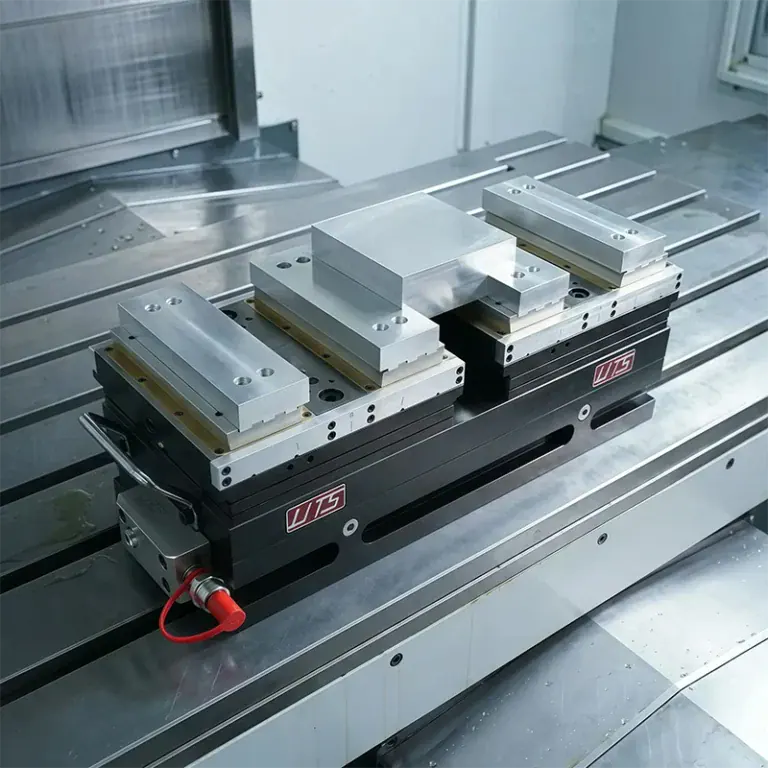
Fixture and tool systems are critical to machining stability. Fixtures must provide sufficient rigidity to prevent movement during high-speed rotation, while cutting tools must be selected according to roughing and finishing requirements.
- Design high-rigidity fixture structures
- Ensure repeat positioning accuracy
- Select roughing and finishing tools
- Set tool compensation parameters
- Inspect tool wear conditions
- Control vibration issues
Proper preparation significantly improves machining stability and consistency.
CNC Programming and Machine Setup Stage
This stage converts process plans into machine-executable instructions while completing program verification and machine parameter configuration. It is a key link between design and production.
CNC Program Development and Tool Path Design
CNC programming generates tool paths based on part geometry and defines cutting parameters and machining logic. A well-designed program ensures repeatability, efficiency, and stability in production.
- Establish coordinate system
- Write tool path instructions
- Set cutting parameters
- Plan tool change logic
- Optimize machining cycle time
- Improve operational efficiency
Once completed, machining becomes standardized and highly controllable.
Program Simulation and Collision Detection
Simulation verifies machining programs before actual cutting begins. It helps identify errors, collisions, and tool path issues, reducing production risks.
- Simulate tool movement paths
- Check fixture interference
- Validate machining sequence
- Evaluate machining time
- Optimize tool paths
- Reduce trial machining risks
Simulation significantly improves machining safety and success rate.
Machine Parameter and System Setup
Machine setup ensures accurate execution of CNC programs by configuring coordinate systems, tool offsets, and spindle parameters.
- Set workpiece zero point
- Configure tool offsets
- Adjust spindle speed
- Set feed rate parameters
- Check coolant system
- Calibrate measurement system
After setup, the machine enters stable operational readiness.
CNC Turning Machining Execution Stage
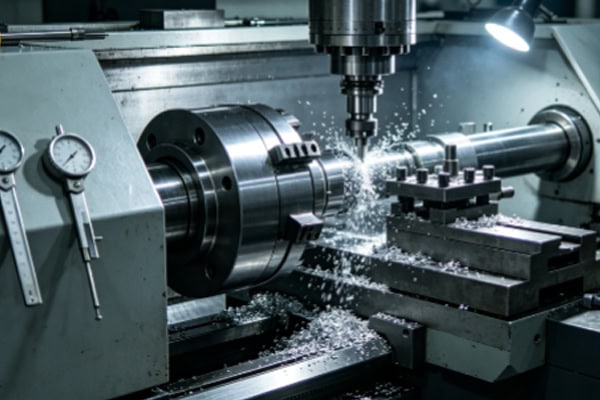
The execution stage is the core of the entire process. It is typically divided into roughing, semi-finishing, and finishing, each serving a distinct function in shaping the final part.
Roughing Stage
Roughing focuses on rapid material removal while forming the basic geometry of the part. Efficiency is prioritized while maintaining machine stability.
- Remove excess material quickly
- Control cutting load
- Form basic geometry
- Improve machining efficiency
- Maintain structural stability
- Reduce load for later stages
This stage establishes a stable foundation for further machining.
Semi-Finishing Stage
Semi-finishing corrects deviations from roughing and gradually brings the part closer to final dimensions while improving surface conditions.
- Correct dimensional errors
- Improve contour accuracy
- Enhance surface condition
- Control thermal deformation
- Improve consistency
- Reduce finishing load
This stage serves as a transition between roughing and finishing.
Finishing Stage
Finishing determines final dimensional accuracy and surface quality. It requires strict control of cutting parameters and tool conditions.
- Achieve final dimensions
- Improve surface finish
- Control geometric tolerances
- Ensure batch consistency
- Reduce machining defects
- Meet technical specifications
After this stage, part quality is finalized.
Post-Machining Inspection and Quality Control Stage
After machining, strict inspection and quality control ensure that parts meet design requirements and enable full traceability.
Dimensional Accuracy Inspection
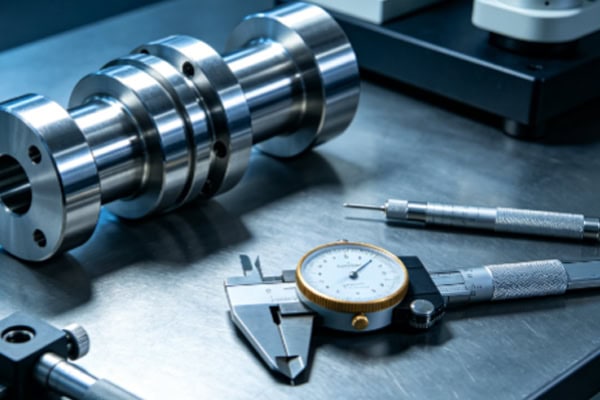
Dimensional inspection verifies whether critical dimensions meet engineering specifications using precision measuring equipment.
- Check outer diameter dimensions
- Measure length accuracy
- Verify hole tolerances
- Compare with design standards
- Record inspection data
- Confirm batch consistency
This step ensures compliance with design requirements.
Surface Quality and Defect Inspection
Surface quality directly affects part performance and service life. Inspection includes roughness, scratches, and burr evaluation.
- Check surface roughness
- Observe machining marks
- Detect surface scratches
- Remove burrs
- Confirm appearance consistency
- Meet usage standards
Proper surface quality ensures functional reliability.
Quality Records and Traceability Management
Quality records store machining and inspection data for process traceability and continuous improvement.
- Record machining parameters
- Store inspection results
- Build traceability system
- Analyze quality variation
- Optimize process parameters
- Improve production stability
Data management supports long-term manufacturing optimization.
Finished Product Handling and Delivery Stage
After machining, parts undergo cleaning, protection, and packaging to ensure safe transport and storage.
Cleaning and Deburring Process
Cleaning removes machining residues to improve cleanliness and assembly quality.
- Remove machining residues
- Clean burrs
- Wash oil and coolant
- Improve surface quality
- Reduce assembly risks
- Ensure safe usage
Proper cleaning ensures delivery readiness.
Anti-Rust and Packaging Protection
Protection measures prevent corrosion and damage during transportation and storage.
- Apply anti-rust coating
- Use shock-resistant packaging
- Prevent transport damage
- Maintain surface condition
- Extend storage life
- Improve delivery quality
Proper packaging ensures safe logistics.
Delivery and Technical Support
Delivery includes logistics and technical support services to ensure smooth customer usage.
- On-time delivery
- Provide inspection reports
- Technical consultation support
- Handle feedback issues
- Build cooperation relationships
- Improve customer satisfaction
This completes the full CNC turning production cycle.