The biggest difference between high-precision plastic mold part processing and ordinary plastic part processing is that it’s not as simple as “making the part.” It requires controlling dimensions, fit, surface finish, stability, and service life simultaneously. Mold parts often directly affect molding accuracy, demolding effect, assembly clearance, and subsequent production stability, thus demanding higher processing conditions. If any aspect is not controlled properly, problems such as dimensional deviations, surface scratches, localized deformation, assembly difficulties, or reduced service life may occur.
What does the processing condition for high-precision plastic mold parts refer to?
What are the processing conditions for high-precision plastic mold components?
The processing conditions for high-precision plastic mold parts refer to the complete set of environmental, equipment, process, and control requirements that must be met when processing plastic mold parts. This includes not only machine tool accuracy, tool condition, and cutting parameters, but also temperature control, fixture stability, material condition, and inspection methods. For mold parts, “suitable conditions” does not mean that a single factor meets the standard, but that multiple factors are satisfied simultaneously to ensure that the final part is both accurate and stable.
Why are the requirements for mold parts higher than for ordinary parts?
Mold parts do not simply bear loads; they participate in the molding process, making them more sensitive to dimensional and fit precision. For example, guide components, inserts, positioning blocks, sliders, or core structural components—if machining errors are too large, it can lead to assembly jamming, molding misalignment, or accelerated localized wear. While ordinary plastic parts sometimes allow for a certain degree of error, high-precision mold parts often cannot be “close enough” and must be consistently controllable. This is why they have higher requirements for machining conditions.
What is the core objective of machining conditions?
The core objectives of machining conditions for high-precision plastic mold parts can be summarized in three points: first, ensuring dimensional accuracy; second, ensuring structural stability; and third, ensuring surface quality. Dimensional accuracy is fundamental; structural stability determines whether deformation will occur during subsequent use; and surface quality directly affects friction, demolding, sealing, and assembly performance. Therefore, machining conditions are not simply about pursuing “speed,” but about finding a balance between stability and precision to ensure the parts maintain consistency over long-term use.
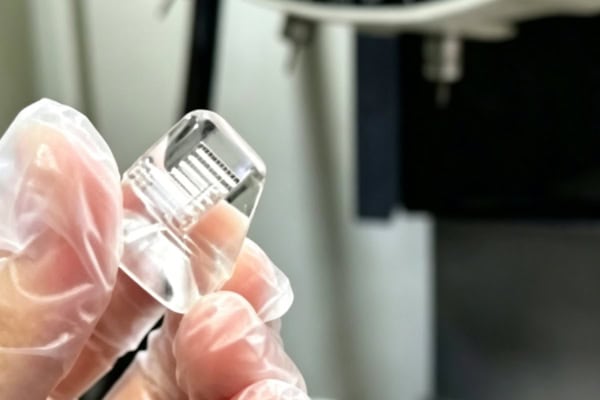
How are high-precision plastic mold parts manufactured?
Preliminary Design and Feasibility Assessment
For high-precision plastic mold parts machining, the first step isn’t actually installing the parts on the machine, but rather analyzing the drawings and assessing the process. Engineers must first examine the part’s dimensional tolerances, fit relationships, wall thickness variations, sharp corner locations, and stress areas to determine which structures are prone to deformation and which locations might affect accuracy. For high-precision parts, the design phase must consider the feasibility of subsequent machining; it’s not enough to simply draw the outline. Machining feasibility, tool entry space, and clamping methods must all be taken into account.
Material Pretreatment and Condition Stabilization
Plastic materials typically require condition confirmation before machining because many materials inherently possess residual stress at the factory. Direct machining may lead to warping or dimensional drift. For some highly hygroscopic materials, drying is also necessary. For high-precision mold parts, material stability is more important than simply having “large enough dimensions,” because unstable material conditions, even with precise dimensions during machining, can change later, affecting assembly and performance.
Clamping, Positioning, and First-Piece Verification
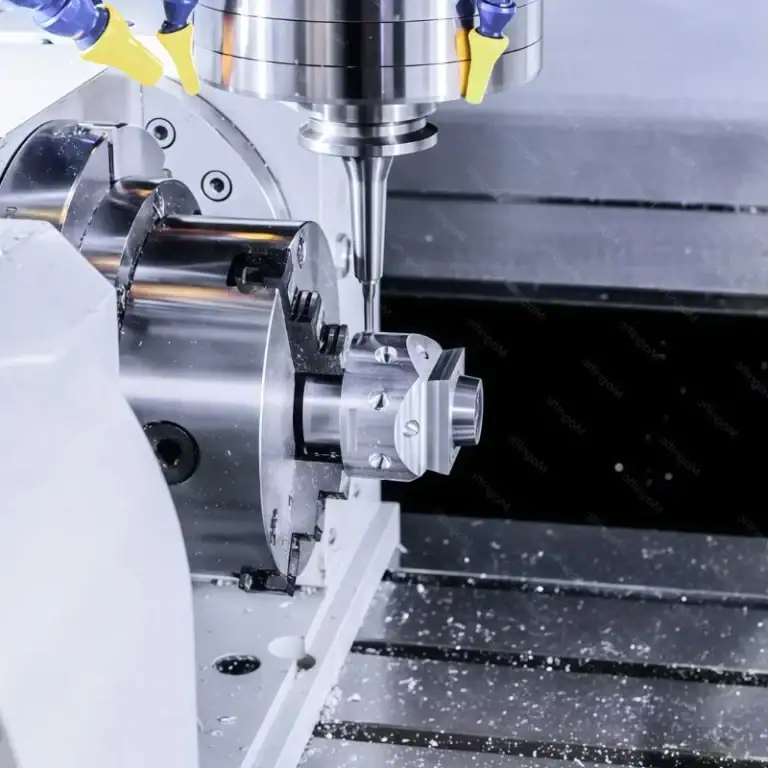
Clamping is a crucial step in high-precision machining. Unlike metals, plastics are not rigid. If clamped too tightly, they can easily damage the surface or introduce stress; if clamped too loosely, positioning accuracy will be affected. Therefore, it’s generally necessary to fix the workpiece using a method of even force distribution and sufficient support, and to perform a first-piece verification before mass production. The first piece focuses on checking dimensions, hole positions, flatness, and surface condition. Only after confirming that everything is correct can further processing continue. This effectively reduces the risk of batch scrap.
Phased Machining and Subsequent Inspection
High-precision plastic mold parts are usually not machined in one go, but rather in three stages: roughing, semi-finishing, and finishing. Roughing removes large excess material, semi-finishing stabilizes the structure, and finishing ensures final dimensions and surface quality. After machining, static setting, re-measurement, and necessary secondary adjustments are required. Many high-precision parts are not formed in one go, but through multiple inspections and fine-tuning to gradually control errors to a smaller range.
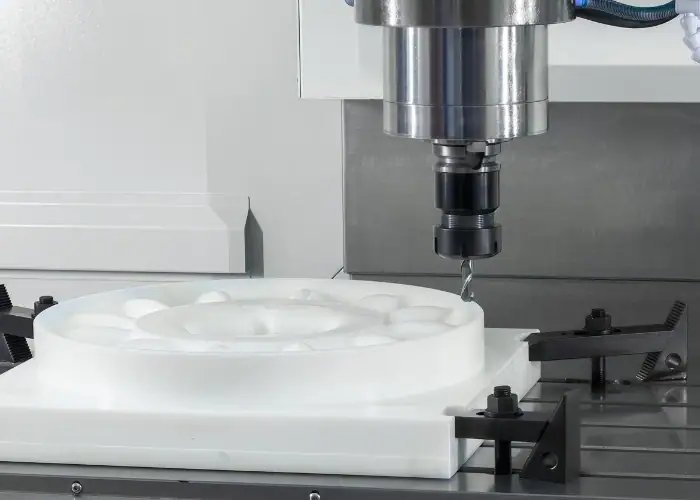
What determines the quality of high-precision machining?
cutting parameters cannot be too aggressive
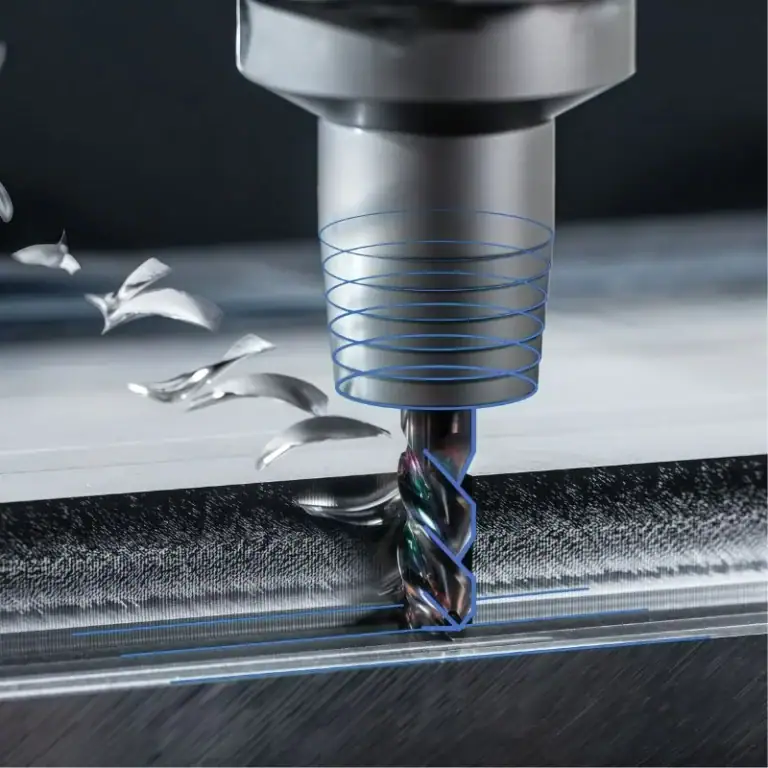
Excessive spindle speed generates excessive heat, improper feed rate intensifies material friction, and excessive depth of cut can easily lead to deformation or chipping. A more prudent approach is to control the cutting load, using small depths of cut, multiple passes, and a steady feed rate to gradually remove material under controlled conditions. For plastics, stability is often more important than speed.
Tool Sharpness and Chip Removal Capability
Tool condition directly affects the surface finish and dimensions of high-precision parts. Once a tool becomes dull, cutting resistance increases, temperature rises, and the material surface is prone to burrs, stringing, whitening, or slight melting. For mold parts, tools must not only be sharp but also have excellent chip removal capabilities, because if chips accumulate in the machining area, they will continue to rub against the workpiece surface, affecting accuracy and appearance. Therefore, tool management is an indispensable part of high-precision machining.
Fixture Design
High-precision plastic mold parts often have complex structures, with areas of thinness, thickness, and uneven stress. If the fixture design is unreasonable, stress release after machining can easily lead to part deformation. The correct approach is to use distributed support, flexible cushioning, and as even a clamping method as possible to allow the part to maintain its natural state during processing. For thin-walled, long, or deep-cavity parts, it is even more important to avoid single-point pressure, as these parts are most prone to deformation during clamping and disassembly.
Temperature and Environmental Control
Plastics are more susceptible to ambient temperature than metals, so high-precision machining is best performed under relatively stable workshop conditions. Excessive temperature fluctuations can cause slight changes in material dimensions, affecting the final accuracy. Processing heat must also be controlled, as localized overheating can not only affect the surface but also generate internal stress in the material. For high-precision mold parts, it is often necessary to keep the processing, inspection, and storage environments as consistent as possible to ensure more reliable measurement results and actual usage conditions.
Different Plastics Determine Different Processing Conditions
POM is suitable for parts with high dimensional stability requirements
POM is a very common material in high-precision plastic mold parts. Its advantages include good dimensional stability, good machinability, and a low coefficient of friction, making it suitable for guides, supports, and sliding parts. 1. **POM:** Its processing conditions are relatively easy to control. As long as the cutting tools are sharp and the parameters are stable, it can usually achieve relatively ideal dimensional and surface effects. Therefore, if customers value precision and stability, POM is often a practical choice.
PEEK:Suitable for high-performance applications
PEEK is a high-performance engineering plastic with strong heat resistance, wear resistance, and mechanical properties, making it suitable for mold parts with high environmental requirements and long service life. However, PEEK material is expensive, and processing requirements are higher, demanding stricter requirements on equipment, cutting tools, and process control. It is suitable for high-end applications but not for all projects, especially cost-sensitive projects, requiring a comprehensive evaluation to determine its necessity.
PC and ABS:Suitable for comprehensive needs
PC and ABS are also common in high-precision plastic parts. PC has high strength but is sensitive to heat and stress; ABS has better processability and a relatively moderate cost. They are suitable for mold parts with high comprehensive requirements but not requiring extreme performance. However, in high-precision applications, parameter and clamping control remain crucial; requirements should not be relaxed simply because they are “easy to process.”
Material Selection Must Match Processing Objectives
The selection of materials for high-precision plastic mold parts cannot be based solely on price, wear resistance, or strength. It must be tailored to the specific processing and usage conditions. For example, parts prioritizing precision require dimensional stability; parts prioritizing heat resistance prioritize material properties; and cost-sensitive projects must find a balance between performance and price. Choosing the right material makes subsequent processing much easier; choosing the wrong material makes even the best processes more difficult to maintain stability.
Common Questions
Why do plastic mold parts from different manufacturers produce such different results?This is a common concern for many customers.The main reason lies in the varying levels of control different manufacturers have over processing conditions, including machine tool precision, tooling condition, fixture design, material pretreatment, and inspection standards. High-precision plastic mold parts are not simply about “being able to make them,” but about maintaining stability throughout the processing. If a manufacturer’s equipment is of average rigidity, their process flow is non-standard, or their inspection is not rigorous enough, the final parts are prone to dimensional deviations, surface differences, or assembly problems. Therefore, the real difference often lies not just in the equipment, but in the maturity of the entire processing system.
Conclusion
Machining high-precision plastic mold parts requires not only high-precision equipment but also stable materials, sufficiently sharp cutting tools, uniform clamping force, controllable processing temperature, and rigorous inspection and finishing. If any one of these steps is not done well, the parts may suffer from dimensional deviations, deformation, burrs, or assembly problems. Therefore, producing high-precision plastic mold parts requires more than just experience; it demands standardized processes and meticulous attention to detail. Correct design and material selection in the early stages, proper parameters and clamping in the middle stages, and meticulous inspection and correction in the later stages will ensure a more stable machining process. Ultimately, high precision is not about “doing it fast,” but about “doing it accurately, steadily, and for a long time.” With proper control of processing conditions, plastic mold parts can achieve very high precision and excellent performance.