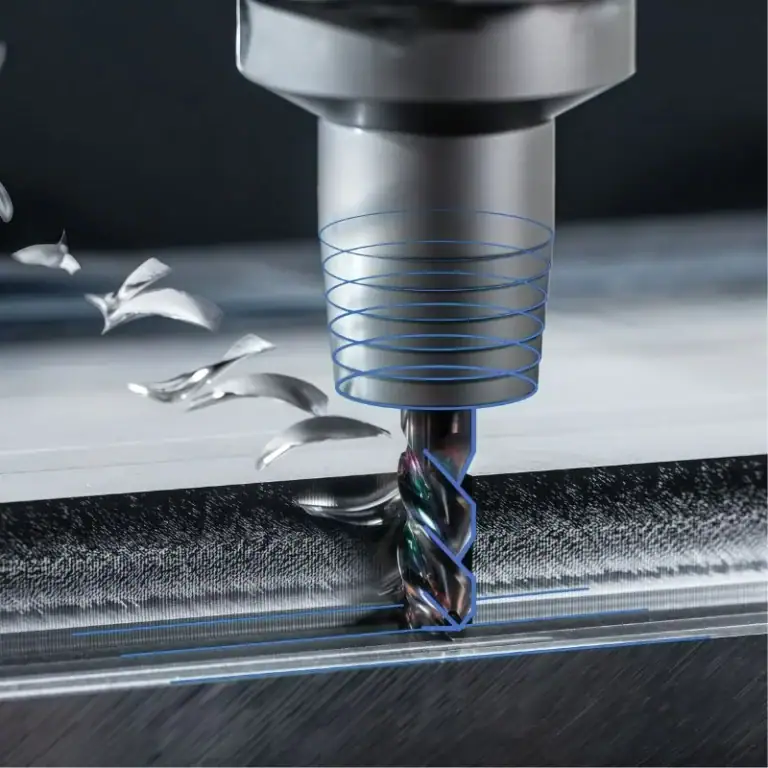
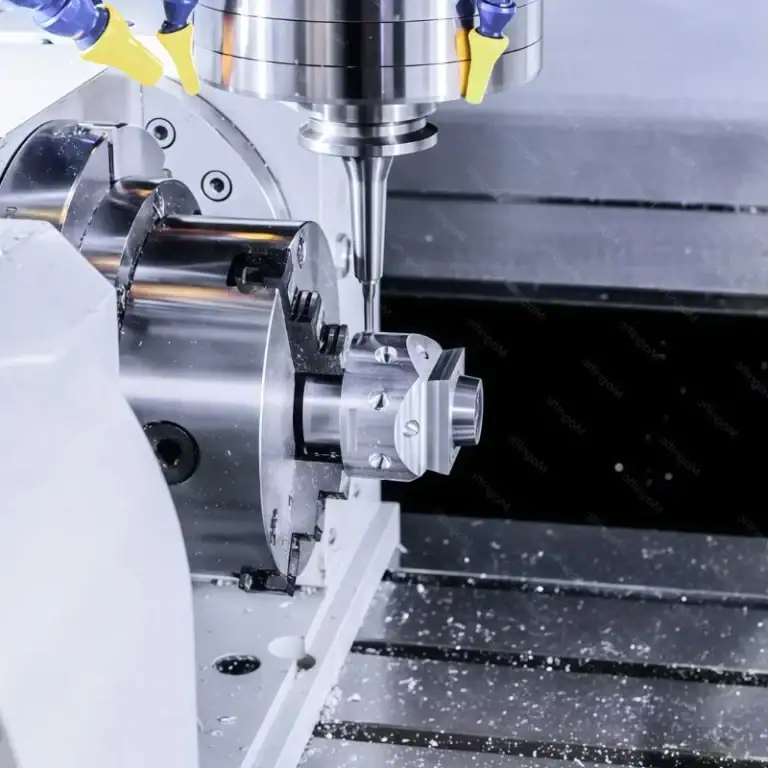
High-speed turning technology has become an increasingly important high-efficiency machining method in modern manufacturing. With the continuous improvement of CNC equipment performance, the application of high-speed spindles, high-performance cutting tools, and stable control systems has made high-speed turning a key process for improving production efficiency. Compared with traditional turning methods, high-speed turning can complete machining in a much shorter time while also improving surface quality and machining stability. As a result, it is widely used in automotive parts, aerospace components, precision molds, and batch production industries.
High-speed turning is not simply about increasing spindle speed. It requires proper coordination between machine rigidity, tool performance, cutting parameters, and cooling systems in order to fully achieve the advantages of high-speed machining. When process control is properly managed, high-speed turning can not only improve production capacity but also reduce overall machining costs, which is why more manufacturers are adopting this technology to enhance production capability.
High-Speed Turning Can Significantly Improve Machining Efficiency
In machining operations, production cycle time directly affects manufacturing capability. One of the biggest characteristics of high-speed turning is its ability to remove material quickly, thereby increasing the number of parts produced within a certain time period. For batch production, shorter machining cycles mean more orders can be completed while reducing waiting time and workpiece accumulation.
Shorten Single-Part Machining Time
High-speed turning increases cutting speed, which significantly shortens machining cycles for individual parts. In batch production, even reducing machining time by a few seconds per part can create a major production difference during long-term continuous manufacturing. Especially in automated production lines, high-speed turning allows equipment to operate at a faster rhythm, improving overall production efficiency. Shorter machining cycles also reduce machine waiting time, workpiece transfer time, and production queue delays, making the entire production line operate more smoothly.
Improve Material Removal Efficiency
Under high-speed cutting conditions, the amount of material removed per unit time increases significantly.
Common improvements include:
- Shortening rough machining time
- Increasing machine utilization
- Reducing waiting time
- Improving continuous machining capability
- Increasing batch production efficiency
As material removal efficiency improves, the overall production rhythm becomes more compact.
Reduce Auxiliary Machining Time
High-speed turning not only shortens cutting time but also reduces auxiliary production time. After machining cycles become shorter, equipment waiting time, workpiece transfer time, and certain inspection processes are also reduced. In large-scale production, reducing auxiliary time can significantly improve total production output. At the same time, stable machining rhythm makes production planning easier to manage and reduces efficiency losses caused by waiting.
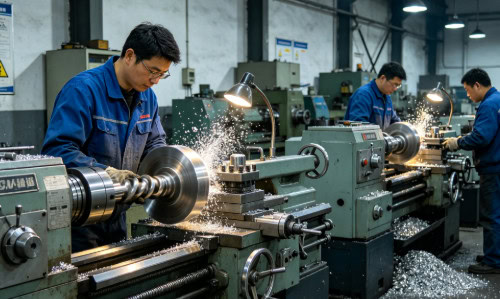
High-Speed Turning Can Improve Surface Quality
Many people believe that high-speed cutting is only suitable for improving efficiency, but properly controlled high-speed turning can also improve workpiece surface conditions. Stable high-speed cutting reduces cutting fluctuations and creates a more uniform surface finish, which is especially important for precision components.
Reduce Surface Roughness
During high-speed turning, contact between the tool and workpiece becomes more continuous, resulting in more uniform tool marks on the surface. Especially during finishing operations, increasing cutting speed appropriately can significantly improve surface smoothness. For precision and appearance-sensitive parts, higher surface quality can reduce the need for polishing or secondary finishing processes while also improving overall product quality.
Reduce Chatter Marks
Chatter marks are common problems in turning operations, while stable high-speed cutting can reduce low-frequency vibration.
Common improvements include:
- Smoother surface finish
- More uniform tool marks
- Improved dimensional stability
- Reduced local waviness
- Better machining consistency
The higher the machine rigidity, the more obvious the effect of high-speed cutting becomes.
Improve Dimensional Stability
During high-speed turning, stable equipment and sharp tools create a smoother cutting process. As cutting force fluctuation decreases, dimensional variation of the workpiece is also reduced. For high-precision parts, stable high-speed machining improves consistency among batch-produced components while reducing rework and dimensional correction frequency, making overall machining quality more stable.
High-Speed Turning Can Reduce Overall Machining Costs
Although high-speed turning equipment and cutting tools may have relatively high initial costs, overall machining costs are usually reduced in long-term production. Especially in large-scale manufacturing environments, high-efficiency machining can significantly reduce unit production costs while improving equipment return on investment.
Reduce Labor Costs
After machining rhythm improves, more parts can be produced within the same amount of time, reducing labor cost per product. Automated high-speed turning equipment also reduces manual intervention and improves continuous nighttime machining capability, allowing machines to operate more stably. For companies with long-term continuous production, labor cost reduction can become very significant.
Reduce Process Consumption
When high-speed turning produces better surface quality, some parts may require fewer secondary operations.
Processes that may be reduced include:
- Polishing
- Edge trimming
- Secondary finishing
- Surface correction
- Local grinding
As secondary processes decrease, overall machining costs continue to decline.
Improve Equipment Output Capability
High-speed turning allows machines to complete more machining tasks within the same amount of time, significantly improving equipment utilization. For manufacturers, increasing production capacity without purchasing large numbers of additional machines helps reduce equipment investment pressure. At the same time, increased output capability allows companies to arrange production schedules more flexibly and improve order handling capacity.
High-Speed Turning Is Suitable for Continuous Batch Production
The advantages of high-speed turning become even more obvious in continuous production environments. Especially in automotive, electronics, and standard component manufacturing industries, high-speed turning has become an important method for improving productivity. Stable high-speed machining not only improves production rhythm but also reduces production fluctuation.
Improve Automated Production Efficiency
Automated production lines require stable and fast machining cycles. High-speed turning reduces machine waiting time while keeping loading and unloading systems operating in stable cycles. The more stable the machining rhythm, the higher the automation efficiency becomes. In unmanned machining environments, stable high-speed operation also reduces the need for manual supervision and improves production continuity.
Suitable for Long-Term Continuous Operation
Modern high-speed CNC lathes are usually equipped with stable spindle systems and automatic cooling systems, allowing them to maintain high-speed operation for extended periods.
Common advantages include:
- Maintaining stable cutting conditions
- Reducing machine downtime
- Improving equipment utilization
- Enhancing continuous production capability
- Reducing production fluctuation
Continuous machining capability is extremely important for batch production.
Improve Order Delivery Capability
After machining efficiency improves, companies can complete more orders within a shorter period of time. Especially in industries with tight delivery schedules, high-speed turning helps improve delivery speed while strengthening market competitiveness. Shorter production cycles also allow companies to arrange order switching more flexibly and improve overall production management efficiency.
High-Speed Turning Requires Higher Equipment and Tool Standards
Although high-speed turning offers significant advantages, not all machines are suitable for high-speed machining. If machine rigidity is insufficient or tool performance is poor, high-speed cutting may instead cause vibration, rapid tool wear, or unstable machining.
High-speed machining generally requires high-rigidity CNC lathes, high-balance spindle systems, and wear-resistant cutting tools. Cooling systems must also remain stable to prevent excessive temperature in the cutting area. Only when equipment, tools, and process parameters are properly matched can high-speed turning fully achieve its efficiency and quality advantages while maintaining long-term stable operation.
High-Speed Turning Technology Is Becoming More Widely Used in Modern Manufacturing
As CNC equipment performance continues to improve, high-speed turning has gradually become one of the most important processes in modern machining. Compared with traditional machining methods, high-speed turning not only improves machining efficiency but also enhances surface quality, reduces production costs, and improves continuous machining capability.
For companies involved in batch part manufacturing, high-speed turning helps production lines achieve higher output while strengthening market competitiveness. With the continuous development of intelligent manufacturing and automated machining, the application range of high-speed turning technology will continue to expand and play an even more important role in precision and high-efficiency manufacturing.