In the machining industry, the productivity of turning processes directly affects delivery speed, production cost, and order capacity. Especially in batch part production and continuous manufacturing environments, slow machining cycles, excessive downtime, or unreasonable process arrangements can easily reduce machine utilization. Improving turning productivity is not simply about increasing cutting speed. More importantly, machines, tooling, processes, and operators must work together in a stable and coordinated manner. Only by reducing non-productive time and improving continuous machining capability can overall production efficiency truly increase while also minimizing the impact of production fluctuations on delivery schedules.
Improving Machine Utilization Can Increase Productivity
The higher the operating efficiency of equipment, the more parts can be completed within a certain period of time. If machines frequently stop, wait, or require parameter adjustments, overall productivity will still remain low even when cutting speed is high. Therefore, stable machine operation is extremely important in turning production. Many factories overlook the loss caused by machine idle time, but these hidden waiting and downtime periods are often the real factors limiting productivity.
Reduce Machine Downtime
Machine downtime directly affects production rhythm. In many factories, actual cutting time is relatively short, while a large amount of time is spent on tool changing, machine setup, and waiting for materials.
Common optimization methods include:
- Preparing materials in advance
- Reducing repeated machine setup
- Standardizing fixtures and tooling
- Improving tool change efficiency
- Establishing continuous machining processes
The longer the machine runs continuously, the more obvious the productivity improvement becomes.
Improve Equipment Automation
Automated equipment reduces manual intervention and improves machining continuity. Automatic bar feeders, robotic loading systems, and automatic tool changers allow machine tools to operate steadily for long periods. Especially in large-scale production, automation reduces production rhythm fluctuations caused by manual operation while also lowering labor costs. For long-duration machining, automation can reduce nighttime downtime and improve all-day equipment utilization, significantly increasing total production capacity.
Maintain Stable Machine Accuracy
After long-term operation, wear on guideways, spindles, or lead screws may cause dimensional fluctuations during machining, leading to increased rework rates. Rework not only affects quality but also occupies valuable machining time. Therefore, regular machine maintenance is necessary to maintain stable machining conditions. Stable machine accuracy reduces scrap rates and minimizes the need for repeated parameter adjustments, allowing equipment to maintain high-efficiency operation continuously.
Tool Optimization Can Improve Machining Efficiency
Cutting tools are core consumable components in turning operations. Tool performance directly affects cutting speed, machining stability, and tool change frequency. Proper tool configuration can significantly improve machining efficiency per unit time while reducing interruptions caused by tooling problems.
Use High-Efficiency Cutting Tools
High-performance cutting tools can withstand higher cutting parameters, thereby improving material removal efficiency.
Common improvements include:
- Increasing cutting speed
- Increasing feed rate
- Extending tool life
- Reducing tool change frequency
- Maintaining dimensional stability
In continuous machining environments, high-efficiency tools provide even greater advantages.
Select Proper Tool Structure
Different machining operations require different tool structures. Rough machining is suitable for tools capable of handling large cutting loads, while finishing requires sharper tools for better surface quality. Proper chipbreaker groove design can reduce chip entanglement and improve continuous machining capability. If tool structure is not suitable, machining may require frequent stoppages for chip removal and may also cause unstable surface quality. Proper tool matching improves both machining rhythm and tool life.
Establish Tool Management Standards
Poor tool management can lead to repeated tool replacement, inconsistent parameters, and unstable tool life. Establishing unified tool numbering, tool life records, and preset management can reduce tool change time and maintain stable machining conditions. In batch production, standardized tool management reduces human error while improving tool utilization efficiency, making production rhythm more stable and continuous.
Proper Cutting Parameter Adjustment Can Reduce Machining Time
Cutting parameters directly determine single-part machining cycle time. If parameters are overly conservative, even high-performance machines cannot fully utilize their production capability. Therefore, cutting efficiency should be increased reasonably while maintaining stable machining quality.
Increase Cutting Speed
Increasing cutting speed can significantly shorten machining time per part. However, cutting speed should not simply be increased blindly and must be adjusted according to tool life and material properties.
Common effects include:
- Improving production rhythm
- Increasing cutting temperature
- Accelerating tool wear
- Improving cutting continuity
- Increasing material removal efficiency
Different materials require different speed ranges.
Optimize Feed Parameters
Feed rate directly affects machining rhythm and surface quality. Properly increasing feed rate can reduce machining time, but excessive feed may also increase surface roughness or vibration. Therefore, feed parameters must be continuously optimized through trial machining to maintain a stable balance between efficiency and quality. Proper feed rate not only improves material removal efficiency but also reduces tool wear.
Reduce Repeated Cutting Passes
Improper machining allowance arrangement may lead to repeated cutting passes, which not only increases machining time but also accelerates tool wear. Properly arranging roughing and finishing allowances can reduce unnecessary tool passes and improve overall machining efficiency. In batch production, reducing even one repeated cutting pass can save a significant amount of accumulated machining time.
Process Optimization Can Reduce Non-Productive Machining Time
A large portion of production time is not consumed by actual cutting but by clamping, transportation, and waiting. Therefore, optimizing process flow can also significantly improve productivity. The more reasonable the machining route, the more compact the production rhythm and the higher the machine utilization rate.
Reduce Clamping Operations
The fewer the clamping operations, the faster the machining rhythm and the lower the positioning error.
Common methods include:
- Completing multiple operations in one setup
- Using combined fixtures
- Standardizing positioning references
- Reducing repeated positioning
- Combining adjacent machining processes
This not only improves efficiency but also enhances machining consistency.
Optimize Machining Sequence
A reasonable machining sequence can reduce idle movement and repeated actions. For example, completing rough machining before unified finishing can reduce frequent tool changes. The more compact the machining route, the easier it is to improve overall production rhythm while reducing time wasted on repeated machine starts and stops.
Integrate Multiple Processes
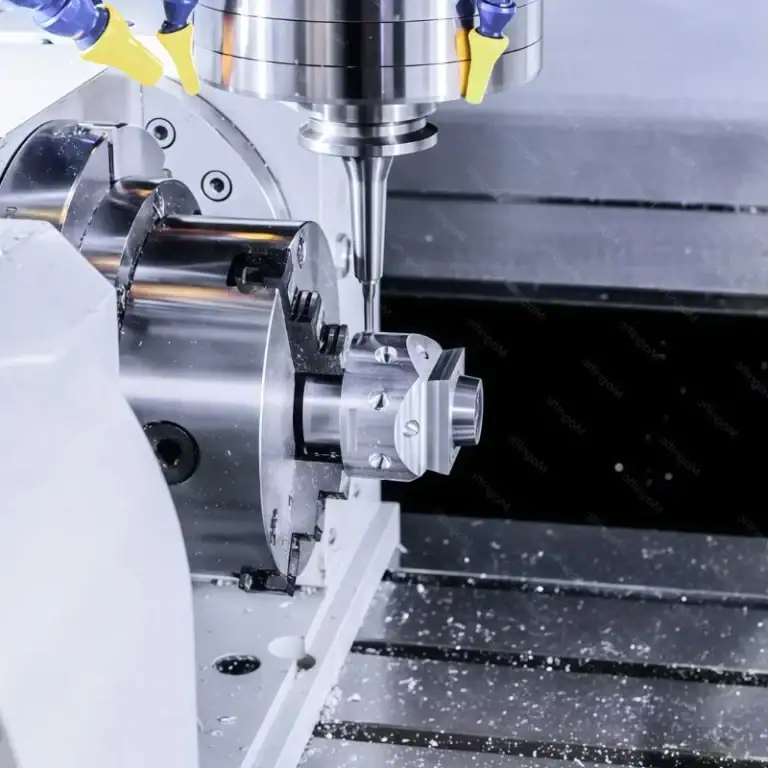
By using turning centers or multi-function machining equipment to complete drilling, tapping, and external turning in one setup, workpiece transportation time can be reduced. The more concentrated the processes are, the less waiting time is required and the higher the production continuity becomes. In batch machining, reducing workpiece transfer between different machines can significantly improve total productivity.
Stable Cooling and Chip Removal Ensure Continuous Production
During long-term batch machining, unstable cooling or poor chip evacuation can easily cause machine stoppages. Especially in high-speed machining, cooling and chip removal systems directly affect continuous machine operation while also influencing tool life and machining quality.
Improve Cooling Efficiency
A stable cooling system can reduce cutting zone temperature and improve machining stability.
Common optimization methods include:
- Increasing coolant flow rate
- Adjusting nozzle direction
- Using high-pressure cooling
- Maintaining continuous coolant supply
- Using internal coolant tools
Stable cooling allows equipment to operate at higher cutting parameters.
Improve Chip Evacuation
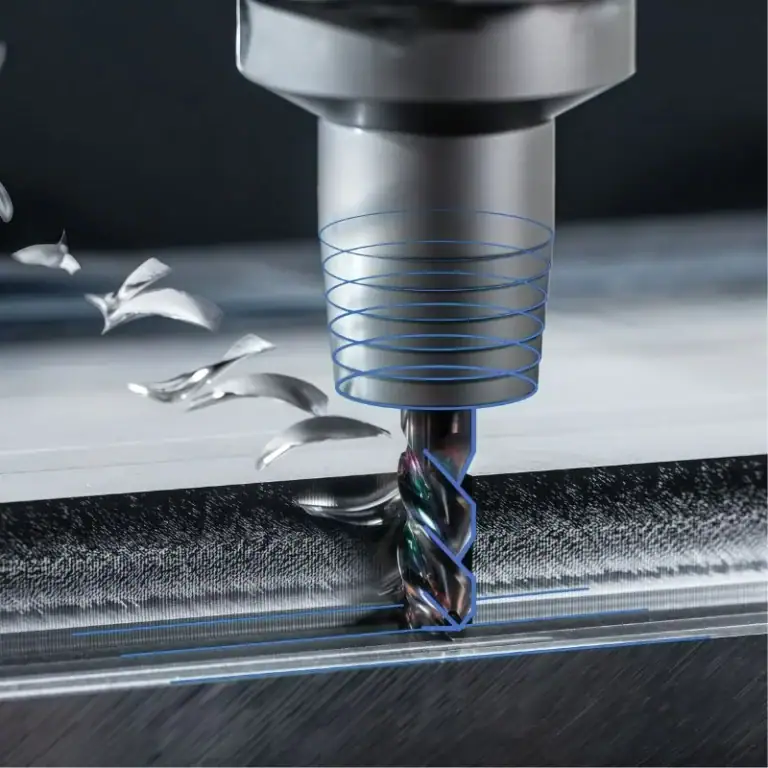
Chip accumulation not only affects surface quality but may also cause machine stoppages.
Common methods include:
- Using chipbreaker tools
- Adjusting cutting parameters
- Increasing chip evacuation space
- Cleaning chips regularly
- Ensuring timely chip discharge
Smooth chip evacuation improves continuous machining capability.
Production Management Also Affects Turning Productivity
Even with good equipment and machining conditions, productivity can still remain low if production management is disorganized. Proper production scheduling, reduced idle time, and stable material supply all directly affect machining rhythm. Many factories have strong equipment capability, but large amounts of time are wasted due to poor process coordination and waiting periods.
In batch production environments, stability is often more important than short-term high-speed machining. When machines, tooling, processes, and operators maintain stable coordination, the production line can sustain high-efficiency operation for long periods, truly improving turning productivity while also reducing additional costs caused by production fluctuations.