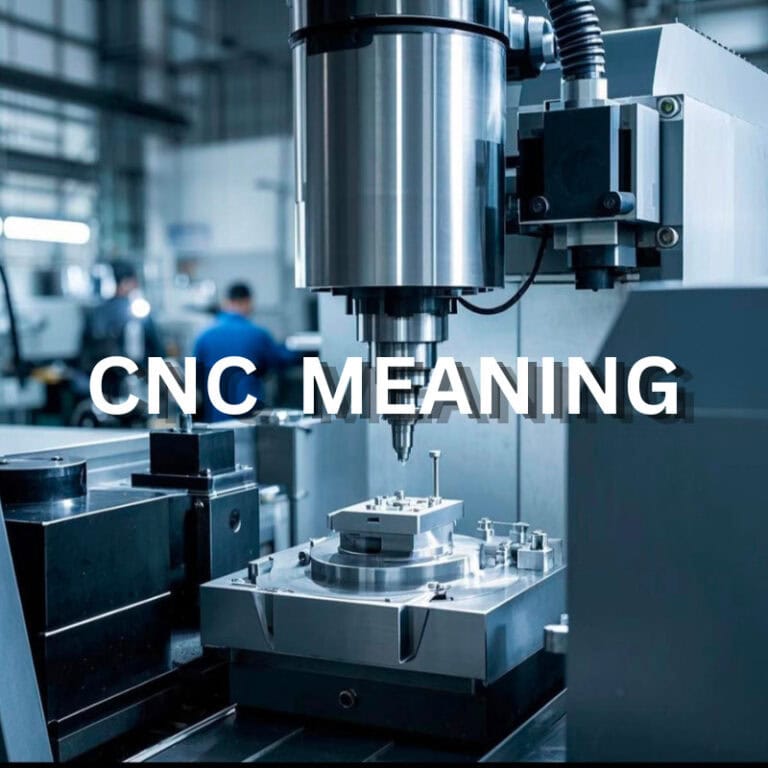
Automotive parts are not always produced in quantities of thousands or tens of thousands at once. New vehicle development, automotive modification, racing part development, equipment maintenance, and new energy vehicle component testing often involve machining requirements for dozens, hundreds, or even just a few parts. For these types of orders, if traditional mass-production methods are used directly, mold making, production line preparation, and initial debugging may all increase costs and lead times. The advantage of small-batch CNC machining is that it does not require complex molds to be specially manufactured for a small quantity of parts. Parts can be machined according to 3D drawings, 2D engineering drawings, or samples provided by the customer. When the design changes, only the machining program needs to be adjusted before production can resume, making this approach particularly suitable for the R&D and trial-production stages of automotive projects.
Which CNC Machining Scenarios Are Suitable for Small-Batch Automotive Parts?
R&D and Prototyping
During automotive R&D, small quantities of functional prototypes are often required. These may include mounting brackets, sensor mounting bases, connecting blocks, adapters, housings, bushings, and various testing fixtures. These parts may only require 5, 20, or 50 pieces, but dimensional requirements cannot simply be relaxed because the quantity is small. Engineers usually need to install the machined parts directly onto vehicles or testing equipment to check hole positions, assembly clearances, structural strength, and actual performance. CNC machining is suitable for this stage because design modifications are relatively convenient. If the first test shows that a hole position needs to be adjusted or the part thickness needs to be changed, the part can be remachined according to the updated drawing without producing a new mold.
Small-Batch Production
Some automotive parts do not have large demand volumes, such as special vehicle accessories, racing modification parts, test vehicle components, and replacement parts for maintenance. If mass-production methods are used for these products, the initial investment may be difficult to distribute effectively. CNC machining can start directly from metal or engineering plastic materials, making it more suitable for orders with relatively small quantities.
Common small-batch CNC automotive parts include:
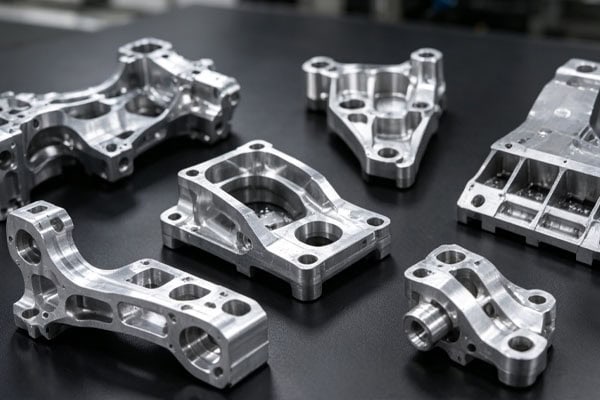
- Aluminum alloy mounting bases, brackets, and connectors
- Motor end covers, sensor housings, and controller housings
- Bushings, flanges, adapter rings, and precision shaft components
- Automotive testing fixtures, locating components, and modification parts
Customized Parts for New Energy Vehicles
The motors, electronic controls, thermal management systems, and various electronic devices used in new energy vehicles have resulted in more structurally complex and customized components inside vehicles. For example, motor mounting components, auxiliary battery pack structural parts, cooling system connectors, sensor mounting components, and electronic equipment housings may all be manufactured using CNC machining. These parts generally need to balance weight, strength, and assembly accuracy, which makes aluminum alloys relatively common in small-batch automotive part machining.
How to Select Machining Materials and Methods
Select Materials According to the Application of the Part
Different automotive parts have very different working environments. Some parts are mainly responsible for mounting, some are exposed to continuous vibration, some need to dissipate heat, while others require good wear resistance.
| Material | Main Characteristics | Common Small-Batch Automotive Parts |
| 6061 Aluminum Alloy | Lightweight, easy to machine | Brackets, housings, mounting bases |
| 7075 Aluminum Alloy | High strength, lightweight | High-strength structural parts, modification parts |
| Stainless Steel | Corrosion resistant, good strength | Connectors, bushings, functional components |
| Carbon Steel/Alloy Steel | Good strength and wear resistance | Shaft components, mechanical connectors |
| POM | Lightweight, wear resistant, easy to machine | Gears, bushings, guide components |
| Nylon | Lightweight, with certain toughness | Internal functional components, isolation components |
If the customer has already specified the material, TiRapid can arrange machining according to the drawings and material requirements. If the material has not yet been determined, assistance can also be provided based on the part application, operating environment, and cost requirements.
Adjust the Machining Method According to the Part Structure
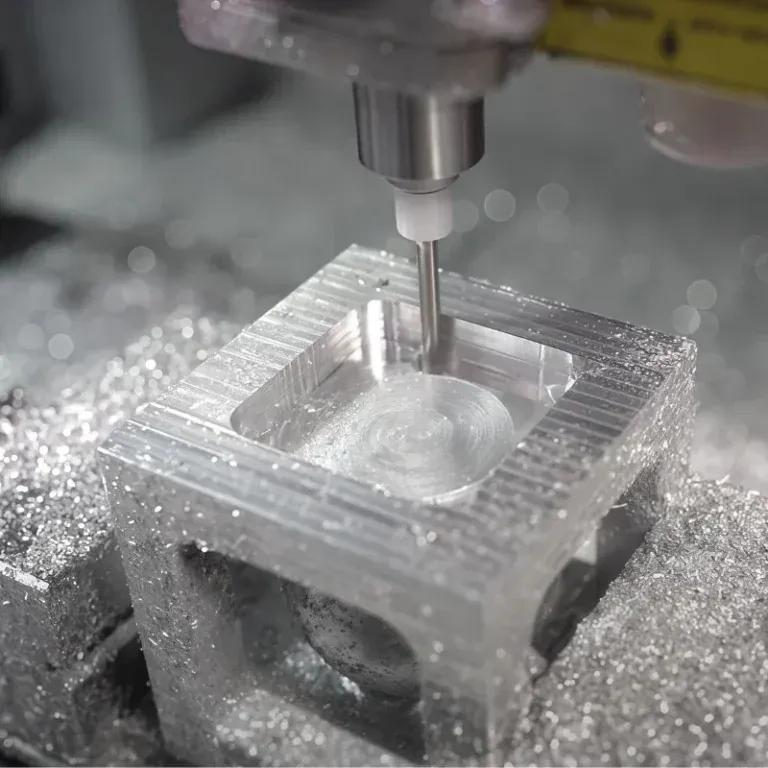
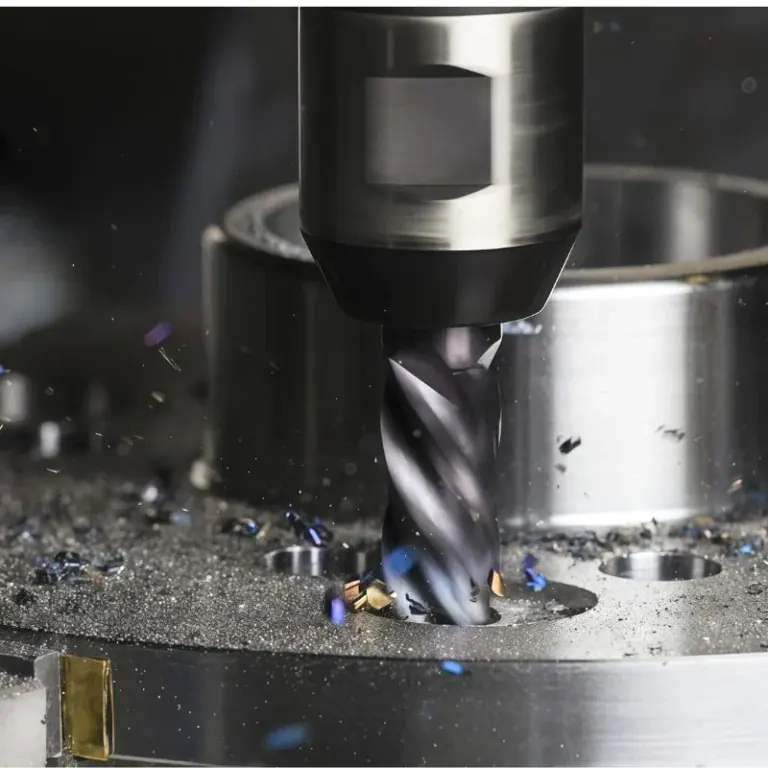
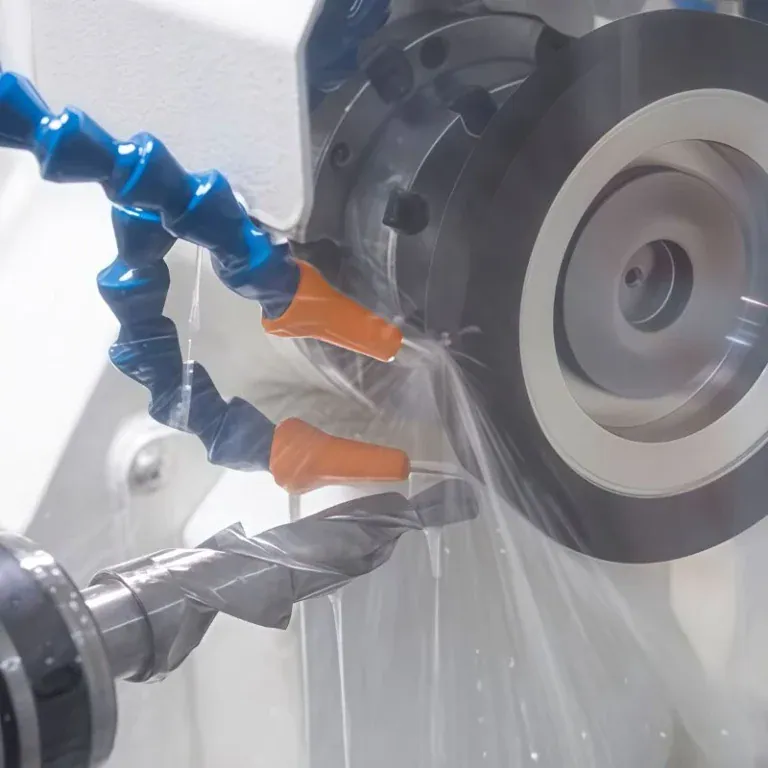
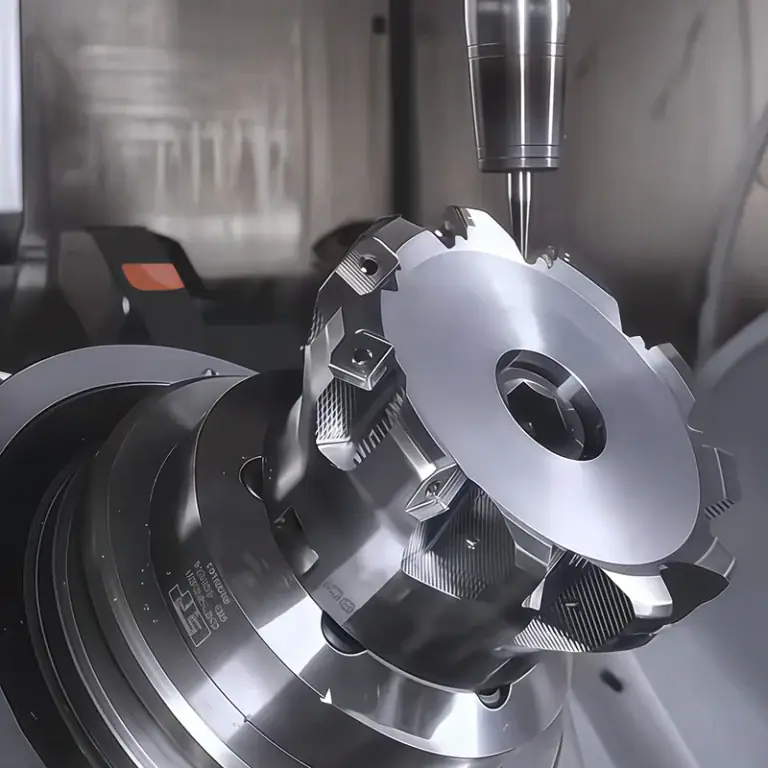
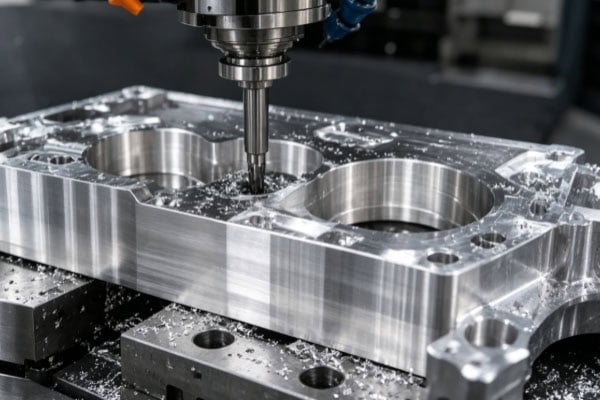
Regular square parts, cylindrical parts, and complex parts with multiple holes are not necessarily suitable for exactly the same machining approach. For example, shafts, bushings, and threaded components are generally suitable for turning; parts with flat surfaces, slots, holes, and curved surfaces are more suitable for milling; if a part requires machining from multiple directions, multi-axis equipment may be required to reduce repeated fixturing. This is particularly important for small-batch production. Since order quantities are small, if there are too many fixturing operations, preparation time can account for a significant portion of the overall order cost. Properly arranging the machining sequence can reduce repeated positioning and also help maintain dimensional consistency between different parts.
Surface Treatment Results
Automotive parts are not necessarily ready for direct use after machining. Depending on the application, anodizing, sandblasting, polishing, plating, passivation, or other surface treatments may also be required. For example, exposed aluminum alloy parts can be treated according to appearance and corrosion resistance requirements, while stainless steel parts may place greater emphasis on surface cleanliness and corrosion resistance. When making a purchase request, it is best to provide “material + machining + surface treatment” as a complete requirement. This allows the machining manufacturer to evaluate the process in advance and avoid discovering after machining that the surface treatment cannot meet the requirements.
How to Control Quality and Costs in Small-Batch Automotive CNC Machining
Reduce Rework Through Drawing Review
The biggest concern with small-batch orders is discovering drawing problems only after machining has been completed. For example, the hole diameter may not match the mating component, the wall thickness may be too thin, the tool may not be able to access an internal area, or certain dimensional requirements may be unnecessarily tight. Therefore, it is very important to check the drawings and machining feasibility before formal production begins. TiRapid can conduct DFM checks based on CAD files and engineering drawings provided by customers and provide modification suggestions for structures that may affect machining. This helps resolve problems before production whenever possible rather than waiting until parts have been manufactured and then performing rework.
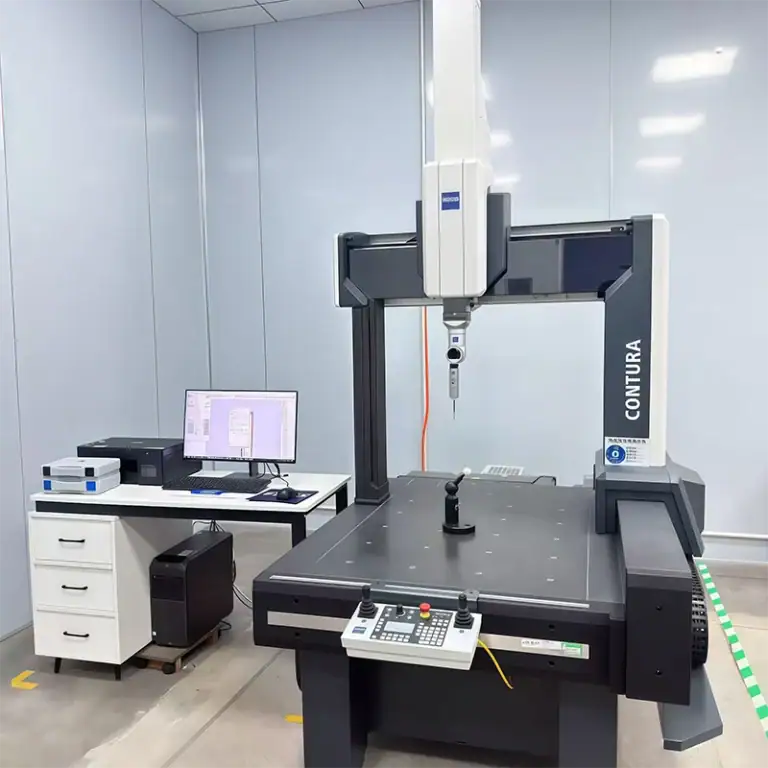
Inspect Critical Dimensions
Not every dimension of an automotive part has the same level of importance. For example, an ordinary external dimension may only affect appearance, while shaft holes, mounting hole spacing, mating surfaces, and locating surfaces may directly affect assembly. These critical dimensions require more targeted inspection. First-piece inspection can also be performed for small-batch orders. Machining one or a small number of samples first, confirming dimensions and assembly conditions, and then continuing with the remaining quantity can help reduce the risk of the same issue occurring throughout the entire batch.
Strictly Control Accuracy
Not every automotive part requires extremely high precision. If an ordinary mounting surface allows a certain dimensional tolerance but extremely tight tolerances are specified for all dimensions on the drawing, machining difficulty and inspection costs will increase. A more reasonable approach is to focus on dimensions that truly affect assembly and function while machining areas that do not require extremely high precision according to normal requirements. This can meet application requirements while helping customers control the cost of small-batch orders.
Control Batch Consistency
Small-batch CNC production often involves a situation where the first batch contains only dozens of pieces, followed by additional orders later. If material information, machining programs, dimensional requirements, and surface treatment specifications are not retained after the first batch is completed, differences in color, dimensions, or machining results may occur during subsequent production. Therefore, for automotive projects with ongoing purchasing requirements, production data management is equally important. This can reduce repeated communication when additional orders are placed and help maintain greater consistency between new and previous batches.
How Does TiRapid Provide Small-Batch Automotive Part Machining?
Arrange Machining According to Requirements
Customers can provide 3D models, 2D drawings, material requirements, quantities, and surface treatment requirements. Engineers will determine the appropriate machining method according to the part structure and check for obvious machining risks. For R&D projects where the machining solution has not yet been fully determined, the intended application and operating conditions can also be discussed first before selecting an appropriate manufacturing method.
Combine CNC, Sheet Metal, and 3D Printing
Not every part in an automotive R&D project is necessarily suitable for CNC machining. Some structural components are suitable for CNC, some sheet metal components are better suited to sheet metal fabrication, and some appearance verification parts or complex prototypes can be produced using 3D printing. If a project contains different types of components, coordinating them through a single manufacturing supplier can reduce the time customers spend searching for different machining manufacturers and also make it easier to communicate dimensions, materials, and delivery requirements consistently.
Delivery Standards for Small-Batch Orders
Before quotation, the quantity, material, surface treatment, packaging method, and inspection requirements should be clearly defined. Proper packaging and transportation of parts are also important. If precision-machined surfaces are not adequately protected, impacts or scratches may occur during transportation, meaning the parts may still not be ready for direct use when they reach the customer. Therefore, TiRapid will arrange machining, inspection, and packaging according to the characteristics of the parts to help maintain their condition from production completion through customer delivery.
Common Questions
Q1: Can automotive parts be CNC machined if only dozens of pieces are required?
Yes. CNC machining does not require production molds to be manufactured in advance like injection molding, making it suitable for R&D prototypes, trial-production parts, and small-batch orders ranging from dozens to hundreds of pieces. The actual cost still needs to be evaluated according to the part size, material, structure, and machining time.
Q2: Can I get a quotation without a complete 2D drawing?
If STEP, STP, or other 3D files are available, an initial evaluation can still be performed. However, when critical dimensions, threads, tolerances, and surface treatments are involved, complete engineering drawings are more helpful for accurate quotation.
Q3: Can aluminum alloy automotive parts receive surface treatment?
Yes. Common options include anodizing and sandblasting. The specific solution needs to be determined according to the part’s appearance, corrosion resistance, and application requirements.
Q4: Can small-batch CNC machining start with prototypes and continue with production?
Yes. This is one of the reasons why small-batch CNC machining is particularly suitable for automotive R&D projects. Prototypes can be produced first for assembly and testing, and the remaining quantity can be machined after the design has been confirmed.
TiRapid Small-Batch Automotive Part Machining Services
Small-batch automotive part machining is suitable when large-scale production is not yet required, but customers still need parts that can actually be installed on vehicles, used for testing, or put into service. In this situation, selecting the right machining method is more important than simply pursuing the lowest price. If the wrong material is selected, the part may not be durable; if dimensions are not properly controlled, assembly problems may occur; if surface treatment is not confirmed in advance, the finished part may require additional processing. CNC machining is well suited to these requirements because quantities can be relatively flexible and design modifications are convenient. Good small-batch machining is not simply about turning drawings into parts. It requires careful consideration of every step, from drawing review and material selection to machining arrangements, dimensional inspection, packaging, and delivery. In this way, even when order quantities are small, parts can be produced correctly and delivered accurately, while subsequent repeat production can also be more efficient. For customers with automotive part machining requirements, drawings and quantities can be sent directly to TiRapid, allowing the engineering team to evaluate the machining solution and quotation according to the actual part requirements.
If you are looking for a machining supplier for automotive brackets, mounting bases, housings, bushings, motor components, sensor components, or other custom automotive parts, you can send your drawings, 3D files, and quantities directly to TiRapid. TiRapid provides precision CNC machining, sheet metal fabrication, 3D printing, and other manufacturing solutions to meet your customized requirements. Whether you need single-piece prototypes, small-batch production, or large-scale manufacturing, we can provide professional services. We strictly follow ISO9001 certification standards and provide free DFM reports, instant quotations, and dedicated support—with a response within 3 minutes and a free quotation within 4 hours. Our goal is not only to provide CNC-machined parts, but also to deliver complete, customized manufacturing solutions.
Email: projects@tirapid.com
Phone: +86 760 8999 8536