Medical external fixation brackets are important structural components used in orthopedic treatment to assist in stabilizing bones and maintaining the stability of fracture sites. Compared with ordinary mechanical brackets, these components typically need to consider structural strength, installation accuracy, hole position consistency, surface quality, and long-term stability at the same time. In particular, the connecting holes, threaded holes, positioning surfaces, and clamping areas on the bracket can affect subsequent assembly and use if there are significant dimensional deviations. Therefore, for medical external fixation brackets, precision CNC machining is not simply about “making the part.” It requires comprehensive planning covering material selection, machining methods, fixturing, dimensional control, surface treatment, and final inspection.
TiRapid has long provided precision CNC machining services and can offer machining support from prototype production to small-batch and mass production according to customers’ 3D models, 2D drawings, and actual application requirements. Its current medical component machining capabilities cover CNC milling, CNC turning, and 5-axis machining, with suitable machining solutions selected according to the structure of each component. For medical external fixation brackets, a reasonable machining solution can reduce repeated drawing revisions and rework, making it easier for designers to move products from prototypes into stable production.
Why Do External Fixation Brackets Require Precision CNC Machining?
Complex support structure
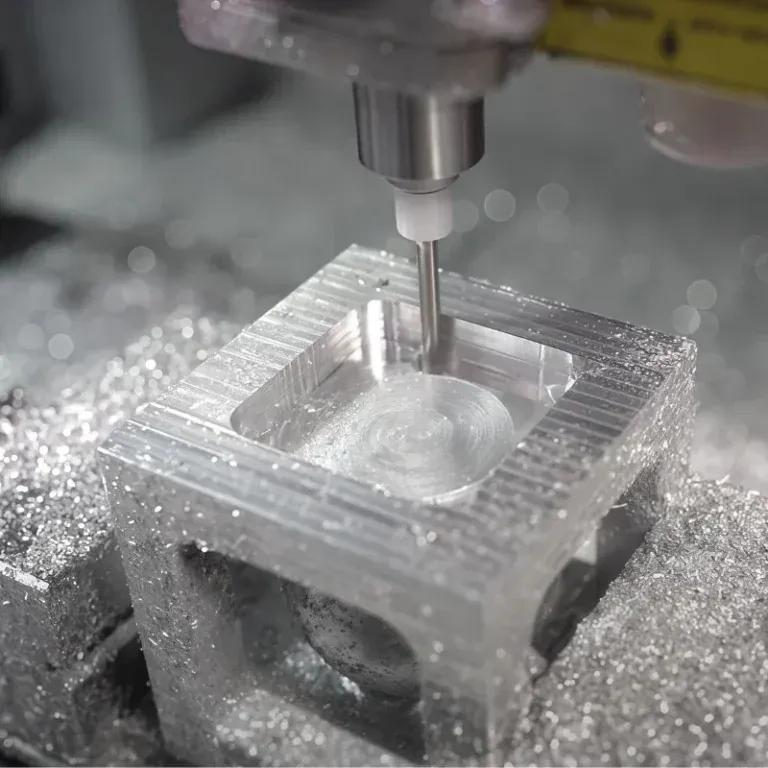
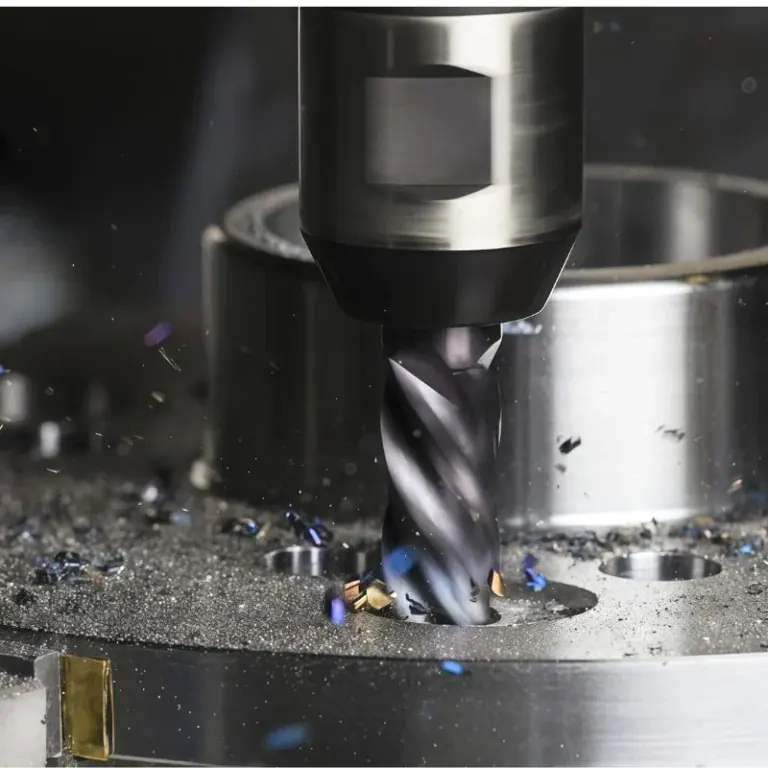
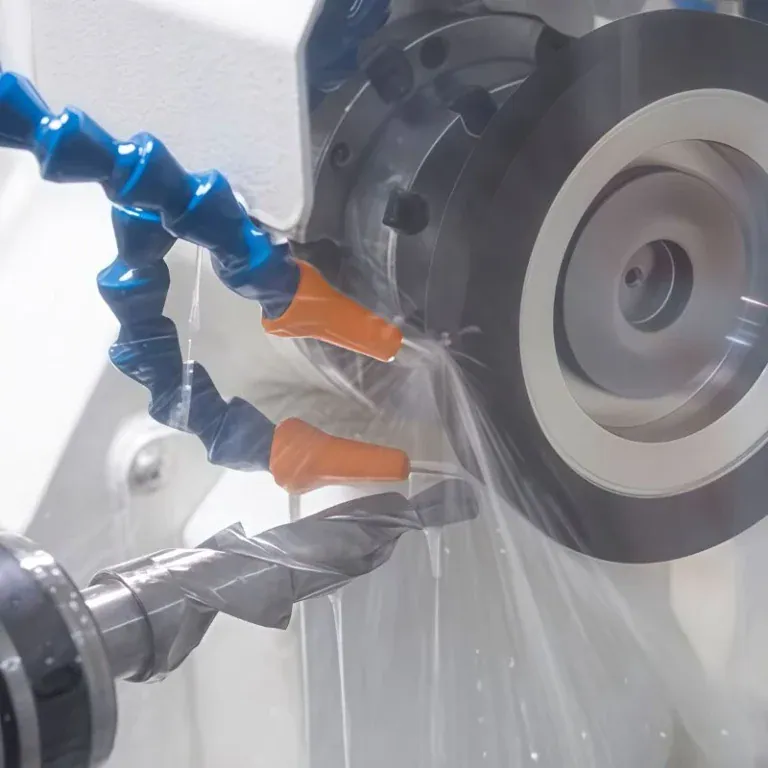
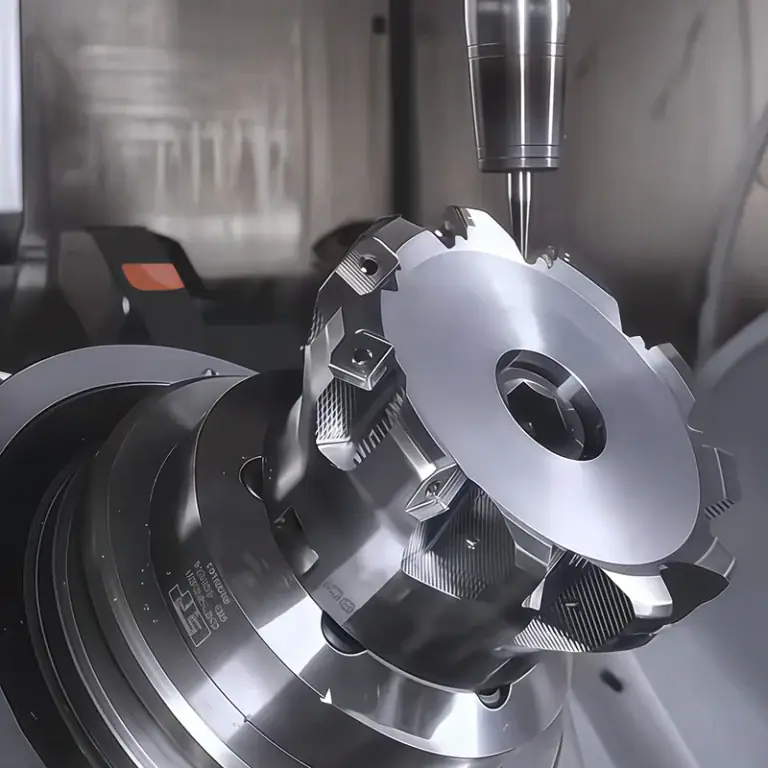
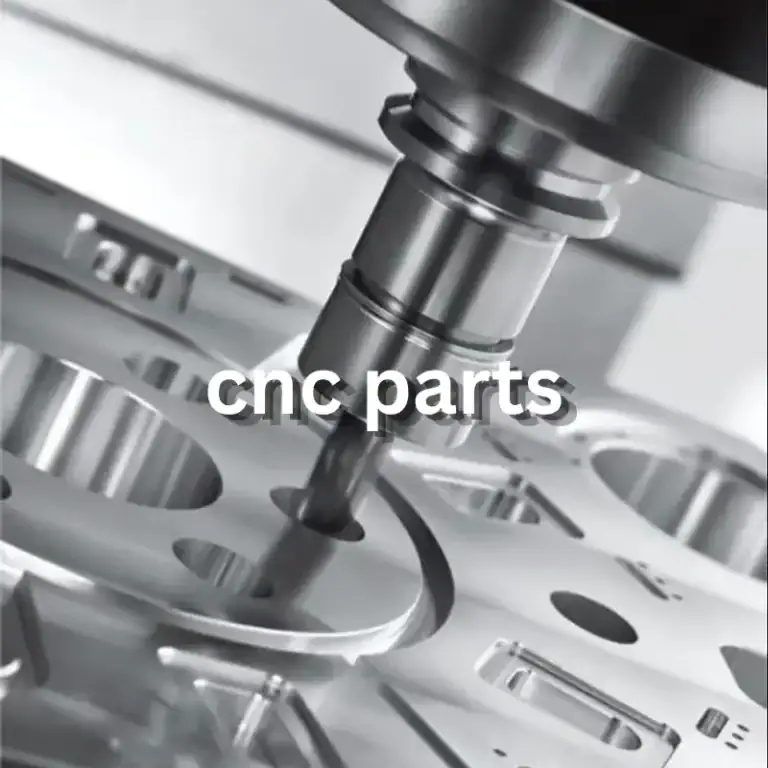
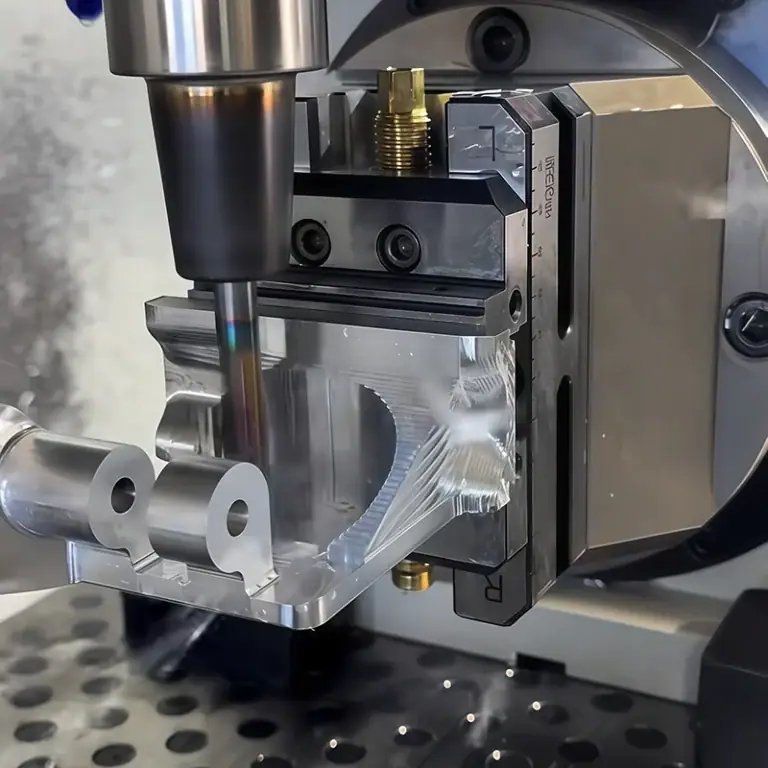
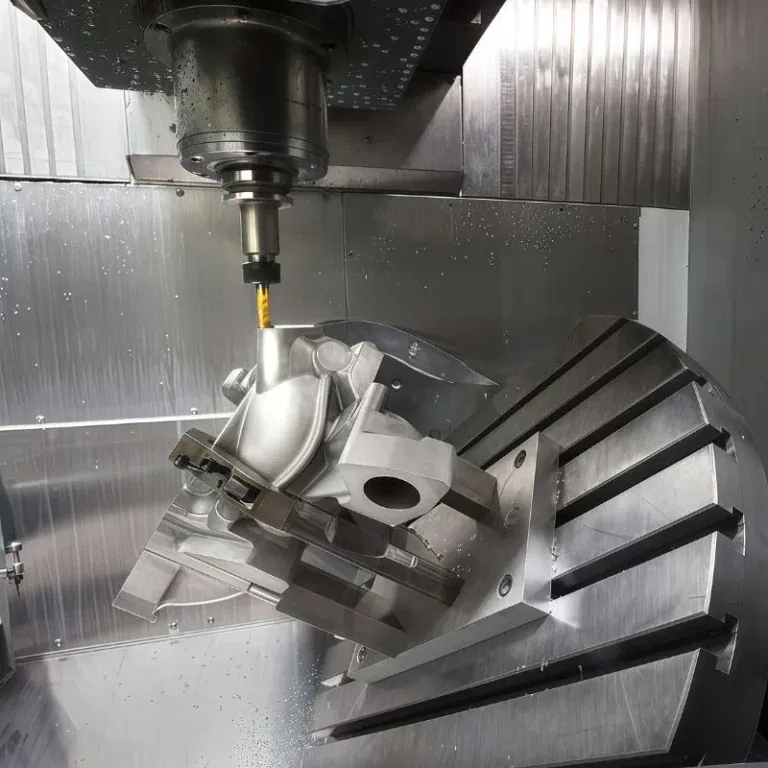
Common structures of medical external fixation brackets include connecting plates, fixing blocks, clamping bases, connecting arms, and perforated support components. Depending on the specific design, a part may contain mounting holes, counterbores, threaded holes, grooves, steps, and curved surfaces at the same time. If conventional machining methods are used for such structures, it can be difficult to achieve a good balance between efficiency and dimensional stability. CNC machining, however, can directly control tool movement according to a digital model and continuously machine holes, contours, and grooves. For brackets requiring machining on multiple surfaces, 4-axis or 5-axis equipment can also be used to reduce repeated fixturing and thereby minimize errors caused by repositioning. TiRapid’s medical CNC machining services cover milling, turning, and 5-axis machining. CNC milling is particularly suitable for medical structural components such as brackets, mounting plates, housings, and other parts featuring flat surfaces, holes, and complex contours.
High Machining Dimensional Accuracy
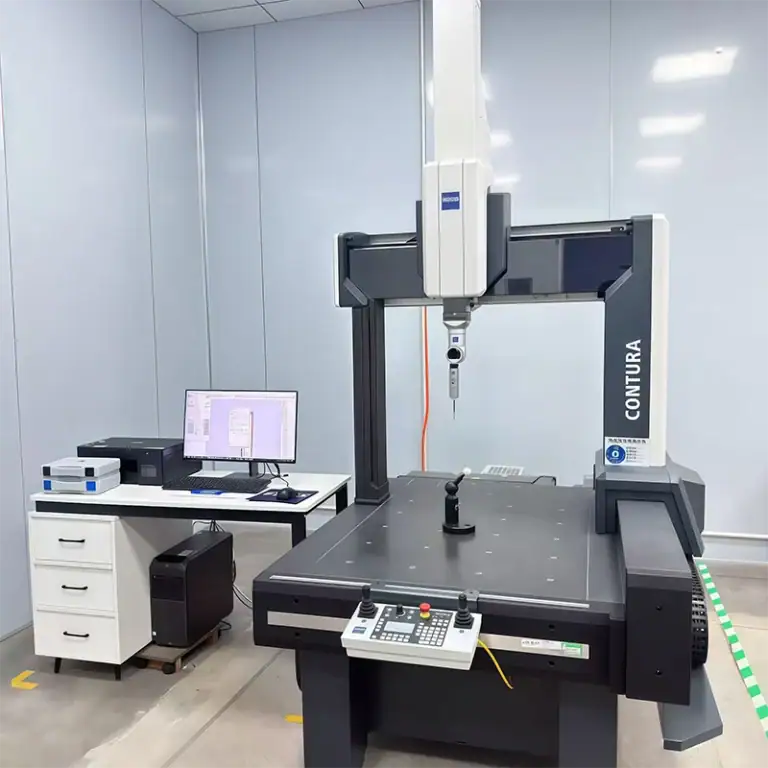
External fixation brackets are generally used together with screws, connecting rods, clamps, or other supporting components. Therefore, it is not enough for the dimensions of an individual component to be correct; reasonable consistency must also be maintained between different mounting positions. For example, if the positions of multiple mounting holes on a bracket have significant deviations, assembly may still be difficult even when the diameter of every hole meets the requirements. For such components, the reference surfaces, hole spacing, hole diameters, and critical mating dimensions need to be confirmed before machining, followed by the determination of the machining sequence. One advantage of CNC machining is that programs can be reused, allowing the same batch of components to be produced using consistent machining parameters, which helps maintain product consistency. TiRapid also applies quality control methods such as dimensional inspection and CMM inspection to precision component manufacturing to verify whether critical dimensions meet drawing requirements.
Customized Machining Solutions
There is no single fixed machining method for external fixation brackets. Small connecting blocks can often be completed using 3-axis CNC machining, while structures with multiple inclined surfaces, deep grooves, or complex curved surfaces are more suitable for multi-axis machining.
| Bracket Structure Recommended Machining Method Main Reason | ||
| Flat mounting plate | CNC milling | Convenient for hole and contour machining |
| Multi-hole fixing base | CNC milling | Easy to control hole spacing and position |
| Multi-angle connecting component | 4-axis/5-axis machining | Reduces repeated fixturing |
| Cylindrical connecting component | CNC turning + milling | Suitable for cylindrical surfaces and hole machining |
| Complex curved-surface bracket | 5-axis CNC machining | More suitable for multi-directional machining |
Therefore, before quotation, the machining process needs to be determined based on the drawings, material, quantity, and structural complexity.
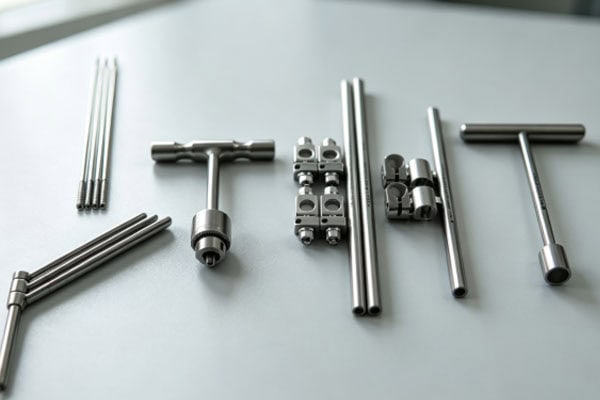
How to Develop a CNC Machining Solution for Medical External Fixation Brackets
Start by Confirming the Material and Drawings
Material selection directly affects machining difficulty, component weight, strength, and subsequent surface treatment methods. Common machining materials for medical structural components include aluminum alloys, stainless steel, and certain high-performance engineering plastics. Different materials have different cutting characteristics, so machining parameters and tool selection also need to be adjusted accordingly. For example, aluminum alloys are relatively lightweight and offer good machinability, making them suitable for certain structural components where weight reduction is required. Stainless steel provides good corrosion resistance and mechanical properties and can be used for components requiring higher strength and durability. TiRapid’s medical CNC machining services also list aluminum alloys, stainless steel, and PEEK among the commonly selected materials for medical component machining. Before formal machining, it is also necessary to confirm critical dimensions, tolerances, hole diameters, threads, surface roughness, and surface treatment requirements in the 2D engineering drawings. If the customer only has a 3D model, key dimensions can also be further confirmed during the engineering evaluation stage.
Arrange the Machining Sequence According to the Structure
The machining sequence is particularly important for bracket-type components. A stable reference surface generally needs to be established first, followed by the main external profile, holes, grooves, and detailed structures. For thin or irregularly shaped brackets, attention must also be paid to deformation caused by fixturing. Excessive clamping force may cause local deformation, while insufficient clamping force can cause the component to move during machining. Therefore, machining personnel need to design an appropriate positioning method according to the shape of the component. For external fixation brackets containing multiple machining surfaces, multiple fixturing operations or multi-axis machining can be selected according to the actual structure. 5-axis CNC machining can complete machining in multiple directions with fewer repositioning operations, making it particularly helpful for medical components with complex curved surfaces, inclined surfaces, and multi-directional holes.
Strictly Control the Machining Process
For precision structural components such as external fixation brackets, dimensional verification should be carried out after each machining operation. This makes it possible to identify problems in time and avoid discovering dimensional abnormalities only after an entire batch has been completed. The actual inspection items can be determined according to drawing requirements, such as overall dimensions, hole diameter, hole spacing, flatness, perpendicularity, and critical mating dimensions. For components with higher precision requirements, coordinate measuring machines can also be used for inspection. TiRapid’s precision machining process includes dimensional control during machining, final inspection, and related quality documentation support, with CMM and other inspection methods used to verify component accuracy.
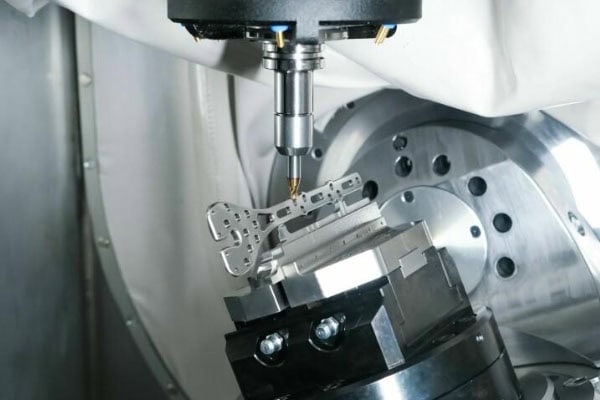
Considerations for External Fixation Bracket Machining
Control Hole Positions
External fixation brackets generally contain numerous mounting holes, and hole positions often directly affect assembly. During machining, it is necessary to control not only the hole diameter but also the hole center position, hole spacing, and relationship between the holes and reference surfaces. If the bracket needs to be installed with screws or connecting components, the thread specification, thread depth, and entrance condition must also be confirmed. For structures with multiple repeated hole positions, programming and positioning methods are particularly important. Therefore, when providing drawings, customers are advised to clearly identify the critical dimensions that directly affect assembly. This allows the machining supplier to prioritize these locations during engineering evaluation rather than quoting based only on standard dimensions.
Select the Appropriate Surface Treatment
After CNC machining, the component surface may still have tool marks, burrs, or machining patterns. If an external fixation bracket is directly assembled, these minor issues may affect handling, assembly, and appearance. Therefore, deburring, chamfering, polishing, or other surface treatments are generally required. Aluminum alloy components can be treated with methods such as anodizing according to design requirements, while stainless steel components can undergo polishing or other treatments as required. TiRapid provides a variety of surface treatment services, including polishing, anodizing, sandblasting, and electroplating, which can be selected according to the component material and application requirements. It should be noted that surface treatment for medical components should not be evaluated only by color and appearance. Dimensional changes, surface condition, and subsequent application requirements must also be considered. Therefore, the surface treatment method should preferably be determined before machining rather than decided temporarily after production is completed.
Provide Small-Batch Production Solutions
Medical products often go through prototype production, small-batch testing, and design adjustments during the development stage. If the machining method is changed every time a prototype is produced, differences may occur between different batches of components, while development time and costs may also increase. TiRapid supports single-piece prototypes, small-batch production, and larger-scale manufacturing, and provides engineering evaluation, DFM feedback, machining, and inspection services, allowing customers to maintain a continuous manufacturing solution throughout different stages of product development.
TiRapid Medical External Fixation Bracket Machining Services
Start with Drawing Evaluation to Reduce Trial and Error
A good CNC machining service should not wait until a component has been machined to discover design issues. TiRapid can evaluate the manufacturability of component structures based on customers’ 3D CAD files and engineering drawings and identify machining difficulties in advance through DFM feedback. Engineering evaluation can focus on hole positions, thin-wall areas, deep grooves, fixturing locations, machining directions, and surface treatment requirements. This helps resolve potential issues before production, reducing subsequent modifications and rework. TiRapid’s official website currently provides 3D CAD file uploads, DFM feedback, quotation, and lead-time evaluation services, supporting the manufacturing process from prototypes to production.
Different Machining Requirements Can Be Combined
An external fixation bracket does not necessarily require only one manufacturing process. For example, the main bracket can be produced using CNC milling, cylindrical connecting components can be produced using CNC turning, and complex structures can be manufactured using 5-axis machining. If a project also contains non-CNC structures, sheet metal fabrication and 3D printing services can be combined as well. This integrated approach is practical for medical equipment development projects. Customers do not need to find multiple suppliers to process different components separately and can instead conduct engineering communication and production arrangements through one supplier according to project requirements. TiRapid currently provides CNC machining, sheet metal fabrication, 3D printing, injection molding, wire cutting, and other manufacturing services, supporting prototype, small-batch, and mass production.
Maintain the Same Service Chain from Prototypes to Mass Production
During the development stage, medical external fixation brackets may initially require only a few samples for structural verification and assembly testing. Once the product is confirmed, production may increase to dozens, hundreds, or even larger quantities. In such cases, the supplier’s ability to continuously provide stable machining capabilities is particularly important. TiRapid integrates precision machining, material supply, surface treatment, quality inspection, and delivery into the same manufacturing process and manages production according to ISO9001-related quality standards.
Frequently Asked Questions
Q1: Does a medical external fixation bracket always require 5-axis CNC machining?
Not necessarily. The specific machining method depends on the bracket structure. Standard flat brackets and perforated plates can generally be completed using 3-axis CNC machining. If the component contains multiple inclined surfaces, complex curved surfaces, or machining positions in multiple directions, 4-axis or 5-axis machining may be more suitable.
Q2: Can I get a quotation without a complete 2D drawing?
Yes. You can first provide a 3D CAD model for engineering evaluation. If critical dimensions, tolerances, and surface treatment requirements have not yet been finalized, engineers can further confirm the information that needs to be supplemented based on the component structure. The more detailed the complete drawing is, the more accurate the quotation and machining solution can generally be.
Q3: What materials are suitable for external fixation brackets?
Common choices include aluminum alloys, stainless steel, and certain engineering plastics. The specific material should be determined based on the component’s strength, weight, corrosion resistance requirements, and actual application rather than selected solely according to machining cost.
Q4: Can I start with a small quantity of prototypes?
Yes. Medical product development often requires prototype verification before gradually increasing the purchase quantity. TiRapid supports single-piece prototypes, small-batch production, and subsequent mass production, allowing machining to be arranged according to the project stage.
Q5: Can inspection be provided after machining?
Dimensional inspection can be performed according to project requirements, and equipment such as CMM can be used to inspect critical dimensions. For projects requiring special quality documentation, inspection and documentation requirements can be confirmed in advance during the quotation stage.
Complete CNC Machining Solutions for Medical Components
If you are developing medical external fixation brackets, what you need is not just a CNC machining quotation, but also support in confirming materials, machining methods, hole positions, tolerances, and post-processing solutions. TiRapid can provide support starting from the engineering evaluation stage. TiRapid offers precision CNC machining, sheet metal fabrication, 3D printing, and other manufacturing solutions, supporting single-piece prototypes, small-batch production, and large-scale manufacturing while strictly following ISO9001-certified quality standards. You can directly provide 3D models or engineering drawings, and the engineering team can assist with DFM evaluation to reduce repeated modifications during machining. TiRapid provides free DFM reports, fast quotations, and dedicated support, typically responding within 3 minutes and providing a free quotation within 4 hours.
Email: projects@tirapid.com
Phone: +86 760 8999 8536
If you need machining for medical external fixation brackets, orthopedic device brackets, or other medical CNC components, you can directly provide the drawings, 3D models, and required quantities. TiRapid will develop a corresponding machining solution based on the actual component structure.