As all-terrain vehicles (ATVs), utility task vehicles (UTVs), motorcycles, and snowmobiles continue to evolve toward higher performance, lightweighting has become a key objective in component design and manufacturing. Reducing component weight can improve acceleration response, handling, and energy efficiency. However, manufacturers must also maintain structural strength, vibration resistance, and service life. Lightweight component machining for powersports vehicles therefore requires a comprehensive approach that considers material selection, structural optimization, CNC precision machining, and quality inspection to deliver reliable custom components for vehicle manufacturers.
Get 20% offf
Your First Order
Need custom metal and plastic parts?
Machining Requirements for Lightweight Powersports Components
Reduce Weight While Maintaining Structural Strength
Powersports vehicles frequently operate on rough terrain and are exposed to impact loads and continuous vibration. Components such as frame brackets, suspension mounts, engine mounting brackets, and steering components must be lightweight while meeting load-bearing requirements. By optimizing component geometry, controlling wall thickness, and removing material from non-load-bearing areas, manufacturers can reduce weight without compromising required performance.
Improve Dimensional Accuracy and Assembly Consistency
Lightweight components often feature complex surfaces, multiple mounting holes, and thin-wall structures. Dimensional deviations in hole spacing, mounting surfaces, and flatness can affect the assembly of suspension, engine, and transmission systems. An effective machining solution should use engineering drawings, 3D models, and specified tolerances to maintain consistency in critical dimensions.
Material Selection for Lightweight Components
Different materials offer varying levels of density, strength, corrosion resistance, and machinability. Material selection should be based on component loads, operating environments, and budget requirements.
Material Type
Key Characteristics
Typical Applications
6061-T6 Aluminum Alloy
Lightweight, good machinability, and good corrosion resistance
Mounting brackets, engine covers, and connectors
7075-T6 Aluminum Alloy
High strength for demanding lightweight applications
Suspension brackets, steering components, and wheel mounting components
Titanium Alloy
High strength-to-weight ratio and excellent corrosion resistance
High-performance fasteners and specialized load-bearing components
Stainless Steel
Good strength and corrosion resistance
Pins, fasteners, and wear-resistant connectors
POM, Nylon, and Other Engineering Plastics
Lightweight with suitable wear resistance and vibration-damping properties
Guide components, bushings, wire clips, and protective parts
Material selection should not be based on weight alone. Components exposed to impact and cyclic loading also require consideration of fatigue performance, connection methods, operating temperatures, and environmental corrosion.
How CNC Precision Machining Enables Lightweight Manufacturing
CNC Milling and Turning
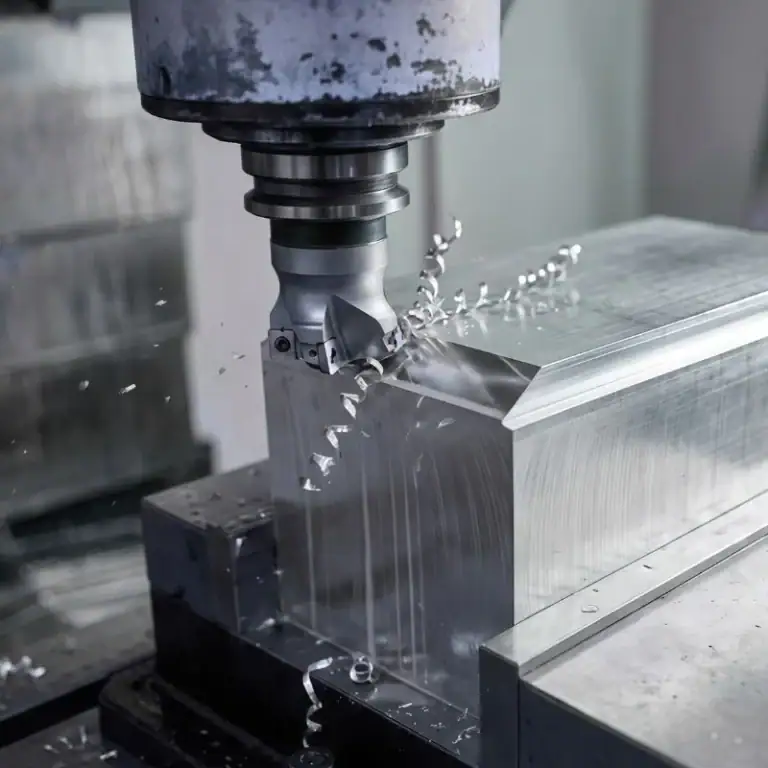
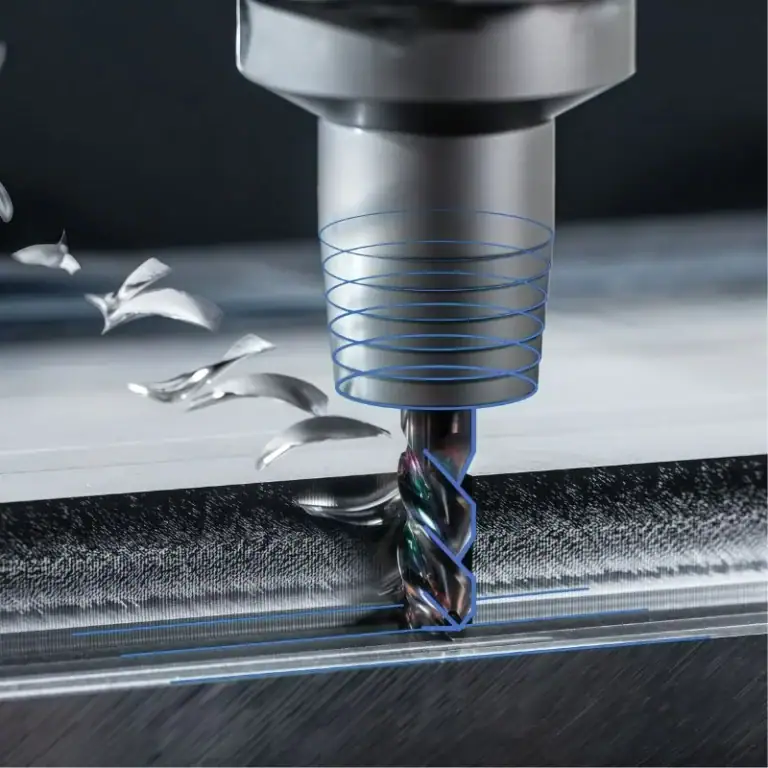
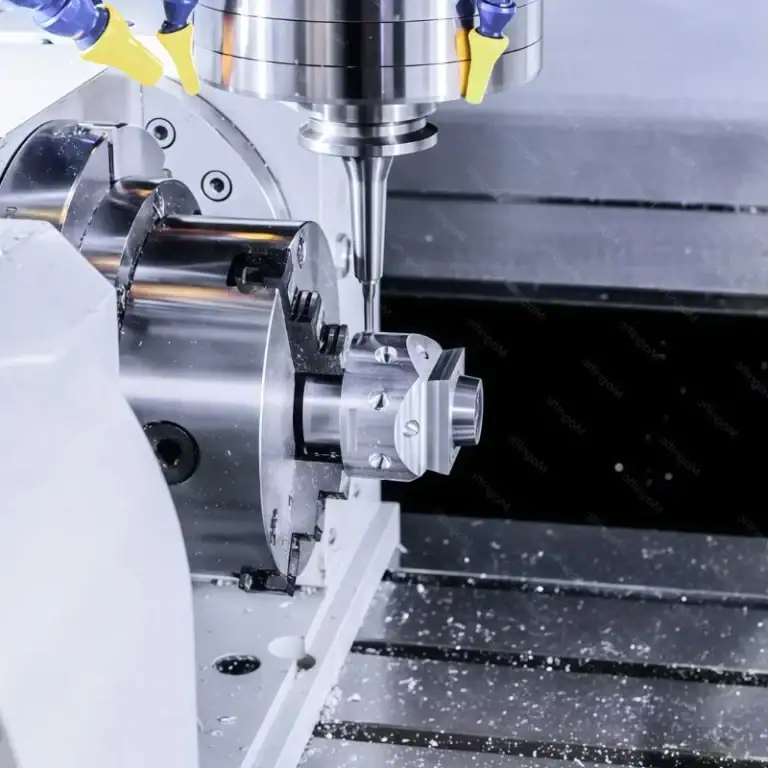
CNC milling is suitable for brackets, connecting plates, housings, and components with complex profiles. CNC turning is commonly used for shafts, bushings, spacers, and round connectors. By optimizing tool paths, workholding methods, and cutting parameters, manufacturers can improve machining efficiency and dimensional consistency.
Five-Axis CNC Machining for Complex Components
For powersports components with multi-angle holes, complex surfaces, and irregular geometries, five-axis CNC machining can reduce repeated setups and improve positional accuracy between machined surfaces. For lightweight brackets and complex connectors, structural optimization can also help eliminate unnecessary material and reduce machining steps.
Thin-Wall Structures and Machining Control
Thin-wall components are susceptible to vibration and deformation during machining. Optimizing workholding, arranging roughing and finishing operations appropriately, and controlling cutting forces can help minimize these risks. Ribs, radii, and localized wall thicknesses should also be designed according to load requirements to prevent excessive weight reduction from compromising component reliability.
Quality Control for Lightweight Components
Powersports components require appropriate inspection to ensure they meet assembly and operational requirements.
Visual Inspection: Check for burrs, scratches, machining defects, and surface quality issues.
Material and Process Verification: Confirm material grades, heat treatment requirements, and applicable surface treatments.
Assembly Verification: Conduct trial assembly of critical components to confirm fit, alignment, and installation accuracy.
Depending on the operating environment, surface treatments such as anodizing, passivation, or other suitable processes can be applied to improve corrosion resistance, wear resistance, or appearance.
TiRapid Lightweight Component Machining Solutions for Powersports Vehicles
TiRapid provides CNC milling, CNC turning, and three-axis to five-axis precision machining services. Manufacturing solutions can be developed according to customer CAD drawings, material specifications, dimensional tolerances, and order quantities. For custom lightweight components such as ATV frame connectors, UTV suspension brackets, motorcycle mounting brackets, shock absorber components, and other precision parts, design for manufacturability (DFM) analysis can help optimize structural details and machining processes.
From prototype development to small-batch production, appropriate material selection, precision machining, and quality control help manufacturers balance component weight, mechanical performance, and production costs. For manufacturers developing new powersports vehicles or upgrading existing components, working with a custom machining partner can improve product development efficiency and support consistent manufacturing in subsequent production stages.
Conclusion
Lightweight component machining for powersports vehicles involves more than simply reducing material usage. It requires a balance between weight, strength, precision, and durability. Through appropriate material selection, structural optimization, CNC precision machining, and comprehensive quality control, manufacturers can develop high-performance components suited to demanding operating conditions.
TiRapid provides customized precision machining support based on specific project requirements, helping powersports manufacturers advance the development and production of lightweight components.
Author
Galen Director and Founder
Committed to ensuring we provide the best possible service in the manufacturing industry.
Glass filled nylon is a reinforced engineering plastic that combines the versatility of nylon with the strength and stiffness of glass fibers. Compared with unfilled nylon, it offers better resistance
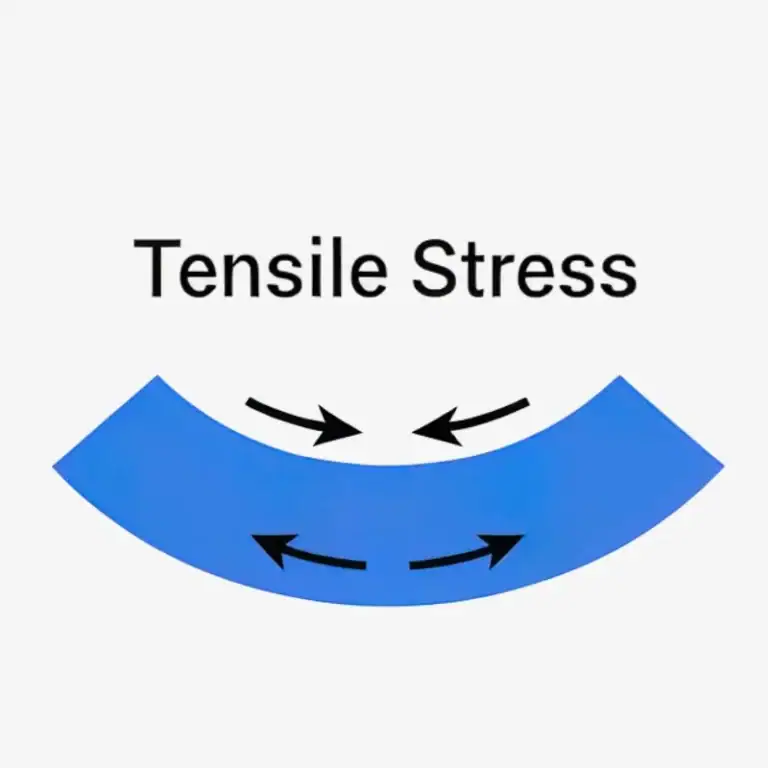
Tensile stress is the internal force per unit area produced when a material is pulled by an external load. It is calculated by dividing the applied tensile force by the
CNC machining programming connects a digital part design with the movements of a CNC machine. A well-built program defines where the cutting tool moves, which tools are used, how fast
Vertical and horizontal milling use the same basic cutting principle, but spindle orientation changes how the tool reaches the workpiece, clears chips, and handles different part geometries. This guide explains
Chamfer machining is the process of removing material from an edge, hole, or contour to create a controlled angled surface. In CNC manufacturing, chamfers are commonly used to remove sharp
Custom machining is used when a part cannot be sourced as a standard component or when its geometry, material, tolerance, or function must be tailored to a specific project. Instead
Undercut machining creates recessed, hidden, or back-facing features that a standard straight-shank cutter cannot reach from the primary machining direction. The main challenge is usually not removing the material, but
Semiconductor equipment depends on far more than electronics and process technology. Behind every wafer-handling system, test station, inspection tool, and process chamber is a network of precision-machined parts, structural components,
AI CNC machining combines traditional computer numerical control with artificial intelligence, machine learning, manufacturing data, sensors, and intelligent CAM software. Instead of replacing CNC technology, AI adds a decision-support layer
Robotic process automation is a software-based automation technology that uses digital bots to complete repetitive, rules-based tasks normally performed by people on computers. RPA bots can enter and transfer data,
Computer numerical control machining is an automated manufacturing process in which programmed computer instructions control machine tools to remove material and produce precise parts. CNC technology can control tool movement,
Semiconductor manufacturing is the process of turning high-purity semiconductor materials into functional chips through a sequence of wafer preparation, thin-film formation, photolithography, etching, doping, metallization, testing, dicing, packaging, and final