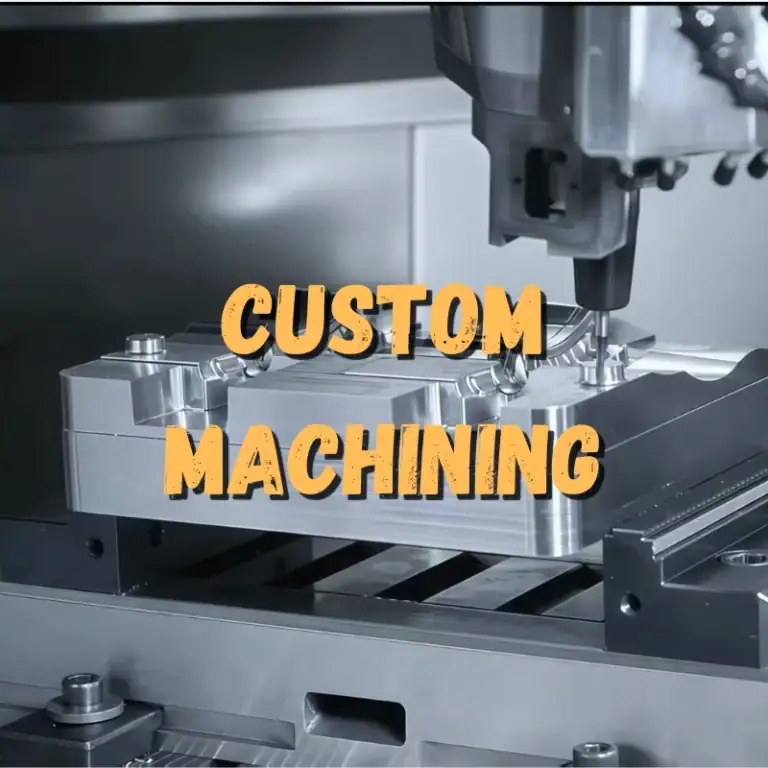
Plastic components are widely used in electronic devices, medical equipment, the automotive industry, automation systems, and precision instruments. Unlike traditional injection molding or simple cutting methods, CNC machining can manufacture high-precision parts directly from a 3D design model. It is especially suitable for low-volume production, custom components, and parts with complex geometries. However, not every plastic part needs to be CNC machined. Whether this manufacturing method is the right choice depends on factors such as precision requirements, structural complexity, production volume, and cost considerations.
When Is CNC Plastic Machining Necessary?
CNC plastic machining is not the only manufacturing option, but it offers irreplaceable advantages for many high-precision or custom-designed products. By using computer-controlled toolpaths, CNC machines can produce highly accurate and complex components, making this process widely used in product development and customized manufacturing. Many companies prioritize CNC machining during prototyping, pilot production, or the manufacturing of specialized parts because it enables a rapid transition from CAD drawings to physical components. Especially when a part requires dimensional accuracy, assembly stability, and design flexibility, CNC machining often meets these requirements more effectively than conventional manufacturing methods while making future modifications and optimizations easier.
High-Precision Parts Require Stable Dimensional Control
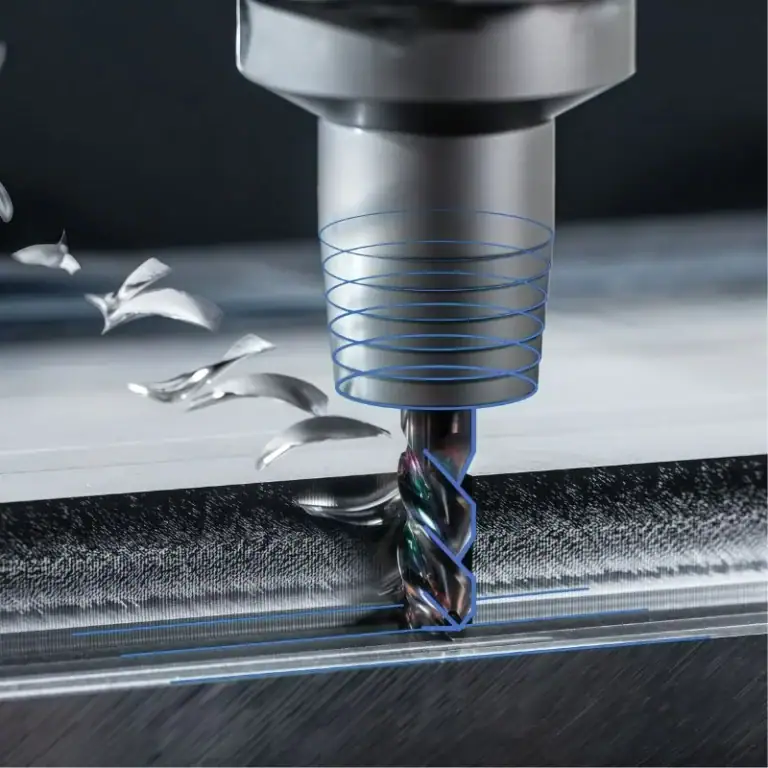
When plastic components demand high dimensional accuracy, CNC machining is often the preferred solution. Since the CNC system precisely controls the cutting tool’s movement, the finished parts achieve excellent dimensional consistency, making them suitable for precision assemblies. For products that must fit closely with metal components, electronic parts, or other plastic components, excessive dimensional deviations may result in assembly difficulties, operational interference, or even functional failure. Therefore, machining accuracy becomes especially important. In these situations, CNC machining provides excellent consistency and helps manufacturers maintain reliable product quality.
Plastic products manufactured by CNC machining can achieve:
- High repeatability and machining accuracy
- Precise control of complex dimensions
- Consistent quality across multiple production batches
- Reliable assembly and fit
This machining method effectively reduces assembly problems caused by dimensional variations and improves the overall reliability of the finished product. In industries where safety and functionality are critical, stable dimensional control not only affects product performance but also influences the operation of the complete system, making CNC machining even more valuable.
When Complex Structures Cannot Be Produced with Molds
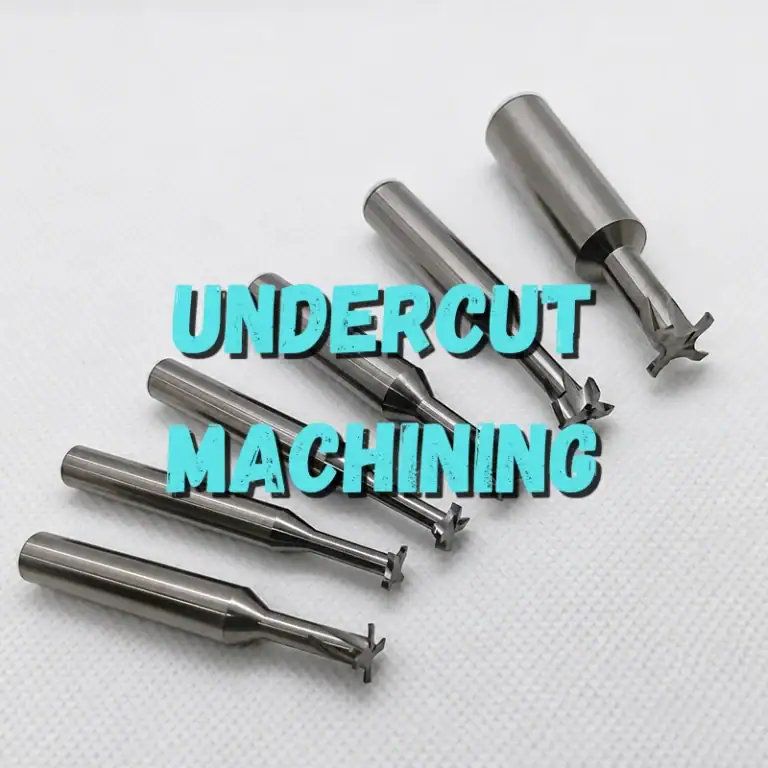
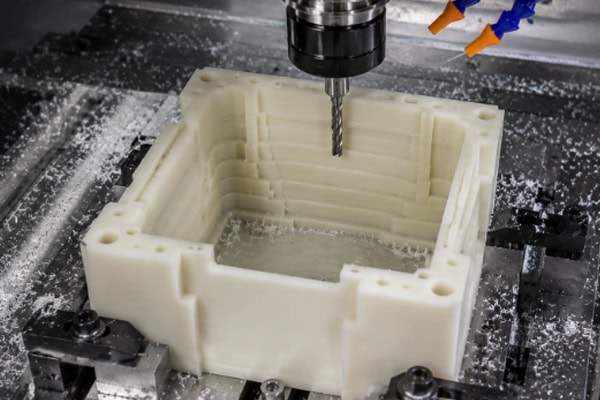
Some plastic components feature complex geometries, such as deep cavities, thin walls, multi-angle holes, and irregular profiles. Producing these parts with traditional molds often requires long development cycles and high tooling costs. CNC machining, however, can manufacture these complex structures directly through programmed toolpaths. For parts with frequently changing designs, irregular geometries, or localized precision features, mold production is often insufficiently flexible. Even small design changes may require new molds, significantly increasing both time and cost. CNC machining allows rapid adaptation to design modifications simply by updating the machining program, making it ideal for research, development, and prototype production.
Common applications include:
- Non-standard equipment components
- Structural verification prototypes
- Products with frequently changing designs
- Customized low-volume parts
During the development stage, designs often require multiple revisions. Relying on molds can significantly increase both development time and investment, while CNC machining allows rapid program adjustments to accommodate design changes.
Low-Volume Production or Prototype Development
When a product is still in the testing or market validation stage, production quantities are usually small, making CNC machining a more economical choice. Compared with injection molding, CNC machining requires no mold investment and can begin production immediately. During early product development, obtaining prototypes quickly for functional testing, appearance evaluation, and assembly verification is usually more important than mass production. Investing in mold development too early not only extends the development timeline but also risks wasting the initial investment if the design changes.
Typical applications include:
- Product prototype development
- Functional testing samples
- Low-volume trial production
- Custom manufacturing projects
This manufacturing approach significantly shortens the development cycle, allowing companies to enter the market validation stage more quickly while reducing upfront investment. CNC machining offers greater flexibility and helps minimize risks during prototype production. Many companies first verify prototypes through CNC machining before deciding whether to proceed with injection molding for mass production, making the overall development process more reliable.

When Might CNC Plastic Machining Not Be Necessary?
Although CNC machining offers excellent flexibility, it is not always the best solution for high-volume or low-precision products. Selecting the appropriate manufacturing process according to product requirements can effectively reduce production costs. In many cases, the decision is not based on whether CNC machining is technically possible, but whether it is economically justified, appropriate for the project stage, and capable of delivering the best overall value.
High-Volume Standardized Products
Once a product reaches a mature stage and requires mass production, injection molding usually provides a greater cost advantage. Although mold development requires a higher initial investment, the cost per unit is significantly lower, making it ideal for large-scale manufacturing. For products with finalized designs, stable structures, and established market demand, mold production substantially reduces manufacturing costs while improving production efficiency. In comparison, although CNC machining requires less initial investment, its longer machining time per part causes the overall production cost to increase as order quantities grow.
Typical applications include:
- Consumer electronics housings
- Standard plastic structural parts
- Standardized connectors
- High-volume industrial components
In these situations, CNC machining provides fewer advantages in terms of efficiency and manufacturing cost, making injection molding the more suitable solution. Especially when demand is high, specifications are standardized, and product designs remain stable, injection molding creates a more efficient and sustainable manufacturing process.
Parts with Low Precision or Minimal Appearance Requirements
Some plastic parts serve only as simple supports or protective components and therefore have relatively low dimensional accuracy and appearance requirements. These products usually do not require high-precision machining. As long as they fulfill their basic installation and functional purposes, there is no need to invest in expensive precision manufacturing. Many auxiliary components are not directly involved in the product’s primary functions, allowing manufacturers to choose simpler and more economical production methods.
Examples include:
- Protective covers
- Simple brackets
- Temporary fixtures
- Non-critical structural components
These components can generally be produced through conventional cutting or injection molding without the additional expense of CNC machining. In applications where appearance and assembly precision are not particularly demanding, excessive investment in CNC machining may only increase unnecessary costs.
Products with Extremely Cost-Sensitive Requirements
If a product has simple geometry and relatively low precision requirements, choosing a more economical manufacturing process is often the better solution. In highly competitive markets, even small differences in unit cost directly affect profitability, making manufacturing process selection especially important. Although CNC machining is highly flexible, it is not always the optimal solution for low-value products.
Examples include:
- Disposable plastic components
- Simple industrial accessories
- Non-load-bearing structural parts
These products are generally better suited for injection molding or other simple manufacturing processes. Since they are typically produced in large quantities, have simple structures, and perform basic functions, more economical production methods better match practical manufacturing needs. As long as functional requirements are satisfied, lower-cost manufacturing usually improves market competitiveness.
How to Determine Whether CNC Plastic Machining Is Worth Using?
Choosing the appropriate manufacturing process improves development efficiency while controlling production costs. During the early stages of many projects, companies are often uncertain about which manufacturing method to adopt. In these situations, factors such as the product lifecycle, structural complexity, and delivery schedule should all be evaluated. Only by matching the manufacturing process with the project’s objectives can the full value of CNC machining be realized while avoiding unnecessary resource waste.
Evaluate Based on the Product Lifecycle
Different stages of the product lifecycle require different manufacturing processes. From conceptual design and prototype validation to mass production, manufacturing requirements continue to evolve. Using molds during early development often results in unnecessary expenses because designs frequently change, while continuing to use CNC machining during mass production may reduce manufacturing efficiency. Therefore, determining whether CNC machining is appropriate requires consideration of the product’s current development stage.
During the development stage:
- CNC machining is generally the better choice
- Supports rapid design modifications
- Reduces trial-and-error costs
During mass production:
- Injection molding is generally more suitable
- Reduces unit production costs
- Improves manufacturing efficiency
Therefore, manufacturing methods should be selected according to each stage of the product lifecycle. Many experienced manufacturers follow a strategy of “CNC validation during development and injection molding during mass production,” balancing design accuracy, cost, and production efficiency.
Evaluate Based on Structural Complexity
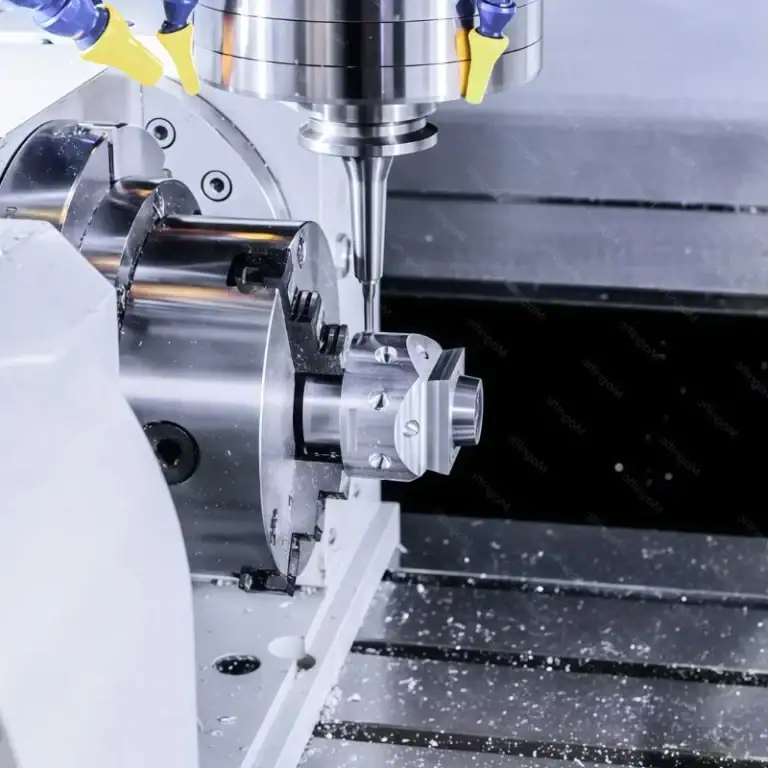
The complexity of a component directly influences manufacturing feasibility. The more complicated the design, the greater the demand for advanced machining capabilities. Products with deep cavities, irregular contours, special hole locations, or complex curved surfaces are often difficult to manufacture using conventional methods. CNC machining performs particularly well with these components because computer-controlled toolpaths allow highly flexible machining without relying on dedicated molds, making it ideal for prototype production and low-volume manufacturing.
When parts include:
- Complex curved surfaces
• Deep cavity designs
• Multi-angle hole locations
• Non-standard geometries
CNC machining usually provides significant advantages because complex structures can be manufactured without mold development. It also enables faster realization of design concepts while simplifying future optimization.
Evaluate Based on Delivery Schedule
If a project has a tight deadline and requires prototypes or trial parts quickly, CNC machining can significantly reduce production time. Many projects are constrained not by budget but by the limited time available for mold development. This is especially true during new product development, customer approval processes, trade show preparation, or emergency replacement parts, where delivery speed is often more important than minimizing unit costs. CNC machining excels in these situations because production can begin directly from engineering drawings without waiting for mold design and fabrication.
Key advantages include:
- No mold development required
- Easy program modification
- Fast production startup
These advantages make CNC machining especially suitable for urgent projects. It shortens the time between design and finished parts, allowing products to enter testing and validation much sooner. In many situations, obtaining prototypes quickly is more valuable than minimizing manufacturing costs because it enables companies to seize market opportunities and identify design issues earlier.
How to Maximize the Value of CNC Plastic Machining?
When used appropriately, CNC machining not only improves product quality but also enhances development efficiency and streamlines the entire manufacturing process.
Optimize Part Design to Reduce Machining Difficulty
Considering manufacturability during the design stage reduces later modifications and improves machining efficiency. High machining costs are often caused not by difficult materials but by designs that are poorly suited for manufacturing. If tool accessibility, fixturing methods, and machining clearance are considered during design, production becomes much smoother while reducing rework and corrective operations.
For example:
- Avoid excessively deep blind holes
- Design reasonable wall thicknesses
- Simplify overly complex curved surfaces
- Optimize fixturing features
Good design directly reduces machining costs. Designers should consider not only product functionality but also manufacturing feasibility. Doing so improves machining efficiency while minimizing dimensional errors and surface quality issues caused by impractical designs. Spending more time optimizing the design early often saves significant machining and modification costs later.
Select Plastic Materials Appropriately
Different plastics possess very different material properties, and selecting the right material significantly improves machining quality. Material hardness, toughness, heat resistance, moisture absorption, and dimensional stability all directly affect machining performance and final product quality. If the wrong material is selected, problems such as deformation, cracking, excessive burrs, or dimensional instability may occur regardless of machining quality. Therefore, material selection is one of the most critical aspects of CNC plastic machining.
Common materials include:
- POM (easy to machine)
- PA (wear-resistant)
- PC (transparent structural applications)
- PEEK (high-performance engineering plastic)
Material selection directly influences machining precision, surface finish, and product service life. For example, POM is well suited for precision components, PA performs well in wear-resistant applications, PC is commonly used for transparent or translucent parts, and PEEK is ideal for high-temperature and high-performance environments. Material selection should always consider the intended application, operating conditions, and machining requirements to maximize the benefits of CNC machining.
Combine Inspection with Process Optimization
Continuously optimizing machining parameters through inspection data improves product consistency. Although CNC machining offers excellent precision, slight variations between production batches may still occur without a comprehensive inspection and feedback system. Plastic machining is particularly sensitive to factors such as temperature, residual stress, and cutting parameters. Therefore, inspections help identify problems early and support process improvements, ensuring consistent quality from the first part through full production.
Common practices include:
- First article inspection
- Random batch inspections
- Dimensional feedback adjustments
- Machining parameter optimization
By continuously collecting production data, manufacturers can gradually determine the optimal machining parameters for specific materials and component types, improving overall manufacturing performance. In this way, CNC machining becomes more than simply producing parts—it delivers stable, consistent, and continuously improving manufacturing quality.
Frequently Asked Question
Is CNC Plastic Machining More Expensive Than Injection Molding?
For low-volume production or product development, CNC machining is usually more cost-effective because there are no mold costs. However, in high-volume manufacturing, injection molding offers a much lower cost per part, making it more suitable for large-scale production. Therefore, neither process is inherently more expensive or cheaper than the other. The better choice depends on production quantity and the product’s development stage. CNC machining is generally more economical for prototypes, pilot production, and customized low-volume parts, while injection molding is the preferred solution for mature products manufactured at scale.
Conclusion
Whether CNC plastic machining is necessary does not have a single universal answer. The decision depends on multiple factors, including dimensional accuracy requirements, structural complexity, production volume, and the product’s development stage. For high-precision, low-volume, or structurally complex components, CNC machining provides a flexible and efficient manufacturing solution. For standardized products manufactured in large quantities, injection molding is generally the better option. Selecting the appropriate manufacturing process not only improves product quality but also effectively controls development costs and production lead times. By aligning manufacturing methods with the product lifecycle—using CNC machining for rapid design validation during development and transitioning to injection molding for mass production—manufacturers can achieve the ideal balance between efficiency and cost.