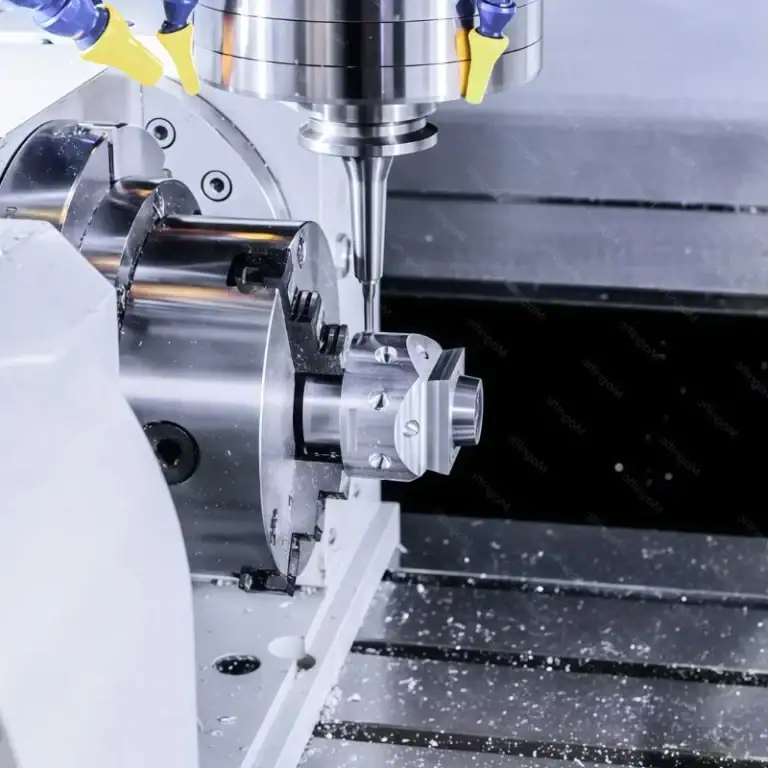
In CNC plastic machining, “surface finish” is often one of the most intuitive evaluation criteria for customers. Even if a part meets dimensional requirements, the presence of burrs, stringing, tool marks, or whitening on the surface can affect assembly, appearance, and even functional performance. Compared with metal machining, surface quality in plastics is more difficult to control because the material itself is more sensitive to heat, pressure, and tool condition.
What Is Surface Finish in CNC Plastic Machining?
The essence of surface finish
Surface finish refers to the microscopic smoothness of a machined part’s surface, typically reflected in roughness, the depth of tool marks, and whether defects such as burrs or melted edges exist.In plastic machining, it is not only about “how smooth it looks,” but also directly affects friction performance, assembly accuracy, and sealing capability.
Why is it harder to achieve good surface finish in plastics?
Unlike metals, plastics have low melting points, low thermal conductivity, and relatively high elasticity. During cutting, heat cannot dissipate quickly and tends to accumulate locally, causing softening or even slight melting.At the same time, the elasticity of plastics can turn cutting action from “shearing” into “pressing,” resulting in burrs or surface tearing.
Typical surface finish issues
Common problems include whitening, visible tool marks, edge burrs, localized melted edges, and uneven texture. These issues are usually the combined result of tooling, parameters, and cooling conditions.
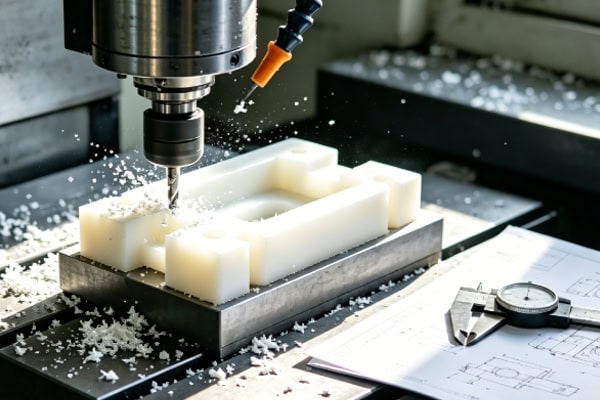
How to Improve Surface Finish?
Evaluate material and requirements before machining
Different plastics have different sensitivity to surface finish. Before machining, it is necessary to clearly define whether the part is a structural component or an appearance part.For example, appearance parts require higher surface quality, while functional parts focus more on dimensional stability. Materials such as PEEK, PC, and PMMA require more precise control over surface quality.
Select appropriate tools and machining methods
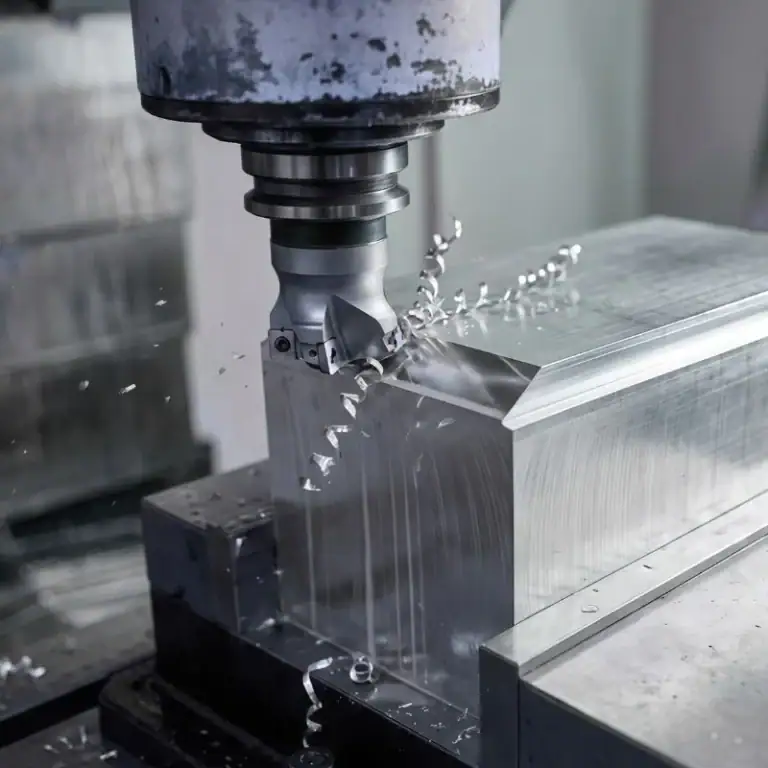
Tools directly determine the cutting condition. Sharp tools with smooth chip evacuation must be selected according to the material, while dull tools or improper tool geometry for plastics should be avoided.Machining strategies should prioritize layered cutting and light cutting paths, avoiding heavy single-pass cuts.
Optimize cutting parameters
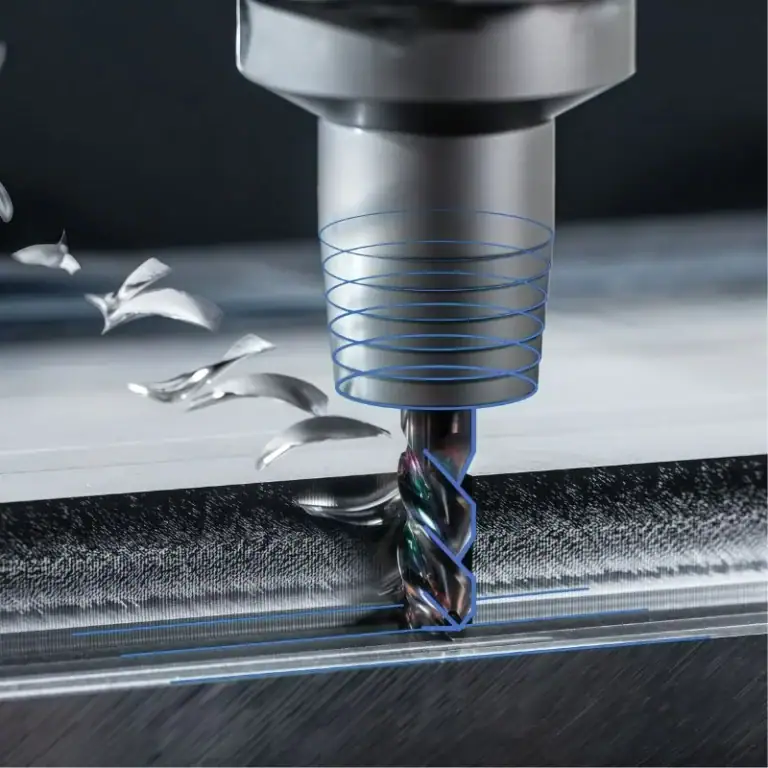
This includes spindle speed, feed rate, and cutting depth.The general principle is to increase spindle speed to reduce cutting load, while appropriately increasing feed rate to avoid “friction heat generation.” Cutting depth should remain within a stable range to prevent vibration or deformation caused by excessive depth.
Control machining environment and cooling method
Although plastic machining does not typically rely heavily on cutting fluid, in some materials, air cooling or air blowing can effectively reduce heat accumulation. At the same time, the machining area should be kept clean to prevent secondary friction from chips.
Finishing and post-processing
During finishing, specialized fine tools should be used for low-load cutting. If necessary, polishing or light deburring processes can be applied to improve final surface consistency.
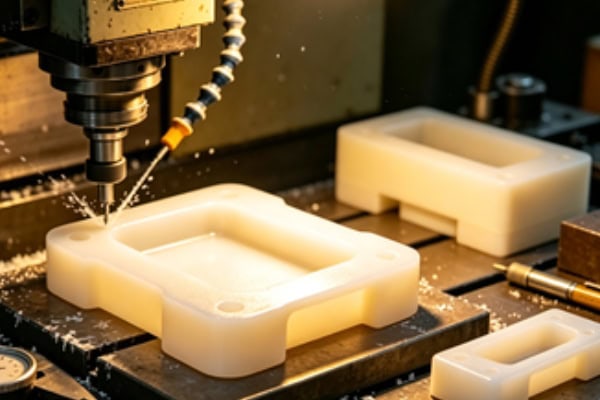
Factors Affecting Surface Finish
Tool sharpness and edge condition
Plastic machining is extremely sensitive to tool sharpness. A dull tool does not “cut” but “presses,” directly causing burrs and stringing.In addition, even minor edge defects can create repeated tool marks, significantly reducing surface quality.
Heat control is a core variable
Plastics have poor thermal conductivity, so cutting heat easily concentrates at the tool tip. Excessive temperature can soften or partially melt the material, creating “glossy edges” or “melted edges.”Therefore, heat control is more important than simply increasing cutting speed.
Vibration and machine rigidity
Insufficient machine rigidity or unstable fixtures can cause micro-vibrations. While this may have limited impact in metal machining, in plastics it directly leads to wave-like tool marks or uneven surfaces.
Chip evacuation affects surface continuity
If chips are not properly removed, they may repeatedly rub between the tool and workpiece, causing secondary scratches and reducing surface quality. This issue is especially prominent in deep grooves and complex geometries.
Toolpath design
Improper toolpaths may lead to repeated local cutting or excessive dwell time at corners, resulting in visible tool marks. Smooth toolpaths can significantly improve surface consistency.
Effect of Different Plastics on Surface Finish
PMMA (Acrylic)
PMMA has high transparency and extremely high requirements for surface quality. Extremely sharp tools are required; otherwise, cracks or clouding may occur.
PC (Polycarbonate)
PC has good toughness but is prone to stress whitening caused by heat accumulation. Cutting temperature must be strictly controlled to avoid whitening on the surface.
PEEK / PPS
High-performance engineering plastics require high machining stability. Improper processing easily leads to tool marks or uneven surfaces, requiring strict process control.
PTFE
PTFE is soft and prone to “tool dragging,” resulting in tearing-like surface defects. Extremely sharp tools and light cutting strategies are required.
Methods to Improve Surface Finish in CNC Plastic Machining
Tools must be sharp: Dull tools cause burrs and stringing, the most common issue.
Control cutting temperature: Excess heat causes softening and surface whitening.
Optimize cutting parameters: Increase spindle speed appropriately and control feed to avoid friction cutting.
Ensure machine stability: Vibration directly affects surface uniformity and tool mark quality.
Improve chip evacuation: Prevent secondary friction scratches caused by chips.
Separate roughing and finishing control: Roughing and finishing must use different parameters.
Common Questions
“Why do some parts from the same batch have smooth surfaces, while others show visible tool marks?”
This difference usually comes from subtle variations in the machining process, such as whether the tool was just replaced, whether there is micro-vibration in the machine, whether environmental temperature changed, or whether clamping pressure is consistent.Plastic machining does not have the same tolerance for variation as metal machining; it is highly sensitive to small changes. Therefore, professional machining typically integrates tool management, parameter standardization, and fixture design to ensure batch consistency, rather than relying only on single-part quality.
Conclusion
If the machining process is compared to “carving,” the tool is the pen and the material is the paper—but what truly determines the final quality is the stability of the entire process.As long as heat is controlled, vibration is minimized, tools remain sharp, and cutting paths are optimized, surface quality can be significantly improved. High surface finish is not only an appearance requirement, but also a reflection of machining capability stability. Stable surface quality means lower rework rates, higher assembly success rates, and better customer experience.