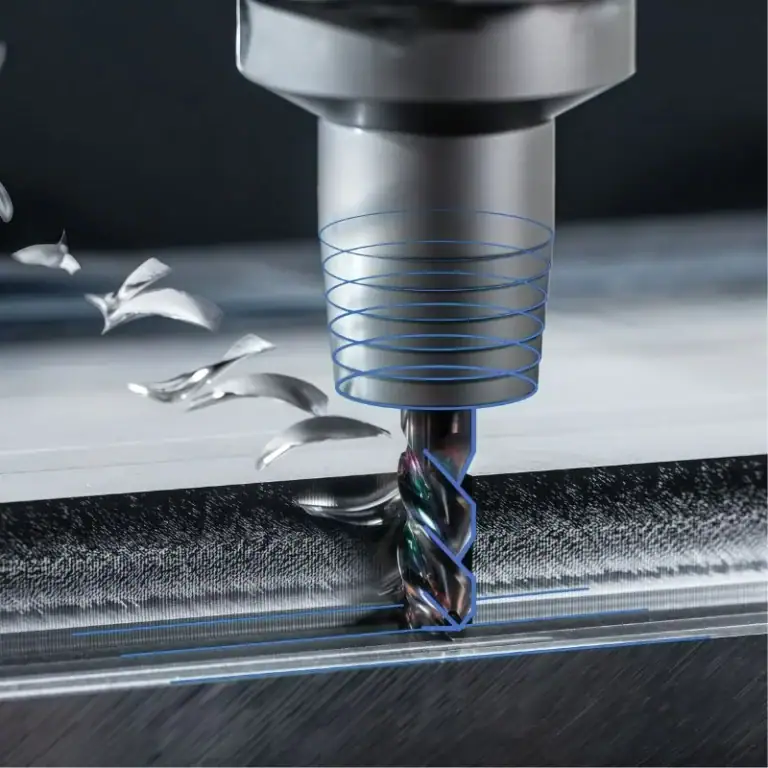
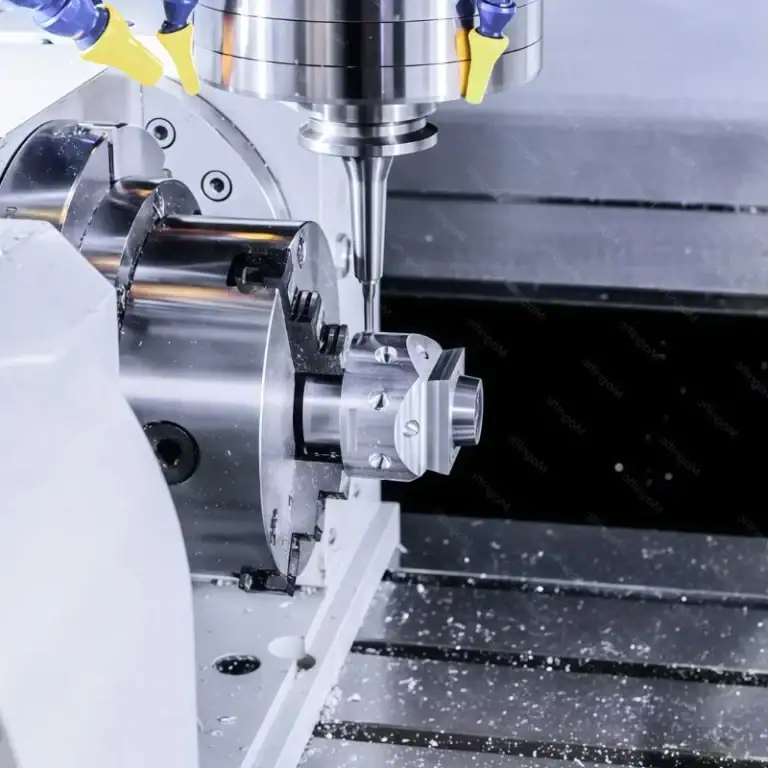
Delrin vs PVC is a useful plastic material comparison because both materials are used in industrial, electrical, and machined components, but they serve very different engineering needs. Delrin is usually selected for strength, rigidity, wear resistance, low friction, and precision CNC machining, while PVC is chosen for chemical resistance, electrical insulation, corrosion resistance, and cost-effective protective parts.
In this guide, we compare delrin vs pvc by mechanical strength, durability, machinability, chemical resistance, moisture behavior, thermal properties, electrical performance, cost, and applications.
What Is Delrin?
Delrin is an engineering thermoplastic known for high stiffness, low friction, good wear resistance, low moisture absorption, and excellent dimensional stability. It is a type of acetal homopolymer, also called POM-H, and is widely used when a plastic part must behave like a precise mechanical component.
Delrin is commonly used for gears, bushings, bearings, rollers, pump parts, valve components, fasteners, insulators, housings, and CNC machined components. It is especially useful when the design requires accurate holes, threads, flat surfaces, smooth movement, or stable fit after machining.
Compared with PVC, Delrin is usually stronger, harder, and better for load-bearing or moving parts. PVC may be more economical and chemically resistant, but Delrin is more suitable when the part must maintain precision under mechanical stress.
Key Properties of Delrin
The key properties of Delrin are high stiffness, good tensile strength, low friction, wear resistance, low moisture absorption, and excellent dimensional stability. These properties make it suitable for precision mechanical parts that must hold shape and move smoothly.
Common advantages of Delrin include:
- High rigidity
- Good hardness
- Low coefficient of friction
- Good wear resistance
- Low moisture absorption
- Excellent CNC machinability
- Good fatigue resistance
- Good creep resistance
- Stable dimensions after machining
- Suitable for precision mechanical components
Delrin is not usually selected when the main requirement is low material cost, flame resistance, or broad chemical resistance against strong acids and bases. Its main value is precision, stiffness, smooth movement, and repeatable mechanical performance.
What Is PVC?
PVC is a widely used thermoplastic known for chemical resistance, electrical insulation, corrosion resistance, and cost-effective manufacturing. Its full name is polyvinyl chloride, and it is one of the most common plastics used across construction, electrical, medical, packaging, and industrial applications.
PVC can be rigid or flexible depending on formulation. Rigid PVC is common in pipes, ducts, covers, panels, and structural profiles, while flexible PVC is used for hoses, films, insulation, and protective components.
Compared with Delrin, PVC is not usually selected for precision gears, bushings, or high-wear mechanical parts. It is more often selected when the part needs chemical resistance, insulation, protective coverage, affordability, and broad availability.
Key Properties of PVC
The key properties of PVC are chemical resistance, corrosion resistance, electrical insulation, low cost, good availability, and broad formulation flexibility. These properties make it useful for protective, electrical, fluid-handling, and industrial components.
Common advantages of PVC include:
- Good chemical resistance
- Good corrosion resistance
- Good electrical insulation
- Low material cost
- Wide availability
- Rigid and flexible grades
- Easy fabrication
- Good weather resistance in selected grades
- Useful for covers, ducts, caps, and cable parts
- Practical for injection molded and extruded products
PVC is not usually selected for high-load moving parts or precision wear components. Its main value is functional protection, insulation, chemical resistance, and cost-effective production.
Delrin vs PVC: Quick Comparison
Delrin vs PVC can be summarized as precision mechanical performance versus chemical-resistant cost-effective protection. Delrin is better for strong, accurate, moving parts, while PVC is better for insulating, protective, and chemical-resistant components.
| Property Focus | Delrin | PVC |
| Main advantage | Precision and strength | Chemical resistance and cost |
| Material family | POM-H / acetal | Polyvinyl chloride |
| Strength | Higher | Moderate |
| Hardness | Higher | Depends on grade |
| Wear resistance | Better | Lower for moving parts |
| Friction | Lower | Higher |
| Moisture resistance | Good | Good |
| Chemical resistance | Moderate to good | Good |
| Electrical insulation | Good | Good |
| Machinability | Excellent | Good for simple parts |
| Cost | Higher | Lower |
| Best use | Precision machined parts | Covers, ducts, caps, plugs, insulation |
Strength and Rigidity
Delrin is generally stronger and more rigid than PVC, especially for precision mechanical parts. It resists deformation better under load and is more suitable for gears, bushings, rollers, and CNC machined components.
PVC can provide useful stiffness, especially in rigid uPVC form, but it is not normally chosen for high-load mechanical movement. It is better for covers, ducts, panels, pipe-related parts, and protective components.
If the part must carry load or hold exact geometry, Delrin is usually the better choice. If the part mainly protects, insulates, or resists chemicals, PVC may be more practical.
Durability and Wear Resistance
Delrin usually has better wear resistance than PVC in moving mechanical applications. Its low friction and hard surface make it suitable for sliding, rolling, and repeated contact parts.
PVC is durable in chemical and environmental exposure, but it is not designed for high-wear precision mechanisms. It may perform well as a protective cover, duct, or enclosure, but not as well as Delrin in gears or bearings.
In a delrin vs pvc wear-related decision, Delrin is safer for moving parts. PVC is safer for static protective and chemical-resistant parts.
Chemical Resistance
PVC usually has better broad chemical resistance than Delrin, especially for many acids, alkalis, salts, and corrosive environments. This is one of PVC’s strongest advantages in industrial and electrical applications.
Delrin resists many fuels, solvents, and neutral chemicals, but it can be affected by strong acids, strong bases, hot water, and steam. Chemical compatibility should always be checked before production.
If chemical exposure is the main risk, PVC may be better. If mechanical precision is the main risk, Delrin may be better.
Moisture Resistance
Both Delrin and PVC provide good moisture resistance, but they behave differently in wet service. Delrin absorbs little moisture and maintains dimensional stability, while PVC is highly resistant to water and commonly used in pipe, duct, and protective applications.
For wet precision components with holes, threads, or bearing fits, Delrin may provide better machining and dimensional control. For water-contact covers, ducts, plugs, or pipe-related components, PVC is often more cost-effective.
Moisture alone should not decide the material. Load, tolerance, chemical exposure, and temperature should also be considered.
Thermal Properties
Delrin generally performs better than PVC in precision mechanical applications where moderate heat and load occur together. It holds shape well and maintains useful stiffness within its working range.
PVC has useful thermal behavior for many building, electrical, and fluid-handling applications, but standard PVC is not ideal for high-temperature precision parts. CPVC may be considered when higher heat resistance is required.
For high-temperature environments, neither material should be selected by name alone. Designers should check grade-specific temperature limits and service conditions.
Electrical Properties
Both Delrin and PVC can provide electrical insulation, but PVC is more widely used for cable insulation, wire management, fuse covers, cable ducts, and protective electrical parts. Its cost and formulation flexibility make it practical for electrical systems.
Delrin also provides good insulating behavior and is used for connectors, insulators, and precision electrical components where strength and dimensional stability are needed.
Choose PVC for low-cost insulation and cable management. Choose Delrin when the electrical part also needs precision, strength, and machined features.
Machinability
Delrin is usually easier to machine accurately than PVC because it cuts cleanly, holds detail well, and provides excellent dimensional stability. It is often preferred for tight-tolerance CNC machined parts.
PVC can also be machined, drilled, cut, and fabricated, but it is more often used for simple shapes, covers, panels, ducts, and protective components. Machining PVC requires attention to heat, chip control, and material grade.
For precision CNC parts, Delrin is usually better. For simple protective or insulating parts, PVC may be more economical.
Cost Difference
PVC is usually less expensive than Delrin and is widely available in many forms. This makes it attractive for cost-sensitive protective, electrical, and chemical-resistant components.
Delrin costs more, but it can reduce failure risk when the part needs accuracy, strength, wear resistance, or tight-tolerance machining. The best choice depends on total performance value, not only material price.
If the part is simple, static, and cost-sensitive, PVC may be better. If the part is mechanical, precise, and load-bearing, Delrin may justify the higher cost.
Delrin vs PVC: Mechanical Properties Comparison
Delrin has stronger mechanical performance than PVC in most precision engineering parts. PVC is useful for structural covers and protective parts, but Delrin is better for load-bearing, moving, and wear-resistant components.
Tensile Strength and Hardness
Delrin usually has higher tensile strength and hardness than PVC, making it better for parts that must resist mechanical stress and maintain shape. It can be used for components that experience repeated motion or moderate load.
Rigid PVC has useful strength for protective and structural applications, but it is generally less suitable for precision mechanical systems. Flexible PVC is even less comparable because it is designed for flexibility rather than rigidity.
For hard, accurate, load-bearing plastic parts, Delrin is usually the better option.
Impact Resistance and Brittleness
Impact resistance depends strongly on grade and formulation. Delrin offers good toughness for mechanical parts, while PVC can be rigid or flexible depending on plasticizer content and formulation.
Rigid PVC may become brittle under certain conditions, especially at low temperature or after long environmental exposure. Flexible PVC can absorb movement better but has lower stiffness.
If the part must absorb repeated impact while holding precision, Delrin may be more reliable. If the part mainly needs flexible protection, a suitable PVC formulation may work better.
Creep Resistance and Dimensional Stability
Delrin has better creep resistance and dimensional stability than PVC in precision mechanical assemblies. It resists long-term deformation better when used for bushings, rollers, gears, spacers, and machined components.
PVC can hold shape well in static applications, but it is not usually selected for precision load-bearing mechanical movement. Long-term load and heat can affect performance depending on formulation.
For stable machined geometry, Delrin is the safer option. For static covers, ducts, and protective parts, PVC is often sufficient.
Metal Replacement Potential
Delrin has stronger metal replacement potential than PVC because it offers high stiffness, good wear resistance, low friction, and reliable machinability. It is commonly used when metal parts are too heavy, conductive, noisy, or corrosion-prone.
PVC can replace metal in corrosion-resistant panels, ducts, covers, or low-load protective components, but it is not usually used as a metal replacement for gears, bearings, or precision mechanical parts.
If the project needs a plastic alternative to metal in a moving assembly, Delrin is usually better. If the project needs corrosion-resistant protection, PVC may be better.
Delrin vs PVC: Thermal, Chemical, and Electrical Properties
PVC is stronger in chemical resistance and electrical applications, while Delrin is stronger in mechanical stability under moderate heat and load. The best choice depends on whether the part faces chemicals, electrical insulation, or mechanical stress.
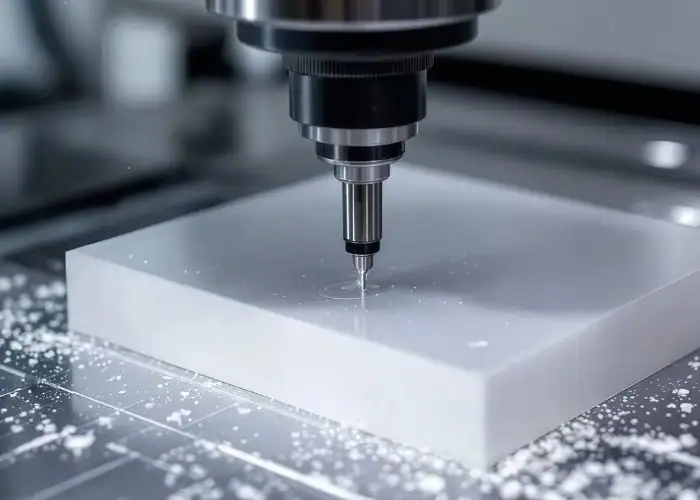
Heat Resistance Comparison
Delrin usually provides better mechanical stability than standard PVC when moderate heat and load occur together. It can maintain stiffness and shape in precision mechanical components within its working temperature range.
PVC is widely used in building, electrical, and fluid systems, but standard PVC may soften or deform if exposed to excessive heat. CPVC is a better option when PVC-type chemical resistance is needed at higher temperatures.
For heated mechanical parts, Delrin is often better. For chemical piping or protective parts with heat exposure, CPVC or another plastic may need review.
Chemical Resistance Comparison
PVC usually provides better chemical resistance than Delrin in many corrosive environments. It is commonly used where resistance to acids, alkalis, salts, and water-based chemicals is important.
Delrin has good resistance to fuels, solvents, and many neutral chemicals, but it should not be used blindly in strong acids, strong bases, hot water, or steam. Compatibility depends on concentration, temperature, and exposure time.
If chemical exposure is the main selection factor, PVC often has the advantage. If mechanical precision is more important, Delrin should be considered.
Electrical Insulation Performance
PVC is widely used for electrical insulation because it is cost-effective, easy to process, and available in many flexible and rigid grades. It is common in cable insulation, cable ducts, fuse covers, spacers, and protective electrical components.
Delrin also provides useful electrical insulation, but it is usually selected when the electrical part also needs stiffness, strength, tight tolerances, or CNC machined features.
For simple electrical protection, PVC is usually better for cost. For precision insulating parts, Delrin may be better.
Fire Behavior and Safety Considerations
PVC often has useful flame-resistant behavior because of its chlorine content, but actual performance depends on formulation, additives, and certification. Delrin should not be assumed to be flame-resistant unless a specific grade is selected.
Fire behavior matters for electrical, transportation, and enclosure applications. Engineers should check UL ratings, smoke requirements, toxicity concerns, and application standards before production.
For regulated products, never choose Delrin or PVC only by general material name. Always confirm grade, datasheet, and certification requirements.
Delrin vs PVC: Machinability and Manufacturing
Delrin is better for precision CNC machining, while PVC is better for cost-effective cutting, fabrication, insulation parts, and simple protective components. Both materials can be manufactured by machining and molding, but they require different design priorities.
CNC Machining Delrin
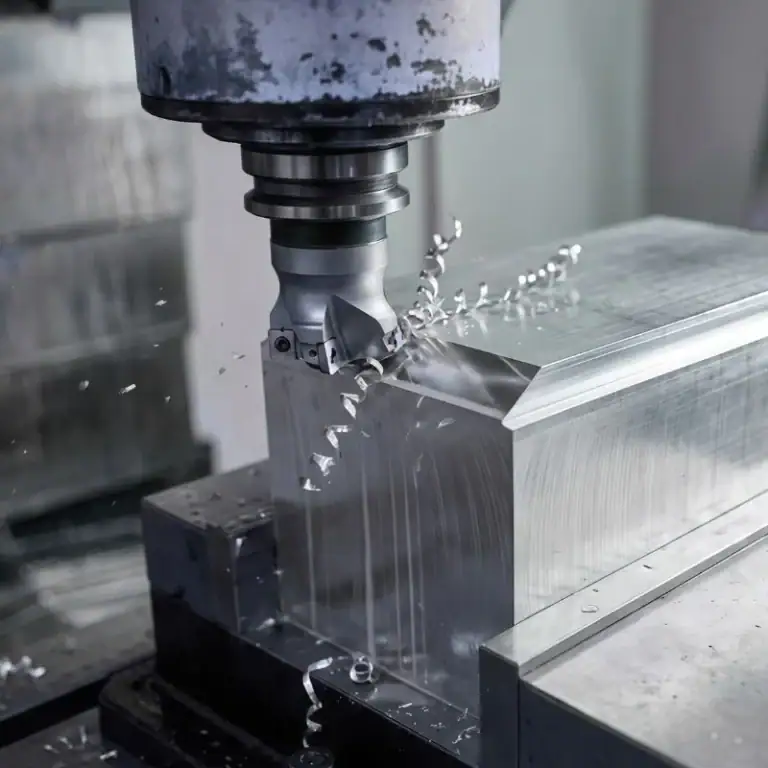
CNC machining Delrin is practical for precision plastic parts because the material cuts cleanly, holds detail well, and provides good surface finish. It is suitable for milled blocks, turned bushings, rollers, spacers, gears, fixtures, and complex machined components.
Delrin can be processed by CNC milling, CNC turning, drilling, tapping, boring, grooving, and profiling. Sharp tools, stable fixturing, moderate feeds and speeds, and proper deburring help maintain tolerance and surface quality.
Because Delrin is rigid and dimensionally stable, it is usually better for tight holes, threads, flat surfaces, bearing fits, and repeatable assemblies. For high-precision custom parts, Delrin is often easier to control than PVC.
CNC Machining PVC
CNC machining PVC is possible for covers, plates, panels, spacers, insulators, housings, ducts, and simple custom parts. It can be drilled, routed, milled, cut, and fabricated depending on grade and thickness.
PVC machining requires control of heat, tool sharpness, and chip evacuation. Excessive heat can affect surface quality and may release undesirable fumes, so ventilation and proper machining practices are important.
PVC is usually better for simple functional parts rather than tight-tolerance moving components. If the part needs high precision, smooth sliding, or wear resistance, Delrin is usually more suitable.
Injection Molding Delrin and PVC
Both Delrin and PVC can be injection molded, but they require different process controls and material handling. Delrin is used for precision molded mechanical parts, while PVC is widely used for molded caps, plugs, covers, clamps, and electrical components.
Delrin molding can produce accurate gears, housings, and mechanical parts, but shrinkage and tolerances must be managed carefully. PVC molding depends heavily on formulation and processing temperature.
For high-volume parts, injection molding can reduce unit cost after tooling is approved. For prototypes and low-volume production, CNC machining is often faster and more flexible.
Assembly Methods for Delrin and PVC Parts
Delrin parts can be assembled with screws, press fits, snap fits, mechanical fasteners, and selected joining methods, but bonding can be difficult because Delrin has low surface energy. Mechanical assembly is often more reliable than adhesive bonding.
PVC parts can often be assembled by solvent cementing, welding, mechanical fastening, or adhesive methods depending on grade. This makes PVC practical for ducts, panels, covers, pipe-related parts, and enclosures.
Assembly method should be considered early. A material that machines well may not bond well, and a material that bonds easily may not provide the needed mechanical precision.
Surface Finishing for Delrin and PVC
Delrin usually has a good as-machined surface and can achieve clean edges and smooth machined features. It may also be bead blasted, marked, or finished for appearance depending on the part requirement.
PVC can be cut, routed, printed, painted, welded, or fabricated, depending on grade and surface condition. It is often used where functional finish and cost matter more than high-end machined appearance.
For both materials, surface finishing should match the application. Sliding parts need controlled surface texture, while covers and housings may need appearance, labeling, or assembly features.
Geometric Tolerances and Design Restrictions
Delrin can generally support tighter geometric tolerances than PVC because it is stiffer, more dimensionally stable, and easier to machine cleanly. It is better for accurate holes, slots, threads, bearing seats, and mating surfaces.
PVC can be machined to useful tolerances, but it is usually selected for less demanding features. Thin walls, sharp corners, heat buildup, and material grade can affect final quality.
Good design should avoid unnecessary tight tolerances, use proper radii, define critical surfaces clearly, and match tolerances to real function. This reduces machining cost and improves part reliability.
Typical Applications of Delrin and PVC
Delrin and PVC are used in different applications because Delrin is better for precision mechanical performance, while PVC is better for protection, insulation, chemical resistance, and low-cost functional parts.
Delrin Applications
Delrin is commonly used for gears, bushings, bearings, rollers, spacers, valve parts, pump parts, fasteners, electrical insulators, precision blocks, jigs, fixtures, and CNC machined mechanical parts.
It is especially useful when the part must hold shape, maintain clearance, and provide reliable movement. Delrin is often selected for smaller precision components where machining accuracy is important.
For custom CNC machining, Delrin is a strong choice when the drawing requires threads, holes, grooves, slots, flatness, or tight assembly features.
PVC Applications
PVC is commonly used for pipes, ducts, cable management, fuse covers, card guides, LED spacers, cable clamps, masking caps, plugs, protective covers, panels, and insulation components.
Rigid PVC is suitable for structural and protective applications, while flexible PVC is suitable for hoses, insulation, films, and soft protective parts. CPVC is used where higher heat resistance is required.
PVC is often selected when the part needs chemical resistance, electrical insulation, corrosion resistance, low cost, and easy fabrication.
Industrial Components
For industrial components, Delrin is used in moving mechanical parts such as rollers, gears, bushings, and precision fixtures. It supports accurate operation and good wear behavior.
PVC is used in panels, guards, ducts, covers, fluid handling parts, and chemical-resistant components. It supports corrosion resistance and cost-effective protection.
Choose Delrin for mechanical movement. Choose PVC for protection, insulation, and chemical exposure.
Electrical and Electronic Parts
For electrical and electronic parts, PVC is widely used for insulation, cable ducts, fuse covers, wire management, spacers, and protective covers. It is cost-effective and available in many grades.
Delrin is used when the electrical part also needs precision, strength, and dimensional stability. Examples include connectors, insulators, brackets, and machined electronic components.
The best choice depends on whether the electrical part is mainly protective or mechanically precise.
Cable Management and Insulation Parts
PVC is usually better for cable management and insulation parts because it is widely used in cable ducts, clamps, sleeves, covers, and flexible insulation products. It combines insulation performance with low cost and easy fabrication.
Delrin may be used for precision clips, brackets, spacers, and insulating mechanical parts where stiffness and accurate geometry are needed.
If the part must route or protect cables, PVC is often enough. If it must also carry load or hold tight mechanical features, Delrin may be better.
Caps, Plugs, Covers, and Protective Components
PVC is usually better for caps, plugs, covers, and protective components when cost, flexibility, chemical resistance, or insulation are the main requirements. It can be molded or fabricated into many simple protective shapes.
Delrin can also be used for covers and plugs, but it is usually chosen when the part needs stronger mechanical fit, wear resistance, or precision features.
For simple protection, PVC is more economical. For precise functional protection, Delrin can be more reliable.
Precision CNC Machined Parts
Delrin is usually better for precision CNC machined parts because it machines cleanly, holds tight dimensions, and provides good mechanical stability. It is suitable for complex parts with holes, threads, slots, grooves, and bearing features.
PVC can be CNC machined for simpler parts, but it is not usually selected for high-precision moving components. It is more practical for plates, covers, insulators, and low-load housings.
For tight tolerance and mechanical function, choose Delrin. For simple insulating or chemical-resistant parts, PVC can be effective.
Delrin vs PVC: Cost and Production Considerations
PVC is usually more cost-effective than Delrin, while Delrin offers better value when precision, strength, and machining reliability are critical. Cost should be judged by total project performance, not just material price.
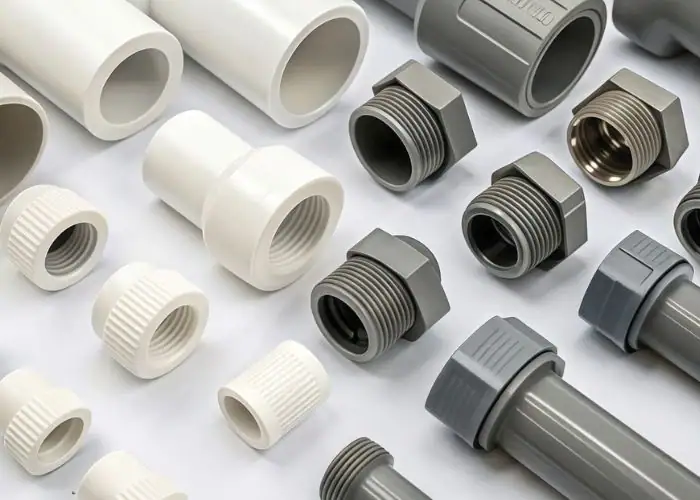
Material Cost Comparison
PVC is generally lower-cost and widely available, making it attractive for protective, electrical, and chemical-resistant parts. It is often used when large volumes or simple shapes are needed.
Delrin usually costs more, but it provides better strength, dimensional stability, and machinability. For small precision parts, the higher material cost can be offset by better machining results and fewer assembly problems.
If the part is static and cost-sensitive, PVC may be better. If the part is precise and functional, Delrin may provide better total value.
CNC Machining Cost
CNC machining Delrin can be cost-effective for precision plastic parts because it cuts cleanly, holds tolerance, and reduces scrap risk. It is often a good option for prototypes, low-volume parts, and custom mechanical components.
CNC machining PVC can be economical for simple plates, covers, insulators, and low-load parts. However, heat control, ventilation, and surface finish requirements may affect the machining process.
The best choice depends on the complexity of the drawing. Delrin is better for precision features, PVC is better for simple functional geometry.
Injection Molding Cost
Injection molding cost depends on tooling, material, cycle time, shrinkage, part complexity, and production volume. PVC can be economical for molded caps, plugs, covers, and cable components, especially in high quantities.
Delrin can be molded into precision mechanical components, but material and tooling requirements may be more demanding. It is often selected when molded parts need strength, wear resistance, and dimensional accuracy.
For low-volume custom parts, CNC machining may be faster. For high-volume stable designs, injection molding can reduce unit cost.
Stock Availability and Lead Time
PVC and Delrin are both widely available, but availability depends on grade, sheet thickness, rod diameter, color, and certification requirements. PVC is common in sheets, pipes, profiles, and molded components.
Delrin is commonly available as rods, sheets, plates, and machinable stock. Specific grades such as POM-H, POM-C, or branded Delrin may require confirmation before ordering.
For urgent CNC projects, material stock should be checked before finalizing the drawing and tolerance plan.
When Higher Material Cost Is Worth It
Higher material cost is worth it when it reduces failure risk, machining scrap, assembly issues, or maintenance problems. Delrin can justify its higher price when the part needs strength, precision, and repeatable performance.
PVC can provide better value when the part mainly needs low cost, chemical resistance, insulation, or protection. It may not be worth paying for Delrin if the part is static and lightly loaded.
The right decision should compare material cost, machining cost, part function, and failure consequences.
How to Choose Between Delrin and PVC?
Choose Delrin when strength, precision, wear resistance, and machinability are the main requirements. Choose PVC when chemical resistance, insulation, corrosion resistance, and cost control are more important.
Choose Delrin for Strength, Precision, and Wear Resistance
Delrin is the better choice when the part needs stiffness, accurate machining, low friction, and stable mechanical performance. It is especially suitable for precision gears, bushings, rollers, spacers, valve parts, fixtures, and custom CNC machined components.
Choose Delrin when the project needs:
- Higher strength
- Better rigidity
- Low friction
- Good wear resistance
- Tight tolerance control
- Clean CNC machining
- Accurate holes and threads
- Dimensional stability
- Precision mechanical fit
- Metal replacement potential
Delrin is usually safer when the drawing includes important machined details or the part must move, support load, or maintain precise assembly.
Choose PVC for Chemical Resistance, Insulation, and Cost Control
PVC is the better choice when the part needs chemical resistance, electrical insulation, corrosion resistance, and lower material cost. It is suitable for cable ducts, covers, caps, plugs, panels, clamps, spacers, and simple protective parts.
Choose PVC when the project needs:
- Lower material cost
- Chemical resistance
- Electrical insulation
- Corrosion resistance
- Protective covers
- Cable management parts
- Simple molded components
- Rigid or flexible grade options
- Easy fabrication
- Cost-effective production
PVC is usually safer when the part is static, protective, chemical-exposed, or cost-sensitive.
Decision Summary for Engineering Parts
The decision is simple when the main performance risk is clear. If the risk is deformation, wear, or machining accuracy, choose Delrin. If the risk is chemical exposure, electrical protection, or cost, choose PVC.
| Requirement | Recommended Material |
| Higher strength | Delrin |
| Better rigidity | Delrin |
| Lower friction | Delrin |
| Better wear resistance | Delrin |
| Precision CNC machining | Delrin |
| Better chemical resistance | PVC |
| Lower cost | PVC |
| Cable management | PVC |
| Protective caps and plugs | PVC |
| Electrical insulation | PVC or Delrin, depending on load |
| Metal replacement parts | Delrin |
| Simple protective covers | PVC |
FAQs
Which Is Better, Nylon Or PVC?
Nylon is better for toughness, impact resistance, and mechanical parts such as gears, rollers, and fasteners. PVC is better for chemical resistance, electrical insulation, cable ducts, covers, and low-cost protective parts. Nylon absorbs more moisture, while PVC is more stable for insulation and corrosion-resistant uses. Choose nylon for mechanical load,choose PVC for protection and cost control.
Is Delrin Ok For Outdoor Use?
Delrin can be used outdoors in limited conditions, but standard Delrin is not ideal for long-term UV exposure. Sunlight, heat, and weathering may affect surface quality and performance over time. For outdoor parts, UV-stabilized grades or alternative plastics should be considered. Delrin is better for precision indoor or protected mechanical parts requiring stiffness, low friction, and dimensional stability.
Is Delrin Stronger Than Plastic?
Delrin is stronger than many general-purpose plastics, but not stronger than all plastics. Compared with PVC, PP, PE, and ABS, Delrin usually offers higher stiffness, better wear resistance, and better dimensional stability. Its tensile strength is commonly around 60–70MPa. However, high-performance plastics like PEEK, PPS, or glass-filled nylon may outperform Delrin in heat, strength, or load capacity.
Conclusion
Delrin and PVC are both useful plastics, but they are designed for different manufacturing goals. Delrin is better for strength, rigidity, wear resistance, low friction, dimensional stability, and precision CNC machined parts. PVC is better for chemical resistance, electrical insulation, corrosion resistance, protective components, and cost-effective production.
At TiRapid, we provide precision CNC machining services for custom plastic components across multiple industries. If you are comparing Delrin vs PVC for a machined part, upload your drawing or share your material requirements to get a tailored manufacturing solution.