Delrin and aluminum are both widely used in CNC machined parts, but they serve different design needs. Delrin is a lightweight engineering plastic known for low friction, good wear resistance, and stable machining performance, while aluminum offers higher strength, better heat conductivity, and excellent structural performance.
Understanding delrin vs aluminum helps engineers and buyers choose the right material based on load, weight, friction, tolerance, cost, and working environment. In this guide, we will compare their key properties, machining performance, advantages, limitations, and common applications to help you make a better material decision.
What Is Delrin?
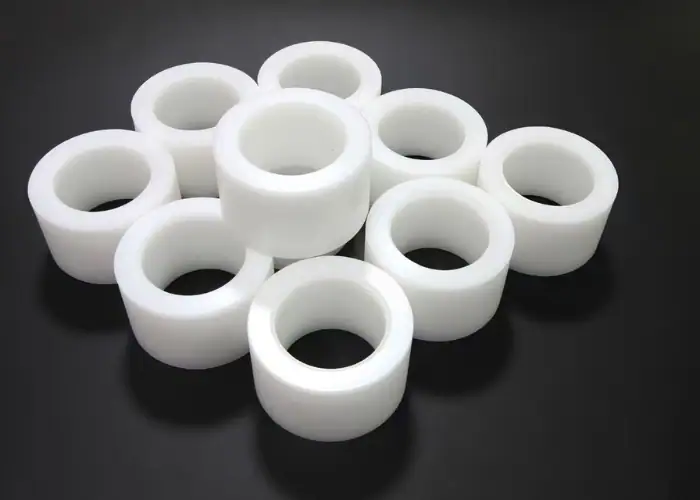
Delrin is a high-performance acetal homopolymer, also known as POM-H. It is an engineering plastic widely used for CNC machined parts that need low friction, good wear resistance, dimensional stability, and smooth movement. Compared with many general plastics, Delrin offers better stiffness, strength, and machining consistency.
One of the main reasons engineers choose Delrin is its excellent sliding performance. It works well in parts that move, rotate, or contact other components, such as gears, bushings, rollers, guides, spacers, and wear pads. Its naturally low friction helps reduce noise, wear, and the need for lubrication in many applications.
Delrin is also easier to machine than many metals, including aluminum, when the part does not require high structural strength or heat conductivity. It can be CNC milled, turned, drilled, and cut into precise plastic components with good surface quality. This makes it useful for prototypes, replacement parts, and low-volume custom components.
What Is Aluminum?
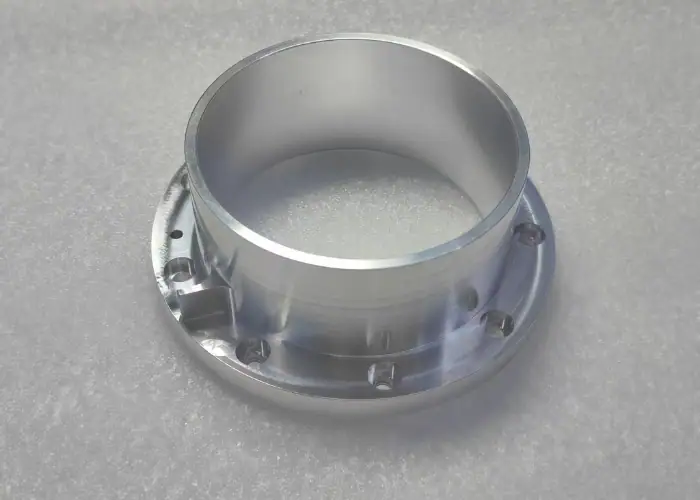
Aluminum is a lightweight metal widely used in CNC machined parts because of its good strength-to-weight ratio, machinability, corrosion resistance, and thermal conductivity. It is much stronger and stiffer than most engineering plastics, making it suitable for structural parts, frames, brackets, housings, and load-bearing components.
One of aluminum’s main advantages is its balance of strength and weight. It is lighter than steel but still strong enough for many mechanical and industrial applications. Common grades such as 6061 aluminum are frequently used for CNC machining because they offer stable cutting performance, good surface finish, and reliable mechanical properties.
Aluminum also provides excellent heat and electrical conductivity. This makes it useful for heat sinks, electronic housings, motor parts, fixtures, and components that need heat dissipation or electrical grounding. It can also be anodized, polished, or coated to improve corrosion resistance, surface hardness, and appearance.
In a delrin vs aluminum comparison, aluminum is usually the better choice when the part needs higher stiffness, stronger load capacity, better heat transfer, or metal durability. However, if the part needs low friction, lighter weight, quieter movement, or better wear behavior without lubrication, Delrin may be more suitable.
Delrin vs Aluminum: What Are the Key Differences?
Delrin and aluminum are both widely used in CNC machined parts, but they solve different engineering problems. Delrin is a low-friction engineering plastic suitable for moving and wear-resistant parts, while aluminum is a lightweight metal used for strength, stiffness, heat transfer, and structural support.
Strength and Load Capacity
Aluminum is stronger and stiffer than Delrin, so it is usually better for load-bearing parts, frames, brackets, housings, and structural components. When a part must resist bending, impact, or high mechanical stress, aluminum offers better safety and long-term stability.
Delrin has good strength for a plastic, but it cannot match aluminum in heavy-load applications. It is more suitable for moderate-load parts where low friction, wear resistance, and smooth movement are more important than maximum structural strength.
Weight and Density
Delrin is lighter than aluminum, which can help reduce part weight in moving systems, portable equipment, and assemblies where low mass matters. This is one reason Delrin is often used for gears, rollers, bushings, guides, and sliding components.
Aluminum is also lightweight compared with steel, but it is still heavier than Delrin. However, its higher strength-to-weight ratio makes it more suitable when the design needs both light weight and stronger structural performance.
Friction and Wear Resistance
Delrin has a clear advantage in low-friction and wear applications. It can slide against metal or plastic with less noise and often requires less lubrication. This makes it practical for bushings, gears, rollers, wear pads, and guide parts.
Aluminum is not naturally as low-friction as Delrin. In sliding contact, it may require lubrication, anodizing, coating, or a bearing surface to reduce wear. For dry-running or quiet movement, Delrin is often the better choice.
Heat and Conductivity
Aluminum has much better thermal conductivity than Delrin. It is commonly used for heat sinks, electronic housings, motor parts, and components that need heat dissipation. It also provides electrical conductivity when grounding or current transfer is required.
Delrin is an electrical insulator and does not transfer heat well. This can be useful for insulating parts, but it is not suitable when the design requires heat dissipation or electrical conductivity.
Machinability and Surface Finish
Both materials are suitable for CNC machining. Delrin is easy to cut, produces smooth surfaces, and is useful for precise plastic parts. It is often easier to machine than aluminum when the part does not require high strength.
Aluminum also machines very well, especially grades like 6061. It can achieve tight tolerances, sharp details, and excellent surface finishes. However, aluminum machining may require more attention to chip evacuation, tool condition, and surface treatment.
Cost and Application Fit
Delrin can be cost-effective for low-friction plastic parts, especially when it reduces the need for lubrication, noise control, or secondary surface treatment. It is a good choice for moving parts, wear parts, spacers, and lightweight plastic components.
Aluminum is usually better when the part needs metal strength, stiffness, heat transfer, corrosion resistance, or a premium surface finish. In short, choose Delrin for low friction and quiet movement, and choose aluminum for strength, structure, and thermal performance.
Delrin vs Aluminum Material Properties Comparison
A direct comparison makes it easier to understand where Delrin and aluminum perform best. Delrin is stronger than many plastics and offers low friction, light weight, and good wear behavior, while aluminum provides much higher strength, stiffness, hardness, and thermal conductivity for structural CNC machined parts.
| Property | Delrin | Aluminum |
| Material Type | Engineering plastic, acetal homopolymer/POM-H | Lightweight metal |
| Density | About 1.41 g/cm³ | About 2.70 g/cm³ |
| Weight | Lighter than aluminum | Heavier than Delrin but lighter than steel |
| Tensile Strength | About 60–70 MPa | About 240–310 MPa for common 6061 aluminum |
| Stiffness | Good for plastic parts | Much higher stiffness |
| Hardness | Moderate hardness, suitable for wear parts | Higher hardness, can be improved by anodizing |
| Friction | Low friction, good for sliding parts | Higher friction, often needs coating or lubrication |
| Wear Resistance | Good wear resistance for gears, bushings, and rollers | Good with surface treatment, but less ideal for dry sliding |
| Heat Resistance | Moderate, limited in high-temperature environments | Better heat resistance and heat dissipation |
| Thermal Conductivity | Low, acts more like an insulator | High, suitable for heat sinks and thermal parts |
| Electrical Properties | Electrical insulator | Electrical conductor |
| Machinability | Easy to machine, smooth cutting | Excellent machinability, especially 6061 aluminum |
| Corrosion Resistance | Good resistance to moisture and many chemicals | Good corrosion resistance, improved by anodizing |
| Typical Uses | Bushings, gears, rollers, guides, spacers, wear pads | Brackets, housings, frames, heat sinks, fixtures, structural parts |
Overall, Delrin is a better choice for lightweight, low-friction, and wear-resistant plastic parts, especially when quiet movement is important. Aluminum is better when the part needs higher strength, stiffness, thermal conductivity, electrical conductivity, or structural support.
What Are the Advantages and Limitations of Delrin?
Delrin is a practical engineering plastic for CNC machined parts that need low friction, good wear resistance, smooth movement, and lightweight performance. In a delrin vs aluminum comparison, Delrin is often better for moving parts, but it has limits in strength, stiffness, heat resistance, and long-term load capacity.
Advantages of Delrin
Delrin has excellent low-friction performance, making it suitable for bushings, gears, rollers, guides, sliders, and wear pads. It can reduce noise and movement resistance, and in many cases, it requires less lubrication than aluminum or other metal parts.
Delrin is also lighter than aluminum, with a density of about 1.41 g/cm³, compared with aluminum at about 2.70 g/cm³. This makes it useful for moving assemblies, portable devices, automation parts, and applications where weight reduction improves performance.
Another advantage is machinability. Delrin cuts cleanly, produces smooth surfaces, and is suitable for CNC milling, turning, drilling, and custom plastic parts. It is often a good choice for prototypes, replacement parts, low-volume production, and precision components that need stable dimensions.
Limitations of Delrin
Delrin is not as strong or stiff as aluminum. Its tensile strength is usually around 60–70 MPa, while common 6061 aluminum can reach about 240–310 MPa. For heavy-load, structural, or high-impact parts, aluminum is usually the safer material.
Delrin also has limited heat resistance compared with aluminum. Under high temperature or long-term load, it may soften, creep, or lose dimensional stability. If the part needs to work near heat sources, engines, or high-temperature industrial equipment, aluminum may perform better.
Another limitation is thermal and electrical behavior. Delrin is an insulator and does not conduct heat well, which is useful in some cases but unsuitable for heat sinks, grounding parts, or components requiring heat dissipation. For those applications, aluminum is the better choice.
What Are the Advantages and Limitations of Aluminum?
Aluminum is a common CNC machining material for parts that need strength, stiffness, heat transfer, and structural reliability. In a delrin vs aluminum comparison, aluminum is usually better for load-bearing and thermal applications, but it is heavier and has higher friction than Delrin in moving contact.
Advantages of Aluminum
Aluminum offers much higher strength and stiffness than Delrin. Common 6061 aluminum has a tensile strength of about 240–310MPa, making it suitable for brackets, frames, housings, fixtures, structural parts, and components that need to resist bending or impact.
Aluminum also has excellent thermal and electrical conductivity. This makes it useful for heat sinks, electronic housings, motor parts, grounding components, and parts that need heat dissipation. Delrin cannot replace aluminum in applications where heat transfer or electrical conductivity is required.
Another advantage is surface treatment flexibility. Aluminum can be anodized, polished, bead blasted, plated, or coated to improve corrosion resistance, surface hardness, wear resistance, and appearance. This makes it suitable for both functional parts and visible product components.
Limitations of Aluminum
Aluminum is heavier than Delrin, with a density of about 2.70g/cm³, compared with Delrin at about 1.41g/cm³. For moving assemblies, lightweight mechanisms, or portable equipment, this weight difference can affect speed, energy use, and handling.
Aluminum also has higher friction than Delrin in sliding contact. For gears, bushings, rollers, or guide parts, aluminum may require lubrication, coating, or bearing inserts to reduce wear and noise. Delrin is usually more suitable for quiet, low-friction movement.
Another limitation is that aluminum may need surface treatment in some environments. Although aluminum has good corrosion resistance, harsh chemicals, salt spray, or abrasive conditions may still affect performance. In these cases, anodizing or coating may be needed, which adds cost and processing steps.
How Do Delrin and Aluminum Perform in CNC Machining?
Both Delrin and aluminum are suitable for CNC machining, but they behave differently during cutting. Delrin is easier to machine and works well for low-friction plastic parts, while aluminum provides better strength, tighter structural performance, and more surface treatment options.
CNC Machining Delrin
Delrin machines very cleanly and is suitable for milling, turning, drilling, and custom plastic components. It can produce smooth surfaces, accurate dimensions, and low-friction features, making it useful for bushings, gears, rollers, guides, spacers, and wear pads.
During machining, Delrin requires sharp tools, stable clamping, and proper chip removal. Because it is softer than aluminum, excessive clamping force or cutting heat may cause deformation. For precision parts, tolerance planning and part support are important.
CNC Machining Aluminum
Aluminum is one of the most commonly CNC machined metals, especially grades such as 6061 and 7075. It offers good machinability, strong dimensional control, and excellent surface quality. It is suitable for brackets, housings, frames, heat sinks, fixtures, and structural parts.
Compared with Delrin, aluminum usually requires more attention to tool wear, chip evacuation, cutting fluid, and surface finishing. However, it can achieve high strength, sharp details, and tight tolerances, making it a reliable choice for functional metal parts.
Machining Selection Guide
Choose Delrin when the part needs low friction, quiet movement, light weight, wear resistance, or electrical insulation. It is often better for moving plastic components and parts that contact metal surfaces.
Choose aluminum when the part needs higher strength, stiffness, heat dissipation, electrical conductivity, or structural support. In delrin vs aluminum CNC machining, Delrin is easier to cut, while aluminum provides stronger mechanical performance.
What Are the Common Applications of Delrin and Aluminum?
Delrin and aluminum are both widely used in CNC machined parts, but they fit different application needs. Delrin is better for low-friction, lightweight, and wear-resistant moving parts, while aluminum is better for structural, load-bearing, heat-dissipating, and metal components.
Automotive
Delrin is commonly used for bushings, gears, rollers, guide parts, clips, and low-friction components in automotive assemblies. It helps reduce noise, weight, and wear in moving systems.
Aluminum is more suitable for brackets, housings, frames, heat sinks, engine-related parts, and structural components. Its strength, stiffness, and heat conductivity make it useful for parts exposed to load, vibration, or heat.
Industrial Equipment
Delrin is often used in industrial equipment for wear pads, rollers, spacers, guide rails, pulleys, and sliding components. It performs well where smooth movement, low friction, and reduced lubrication are important.
Aluminum is widely used for machine frames, fixtures, housings, mounting plates, covers, and equipment structures. It provides reliable strength, good machinability, and lighter weight compared with steel.
Medical
Delrin can be used for medical device components, handles, rollers, guides, spacers, and low-friction mechanical parts. Its machinability and dimensional stability make it useful for custom precision plastic components.
Aluminum is used for medical equipment housings, brackets, frames, fixtures, and instrument components. It is often selected when parts need strength, lightweight structure, clean surface finishing, or anodized protection.
Aerospace
Delrin may be used for lightweight spacers, bushings, guide parts, rollers, and insulation-related components where low friction and weight reduction are important.
Aluminum is more common in aerospace applications for brackets, panels, housings, frames, structural supports, and lightweight metal components. Its high strength-to-weight ratio makes it a preferred material for many aerospace parts.
Automation
Delrin is useful for automation parts such as positioning blocks, sliders, rollers, bushings, guides, and custom moving components. It helps reduce friction and noise in repeated motion systems.
Aluminum is commonly used for automation frames, machine bases, fixtures, robotic supports, sensor brackets, and mounting plates. It provides stable structure while keeping equipment relatively lightweight.
Electronics
Delrin can be used for insulating parts, spacers, guides, holders, and low-friction components in electronic equipment. It is useful when electrical insulation and precision plastic machining are needed.
Aluminum is often used for electronic housings, heat sinks, enclosures, mounting plates, and shielding components. Its thermal conductivity makes it especially valuable for heat management.
Robotics
Delrin is suitable for robot bushings, rollers, sliding blocks, cable guides, lightweight gears, and low-friction joints. It supports smooth movement and helps reduce part weight.
Aluminum is used for robot arms, frames, brackets, housings, motor mounts, and structural supports. It offers the strength and stiffness needed for repeated movement and mechanical stability.
Consumer Products
Delrin is used in handles, rollers, gears, buttons, sliders, clips, and wear-resistant internal parts. It is suitable when products need quiet movement, durability, and smooth operation.
Aluminum is used for premium housings, frames, decorative parts, brackets, knobs, and structural product components. It provides a clean metal appearance, good strength, and multiple surface finishing options.
Delrin vs Aluminum: Which Material Should You Choose?
Choosing between Delrin and aluminum depends on the part’s function, load, friction, weight, heat, and working environment. Delrin is better for low-friction moving parts, while aluminum is better for structural parts that need strength, stiffness, and heat transfer.
Choose Delrin When Low Friction and Weight Matter
Choose Delrin when the part needs smooth movement, low noise, wear resistance, and lighter weight. It is suitable for bushings, gears, rollers, sliders, guides, spacers, and wear pads. If the part works under moderate load and does not need heat dissipation or metal-level strength, Delrin can be a practical and cost-effective choice.
Choose Aluminum When Strength and Structure Matter
Choose aluminum when the part needs higher strength, stiffness, impact resistance, or structural support. It is better for brackets, housings, frames, fixtures, mounting plates, heat sinks, and load-bearing components. If the part must handle heat, vibration, tight assembly, or long-term mechanical stress, aluminum usually provides better reliability.
Consider Load, Heat, Friction, and Tolerance
For sliding or rotating contact, Delrin usually performs better because of its low friction and wear behavior. For high temperature, heat transfer, or electrical conductivity, aluminum is the better option. If the part has tight tolerances, both materials can be CNC machined well, but the final choice should match the operating conditions.
Balance Cost, Performance, and Application Risk
Delrin may reduce weight, noise, lubrication needs, and machining difficulty, but it cannot replace aluminum in heavy-duty structural parts. Aluminum provides stronger mechanical performance and better thermal conductivity, but it may require surface treatment or lubrication in some applications. A practical rule is simple: choose Delrin for low-friction motion parts and aluminum for strong structural parts.
FAQs
Is Delrin Stronger Than Aluminum?
No. Aluminum is much stronger and stiffer than Delrin. Delrin tensile strength is usually around 60–70MPa, while common 6061 aluminum can reach about 240–310MPa. For structural, load-bearing, or high-impact parts, aluminum is usually the better choice. Delrin is more suitable for low-friction, lightweight, and wear-resistant moving parts.
Is Delrin Lighter Than Aluminum?
Yes. Delrin is lighter than aluminum. Delrin density is about 1.41g/cm³, while aluminum density is about 2.70g/cm³. This means Delrin can reduce part weight by nearly half compared with aluminum. It is useful for moving assemblies, rollers, gears, guides, and lightweight mechanisms where lower mass improves motion and efficiency.
Can Delrin Replace Aluminum?
Delrin can replace aluminum in some low-load and low-friction applications, such as bushings, rollers, guides, spacers, and wear pads. However, it should not replace aluminum when the part needs high strength, stiffness, heat dissipation, electrical conductivity, or structural support. The decision depends on load, temperature, friction, tolerance, and working environment.
Is Delrin Better Than Aluminum For Bushings?
Yes, Delrin is often better than aluminum for bushings because it has low friction, good wear resistance, and quieter movement. It can reduce lubrication needs and works well against metal shafts in many moderate-load applications. Aluminum bushings usually need lubrication, coating, or inserts to reduce wear and friction.
Conclusion
Delrin and aluminum are both useful CNC machining materials, but they fit different part requirements. Delrin is better for lightweight, low-friction, wear-resistant, and quieter moving parts, while aluminum is better for strength, stiffness, heat transfer, structural support, and metal durability. In a delrin vs aluminum decision, the right choice should depend on load, friction, temperature, tolerance, weight, and working environment.
At TiRapid, we provide precision CNC machining services for custom Delrin, aluminum, and other engineering material parts, helping customers choose suitable materials and produce reliable precision components.