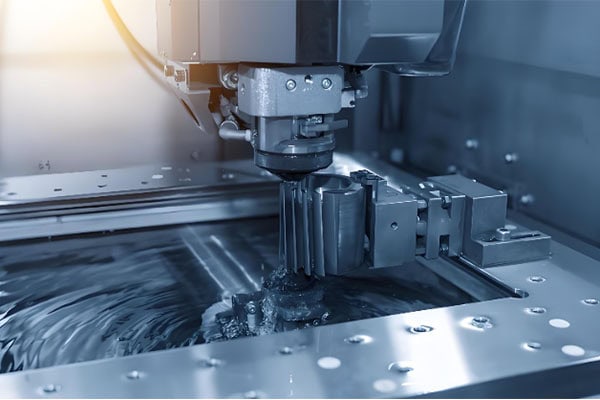
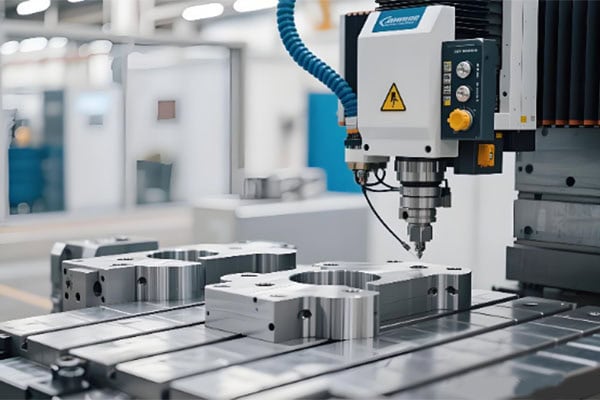
Snowmobiles operate in low temperatures, snow, ice, and demanding outdoor environments, creating high requirements for component strength, dimensional accuracy, wear resistance, and reliability. Precision parts used in suspension systems, steering systems, drivetrain systems, and frame connections must maintain stable performance under vibration, impact, and continuous loads.CNC machining can manufacture complex structures based on CAD drawings while providing consistent dimensional control through CNC milling, turning, and multi-axis machining. It is therefore suitable for customized snowmobile parts, prototype development, and small- to large-batch production. TiRapid’s Powersports machining capabilities cover lightweight brackets, drivetrain components, suspension parts, and high-performance structural components, providing flexible CNC machining solutions for snowmobile applications.
Get 20% offf
Your First Order
Need custom metal and plastic parts?
Key CNC Machining Requirements for Snowmobile Parts
High-Precision Dimensional Control
Snowmobile components such as bushings, mounting brackets, hubs, and steering parts often include critical features such as shaft holes, threaded holes, and positioning surfaces. Excessive dimensional deviations can affect assembly accuracy and overall component performance.
CNC machining follows digital CAD models and predefined machining parameters, allowing manufacturers to maintain consistent dimensions during repeated production. Appropriate process planning and inspection can further improve dimensional consistency across batches.
Balancing Lightweight Design and Structural Strength
Snowmobiles need to balance power output, handling performance, and adaptability to challenging terrain. Their components therefore need to reduce unnecessary weight while maintaining sufficient mechanical strength.
Aluminum alloys offer a favorable strength-to-weight ratio and good machinability, making them suitable for brackets, mounting bases, connectors, and suspension components. Steel and stainless steel can also be selected for parts exposed to higher mechanical loads or requiring additional durability.
Machining Complex Geometries
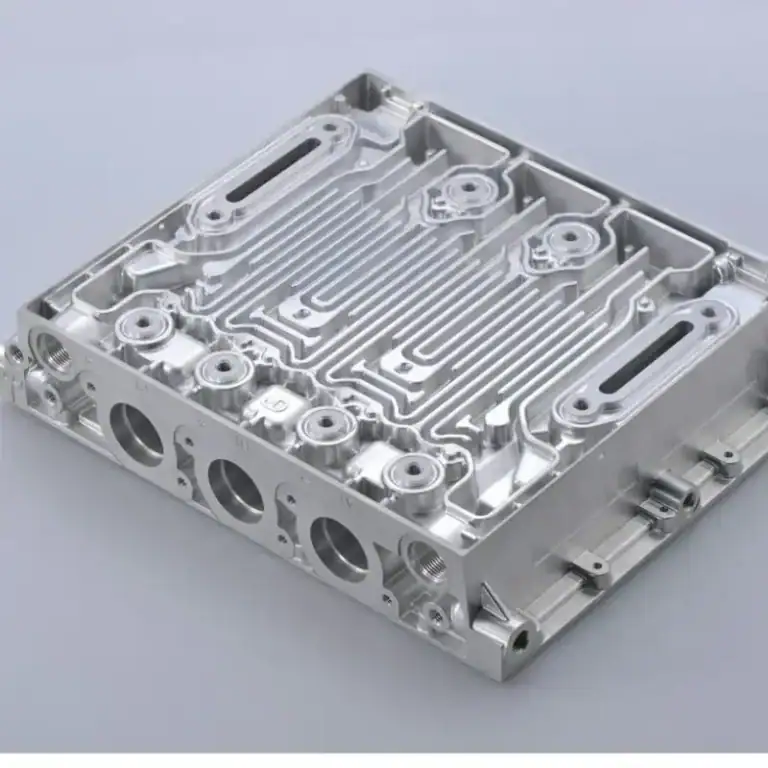
Snowmobile components may feature curved surfaces, deep grooves, irregular holes, thin-wall structures, and multi-angle mounting surfaces. Conventional machining may require multiple setups, potentially increasing positioning errors.
4-axis and 5-axis CNC machining can reduce the number of setups required for complex components and improve positional consistency between different machining surfaces. TiRapid provides 3-axis, 4-axis, and 5-axis CNC machining for components with different levels of structural complexity.
Common CNC Machined Snowmobile Parts
Different snowmobile components require different machining processes depending on their function, load conditions, and assembly position.
Part Type
Recommended Machining
Common Materials
Key Considerations
Suspension Brackets
CNC Milling / 5-Axis Machining
6061-T6, 7075-T6, Steel
Strength, hole positioning accuracy
Steering Connectors
CNC Milling / Turning
Aluminum Alloy, Alloy Steel
Concentricity, assembly accuracy
Bushings and Sleeves
CNC Turning
Aluminum Alloy, Steel, POM
Inner/outer diameter, roundness, wear resistance
Hubs and Axle Components
CNC Turning / Milling
6061, 7075, Steel
Concentricity, dimensional stability
Engine Mounting Brackets
CNC Milling
6061-T6, 7075-T6
Lightweight design, vibration resistance
Drivetrain Connectors
CNC Turning / 5-Axis Machining
Alloy Steel, Stainless Steel, Aluminum Alloy
Strength, thread accuracy
Frame Connection Parts
3/4/5-Axis Milling
Aluminum Alloy, Steel
Structural strength, hole consistency
TiRapid’s existing CNC machining capabilities for racing motorcycle parts cover materials such as 6061, 6063, and 7075 aluminum alloys, as well as steel, stainless steel, and engineering plastics. Similar material selection principles can be applied to snowmobile components according to their structural and performance requirements.
CNC Machining Processes for Snowmobile Applications
CNC Milling
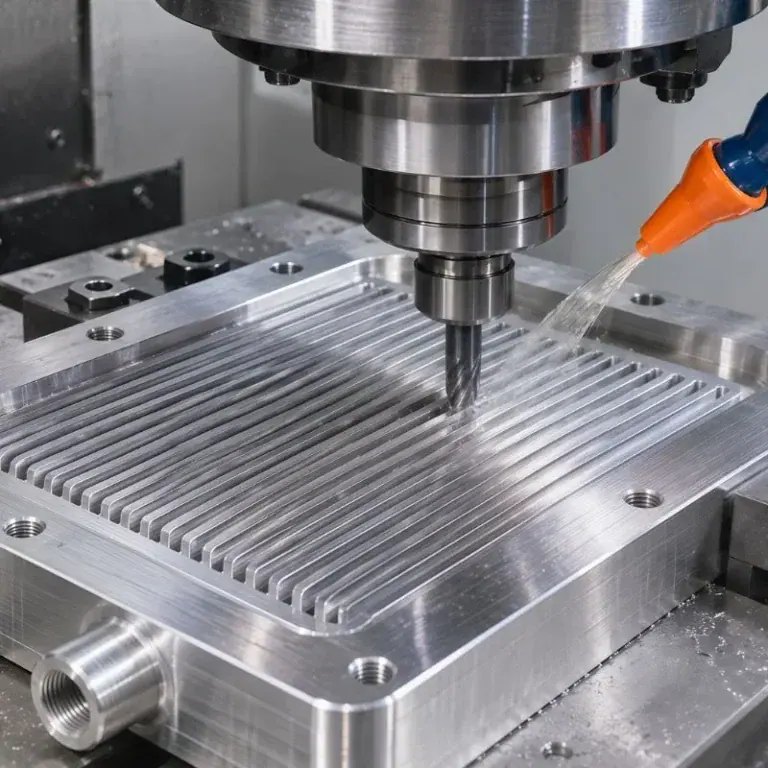
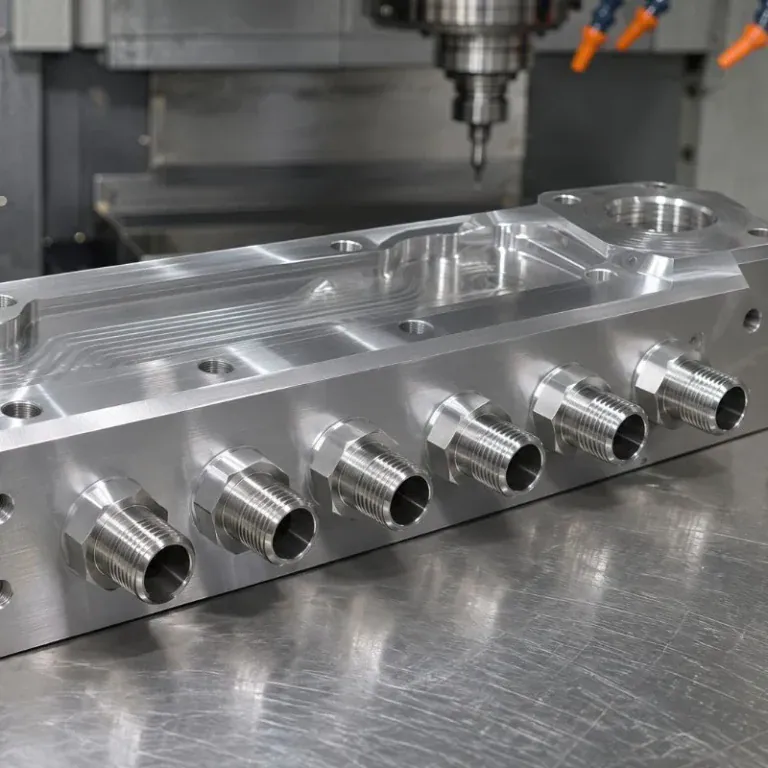
CNC milling is suitable for suspension brackets, frame connection bases, engine mounting plates, brake mounting components, and other parts featuring flat surfaces, curved surfaces, and multiple holes.
For components with complex geometries, multi-axis machining can reduce the number of setups and improve machining efficiency and dimensional consistency.
CNC Turning
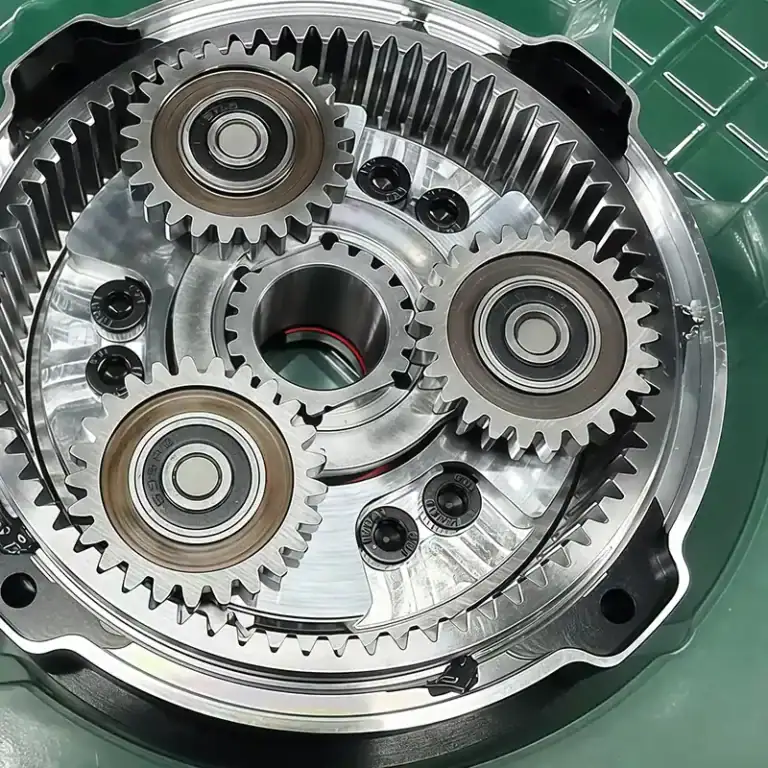
Shafts, sleeves, bushings, hubs, and certain drivetrain components have rotational geometries and are well suited to CNC turning.
CNC turning can control critical features such as outer diameters, inner diameters, end faces, grooves, and threads to meet precision assembly requirements. TiRapid’s CNC turning capabilities can be used for precision shafts, bushings, hubs, spacers, and other Powersports components.
3-Axis to 5-Axis CNC Machining
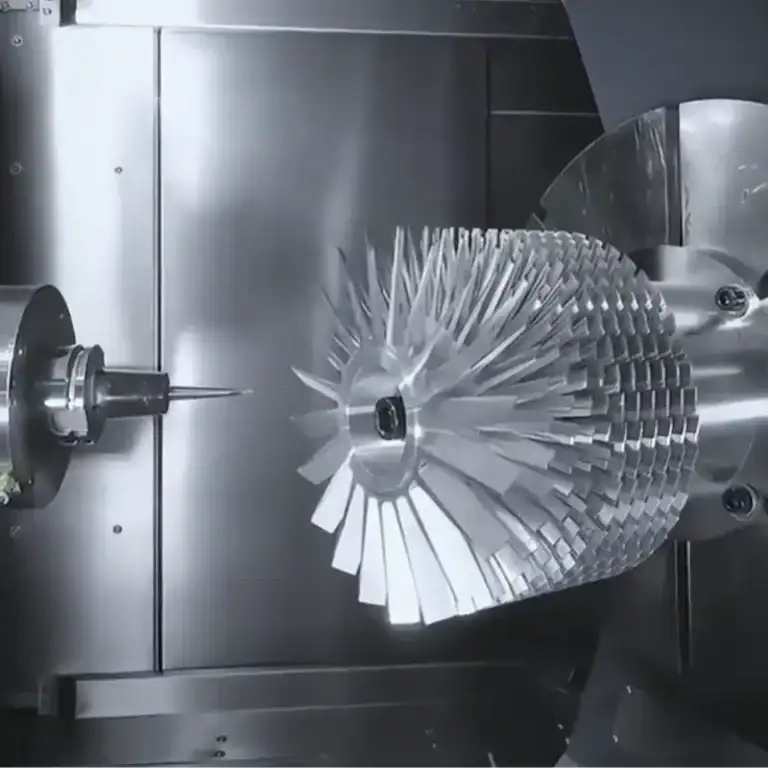
For snowmobile components with complex curved surfaces, 5-axis CNC machining can complete multiple machining operations from different directions with fewer setups.
For structural parts requiring precise positional relationships between multiple reference surfaces, 5-axis machining can help minimize errors caused by repositioning and improve overall dimensional consistency.
Material Selection for Snowmobile Parts
Material selection should consider component weight, mechanical loads, wear resistance, corrosion resistance, and machinability.
6061-T6 is suitable for brackets, connectors, and lightweight structural components because of its good machinability and balanced mechanical properties. 7075-T6 offers higher strength and can be used for performance components exposed to higher loads.
Stainless steel is suitable for parts requiring a combination of corrosion resistance and strength. Engineering plastics such as POM and PA can be used for low-friction, lightweight, and electrically insulating auxiliary components.
TiRapid offers a range of machining materials, including aluminum alloys, stainless steel, carbon steel, alloy steel, copper, brass, and engineering plastics, allowing material selection to be matched with specific snowmobile applications.
CNC Machining from Prototypes to Production
Snowmobile component development typically involves design validation, prototype testing, process optimization, and batch production. CNC machining can manufacture components directly from 3D CAD models, making it suitable for new product development, custom components, and low-volume production.
After prototype testing, the machining process and production parameters can be optimized based on actual test results before moving into stable batch production.
For Powersports manufacturers, a machining supplier needs more than basic manufacturing equipment. A thorough understanding of component assembly relationships, material requirements, dimensional specifications, and operating environments is also important.
TiRapid provides CNC manufacturing services from prototyping to production, including CNC milling, CNC turning, and 5-axis machining for different types of Powersports components.
Advantages of CNC Machining Solutions for Snowmobile Parts
A complete snowmobile CNC machining solution can combine material selection, machining process optimization, dimensional control, surface finishing, and quality inspection.For structural components, key factors may include hole positioning and overall dimensions. For shafts and rotating components, concentricity and roundness are particularly important. For complex curved components, toolpath optimization and fixture design can help improve machining stability.
With customized CNC machining, snowmobile manufacturers can obtain components matched to specific vehicle designs and structural requirements while supporting prototyping, low-volume manufacturing, and subsequent batch production.
For Powersports products that require lightweight construction, precision machining, and reliable assembly, CNC machining provides an effective manufacturing solution for snowmobile component development and production.
Author
Galen Director and Founder
Committed to ensuring we provide the best possible service in the manufacturing industry.
Vacuum chambers are precision enclosures designed to create and maintain controlled low-pressure environments for semiconductor manufacturing, research equipment, coating systems, testing platforms, and other vacuum-dependent processes. Their performance depends on
An aluminum water cooling block is a liquid cooling component that transfers heat from electronic devices into circulating coolant. Compared with copper alternatives, aluminum offers lower weight, competitive material costs,
A micro channel cold plate is a precision liquid cooling component that removes heat from high-power electronics through closely spaced internal fluid channels. These channels increase the contact area between
Semiconductor vacuum components are precision parts used to create, maintain, control, and isolate low-pressure environments inside semiconductor manufacturing equipment. Vacuum chambers, flanges, valve bodies, manifolds, chucks, ports, and wafer-handling parts
A part does not have to be small enough to fit on a fingertip to require micromachining. A larger component may contain a tiny hole, narrow channel, or thin wall
As AI computing, high-performance servers, and data centers continue to generate more heat, traditional air cooling is becoming less effective for high-density equipment. Liquid cooling provides a more direct way
Semiconductor manufacturing equipment relies on precision aluminum components to support wafer handling, vacuum systems, thermal management, and automated motion. From large mounting plates and equipment housings to cooling blocks and
Gears transfer motion and power between components in equipment ranging from small actuators to industrial gearboxes. Although a gear may look like a simple toothed wheel, its performance depends on
A water cooling block is a precision cooling component that transfers heat from a CPU, GPU, or other electronic device into circulating liquid. It typically uses a copper or aluminum
Turbo impellers are high-speed rotating components whose performance depends heavily on blade geometry, mass distribution, surface condition, and the relationship between the hub and rotational axis. Small machining errors can
A liquid cold plate is a metal heat exchanger that removes heat from electronic components through circulating coolant. It uses internal channels or tubes to transfer heat away from CPUs,
A battery cooling plate helps transfer heat between battery cells and a cooling system. In many electric vehicles, liquid flows through channels inside the plate, carrying heat away from the