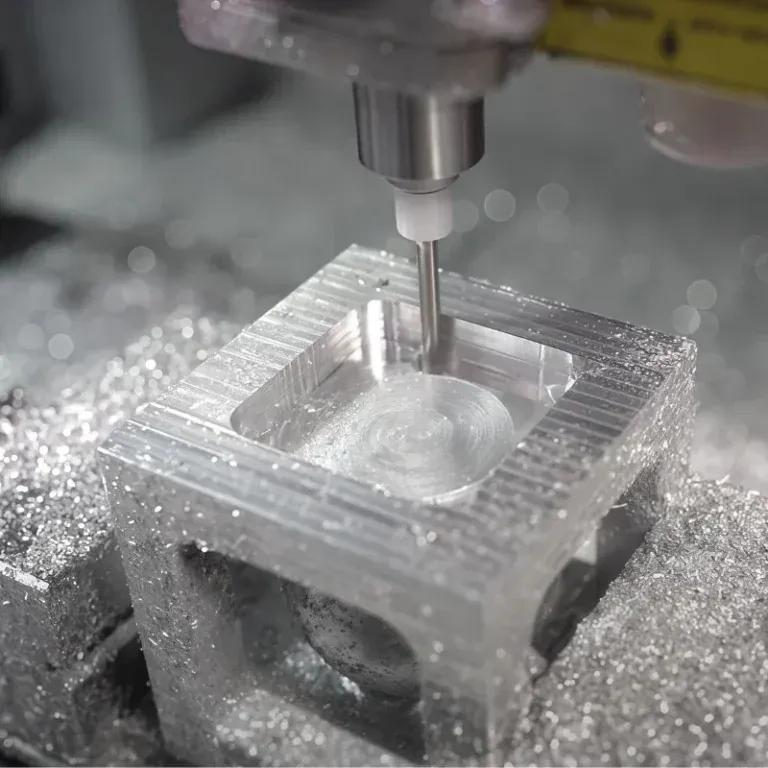
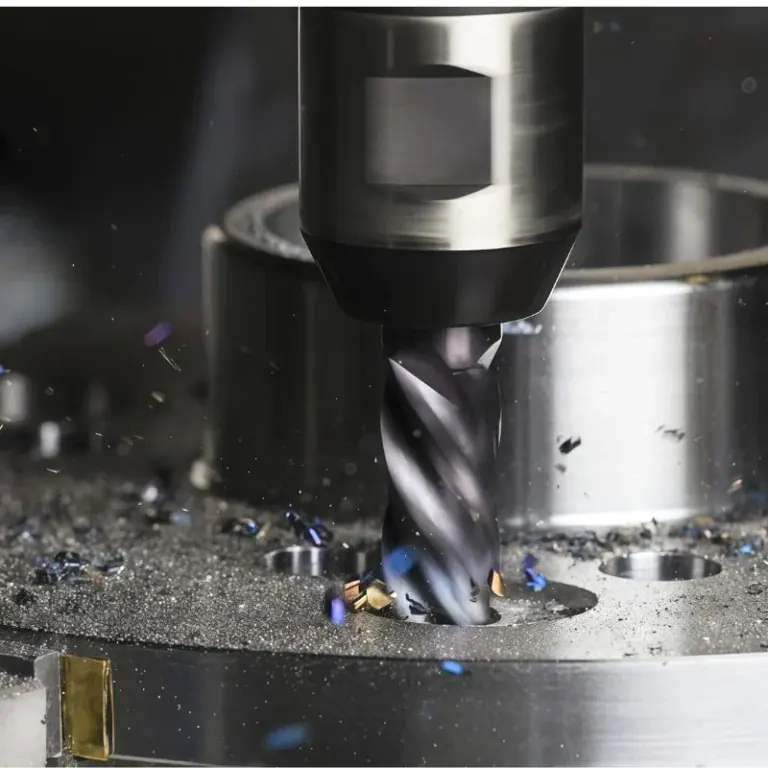
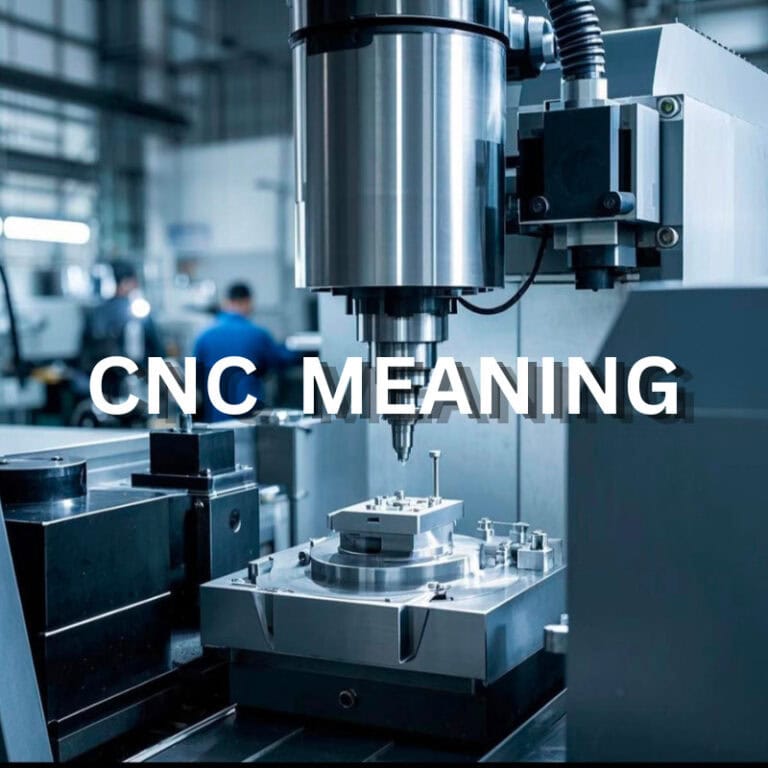
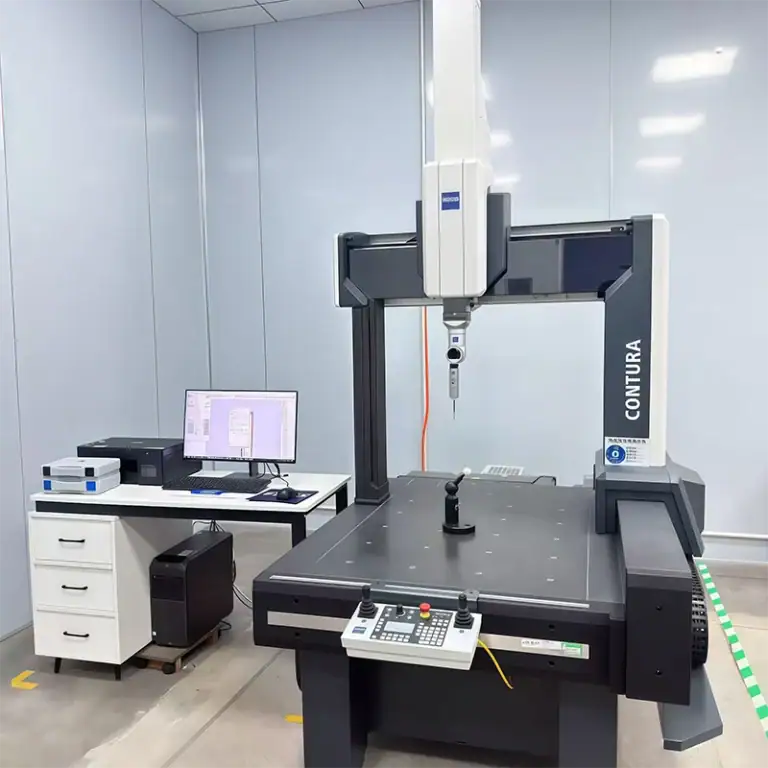
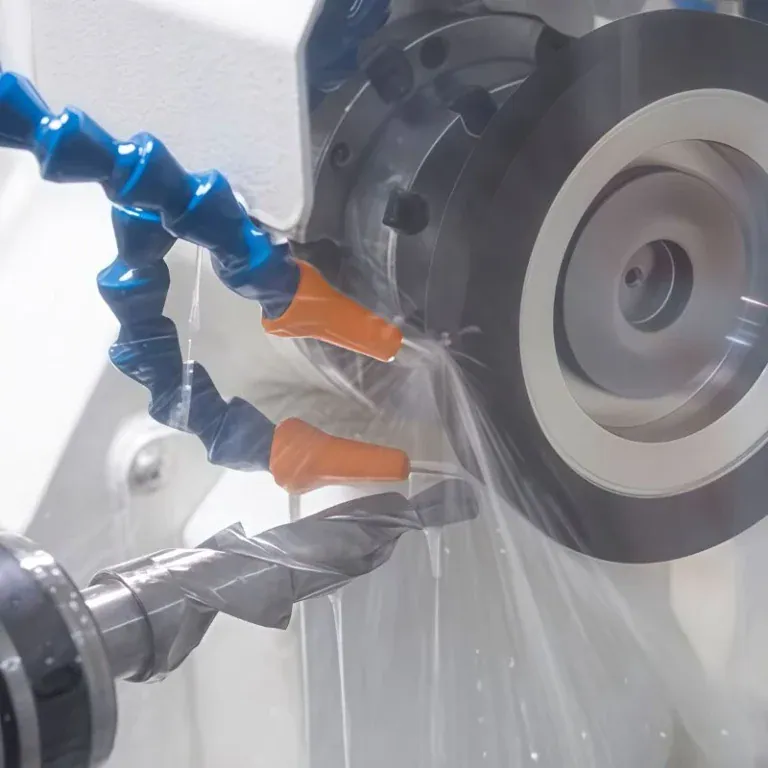
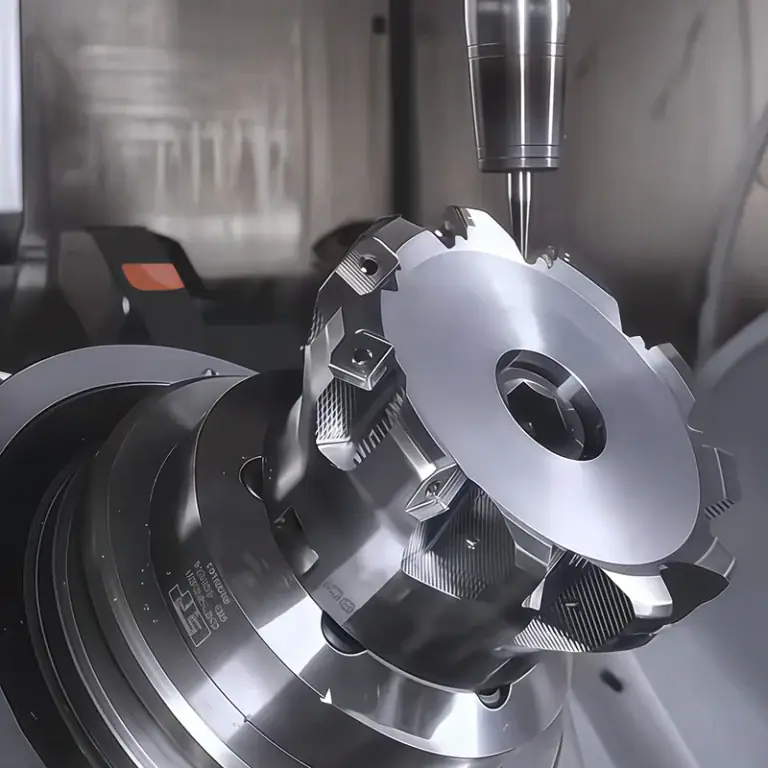
Oil pumps are widely used in oil transportation, pressurization, circulation, and related industrial equipment. During operation, their components may be exposed to pressure, friction, vibration, and complex media, creating high requirements for machining accuracy, material performance, and operational stability. CNC precision machining can manufacture oil pump components in various specifications based on drawings and 3D models, meeting requirements for complex structures, tight tolerances, and batch consistency while providing oil equipment manufacturers with flexible manufacturing solutions from prototype development to mass production.
What Are the Core Requirements for CNC Machining Oil Pump Components?
The practical application of oil pump components places greater emphasis on post-machining fit accuracy, durability, and long-term operational stability.
Accuracy Directly Affects Pump Assembly
Oil pumps contain multiple components that require precise fitting. Dimensions such as bore diameter, shaft diameter, mounting surfaces, and sealing surfaces all affect assembly performance.
- CNC machining can consistently control critical dimensions and geometric tolerances.
- Precision bores and mating surfaces help reduce assembly deviations.
- Inspecting critical dimensions can reduce the risk of defective components in batch production.
Stable machining accuracy provides a reliable foundation for oil pump assembly and operation.
Sealing Structures Require Fine Machining
Pump bodies and related connection components typically involve sealing fits, making surface quality and dimensional control particularly important.
- Supports machining of flanges, sealing grooves, mounting holes, and other structures.
- Controls the dimensions and surface quality of sealing surfaces according to design requirements.
- Reduces assembly problems caused by machining errors.
Appropriate machining processes help improve the fitting stability between components.
Materials Must Match the Operating Environment
The materials used for oil pump components need to be selected according to pressure, temperature, media, and wear conditions.
| Oil Pump Component Requirement | CNC Machining Solution | Common Components |
| High-precision assembly | CNC precision turning/milling | Pump shafts, bushings, connectors |
| Sealing fit | Precision turning + finishing | Seal seats, flanges, pump bodies |
| Complex structures | 3-axis/5-axis CNC machining | Pump housings, impellers |
| High-strength requirements | Precision machining of alloy steel | Shafts, transmission components |
| New product development | Rapid CNC prototyping | Custom pump bodies and prototypes |
Oil pump component machining requires comprehensive planning based on materials, structures, accuracy, and operating environments rather than simply pursuing machining speed.
How Does CNC Machining Improve Oil Pump Component Manufacturing Efficiency?
Oil equipment projects often involve multiple models, significant specification differences, and tight delivery schedules. The flexibility of the manufacturing method directly affects project progress.
Accelerate the Development of Non-Standard Components
Oil pump products often need to be customized according to equipment parameters or application scenarios, and standardized components cannot cover all requirements.
- Components can be machined directly from CAD drawings or 3D models.
- CNC programs can be quickly adjusted after design modifications.
- No dedicated molds are required, making CNC machining suitable for prototypes and small-batch production.
This flexible manufacturing method can shorten the development and validation cycle for new oil pump components.
Maintain Batch-to-Batch Component Consistency
During the batch production of the same oil pump model, component consistency affects assembly efficiency and delivery schedules. Standardized CNC programs, stable machining parameters, and comprehensive quality inspection can reduce dimensional differences between batches.
- Unified CNC Programs: Programs are prepared according to confirmed drawings and process requirements to reduce machining errors.
- Stable Machining Parameters: Spindle speed, feed rate, cutting depth, and tool usage cycles are set appropriately to ensure machining stability.
- Inspection of Critical Dimensions: Shaft diameters, bore diameters, mounting surfaces, sealing surfaces, and mating dimensions are inspected as key points.
- Batch Consistency Control: Dimensions from different batches are recorded and compared to identify deviations promptly.
- Reduced Rework and Debugging: First-article approval and in-process inspection help reduce assembly defects and rework risks.
Stable batch machining capabilities can improve oil pump assembly efficiency, ensure product quality, and reduce delivery risks.
Reduce Overall Manufacturing Costs
For oil pump components with multiple specifications and small production volumes, CNC machining does not require significant mold investment, making it more suitable for flexible production based on project requirements. At the same time, optimizing tool paths, process planning, and material utilization can reduce machining time and material waste. Stable machining quality can also lower hidden costs associated with rework, assembly, and after-sales maintenance.
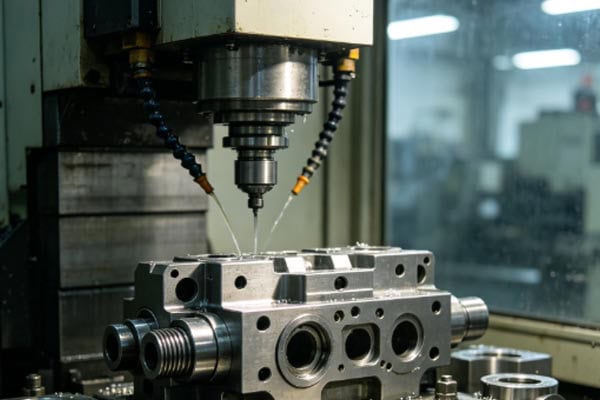
CNC Machining Applications for Common Oil Pump Components
Different types of oil pumps vary considerably in structure, but their core components are generally concentrated in the pump body, transmission, and sealing areas.
Pump Bodies and Pump Housing Components
The pump body contains internal fluid passages and provides mounting functions, creating high requirements for structural dimensions and connection locations.
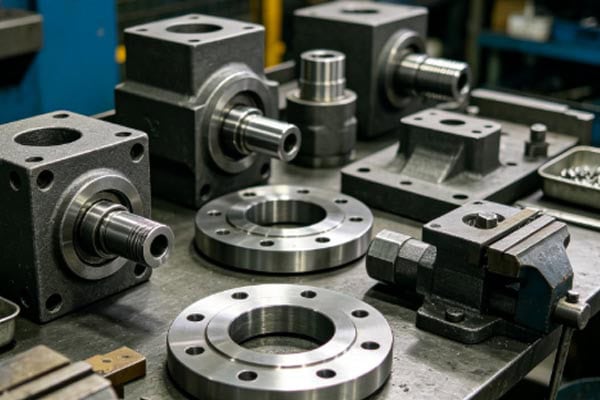
- Supports machining of pump housings, pump covers, flanges, and mounting bases.
- Can machine complex hole patterns, flow passages, and connection structures.
- Supports customized manufacturing according to different equipment specifications.
Accurate pump body machining provides a stable foundation for subsequent assembly and piping connections.
Pump Shafts, Bushings, and Transmission Components
Transmission components operate under continuous rotation and friction, making them particularly sensitive to concentricity, roundness, and surface quality.
- Supports precision turning of pump shafts, bushings, and connecting shafts.
- Materials such as stainless steel and alloy steel can be selected according to operating conditions.
- Heat treatment or surface treatment can be combined to improve wear resistance.
High-quality shaft components help reduce operating vibration and the risk of abnormal wear.
Impellers and Complex Functional Components
Components such as impellers often feature complex curved surfaces and multiple structural characteristics, making them relatively difficult to machine.
- Supports complex surface and multi-axis machining.
- Controls blade and mounting structure dimensions according to design models.
- Suitable for prototype development, small-batch production, and customized manufacturing.
Multi-axis CNC machining provides a more flexible manufacturing method for complex oil pump components.
How to Choose a CNC Machining Supplier for Oil Pump Components?
For oil equipment manufacturers, whether a supplier truly understands the application requirements of precision components is more important than simply comparing quotations.
Evaluate Equipment and Precision Machining Capabilities
Confirm whether the supplier has turning, milling, and multi-axis CNC machining capabilities, as well as experience processing materials such as stainless steel and alloy steel. The more comprehensive the equipment coverage, the easier it is to develop suitable machining solutions for oil pump components with different structures, dimensions, and production volumes.
Evaluate the Quality Inspection System
Quality control for oil pump components should cover the machining process rather than focus only on final inspection.
- Inspect critical dimensions, tolerances, and hole positions.
- Control the quality of key areas such as sealing and mating surfaces.
- Ensure consistency between prototypes and batch-produced components.
- Provide corresponding inspection documentation according to project requirements.
A comprehensive quality management system can help customers reduce assembly and batch production risks.
Evaluate Complete Manufacturing Support
If a supplier can provide DFM analysis at the early stage, followed by CNC machining, surface treatment, quality inspection, and batch production, customers do not need to coordinate repeatedly among multiple suppliers. For customized oil pump projects in particular, one-stop manufacturing helps shorten communication cycles and maintain process continuity across different production stages.
Manufacturing oil pump components requires a balance of dimensional accuracy, structural strength, and long-term operational reliability. TiRapid provides CNC precision machining services for oil pump components and supports rapid prototyping, small-batch production, and mass production based on customer drawings and 3D models, helping oil equipment manufacturers efficiently complete customized component production while controlling project delivery risks.