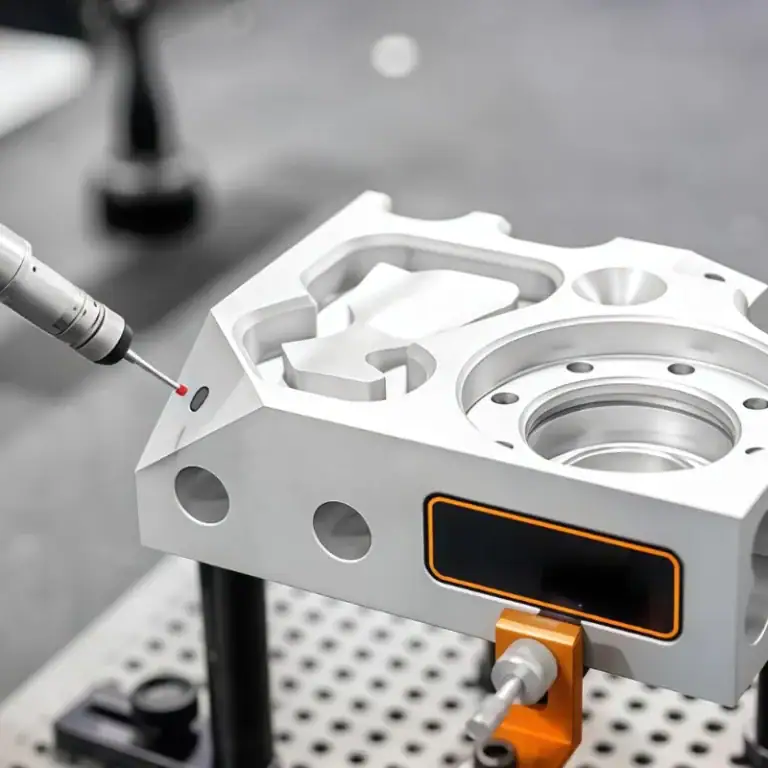
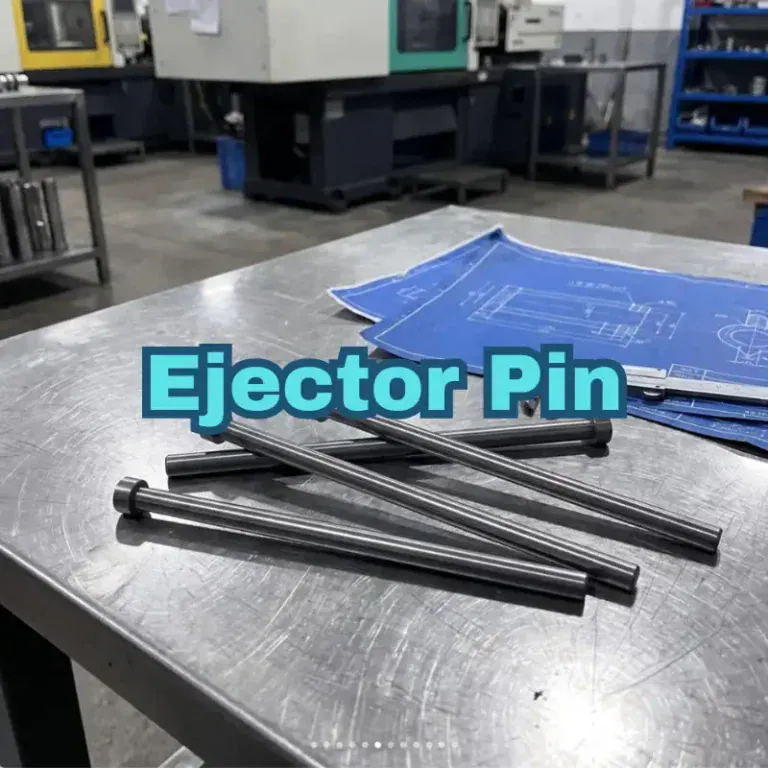
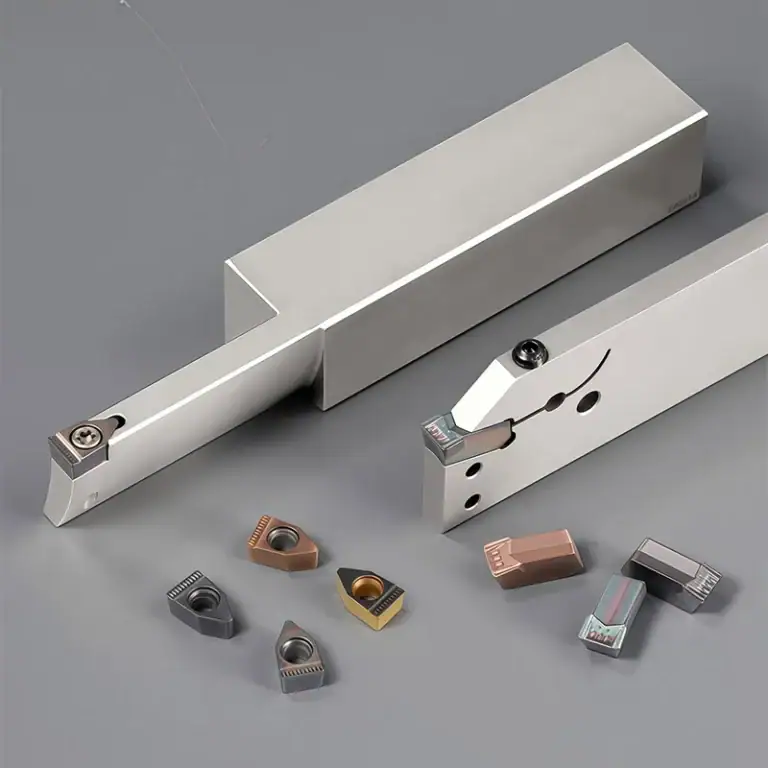
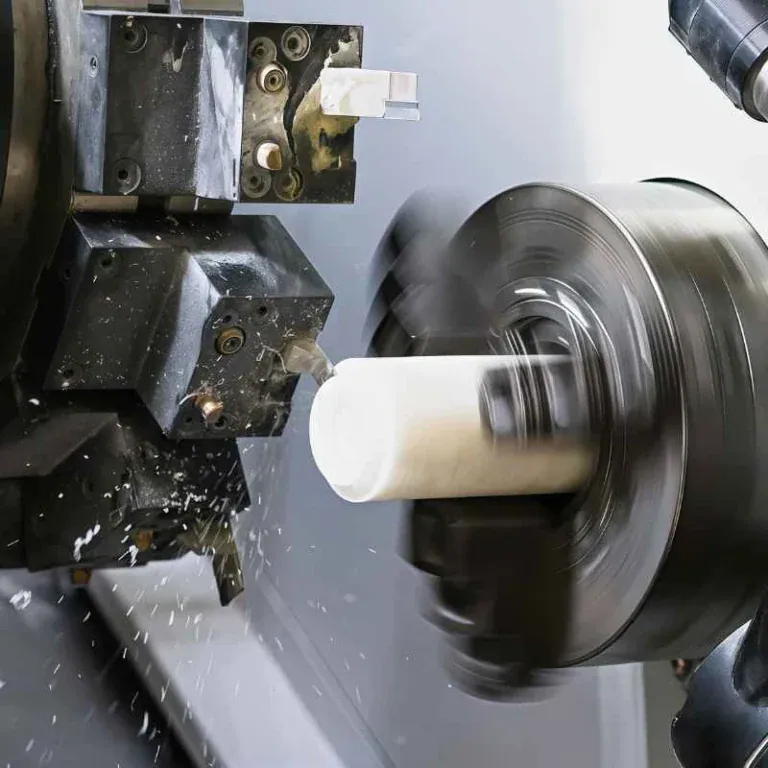
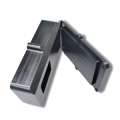
Natural gas pipeline components are not simply finished by cutting metal into the required shape. Once installation begins, even a small deviation in hole position, interface direction, or overall length can make on-site assembly difficult. Many components used in natural gas equipment are customized to match specific equipment dimensions, while order quantities may remain relatively small. This is where CNC machining becomes particularly valuable. It allows manufacturers to move directly from engineering drawings to digital machining processes and is well suited for complex structures, non-standard specifications, and small-batch production.
What Are the Most Difficult Factors to Control When CNC Machining Natural Gas Pipeline Components?
The main challenges in machining natural gas pipeline components do not necessarily come from complicated shapes. Many problems are hidden in the relationships between different dimensions. A single connection component may contain multiple locating surfaces, holes, and interfaces, and a change in one dimension can affect several others. For procurement teams, the key concern is whether the machining supplier can keep these dimensional relationships stable rather than simply looking at the machine specifications.

Dimensional Relationships Can Affect Final Assembly
Pipeline components often need to match flanges, pipes, valve assemblies, or equipment interfaces at the same time. A single dimension being within tolerance does not necessarily mean the entire component will fit properly after installation. During machining, locating surfaces, centerlines, and critical installation positions need to be controlled from consistent references.
- Machining datums need to be clearly defined, preventing cumulative errors caused by different positioning methods between processes.
- Critical hole positions need to share consistent references, ensuring proper alignment with mating components.
- Overall length needs to remain stable, preventing gaps or interference during pipeline installation.
- Adjacent features need to be controlled together, reducing situations where one dimension is correct while another position is offset.
CNC machining is well suited to this type of dimensional relationship because programmed coordinates can provide consistent positioning. Once the critical machining datums are established, milling, drilling, and finishing operations become easier to control.
Multi-Interface Components Require Accurate Spatial Positioning
Some natural gas pipeline components are not simple straight structures. A single component may contain interfaces in several different directions. If machining focuses only on the size of individual holes without controlling the spatial relationship between interfaces, assembly problems may still occur.
For these components, machining datums and clamping methods should be planned before production begins. For parts requiring multi-face machining, minimizing unnecessary repositioning can help maintain more consistent positional relationships between different surfaces and also make final inspection easier.
Different Machining Datums Can Create Cumulative Errors
When a component is repeatedly removed and re-clamped, every positioning operation can introduce a small amount of error. This may not be obvious on ordinary structural parts, but natural gas pipeline components often contain several precision mating areas where accumulated errors can affect the overall installation.
A suitable machining sequence should be planned in advance. Critical dimensions should be completed from stable references whenever possible, while complex components should be reviewed to determine which features can be machined in one setup and which should be finished later.
Different Specifications Require Different Machining Strategies
Natural gas pipeline systems contain components of various sizes. From small fittings to larger connection assemblies, the machining approach cannot always be the same. Changes in size, material, structure, or order quantity may require adjustments to equipment configuration, tooling, and process planning.
| Component Type | Machining Characteristics | Key Control Points |
| Pipeline transition fittings | Multiple interfaces | Hole positions, threads, center alignment |
| Precision connection parts | Multiple mating dimensions | Datums, positional accuracy, overall length |
| Special mounting components | Non-standard structures | Multi-face machining, clamping |
| Pipeline support components | Larger structural dimensions | Flatness, hole spacing, dimensional stability |
This is one of the major differences between customized CNC machining and standard part production. The more varied the specifications, the more important it becomes for the machining supplier to switch between different manufacturing processes efficiently.
How Can CNC Machining Reduce Rework for Natural Gas Pipeline Components?
Rework does not always happen because the machine lacks machining capability. In many cases, it comes from incomplete technical information, an unsuitable process route, or insufficient inspection checkpoints. Natural gas equipment components are often made to order, with dimensions determined by specific equipment requirements. If there is no intermediate verification during production, discovering a problem only after the entire component has been completed can significantly increase manufacturing costs.
Critical Drawing Data Should Be Confirmed Before Production
When engineering drawings are received, manufacturers need to review more than the overall shape and dimensions. Material specifications, tolerances, threads, hole positions, datums, and surface requirements should all be identified. For components with multiple mating interfaces, the dimensional relationship between the related components also needs to be confirmed.
Organizing this information in advance allows programmers, machine operators, and inspectors to work from the same dimensional requirements. If the drawing is revised, the latest version should be confirmed before production to prevent outdated information from entering the manufacturing process.
Rough Machining Should Leave Room for Finishing
For natural gas pipeline components that require significant material removal, machining directly to the final dimensions from the beginning is not always the best approach. Proper finishing allowance gives manufacturers room to compensate for dimensional changes during the machining process.
- Rough machining removes material efficiently, reducing the workload of later finishing operations.
- Semi-finishing establishes the basic geometry, bringing critical features closer to their final dimensions.
- Finishing focuses on critical areas, improving dimensional and surface quality.
- Key dimensions are rechecked during production, allowing issues to be identified before the next operation.
This staged approach is well suited to precision non-standard pipeline components. It also makes it easier to identify problems during production instead of waiting until the entire part has been completed.
Tool Condition Needs to Be Part of Production Management
A cutting tool does not maintain exactly the same condition throughout its service life. As machining time increases, tool wear can gradually affect hole diameter, contours, and surface quality. This is particularly important for batch production, where uncontrolled tool wear may cause dimensional drift between early and later parts.
Manufacturers can establish tool usage records for critical operations and introduce inspection checkpoints based on tool life. Addressing dimensional trends early is far more efficient than waiting until a large quantity of parts requires rework.
In-Process Inspection Can Reduce Batch-Wide Risks
Batch production does not necessarily require every component to undergo the same complete inspection process repeatedly, but critical dimensions should have appropriate first-piece and in-process inspection checkpoints. This allows the machining program and process conditions to be verified before full production continues.
For newly developed components, first-piece inspection is particularly important. Once critical dimensions, interfaces, and structural features are confirmed, batch production can proceed with a lower risk of repeating the same manufacturing problem across the entire order.
How Can CNC Machining Maintain Consistency in Batch Production?
Natural gas equipment components often have a different purchasing cycle from ordinary consumer products. The same component may be reordered months later for equipment maintenance, expansion projects, or spare-part inventory. Reliable supply is not simply about producing the first batch correctly. The real test is whether the same specification can still be manufactured consistently when the next order arrives.
Clear Part Version Management Is Essential
Non-standard components are particularly vulnerable to drawing-version confusion. When a design is modified, using an outdated drawing can result in old and new specifications being mixed together. For long-term natural gas equipment systems, clear version management is especially important.
- Keep fixed part numbers, making procurement and production records easier to retrieve.
- Record drawing revisions, preventing different versions from being mixed.
- Save special machining requirements separately, reducing repeated technical communication.
- Retain historical order information, making future repeat orders easier to process.
Although these records may appear to be outside the machining process, they directly affect future procurement efficiency. The clearer the documentation, the easier it is to restart production of the same component.
Verified CNC Programs Can Support Repeat Orders
One of the major advantages of CNC machining is that a verified machining program can be reused for components with the same specifications. After the first order is completed, the validated machining parameters, tooling strategy, and inspection requirements can be documented for future production instead of being developed from scratch.
For procurement teams, this reduces communication time during repeat orders and makes dimensional consistency between different batches easier to maintain. For manufacturers, it also shortens preparation time and improves response speed for recurring small-batch orders.
Small-Batch Production Still Requires Stable Processes
Natural gas pipeline components are not always ordered in large quantities. Some projects may require only a few dozen parts or even fewer. A small order does not mean lower manufacturing requirements. It often requires stable production within a relatively short delivery cycle.
- Reduce unnecessary preparation time, allowing small orders to enter production quickly.
- Maintain verified process parameters, avoiding repeated trial machining for every small order.
- Schedule similar components efficiently, improving machine utilization.
- Retain inspection records, making future batches easier to verify.
For procurement teams, the value of small-batch CNC machining is not simply the ability to produce a small quantity. It is the ability to maintain quality control and delivery stability even for limited-volume orders.
Manufacturing Records Should Be Retained for Repeat Components
Once a batch of components has been delivered, future orders can become difficult if the original machining information has not been properly retained. The material, dimensions, machining methods, and inspection requirements may all need to be reconfirmed.
Keeping drawings, program versions, inspection records, and special requirements together allows future orders to be restarted much more efficiently. For natural gas equipment manufacturers and maintenance companies, this type of manufacturing documentation can make long-term procurement much more reliable.
What Should You Look for When Purchasing CNC-Machined Natural Gas Pipeline Components?
Price is certainly an important part of procurement, but the actual manufacturing experience is often determined by drawing communication, first-piece validation, delivery stability, and repeat-order capability. For natural gas pipeline components, dimensional mismatches with existing equipment can lead to additional machining and project delays. When selecting a CNC machining supplier, these practical factors should be considered alongside the quotation.

Can the Supplier Properly Interpret Engineering Drawings?
Non-standard pipeline components often involve dimensional tolerances, sectional views, threads, and assembly relationships. Simply understanding the overall shape is not enough. The supplier needs to identify the details that directly affect machining and installation.
For components with complex dimensional relationships, raising potential issues during the early engineering stage can prevent manufacturing problems later. Procurement teams can also confirm whether the design is compatible with the proposed machining process before production begins.
Does the Supplier Support Prototypes and Small-Batch Validation?
For newly developed pipeline components, moving directly into large-volume production is not always the best option. Producing a small number of prototypes allows the installation relationship to be verified before the order is expanded. CNC machining is well suited to this type of development work because it does not require extensive tooling investment.
- Produce a small number of prototypes first, allowing installation conditions to be verified.
- Adjust machining programs quickly after design revisions, reducing preparation time.
- Move to larger quantities after validation, lowering the risk of batch-wide rework.
For new projects, a “validate first, scale up later” approach provides better process control and gives engineering and procurement teams more flexibility.
Does the Inspection Report Provide Useful Information?
An inspection report does not become more useful simply because it contains more numbers. What matters is whether the data clearly shows that the component meets the installation and application requirements. For natural gas pipeline components, dimensions that directly affect assembly deserve particular attention.
| Inspection Item | Key Information | Procurement Value |
| Critical dimensions | Length, hole diameter, thickness | Confirms basic specifications |
| Hole relationships | Hole spacing, center position | Confirms installation compatibility |
| Threads | Specification, size, profile | Confirms connection performance |
| Surface condition | Burrs, machining defects | Confirms delivery quality |
When inspection data is directly linked to drawing requirements, procurement teams can evaluate part quality more efficiently. The same inspection criteria can also be reused for future orders of the same component.
Does the Supplier Have Long-Term Production Capability?
Natural gas pipeline components are often not one-time purchases. The same spare or replacement part may be required again in the future. A supplier that can complete one order but cannot maintain consistency between later batches can create unnecessary procurement difficulties.
When evaluating a supplier, it is worth looking at prototype response time, batch production capability, inspection management, and manufacturing record retention. For companies that regularly purchase customized components, a supplier capable of turning individual orders into a stable long-term supply process can offer much more value than a low quotation alone.
Natural gas pipeline component CNC machining is not simply about machining speed. The real manufacturing capability lies in drawing interpretation, datum planning, process control, inspection, and the ability to reproduce the same specification over time. When dimensional relationships, interface compatibility, and batch consistency are properly managed, components are much more likely to fit existing equipment and remain reliable across future orders. TIRAPID specializes in precision CNC machining and supports customized natural gas equipment and pipeline components from prototype development through small-batch production.