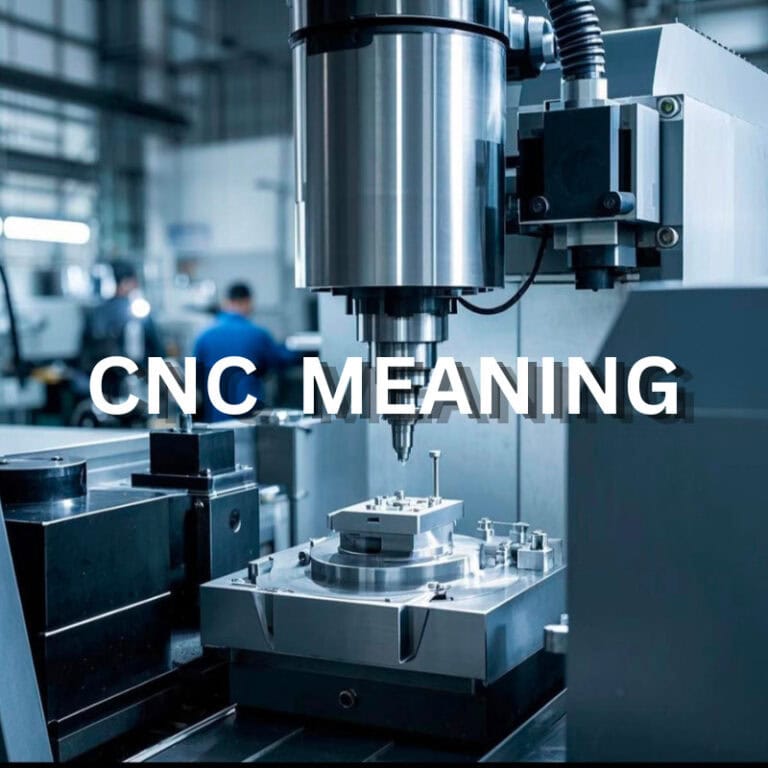
Shaft parts in industrial equipment often look simple, but they can cause plenty of trouble when something goes wrong. Motor shafts, transmission shafts, connecting shafts, and roller shafts all play important roles in equipment operation. A small dimensional deviation or poor concentricity can lead to vibration, abnormal noise, or accelerated wear. Industrial equipment also tends to operate continuously for long periods, which places high demands on shaft diameter accuracy, roundness, concentricity, and surface quality. CNC machining provides stable dimensional control and is well suited for custom shaft parts, small-batch production, and repeated manufacturing.
Why Do Industrial Equipment Shaft Parts Require High-Precision CNC Machining?
The real challenge of shaft machining is not simply producing the correct outer diameter. Multiple features along the same shaft must maintain accurate relationships with each other. Shoulders, keyways, threads, bearing seats, and mounting sections are often concentrated on one component, and a deviation in any critical area can affect the entire assembly.
Concentricity Directly Affects Equipment Operation
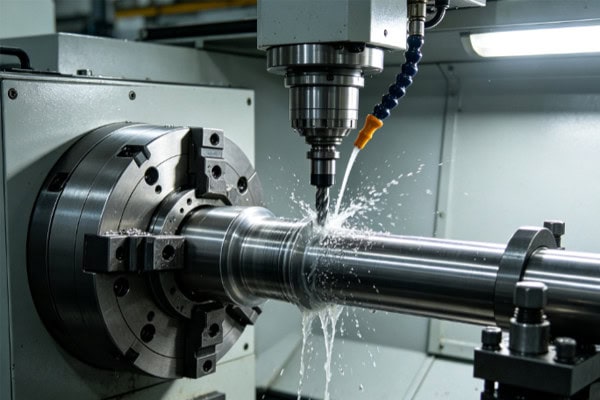
Shaft parts usually work together with bearings, gears, couplings, and other components, making the relationship between their centerlines extremely important. Machining cannot focus only on individual dimensions; the positional relationship between different features must also be controlled.
- Bearing seats must maintain stable dimensions to prevent excessive looseness or interference during assembly.
- Shaft journals at both ends need good concentricity to reduce runout during rotation.
- Keyway positions must maintain an accurate relationship with the machining datum for reliable gear installation.
- Long shafts also require proper straightness control to reduce vibration during high-speed operation.
These requirements make stable CNC machining particularly suitable for industrial equipment shaft parts. Once the program, tooling, and fixturing method are properly controlled, dimensional consistency becomes easier to maintain across the same production batch.
Long and Slender Shafts Are Prone to Machining Deflection
Some industrial equipment shafts are relatively long but have a small diameter, making them more sensitive during machining. Cutting forces, clamping pressure, and internal material stress can all cause slight bending or dimensional changes.
- Slender shafts require properly positioned supports.
- Rough machining should avoid removing excessive material in a single operation.
- Finishing operations should reduce cutting loads and stabilize final dimensions.
For purchasing teams, meeting the drawing dimensions is only part of the job. The finished shaft must also fit the equipment properly after delivery. A well-planned machining route can reduce assembly adjustments and save considerable troubleshooting time later.
Different Materials Require Different Machining Strategies
Industrial equipment shaft parts are made from different materials depending on their application. Some prioritize strength and wear resistance, while others focus more on weight, corrosion resistance, or manufacturing cost.
| Material | Common Applications | Main Machining Considerations |
| Stainless steel | Corrosion-resistant shafts, equipment connection shafts | Tool wear, cutting heat |
| Alloy steel | Transmission shafts, load-bearing shafts | Strength, dimensional stability |
| Aluminum alloy | Lightweight shaft components | Deflection, surface quality |
| Titanium alloy | High-performance equipment components | Cutting temperature, tool life |
| Engineering plastics | Special transmission and insulating components | Deformation, dimensional changes |
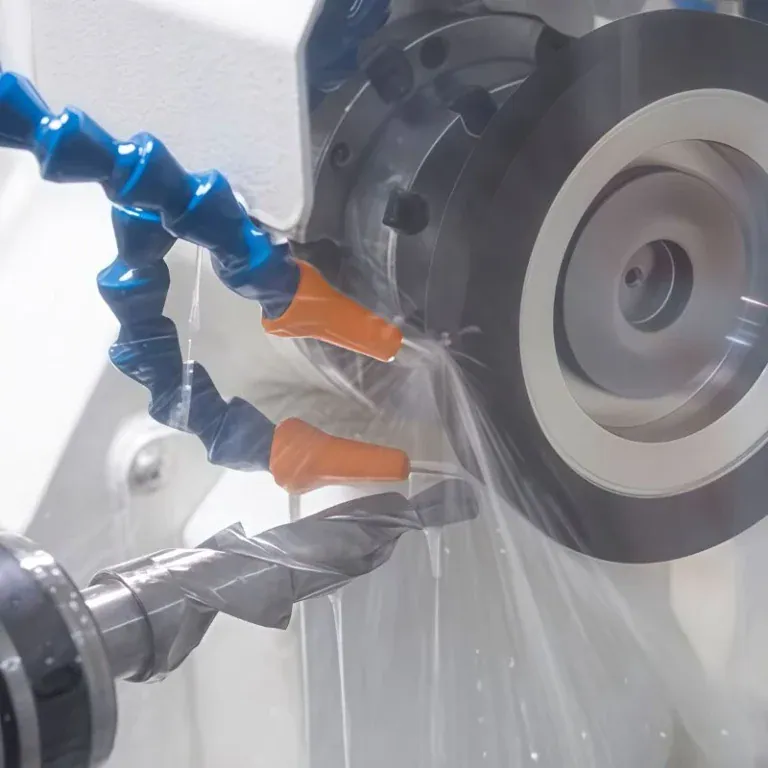
Material selection is only the starting point. Tool selection, spindle speed, feed rate, and cooling methods also need to match the material to keep the machining process stable.
What Are the Key CNC Machining Processes for Industrial Equipment Shaft Parts?
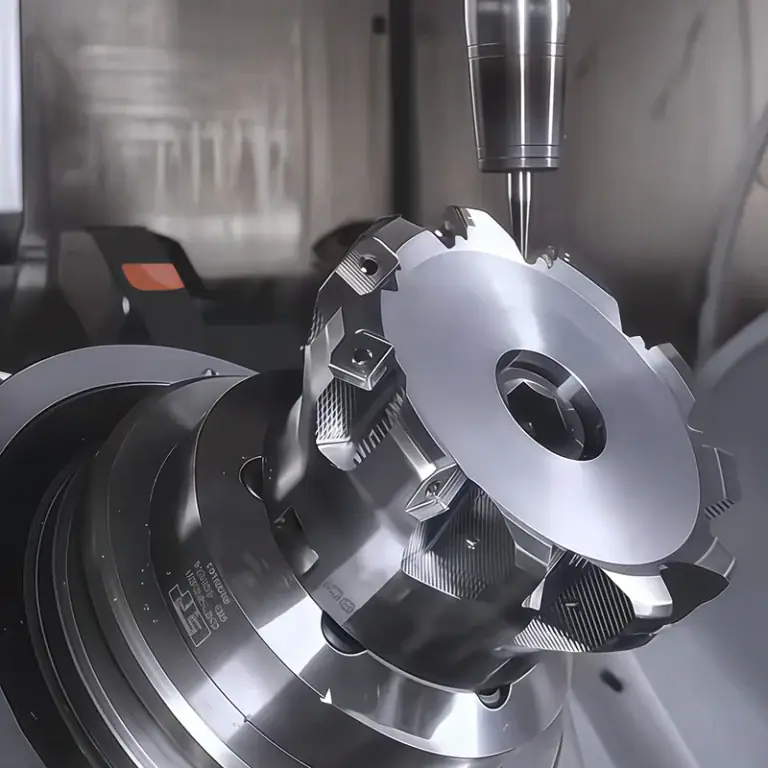
Shaft components are rarely completed in a single operation. Depending on the design, the manufacturing process may include turning, grooving, drilling, threading, and finishing. A well-planned process sequence helps reduce dimensional variation and makes batch production more consistent.
Rough Turning and Finish Turning Should Be Managed Separately
Rough machining focuses on efficient material removal, while finishing is responsible for achieving the final dimensions and surface condition. Treating both stages in the same way can make it harder to balance machining efficiency and final precision.
- Rough turning removes most of the material while leaving a controlled allowance for finishing.
- Semi-finishing corrects the overall profile and prepares the part for final machining.
- Finish turning uses lower cutting loads to control shaft diameter, roundness, and surface roughness.
- Critical fitting areas can receive dedicated finishing operations for better dimensional stability.
This staged approach is well suited to precision industrial equipment shafts and helps reduce the impact of rough machining on final dimensions.
Shoulders, Keyways, and Threads Must Be Accurately Integrated
A single shaft often contains several functional areas. The real machining challenge lies in maintaining the correct relationship between these features. An incorrect shoulder dimension can affect bearing positioning, while a displaced keyway can make gear installation difficult.
CNC machining allows different features to be controlled within the same programmed process. Shaft diameters, grooves, threads, and end structures can be machined from consistent datums. For complex custom shafts, reducing repeated setups also helps minimize accumulated positioning errors.
Long Shaft Machining Requires Stable Fixturing and Support
Long shafts can be affected by their own weight and by cutting forces during turning. If support is inadequate, vibration may occur around the middle section, resulting in unstable machining dimensions.
| Machining Stage | Common Problems | Main Control Focus |
| Raw material setup | Workpiece runout | Alignment and clamping stability |
| Rough machining | Vibration, deflection | Controlled material removal |
| Semi-finishing | Dimensional variation | Cutting load control |
| Finish machining | Shaft diameter deviation | Tool condition stability |
| Keyway machining | Position deviation | Datum relationship |
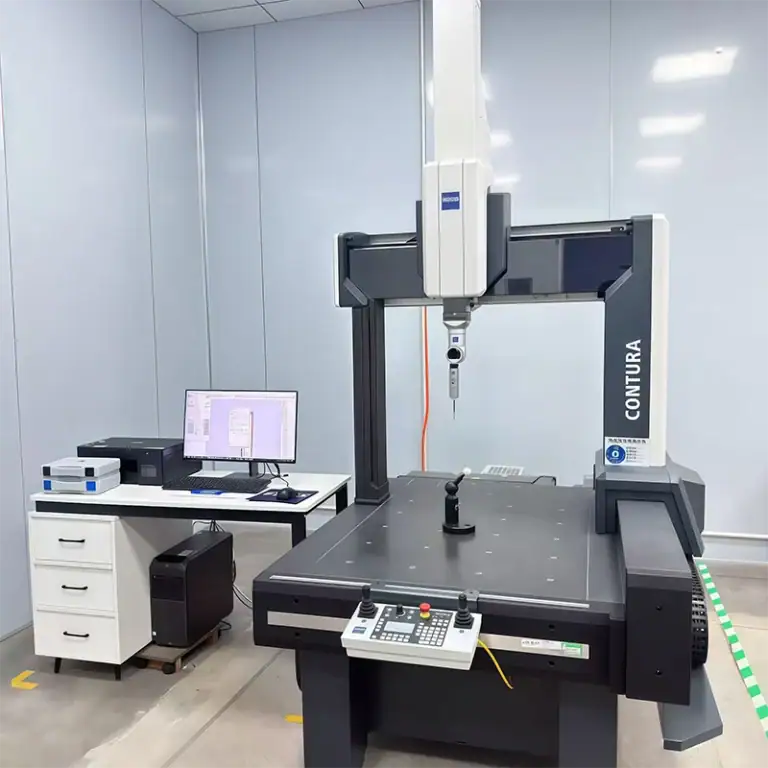
| Final inspection | Concentricity failure | Critical dimensions and GD&T |
In actual production, slowing the cutting speed alone does not solve long-shaft machining problems. Machine rigidity, workpiece support, tool overhang, and machining sequence all need to be considered before production starts.
How Can Machining Quality Be Maintained for Industrial Equipment Shaft Parts?
Shaft quality should not depend entirely on the final inspection. Every stage of production can influence the final result. For high-precision shaft components, dimensional changes should be identified during machining rather than discovered only after the entire part has been completed.
Continuous Monitoring Is Important During CNC Machining
Although CNC machining provides a high level of automation, tool wear, machine thermal conditions, and material behavior can still affect dimensions. During stable production, process monitoring is often more valuable than relying only on final inspection.
- Check cutting tool edges regularly to prevent worn tools from affecting critical dimensions.
- Measure critical shaft diameters at appropriate production stages to identify dimensional drift.
- Monitor spindle and fixture conditions to reduce machining runout.
- Record critical dimensional data during batch production for easier quality tracking.
These details may seem minor, but they directly affect batch consistency. For long-term supply projects, stable repeatability is often more valuable than producing a single perfect sample.
Roundness, Concentricity, and Surface Quality Need Special Attention
Shaft parts rotate continuously after assembly, so inspection should go beyond basic length and diameter measurements. Purchasing teams should pay particular attention to the characteristics that directly affect equipment operation.
- Shaft diameter and tolerance must meet drawing requirements.
- Bearing seat roundness needs to remain stable.
- Concentricity between critical shaft journals must meet specifications.
- Keyways and threads must support proper assembly.
- Surface roughness should match the actual fitting and operating requirements.
Inspection results are not only used to determine whether a part passes. They can also help engineers identify the causes of dimensional variation and improve subsequent production batches.
Batch Production Requires Consistent Results
Industrial equipment manufacturers rarely purchase only one shaft. Follow-up orders, maintenance replacements, and equipment upgrades may create ongoing demand. A qualified first article does not automatically guarantee that every later batch will have identical results.
A stable CNC machining process allows proven programs and process parameters to be reused. Combined with consistent inspection standards, this makes future production easier to reproduce. For industrial equipment components that require long-term supply, repeatable manufacturing can reduce assembly adjustments and rework caused by dimensional variation.
How Can CNC Machining Balance Cost and Lead Time for Industrial Equipment Shaft Parts?
The machining price of a shaft should not be judged by unit price alone. Material cost, machining time, tooling consumption, number of operations, inspection requirements, and order quantity can all influence the final manufacturing cost. Choosing the lowest quotation may create higher costs later if dimensional problems or delivery delays occur.
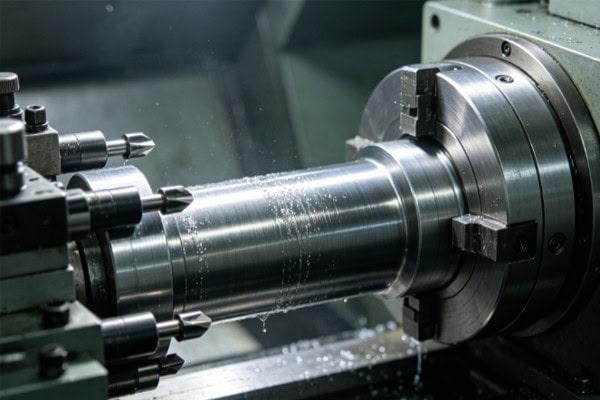
Small-Batch Shaft Parts Are Well Suited to Flexible CNC Machining
Custom industrial equipment often requires a small number of replacement components or development samples. There is usually little value in investing in dedicated molds for this type of production. CNC machining can move directly from engineering drawings to programming and is well suited to customized shaft manufacturing.
For purchasing teams, it is useful to confirm the machining lead time, material preparation time, first-article approval process, and whether future repeat orders can use the same established process. Clear information at the beginning makes project management much easier.
Large-Volume Orders Require Greater Production Stability
Once shaft components move into batch production, unit price is important, but production cycle time and yield also have a major impact on total cost. A mature CNC machining process can reduce repeated machine setup and keep production more stable.
- Standardize machining programs to reduce repeated programming time.
- Manage tool life properly to avoid unexpected downtime caused by tool replacement.
- Set inspection checkpoints for critical dimensions to reduce the risk of batch-wide rework.
- Optimize production scheduling so different shaft specifications can enter machining in an organized sequence.
Handling these details properly makes it possible to control costs without sacrificing part quality or delivery performance.
Clear Drawing Requirements Help Improve Quotation Accuracy
Industrial equipment shaft parts may include special tolerances, material conditions, heat treatment, and surface treatment requirements. Providing these details before quotation reduces the need for later price revisions and production rescheduling.
A complete drawing should ideally include the material grade, critical dimensions, tolerances, surface roughness, heat treatment requirements, and required quantity. For special structures, the assembly location and intended application can also be shared in advance, giving the machining team a clearer picture of process difficulty.
Industrial equipment shaft machining may look like a conventional turning job, but producing reliable results requires stable equipment, proper fixturing, controlled tool wear, dimensional inspection, and consistent batch management. For purchasing teams, price is only one consideration; shaft diameter accuracy, concentricity, surface quality, lead time, and long-term supply capability are equally important. Tirapid provides CNC machining services for industrial equipment shaft parts, offering customized manufacturing solutions for different materials, structures, tolerances, and production volumes.