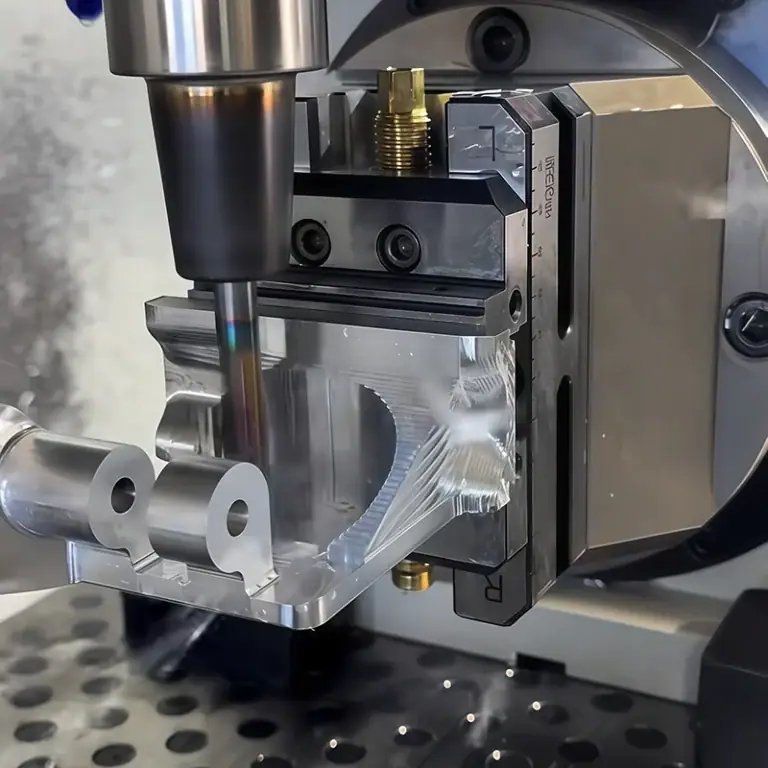
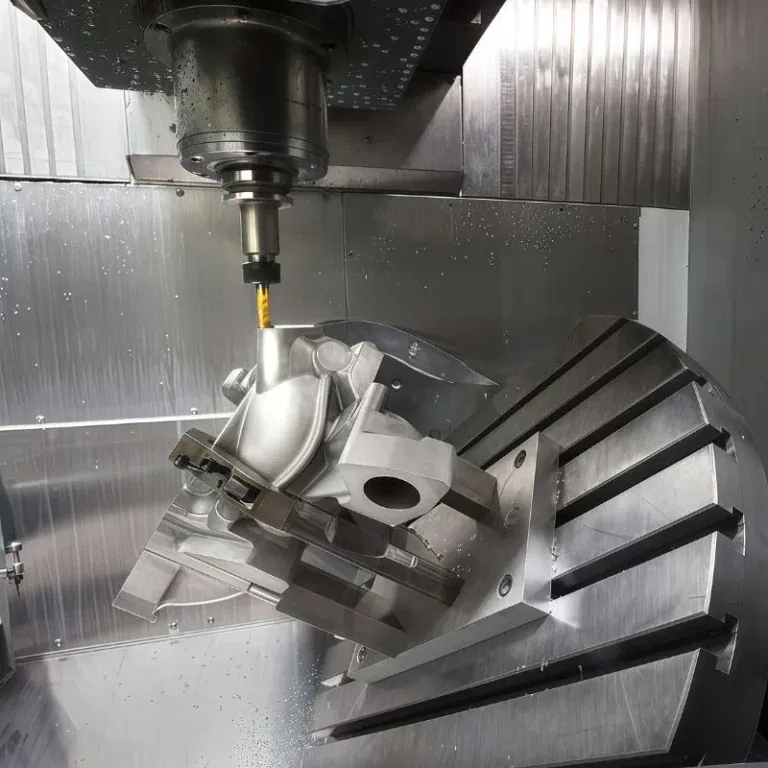
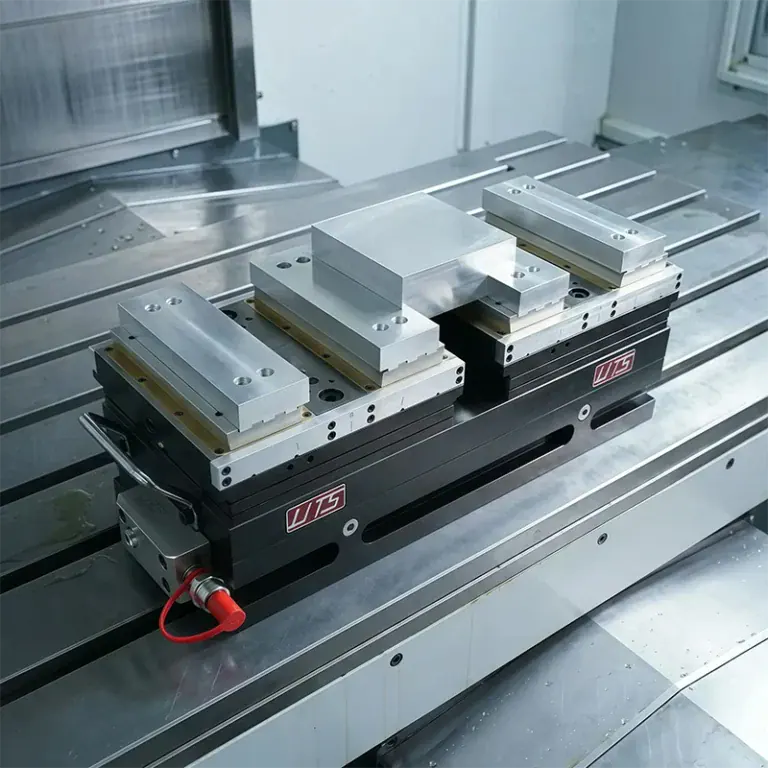
The real machining challenges of heat exchangers used in industrial equipment are often hidden inside the part rather than on the outside. Flow channels, deep holes, mounting holes, sealing grooves, and connection interfaces may all be built into the same component. They may look like simple holes and grooves, but machining them properly requires careful process planning. Custom heat exchangers can also vary significantly in structure and dimensions depending on the equipment, so they cannot simply be produced to one fixed specification. For industrial equipment heat exchanger CNC machining, buyers are usually more concerned with whether the parts can be machined consistently from drawings, whether assembly will be smooth, and whether dimensional consistency can be maintained during repeat production.
What Are the Advantages of CNC Machining for Industrial Equipment Heat Exchangers?
Heat exchangers often need to be customized according to the equipment structure, which means dimensions, connection interfaces, and internal flow channels can all vary. CNC machining is well suited to this type of production because machining paths can be adjusted through programmed processes to accommodate different structures. For industrial equipment projects that require prototypes, small-batch production, or ongoing manufacturing, flexibility and dimensional stability are both important.
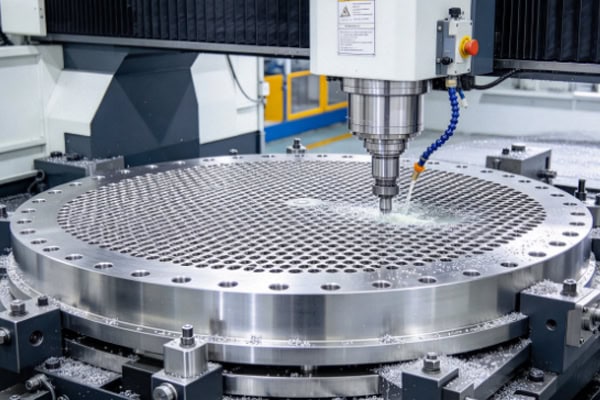
More Flexible Machining for Complex Flow Channels and Interfaces
Heat exchangers may contain deep holes, intersecting holes, flow channels, threaded holes, and sealing grooves, with precise positional relationships between these structures. Machining cannot focus on individual dimensions alone. The entire component must also be able to connect and assemble properly.
- Internal flow channels can be custom machined according to drawings without being limited to a single standard specification.
- Deep and intersecting holes require a suitable machining sequence to reduce tool deflection and internal burrs.
- Mounting holes, locating holes, and connection interfaces can be controlled together to maintain accurate positional relationships for assembly.
- Irregular contours, grooves, and sealing structures can be produced through different tool paths.
This approach is particularly practical for industrial equipment components. For non-standard heat exchangers, the machining process can be adjusted directly according to the actual drawing instead of changing the original design simply to make production easier.
More Stable Dimensional Control Helps Reduce Assembly Adjustments
Heat exchangers often connect with pipelines, flanges, or other equipment modules. If hole positions or sealing surfaces are out of tolerance, repeated adjustments may be required during installation. CNC machining uses programmed tool paths combined with inspection of critical dimensions to help maintain consistent machining conditions across identical parts.
- Hole diameters, hole spacing, and center positions can be kept stable for accurate installation of connecting components.
- Mounting and flange surfaces need controlled flatness to reduce gaps or misalignment after assembly.
- Sealing grooves can be machined to drawing specifications for proper installation of seals.
- A validated process can be maintained during batch production to reduce dimensional differences between production batches.
Easier Transition from Prototypes to Batch Production
Heat exchanger projects do not always begin with high-volume production. Many industrial equipment projects require several prototypes for assembly and testing before moving into larger quantities. CNC machining does not require large amounts of dedicated tooling to be remade whenever specifications change. Once the drawing is updated, machining programs and processes can be adjusted accordingly, making CNC machining suitable for the transition from equipment development to production.
How Do CNC Machining Priorities Differ for Heat Exchangers Made from Different Materials?
The material used for a heat exchanger directly affects the machining method. Aluminum alloys are relatively easy to cut, but thin-wall structures can be affected by clamping and cutting forces. Copper alloys require careful burr and surface control, while stainless steel places greater demands on tool durability and cutting parameters. Different materials should not simply use the same machining approach. Confirming the material grade and machining requirements early can make subsequent production much smoother.
Aluminum Heat Exchangers: Control Thin Walls and Deep Grooves
Aluminum is widely used in industrial equipment because of its relatively low weight and good machinability. However, when a heat exchanger includes thin walls, machining requires careful control of clamping pressure and cutting conditions. Otherwise, dimensional changes may occur after the part is removed from the machine.
- Thin-wall areas require suitable clamping methods to avoid deformation caused by excessive clamping force.
- Deep-groove machining requires effective chip evacuation to prevent chips from affecting machining conditions.
- When holes are closely spaced, the machining sequence should be planned carefully to reduce localized stress.
- For components with surface requirements, tool marks, burrs, and localized machining patterns also need to be controlled.
Aluminum may seem easy to machine, but achieving stable dimensions involves more than simply increasing cutting speed. Clamping and machining sequence are particularly important for large thin-wall heat exchangers.
Copper Alloy Heat Exchangers: Pay Attention to Burrs and Surface Condition
Copper alloys offer good thermal conductivity, but machining may also result in burrs and tool adhesion. For internal flow channels and precision holes, suitable cutting tools and machining parameters should be selected, while chip evacuation must also be properly managed to prevent machining residue from affecting later use.
Stainless Steel Heat Exchangers: Tool Wear and Dimensional Stability Matter More
Stainless steel generally creates higher cutting resistance, making tool wear an important consideration during continuous production. If tool conditions change significantly, hole diameter, groove width, and surface quality may also be affected. For stainless steel heat exchangers produced in batches, proper machining intervals and inspection points can help reduce subsequent rework.
| Material | CNC Machining Focus | Common Concerns |
| Aluminum Alloy | Thin walls, deep grooves, chip evacuation | Deformation, surface quality |
| Copper Alloy | Tool selection, burr control | Hole position, surface condition |
| Stainless Steel | Tool wear, machining parameters | Dimensions, process stability |
How Can Rework Be Reduced from Heat Exchanger Prototyping to Batch Production?
Completing a heat exchanger prototype does not mean every production issue has been solved. Once batch production begins, tool wear, changes in clamping conditions, and machine temperature can all affect dimensions. Internal flow channels and sealing interfaces are especially difficult to correct after production. Continuous inspection of critical dimensions during machining is more practical than waiting until every part is finished before checking everything.
Which Critical Dimensions Should Be Confirmed During Prototyping?
Prototype inspection should not focus only on whether the overall shape matches the drawing. Installation, connection, and sealing locations need particular attention. When these critical dimensions are sufficiently verified, fewer process changes are usually required during subsequent batch production.
- Check the diameter, spacing, and center position of mounting and connection holes to confirm actual assembly accuracy.
- The width, depth, and position of sealing grooves should be inspected separately.
- Internal flow channels should be checked for proper connection, along with visible burrs and chip residue.
- Dimensional changes before and after machining should be monitored in thin-wall areas.
- If surface treatment will be applied later, confirm in advance whether the treatment will affect the final dimensions.
Critical Dimensions Should Not Be Checked Only at the End of Batch Production
One common problem in batch machining is that the first few parts are within tolerance while dimensions gradually change later in the production run. Increased tool usage, temperature changes, or clamping variations can affect machining results. Critical dimensions such as hole diameter, hole spacing, sealing groove dimensions, and flatness should be inspected at planned production checkpoints so that changes can be addressed before all parts are completed.
Deburring and Internal Cleaning Are Also Part of Machining Quality
Heat exchangers contain numerous internal structures. If metal chips, burrs, or coolant residue remain after machining, they may affect later installation and fluid flow. Deep holes and intersecting flow channels are particularly difficult to clean with simple manual wiping, so cleaning and inspection should be planned according to the actual component structure.
| Inspection Item | Main Inspection Content | Main Purpose |
| Dimensions | Length, width, thickness, hole diameter | Verify basic dimensions |
| Hole Position | Hole spacing, center position, hole depth | Ensure accurate interfaces |
| Flatness | Mounting surfaces, flange surfaces | Maintain assembly stability |
| Sealing Structure | Groove width and depth | Ensure proper interface fit |
| Internal Flow Channels | Connection, burrs, residue | Maintain channel condition |
| Appearance | Tool marks, scratches, burrs | Confirm machining condition |
What Capabilities Should You Look for in an Industrial Equipment Heat Exchanger CNC Machining Supplier?
Heat exchangers are typical custom industrial equipment components. What really tests a machining supplier is not simply whether CNC machines are available, but whether the team can understand complex drawings, work with different materials, and provide complete dimensional inspection and process control. When repeat orders are expected, producing one good part is only the starting point. Maintaining stable production over time is even more important.
The Ability to Handle Complex Structures Directly Affects Machining Results
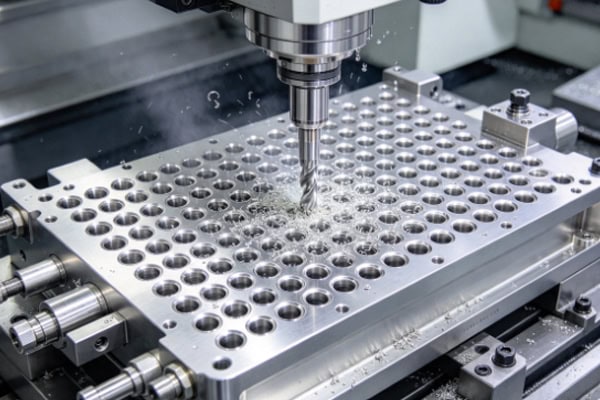
For heat exchangers with deep holes, intersecting flow channels, thin walls, and multiple interfaces, the equipment and process must match the component structure. If the machining team can analyze tool access, clamping positions, and machining sequences in advance, fewer process changes will be required during production.
- The ability to machine complex hole patterns and internal structures is important for custom non-standard heat exchangers.
- Proper clamping strategies help reduce deformation risks when machining thin-wall components.
- Machining parameters can be adjusted according to material characteristics rather than applying identical conditions to every material.
- A stable process transition from prototypes to batch production helps support ongoing manufacturing.
Inspection Capabilities Should Match the Required Component Accuracy
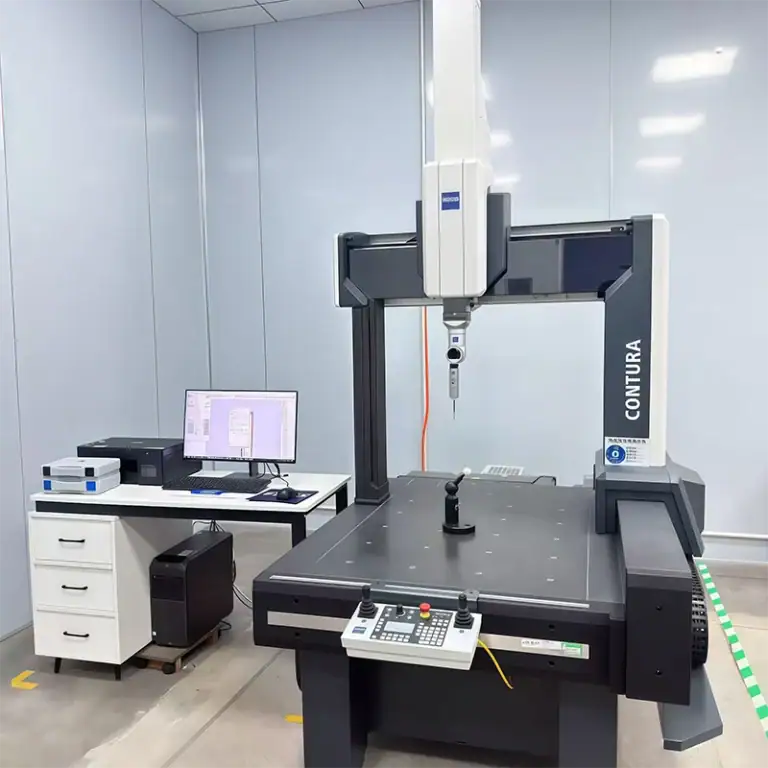
Heat exchanger inspection involves more than length, width, and height. Hole positions, flatness, sealing grooves, and internal structures also need attention. Whether the finished component can be inspected according to drawing requirements directly affects the final delivery condition. For industrial equipment components with tighter tolerances, a clear inspection process can help reduce repeated assembly adjustments.
For Ongoing Orders, Batch Consistency Matters Even More
When heat exchangers require long-term supply, procurement should not focus only on the first prototype. The ability to reuse validated machining programs, manage tool conditions, continuously monitor critical dimensions, and maintain similar results between batches all affect long-term production. For industrial equipment manufacturers, stable production and delivery are often more important than machining speed for a single order.
The main machining challenges of industrial equipment heat exchangers lie in internal flow channels, connection interfaces, sealing structures, and material-specific processing. CNC machining can be customized to different drawings and supports a smooth transition from prototypes to batch production. Planning machining processes, critical dimensional inspection, deburring, and cleaning in advance can reduce assembly adjustments and rework while helping components enter industrial equipment production in a more stable condition. TIRAPID provides CNC machining services for industrial equipment heat exchangers, with customized processing based on different materials, structures, and precision requirements.