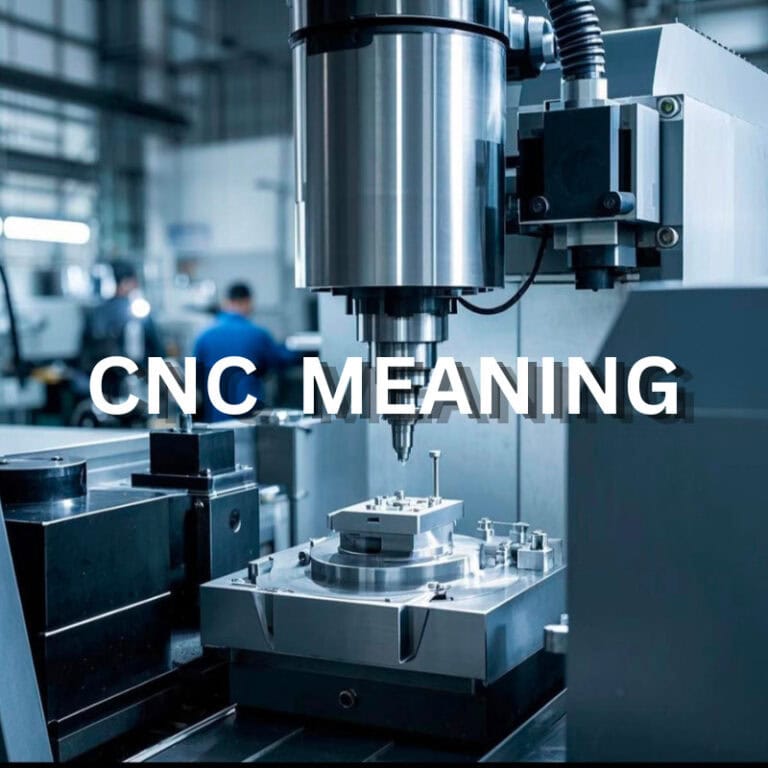
New energy vehicle batteries, motors, electronic control systems, charging modules, and high-voltage power distribution units rely on numerous connectors to transmit electrical power and signals. Although connectors are relatively small components, their dimensional accuracy, hole position relationships, contact positions, surface condition, and assembly stability can all affect the performance of the entire connection structure. As new energy vehicles develop toward higher voltage, higher power, and more compact designs, the machining requirements for connector components are also increasing.
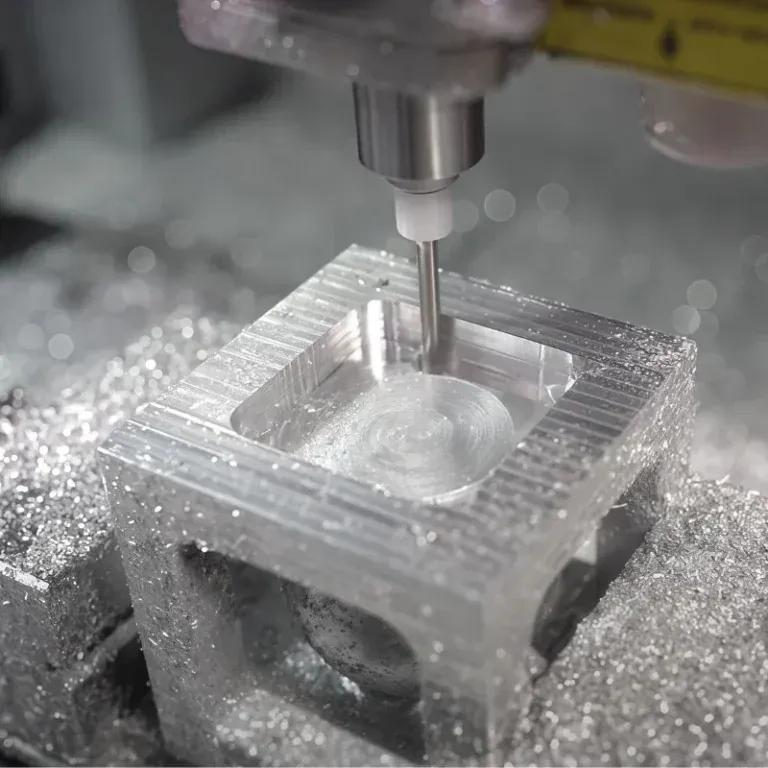
CNC machining can directly cut metal materials according to 3D drawings and can be used to manufacture customized components such as terminals, connector housings, positioning sleeves, contacts, fasteners, shielding structures, and mounting bases for new energy vehicle connectors. For prototypes requiring rapid validation during the R&D stage, small-batch trial-production parts, and high-volume components entering the production stage, CNC machining can reduce tooling investment while maintaining relatively stable dimensional consistency through CNC equipment. TiRapid provides CNC turning, CNC milling, 5-axis CNC machining, micro machining, and other services, with machining solutions developed according to part structure, material, and quantity.
Connector Structure and CNC Machining Requirements
What CNC Machined Parts Are Used in New Energy Vehicle Connectors?
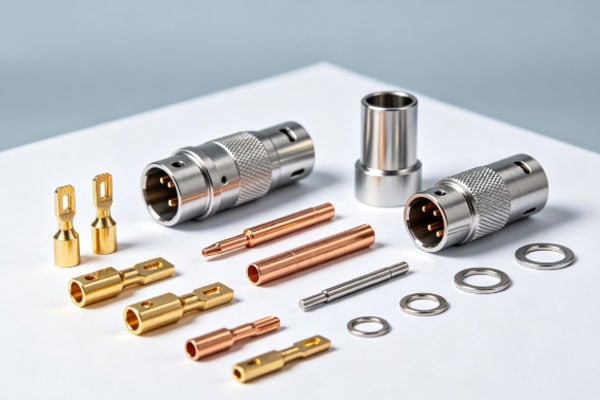
New energy vehicle connectors usually contain multiple components that require precision fitting. Although connector structures vary, common machined components can be classified as follows:
| Part TypeCommon Machined StructuresKey Machining ConsiderationsTypical Applications | |||
| Connector Housing | Holes, slots, mounting surfaces, threaded holes | Dimensions, hole positions, flatness | Battery packs, electronic control systems |
| Contact Terminal | Outer diameter, grooves, steps, holes | Dimensions, concentricity, burrs | High-voltage connectors |
| Positioning Sleeve | Inner hole, outer diameter, grooves | Mating dimensions, roundness | Connector positioning |
| Fastener | Threads, counterbores, mounting holes | Thread accuracy, hole spacing | Wiring harness and module fastening |
| Shielding Component | Thin walls, slots, mounting holes | Wall thickness, deformation control | Electromagnetic shielding structures |
| Sensor Interface Component | Small holes, threads, positioning structures | Small-size machining | Battery and electronic control sensors |
These components usually need to be assembled with plastic parts, seals, terminals, or other metal components. Therefore, machining cannot focus only on individual dimensions. The positional relationships between different features also need to be inspected.
Why Do Connectors Require High Machining Accuracy?
Connectors are responsible for electrical power or signal transmission, and their internal components typically have defined assembly relationships. If the terminal dimensions have excessive deviations, the insertion and extraction force may change. If the positioning hole is offset, assembly difficulties may occur. If obvious burrs remain around holes or edges, they may affect insertion, sealing, or subsequent assembly. Connector components are generally small in size but contain highly concentrated structural details. A small component may contain an outer diameter, inner hole, groove, step, thread, and side hole at the same time. The machining equipment needs to control multiple dimensions within a limited space, so programming, tool selection, workholding methods, and inspection procedures all require advance planning.
Which Production Stages Are Suitable for CNC Machining?
New energy vehicle projects typically go through design validation, prototype testing, small-batch trial production, and mass production. Different stages have different machining requirements. During the R&D stage, speed and design validation are more important. CNC can produce prototypes directly from 3D drawings, making it easier for engineers to verify dimensions, assembly, and structure. During the small-batch stage, stable CNC machining processes can reduce tooling investment while allowing design adjustments based on test results. Once production becomes stable, machining cycle time, tool life, and inspection processes can be further optimized to maintain consistent batch quality. This prototype-to-production service model is also an important part of TiRapid’s existing manufacturing services. The official website provides support for prototypes, small batches, and large-scale manufacturing.
CNC Machining Process for New Energy Vehicle Connectors
Start with Drawing Analysis to Determine the Machining Method
Connector components are not simply placed on a machine immediately after receiving the drawings. Engineers need to review the part dimensions, material, hole positions, threads, grooves, chamfers, and surface treatment requirements before determining whether CNC turning, milling, 5-axis machining, or combined machining is appropriate. For example, cylindrical terminals are generally more suitable for turning. Housings with multiple mounting surfaces and side holes are more suitable for CNC milling. If a part contains multiple complex inclined surfaces that require machining from different directions, 5-axis machining can be considered to reduce repeated workholding. TiRapid provides CNC turning, CNC milling, and 5-axis machining capabilities and can select the corresponding production method according to the part structure.
Material Selection Affects the Machining Solution
Common machining materials for new energy vehicle connectors include aluminum alloys, copper and copper alloys, and stainless steel. Different materials vary in electrical conductivity, strength, corrosion resistance, and machinability. Copper and copper alloys are commonly used in connection structures requiring good electrical conductivity. Brass, phosphor bronze, and other materials are also commonly used for connector components. Aluminum alloys offer advantages such as low weight and relatively high machining efficiency and can be used for certain housings and structural components. Stainless steel is suitable for parts requiring higher strength and corrosion resistance.
| MaterialCommon CharacteristicsSuitable Connector Parts | ||
| Brass | Good electrical conductivity and machinability | Terminals, contacts |
| Copper Alloys | Good electrical conductivity | Conductive connection components |
| Aluminum Alloys | Lightweight, easy to machine | Housings, mounting components |
| Stainless Steel | Good strength and corrosion resistance | Fasteners, structural components |
| Engineering Plastics | Insulating, lightweight | Some non-conductive structures |
After the material is determined, surface treatment also needs to be considered. Some connector metal components require electroplating, passivation, anodizing, or other post-processing. Therefore, machining dimensions cannot simply follow the final drawing dimensions without consideration. Appropriate allowances for surface treatment may also need to be reserved.
Finishing and Burr Removal
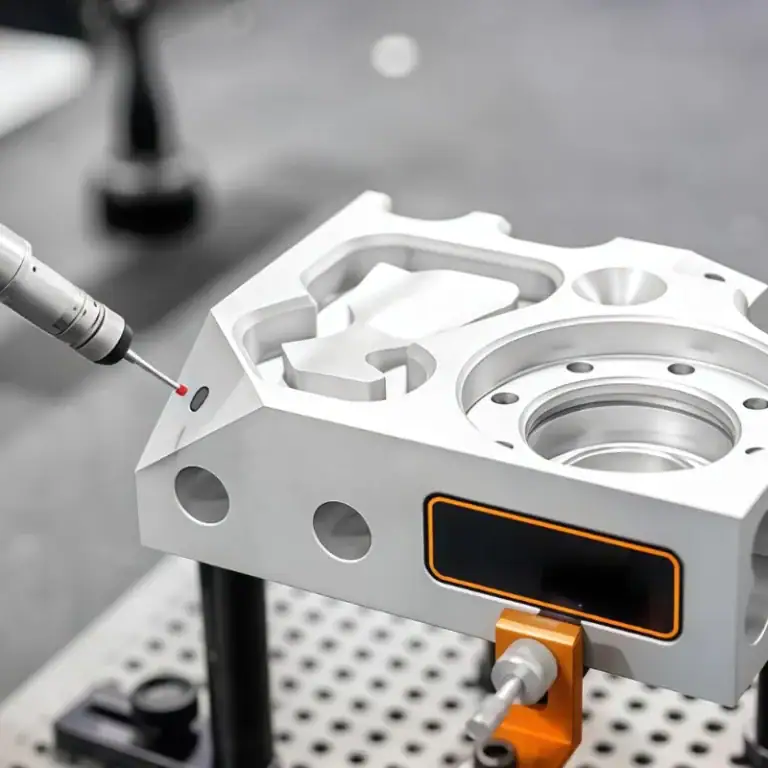
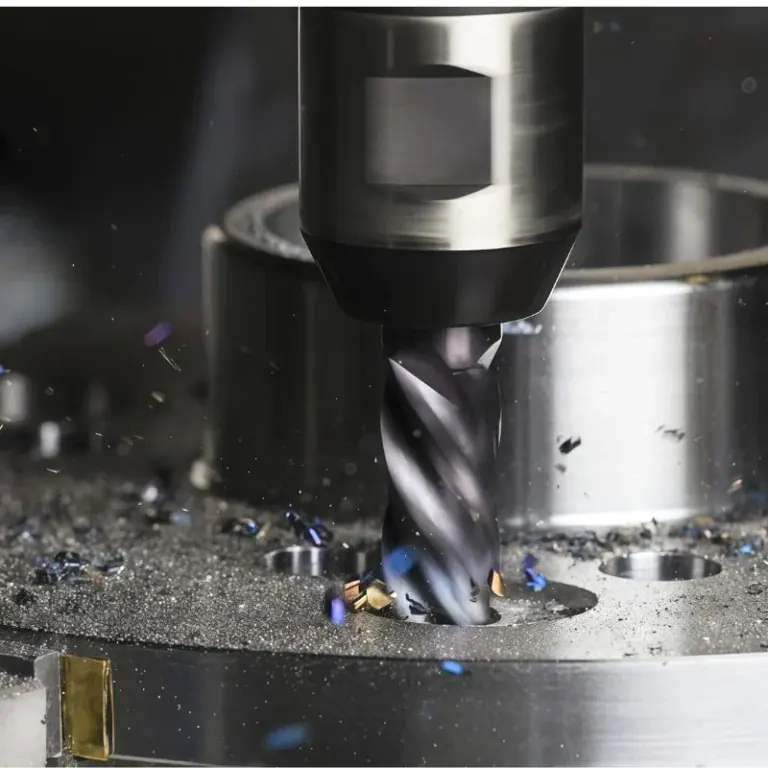
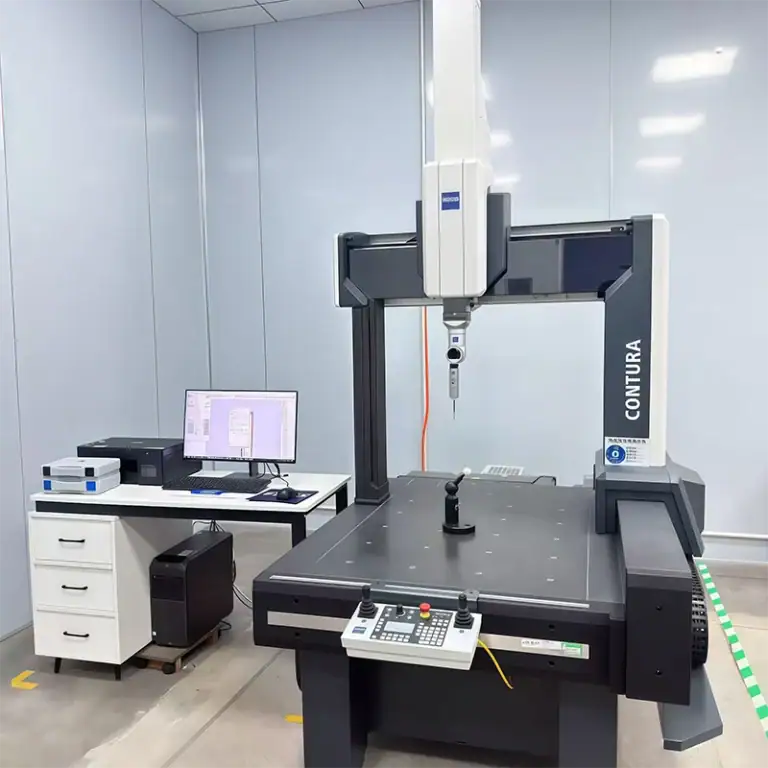
Holes, grooves, threads, and edges require particular attention during connector machining. Rough machining is mainly used to remove material efficiently, while finishing is responsible for achieving critical dimensions. For inner holes, mating surfaces, and positioning structures, more stable machining parameters are required to reduce dimensional variation. Burrs are also a key factor that needs to be controlled during connector machining. Connector components frequently come into contact during insertion and connection. If obvious burrs remain around holes or edges, they may affect assembly and potentially damage adjacent components. Therefore, after CNC machining, deburring, chamfering, and cleaning should be performed according to the part structure. For high-precision connector components, some industry suppliers use CMM and optical inspection to check critical dimensions and provide inspection records according to project requirements.
TiRapid New Energy Vehicle Connector Machining Solution
Precision CNC Machining for Small Terminals
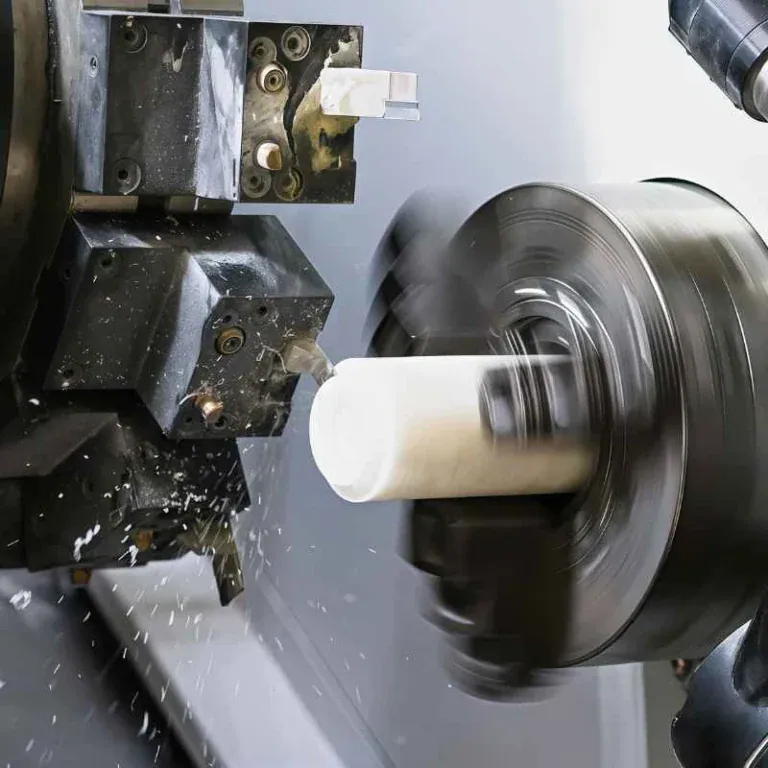
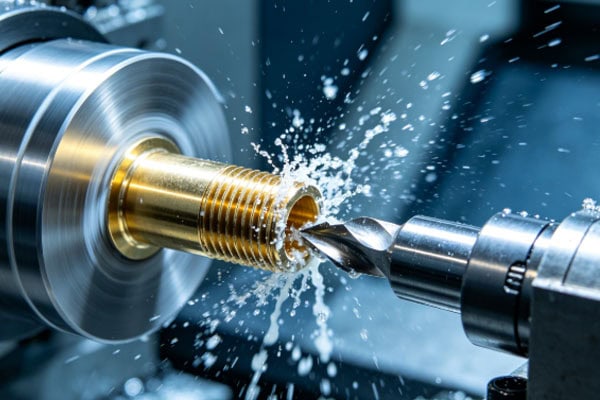
Terminals are among the key components in connectors and usually have small diameters and numerous detailed features. Machining requires careful control of the outer diameter, inner hole, steps, grooves, and end geometry. For cylindrical terminals, CNC turning can be used to complete the outer diameter, end face, grooves, holes, threads, and other features. If the component contains side holes or complex surfaces, additional milling operations can be used to complete the remaining structures. Reducing unnecessary repeated workholding can minimize positional deviations between different operations.
CNC Milling or 5-Axis Machining for Connector Housings
New energy vehicle connector housings generally require mounting holes, positioning holes, slots, steps, and connection surfaces. Although the housing may be relatively small, accurate positional relationships must be maintained between multiple holes. Conventional structures can be completed through 3-axis or 4-axis CNC milling. For parts with complex inclined surfaces, curved surfaces, and multi-directional holes, 5-axis machining can reduce the number of workholding operations. TiRapid currently provides 5-axis CNC machining services for multi-face machining of complex components.
Adjust the Production Method According to Quantity
CNC machining is not limited to single-piece prototypes. Different quantities can be handled through different production arrangements.
| Project StageRecommended Production MethodMain Objective | ||
| Design Validation | Rapid CNC machining | Obtain physical parts quickly |
| Prototype Testing | Precision CNC machining | Verify assembly and dimensions |
| Small Batch | Stable CNC process | Control cost and lead time |
| Mass Production | Optimized machining programs | Maintain batch consistency |
| Structural Modifications | Rapid remachining | Shorten modification cycles |
For new energy vehicle components that require frequent design adjustments, CNC machining can reduce the time costs associated with mold modifications. The TiRapid website provides rapid quoting, DFM design evaluation, and manufacturing support from prototypes to production, helping connect engineering evaluation with machining production.
Reduce Machining Problems in Advance Through DFM
Some designs in connector drawings may appear simple but can cause problems during machining, such as inaccessible tool paths, excessively narrow grooves, insufficient wall thickness, difficult deep-hole machining, or unstable workholding. TiRapid can perform DFM checks before production and provide modification suggestions according to the part structure, material, and machining method. For components requiring electroplating or other surface treatments, dimensional allowances can also be confirmed in advance to reduce the risk of assembly dimensional changes after machining.
Quality Control and Project Delivery
Focus on Inspecting Critical Dimensions
New energy vehicle connector components do not necessarily require the same control requirements for every dimension. Hole diameters, shaft diameters, hole spacing, threads, positioning surfaces, and contact areas that directly affect assembly should be treated as critical dimensions and inspected carefully. Dimensional variations can be controlled progressively through first article inspection, in-process inspection, and final inspection. For small components, attention should also be paid to cleaning and handling to prevent deformation or surface damage caused by collisions after machining.
Inspection Results Need to Correspond to the Drawings
Connector project inspection is not simply about determining whether a component is “qualified” or “unqualified.” More importantly, inspection results need to correspond to the engineering drawings. Depending on project requirements, critical dimensions can be inspected using calipers, micrometers, height gauges, pin gauges, thread gauges, CMMs, and other inspection equipment. The TiRapid website demonstrates CMM inspection capabilities and integrates machining, surface treatment, and inspection into its complete manufacturing services.
Maintain Machining Stability from Prototypes to Mass Production
Stable mass production requires coordinated control of processes, equipment, and inspection. Before mass production, TiRapid completes program verification, tool parameter confirmation, and workholding optimization. First article inspection, in-process sampling inspection, and final inspection are then used to monitor critical dimensions. Maintaining consistent equipment parameters, machining procedures, and quality standards during production, while replacing worn tools in a timely manner, helps reduce batch-to-batch variation and ensures stable dimensional accuracy and assembly consistency for new energy vehicle connector components during high-volume production.
Frequently Asked Questions
Are New Energy Vehicle Connectors Suitable for CNC Machining?
Yes. CNC machining is particularly suitable for prototypes, small-batch, high-precision metal connector components, and customized parts with complex structures. CNC can produce parts directly according to drawings without first manufacturing complex molds. For projects requiring rapid verification of dimensions and assembly relationships, CNC generally offers good flexibility.
What Materials Can Be Used for CNC Machined Connector Terminals?
Common materials include brass, copper alloys, aluminum alloys, and stainless steel. The specific material should be determined according to electrical conductivity, mechanical strength, corrosion resistance, surface treatment, and the actual operating environment.
Can CNC Machine Very Small Connector Components?
Yes. Connector components such as terminals, positioning parts, and small sleeves may have relatively small dimensions. Suitable machining equipment and tools need to be selected according to the part diameter, length, structural complexity, and precision requirements. For micro components, workholding and inspection are equally important.
Can I Get a Quote with Only a 3D Drawing and No Formal Engineering Drawing?
Yes. A 3D CAD file can be provided for an initial evaluation. If the project involves critical dimensions, material, surface treatment, or special inspection requirements, providing an engineering drawing will make it easier to confirm the final quotation and production requirements. The TiRapid website supports uploading 3D CAD files to obtain quotations and DFM recommendations.
Although new energy vehicle connectors may not be particularly large, their requirements for dimensional accuracy, assembly, and operational stability are significant. A hole position deviation, an improperly removed burr, or an unstable terminal dimension can all create difficulties during subsequent assembly. Therefore, when selecting a CNC machining supplier, it is important to evaluate more than the machining price of an individual component. It is also necessary to determine whether the supplier can understand engineering drawings, provide DFM recommendations, select suitable processes according to the material, and smoothly transition from prototypes to mass production.
TiRapid can arrange CNC turning, CNC milling, 5-axis machining, and micro machining according to connector structure, material, quantity, and lead time, together with inspection and surface treatment services. Whether the project involves a new design requiring validation or a small-batch order with a finalized structure, evaluation can begin with the drawings and project requirements. If you are developing new energy vehicle high-voltage connectors, charging connectors, battery connectors, or other automotive electrical connection components, you can send the 3D drawings, engineering drawings, material specifications, and required quantity to TiRapid for evaluation. After the machining process is confirmed through preliminary communication, the project can proceed to formal quotation and production, helping reduce subsequent modifications and rework.
Email Address: projects@tirapid.com
Phone Number: +86 760 8999 8536