Industrial robots, collaborative robots, mobile robots, and automated robotic arms are increasingly used in manufacturing, assembly, material handling, inspection, and smart warehousing. During long-term operation, robot housings and frames not only protect internal controllers, motors, reducers, wiring, and other components but also provide stable structural support. As robots continue to develop toward lightweight construction, high rigidity, compact designs, and higher positioning accuracy, the manufacturing requirements for housings and frames are becoming increasingly demanding.
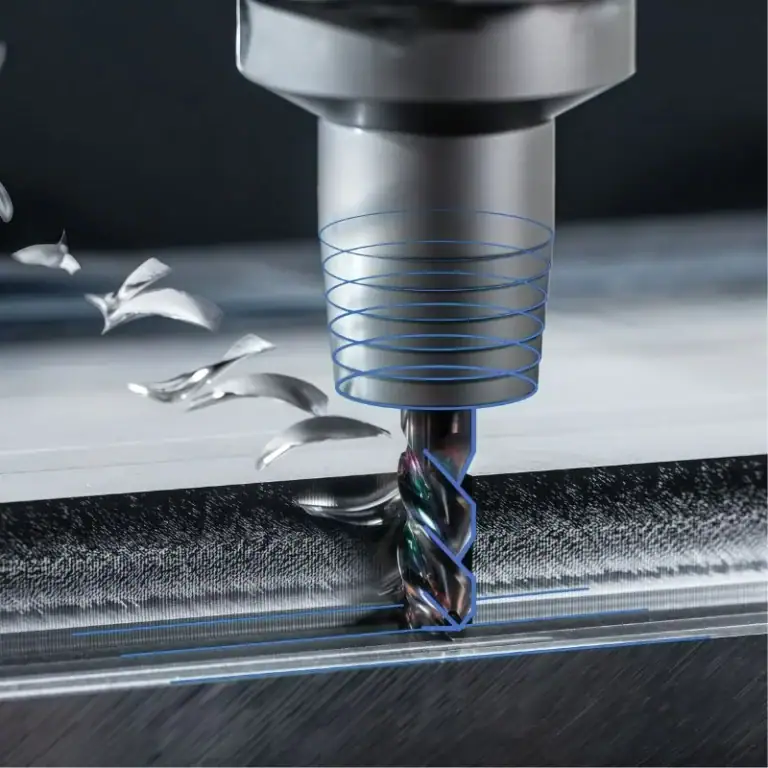
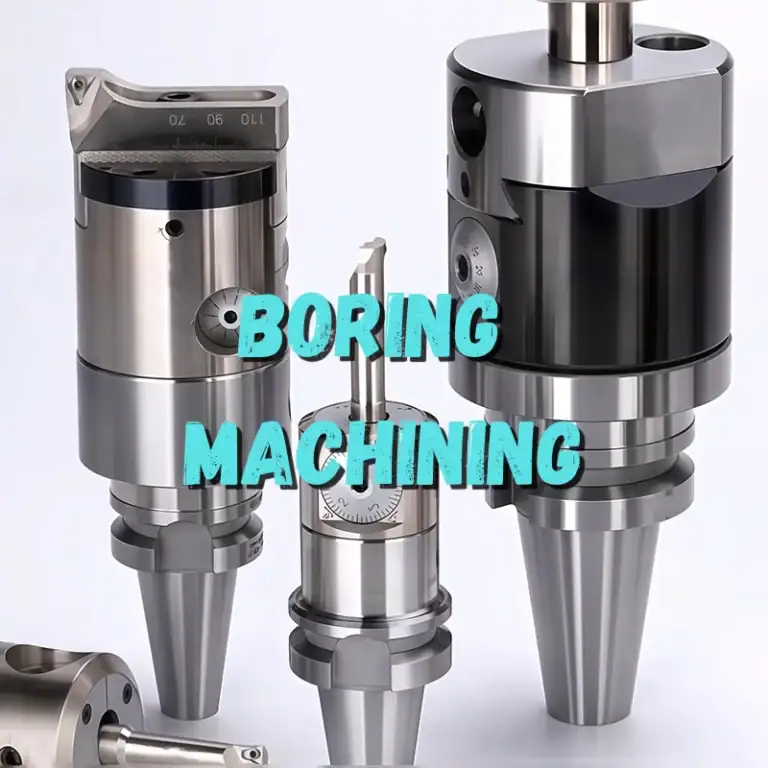
CNC precision machining can manufacture robot bases, robotic arm housings, joint covers, control enclosures, mobile robot chassis, and modular mounting frames according to 3D models and engineering drawings. Milling, drilling, tapping, boring, and precision finishing can be combined to produce complex structures. Depending on the robot application, materials such as aluminum alloy, stainless steel, carbon steel, and engineering plastics can be selected. Surface treatments such as anodizing, sandblasting, and coating can also be applied to achieve a suitable combination of dimensional accuracy, structural strength, weight control, corrosion resistance, and appearance quality.
CNC Machining Technology and Manufacturing Advantages for Robot Housings and Frames
Robot housings and frames generally need to meet protection, load-bearing, positioning, and assembly requirements at the same time. Robotic arm housings and joint enclosures are particularly demanding because their internal spaces are limited while they need to accommodate motors, reducers, encoders, cables, and control components. This often results in complex cavities, mounting holes, positioning surfaces, and cable-routing channels.
CNC machining uses programmed tool movements to reproduce complex three-dimensional structures with high consistency. By reducing manual machining operations, CNC manufacturing can also improve consistency during batch production, helping robot housings and frames maintain accurate assembly relationships with internal modules.
Precision CNC Machining Processes for Robot Housings and Frames
The machining process for robot housings should be determined according to component dimensions, material properties, and structural complexity. Aluminum alloy housings can be processed with high-speed milling to efficiently create external profiles and internal cavities, followed by finishing operations on mounting surfaces, interfaces, and positioning features. For thick-wall load-bearing frames, roughing and finishing operations can be combined to control machining allowances and minimize the influence of material stress on final dimensions.
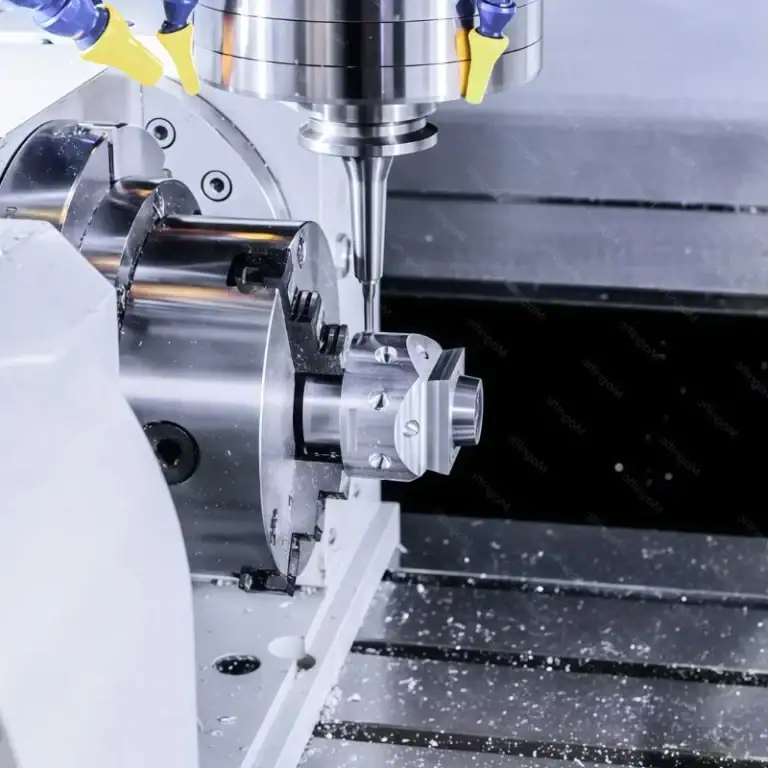
For structures used to install bearings, reducers, or motors, the dimensional accuracy of mounting holes, shaft bores, and mating surfaces requires careful control. For robot frames containing multiple groups of connection holes, hole spacing and positional relationships must remain consistent to ensure reliable module assembly. Complex housings can also be produced with multi-axis CNC machining, allowing structures on different surfaces to be completed with fewer clamping operations and improving overall machining consistency.
CNC Machining Workflow for Robot Housings and Frames
Robot structural components require a complete manufacturing workflow from design file verification to final inspection. Every stage should maintain consistent dimensional references. A well-planned process reduces repeated positioning and provides more stable machining results for critical structures.
- Engineering Drawing and Model Verification: Confirm external dimensions, wall thickness, hole locations, threads, assembly datums, geometric tolerances, and surface treatment requirements.
- Material Preparation: Prepare suitable plates or metal blanks according to structural strength, weight, operating environment, and machining requirements.
- Datum Setup and Workholding: Select reliable positioning surfaces according to design datums and secure the workpiece with appropriate fixtures.
- Rough Machining: Remove material efficiently to create the main profile, cavities, steps, and frame structures.
- Precision Machining: Finish critical mounting surfaces, shaft bores, positioning holes, connection holes, and precision profiles.
- Hole and Thread Machining: Use drilling, reaming, boring, and tapping processes to produce accurate module mounting structures.
- Deburring and Surface Treatment: Remove sharp edges and machining burrs before applying anodizing, sandblasting, coating, or other treatments as required.
- Dimensional Inspection and Packaging: Inspect critical dimensions and geometric tolerances while protecting the finished components against impact and scratches during transportation.
A stable manufacturing workflow helps maintain dimensional consistency from raw material to finished robot components while supporting efficient downstream assembly and batch production.
Common Materials and Performance of Robot Housings and Frames
Robot structural components require material selection based on load capacity, movement speed, operating environment, and weight requirements. Different materials provide different combinations of strength, weight, machinability, and corrosion resistance.
| Material | Main Performance | Typical Robot Components | Suitable Requirements |
| 6061 Aluminum Alloy | Lightweight, easy to machine, moderate strength | Housings, brackets, frames | Lightweight robots |
| 7075 Aluminum Alloy | High strength and low weight | Robotic arm structures, load-bearing parts | High-rigidity structures |
| Stainless Steel | High strength and corrosion resistance | Housings, bases, connection parts | Humid and harsh environments |
| Carbon Steel | Good rigidity and moderate cost | Robot chassis, support frames | Heavy-duty equipment |
| Engineering Plastics | Electrical insulation and low weight | Protective covers, cable components | Insulation and lightweight structures |
Selecting materials according to the actual robot load and operating environment helps achieve a suitable balance between structural reliability and overall equipment weight.
Applications, Functions, and Performance of Robot Housings and Frames
The design of robot housings and frames varies according to robot type and operating task. Industrial robotic arms place greater emphasis on structural rigidity and joint protection, collaborative robots need to balance weight, appearance, and contact safety, while mobile robots require stable chassis structures and sufficient module mounting capacity. CNC custom machining can manufacture dedicated housings and frames according to specific equipment designs, creating accurate interfaces with motors, controllers, sensors, and actuators.
Housings for Industrial Robotic Arms and Collaborative Robots
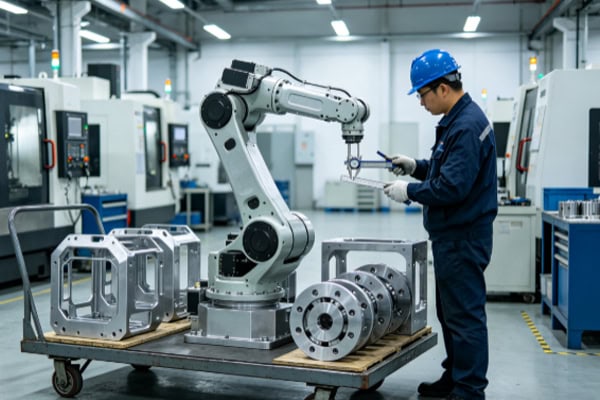
Industrial robotic arm housings are installed around joints and arm sections to protect internal motors, reducers, encoders, and cables. CNC machining can manufacture joint housings, arm-section covers, connection flanges, mounting bases, and internal support components.
These components generally require high dimensional consistency. Significant deviations in joint housing mounting holes or bearing seats can affect the installation condition of transmission components. Collaborative robot housings also require good surface quality and rounded-edge designs to improve user interaction and reduce issues associated with sharp structures.
CNC machining aluminum alloys can reduce component weight while maintaining sufficient structural strength, which can support robotic motion control and energy efficiency.
Frames for Mobile Robots, AGVs, and Automation Equipment
Mobile robots, AGVs, and AMRs generally require rigid chassis frames to support batteries, drive systems, controllers, sensors, and payload modules. CNC machining can manufacture chassis mounting plates, motor brackets, sensor supports, frame connectors, and modular mounting structures.
Mobile robots frequently accelerate, stop, and turn during operation, so their frames need suitable rigidity and vibration resistance. Mounting hole positions must accurately correspond to drive wheels, sensors, batteries, and other modules to minimize assembly deviations.
During mobile robot development, CNC machining can rapidly produce prototypes with different structural configurations, allowing engineering teams to verify chassis space, module installation, and component accessibility.
Functional and Performance Requirements for Robot Housings and Frames
Robot structural components need to meet key performance requirements according to their operating environment and equipment type. Proper dimensional control affects housing assembly as well as robotic motion accuracy and mobile equipment stability.
| Performance Indicator | Typical Requirement | Role in Robotic Equipment |
| Dimensional Accuracy | Controlled according to engineering drawing tolerances | Ensures accurate component assembly |
| Positional Accuracy | Controls holes and mounting datums | Improves module positioning |
| Structural Rigidity | Designed according to robot load | Reduces structural deformation |
| Weight Control | Determined according to moving component requirements | Reduces moving inertia |
| Surface Quality | Determined according to appearance and operating conditions | Improves durability |
| Corrosion Resistance | Selected according to material and surface treatment | Extends structural component service life |
| Vibration Stability | Designed according to operating conditions | Improves long-term reliability |
Robot housings and frames need a suitable balance between weight, strength, precision, and durability to support different robotic systems during long-term operation.
Custom CNC Machining and Quality Control for Robot Housings and Frames
Robots are available in different models, arm lengths, payload capacities, and mounting configurations, making it difficult for standardized components to satisfy every design requirement. CNC custom machining can manufacture components directly from 3D models, engineering drawings, or physical samples without requiring dedicated molds for every structure.
During the research and development stage, individual and small-batch prototypes can be produced quickly. After product validation, the same machining process can transition into batch production. This manufacturing method is suitable for robot manufacturers developing new products, modifying modules, and upgrading structural designs.
Methods for Improving Robot Structural Component Precision with CNC Machining
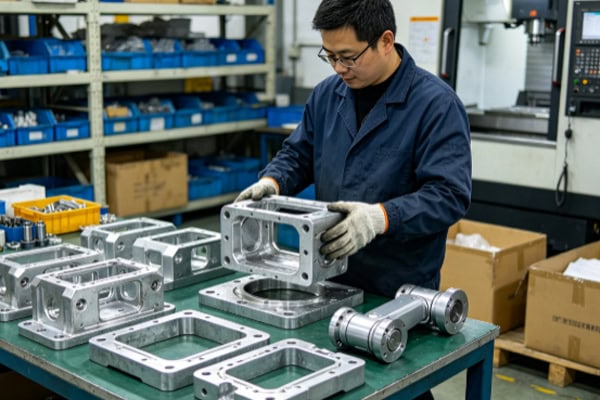
The accuracy of robot housings and frames can be affected by workholding methods, tool wear, machining sequences, and material stress. A stable machining datum should be established according to the component structure, while critical mounting areas should receive dedicated inspection requirements.
- Optimize Machining Datums: Use primary positioning surfaces from robot assembly as machining references whenever possible to reduce datum changes.
- Control Thin-Wall Deformation: Use suitable clamping methods and layered machining strategies for thin-wall housings to reduce deformation caused by fixture pressure.
- Optimize Roughing and Finishing: Leave an appropriate finishing allowance so critical dimensions can be completed under stable machining conditions.
- Control Shaft Bore Accuracy: Use precision boring or finishing milling for bearing seats, motor mounting holes, and other critical features.
- Maintain Hole-System Consistency: Use unified positioning methods for multi-hole structures to maintain stable positional relationships between mounting holes.
- Control Tool Wear: Inspect tool conditions according to material type and machining time to prevent dimensional changes caused by excessive wear.
- Perform First-Piece Inspection: Inspect the first completed component before batch production to confirm that the machining process meets design requirements.
- Conduct In-Process Inspection: Check critical dimensions after key operations and adjust machining parameters when necessary.
Stable process control can improve consistency between batches and help robot housings, frames, and internal modules achieve better assembly compatibility.
Surface Treatment and Application Methods for Robot Housings
After CNC machining, robot housings and frames can receive suitable surface treatments according to operating conditions and product design. Aluminum alloy structural components are commonly anodized to improve corrosion and wear resistance while providing the required appearance. Robot housings requiring specific visual effects can also undergo sandblasting, coating, or other finishing processes.
During robot installation, excessive fastening force should be avoided, especially when assembling thin-wall aluminum alloy housings, as excessive force may cause local deformation. Precision areas such as motor mounting bases and bearing seats should remain clean during assembly to prevent burrs and metal chips from affecting installation.
Outdoor mobile robots also require material and protective treatments suitable for rainwater, dust, humidity, and other environmental conditions.
During long-term robot operation, connection bolts, frame mounting points, and critical structural interfaces should be inspected periodically. If unusual vibration, collision damage, or structural looseness occurs, the corresponding components and fastening structures should be inspected promptly to prevent minor assembly problems from affecting overall equipment operation.
Quality Inspection and Custom Manufacturing Services for Robot Housings and Frames
Quality inspection for robot structural components can be established according to customer drawings and specific engineering requirements. Standard inspection items can include length, width, height, hole diameter, hole spacing, threads, flatness, perpendicularity, and critical mating dimensions. For high-precision components such as robotic arm joint housings and precision bases, coordinate measuring machines can be used to inspect spatial dimensions and geometric tolerances.
Custom CNC machining services can cover robot prototype development, small-batch production, medium-volume orders, and long-term volume supply. Before production, 3D models, engineering drawings, and material requirements are reviewed to establish critical assembly datums. First-piece inspection and in-process sampling can then be performed during production, followed by final verification of dimensions, appearance, and surface treatment quality.
For robot manufacturers, dedicated machining programs and quality records can also be established for different robot models, allowing repeat orders to enter production more efficiently. With stable CNC manufacturing capabilities, robot housings and frames can achieve a better balance between dimensional accuracy, structural strength, weight control, and assembly consistency, providing reliable precision structural components for industrial robotic arms, collaborative robots, AGVs, AMRs, and other automated equipment.