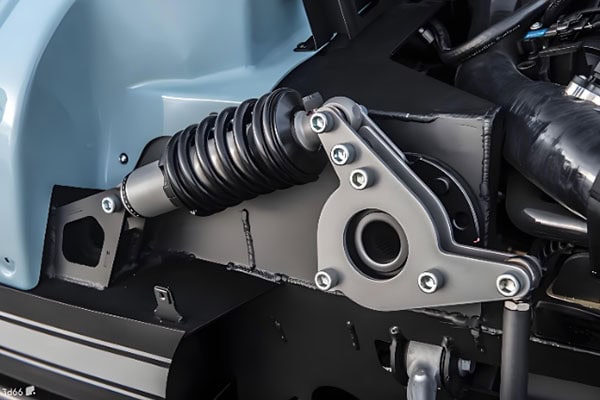
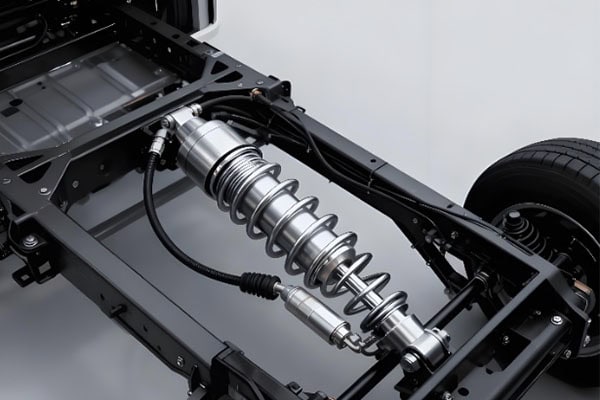
Off-road vehicles frequently operate on gravel roads, muddy terrain, mountain trails, and other challenging surfaces. Their suspension systems must withstand repeated impacts, vibration, and high dynamic loads. Components such as control arms, steering knuckles, shock absorber mounts, suspension links, wheel hubs, and bushings directly affect vehicle stability and handling performance. Compared with conventional structural parts, off-road suspension components require higher standards for material strength, dimensional accuracy, hole positioning, and assembly consistency. CNC precision machining can provide customized manufacturing solutions based on the structure and material of each suspension component, supporting the production of reliable parts for ATVs, UTVs, and other powersports vehicles.
Get 20% offf
Your First Order
Need custom metal and plastic parts?
Machining Requirements for Off-Road Vehicle Suspension Components
Complex Structures and High-Precision Hole Positioning
Off-road suspension components typically feature mounting holes, bearing bores, threaded holes, positioning surfaces, and curved structures. The distance and relative position between holes directly affect the assembly of suspension components. Significant deviations in hole positioning can make assembly difficult or affect the fit between moving components. Therefore, stable machining references and precise control of critical hole positions are essential during CNC machining.
Balancing Strength and Lightweight Design
Suspension components must withstand impact loads while keeping unsprung weight as low as possible. Aluminum alloys are suitable for lightweight control arms, brackets, and mounting components, while steel can be used for suspension parts requiring higher strength and wear resistance. Selecting the appropriate material according to the component’s operating conditions helps achieve a reasonable balance between structural strength and weight.
Surface Quality and Corrosion Resistance
Off-road vehicles are frequently exposed to mud, water, dust, and other harsh environments, making suspension components susceptible to corrosion and wear. After CNC machining, surface treatments such as anodizing, sandblasting, and passivation can be selected according to the material and application requirements to improve surface quality and environmental resistance.
CNC Machining Solutions for Off-Road Suspension Components
CNC Milling for Suspension Structural Components
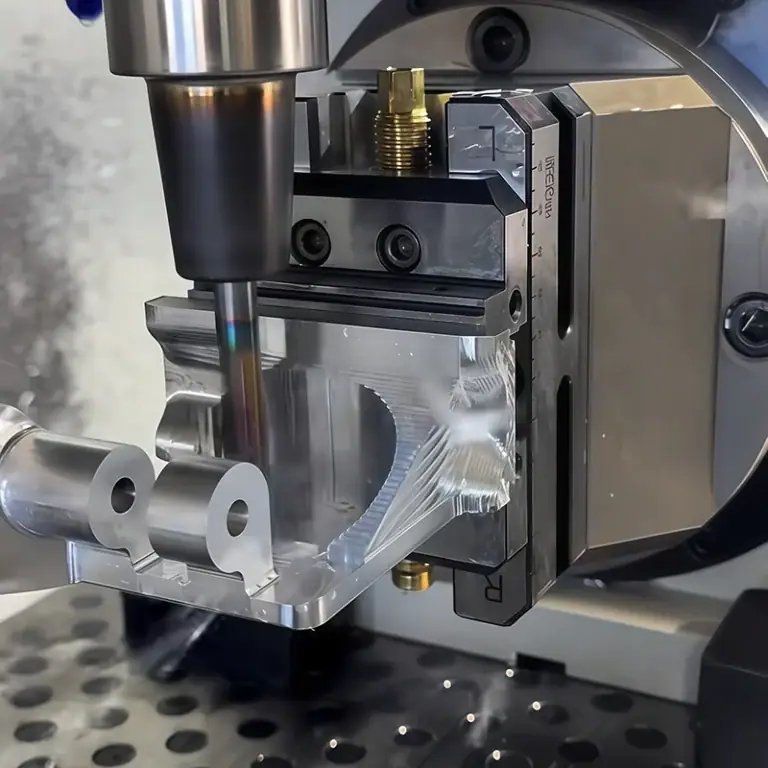
Control arms, shock absorber mounts, steering knuckles, and suspension mounting brackets typically have complex profiles and multiple mounting holes, making them suitable for CNC milling. Optimized toolpaths can be used to machine planes, curved surfaces, holes, grooves, chamfers, and other structural features.
CNC Turning for Shafts and Bushings
Suspension components such as pivot pins, bushings, and spacers usually have rotational geometries and can be manufactured using CNC turning. Features including external diameters, internal bores, end faces, grooves, and threads can be machined precisely to improve dimensional consistency.
5-Axis CNC Machining for Complex Components
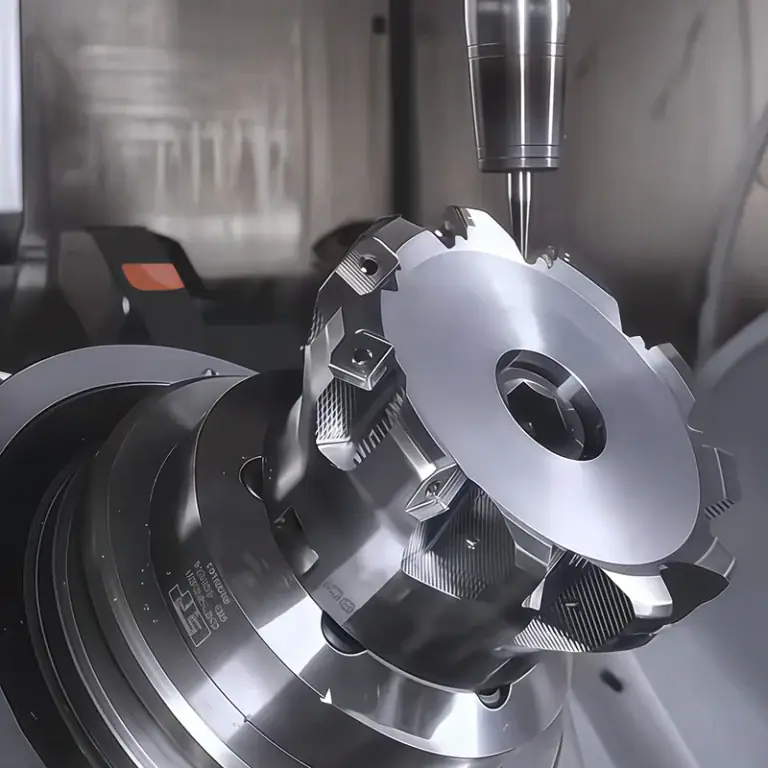
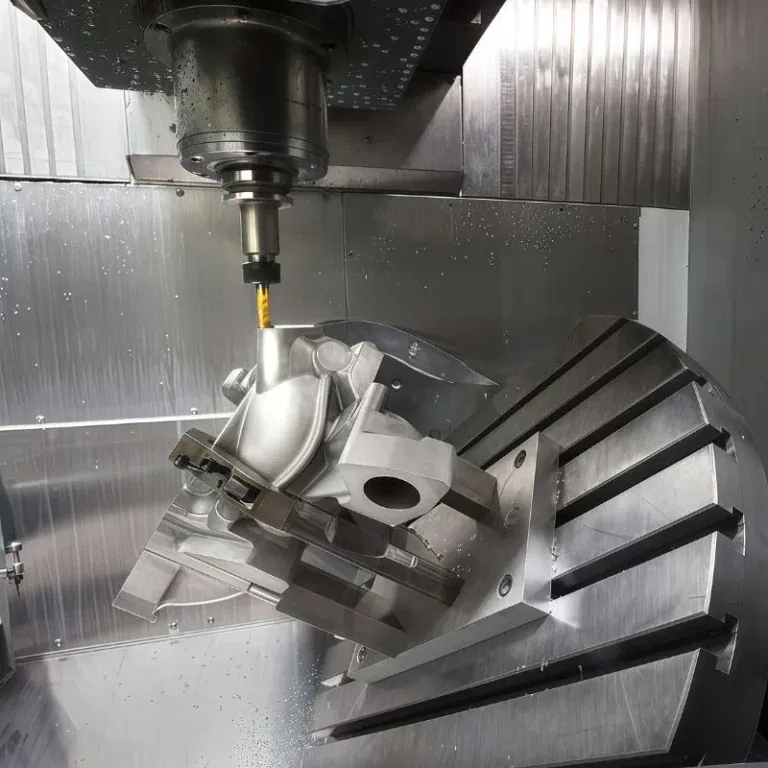
Some off-road suspension components feature inclined surfaces, complex curves, and multi-directional machining features. 5-axis CNC machining can reduce the number of setups required and allow cutting tools to approach machining areas from more suitable angles, helping improve machining efficiency and positioning accuracy for complex parts.
Common Off-Road Suspension Components and Machining Requirements
CNC Machining Process for Off-Road Suspension Components
Drawing Review and DFM Analysis
Before machining, 3D models and 2D engineering drawings should be reviewed to evaluate wall thickness, hole diameters, chamfers, radii, machining references, and tool accessibility. For complex suspension components, proper Design for Manufacturing (DFM) analysis can identify potential machining challenges in advance and help optimize the manufacturing process.
Material Preparation and Precision Machining
Aluminum alloys, steel, and other engineering materials can be selected according to the load requirements of each component. CNC milling, CNC turning, or 5-axis machining can then be selected according to the component’s geometry. Appropriate machining allowances and finishing operations should be planned for critical mating areas.
Dimensional Inspection and Quality Control
After machining, critical parameters such as bore diameter, hole spacing, overall dimensions, flatness, concentricity, and positional accuracy should be inspected. For suspension components with demanding tolerance requirements, coordinate measuring machines (CMM) can be used to verify dimensional accuracy against engineering drawings.
How to Improve the Efficiency of Off-Road Suspension Component Machining
Off-road vehicle components often involve multiple product configurations, complex geometries, and customized manufacturing requirements. Machining efficiency can be improved by reducing the number of setups, optimizing toolpaths, and selecting appropriate machining references.
For complex control arms and steering knuckles, multi-axis machining can reduce repeated repositioning. For pivot pins and bushings, CNC turning provides an efficient method for machining rotational features. For small-batch production, standardized fixtures and machining programs can also help reduce setup and changeover time while controlling manufacturing costs.
TiRapid CNC Machining Solution for Off-Road Suspension Components
TiRapid provides CNC milling, CNC turning, 5-axis CNC machining, and precision machining services. These capabilities can be matched to the material, geometry, tolerance requirements, and production volume of off-road suspension components. From product prototypes and small-batch production to larger-volume manufacturing, an appropriate CNC machining solution can help manufacturers shorten development cycles and improve dimensional consistency.
For control arms, steering knuckles, shock absorber mounts, pivot pins, bushings, wheel hubs, and other components used in ATVs, UTVs, off-road motorcycles, and other powersports vehicles, professional CNC precision machining can meet manufacturing requirements for complex geometries, precise hole positioning, and reliable assembly, providing dependable component manufacturing support for off-road suspension systems.
Author
Galen Director and Founder
Committed to ensuring we provide the best possible service in the manufacturing industry.
Grinding is a precision machining process that removes material from a workpiece using a rotating abrasive wheel. Unlike conventional cutting tools, which remove material with defined cutting edges, grinding uses
A bracket may need a curved edge to clear an adjacent component. A housing may require an accurately shaped internal wall, while a mold needs a continuous surface that defines
The main spindle is one of the most important assemblies in a CNC machine. It provides the rotational motion required for cutting, holds either the cutting tool or the workpiece,
Guide pins are simple components, but they play a critical role in mold alignment, repeatable positioning, and long-term tooling stability. In injection molds, die sets, fixtures, and precision assemblies, a
CNC Part Manufacturing: Process, Quality & Design Guide CNC parts are used across aerospace, medical equipment, robotics, automotive systems, electronics, and industrial machinery because CNC machining can produce complex components
Two parts made from the same material can have very different milling prices. One may fit a standard vise and run with common tools. The other may need several setups,
Multiaxis machining is a CNC manufacturing process that allows the cutting tool, workpiece, or both to move across multiple controlled axes during machining. Instead of only cutting from one fixed
A precise toolpath is only useful when the workpiece stays where it belongs. If a part shifts, lifts, or bends during cutting, even a carefully programmed CNC machine can produce
Machining allowance is the extra material intentionally left on a workpiece before final machining. In CNC machining, this extra stock gives machinists enough material to remove surface defects, correct minor
Plain milling is a milling process used to machine broad, flat surfaces by removing material with the peripheral cutting edges of a rotating cutter. It is commonly performed on a
Glass filled nylon is a reinforced engineering plastic that combines the versatility of nylon with the strength and stiffness of glass fibers. Compared with unfilled nylon, it offers better resistance
Tensile stress is the internal force per unit area produced when a material is pulled by an external load. It is calculated by dividing the applied tensile force by the