Bronze and brass are both copper-based alloys, but they are not the same material. Bronze is usually made from copper and tin, while brass is mainly made from copper and zinc. This composition difference gives each alloy different color, strength, corrosion resistance, machinability, cost, and application performance.
In this guide, we compare bronze vs brass by composition, properties, appearance, advantages, disadvantages, CNC machining behavior, and common applications.
What Is Bronze?
Bronze is a copper-based alloy that is usually made by combining copper with tin and sometimes other elements such as phosphorus, aluminum, silicon, manganese, or nickel. It is known for good strength, wear resistance, corrosion resistance, and low-friction performance.
What Is Bronze Made Of?
Bronze is mainly made of copper and tin. In many industrial grades, other elements such as phosphorus, aluminum, silicon, lead, manganese, or nickel may be added to improve strength, corrosion resistance, wear behavior, or casting performance.
The exact bronze composition depends on the grade and application. For example, phosphor bronze contains copper, tin, and phosphorus, which improves fatigue resistance and spring properties. Aluminum bronze contains aluminum and is often selected for higher strength and marine corrosion resistance.
This is why bronze should always be selected by alloy grade rather than by name only. A decorative bronze part, a bearing bronze sleeve, and a marine aluminum bronze component may all be called bronze, but their composition and performance can be very different.
Common Types Of Bronze
Common types of bronze include tin bronze, phosphor bronze, aluminum bronze, silicon bronze, manganese bronze, and leaded bearing bronze. Each type is designed for different performance requirements.
Tin bronze is widely used for general wear resistance and corrosion resistance. Phosphor bronze is common in springs, electrical contacts, and precision components because it provides fatigue resistance and good dimensional stability. Aluminum bronze is often selected for higher strength and seawater resistance.
Leaded bearing bronze and other bearing bronzes are used where low friction and sliding performance matter. These alloys are common in bushings, bearings, wear plates, sleeves, and heavy-duty mechanical components.
What Is Brass?
Brass is a copper-based alloy that is mainly made by combining copper with zinc. It is known for good machinability, attractive yellow-gold color, corrosion resistance, electrical conductivity, and easy forming behavior.
What Is Brass Made Of?
Brass is mainly made of copper and zinc. The copper-to-zinc ratio changes the color, strength, ductility, corrosion behavior, and machinability of the final alloy.
Some brass grades also contain small amounts of lead, tin, iron, aluminum, manganese, or silicon. Leaded brass improves machinability, while tin brass or aluminum brass may improve corrosion resistance in selected environments.
Because brass composition can vary widely, engineers should check the exact grade before production. Cartridge brass, naval brass, free-cutting brass, red brass, and dezincification-resistant brass are all brass alloys, but they are used for different requirements.
Common Types Of Brass
Common types of brass include cartridge brass, free-cutting brass, naval brass, red brass, yellow brass, leaded brass, and dezincification-resistant brass. Each type is designed for a specific combination of machinability, strength, formability, corrosion resistance, or appearance.
Free-cutting brass is popular for CNC machining because it produces small chips, stable cutting, and good surface finish. Naval brass contains tin and is used where better corrosion resistance is needed.
Red brass has higher copper content and a warmer color, while yellow brass has a brighter yellow appearance. DZR brass is used in plumbing and water systems where dezincification resistance is important.
Bronze Vs Brass: Key Differences
The key difference between bronze and brass is composition: bronze is usually copper plus tin, while brass is copper plus zinc. This difference affects their color, strength, corrosion resistance, wear performance, machinability, cost, and best-use applications.
Composition Difference
The composition difference between bronze and brass is that bronze is mainly copper and tin, while brass is mainly copper and zinc. This is the most important brass and bronze difference.
Bronze may also contain phosphorus, aluminum, silicon, lead, or nickel depending on the grade. These elements can improve fatigue resistance, corrosion resistance, bearing performance, or strength.
Brass may contain lead, tin, aluminum, iron, or manganese depending on the grade. These additions can improve machinability, corrosion resistance, hardness, or dezincification resistance.
Color Difference
The color difference between bronze and brass is that bronze is usually reddish-brown or darker gold, while brass is usually yellow-gold or brighter gold. Brass vs bronze color is one of the easiest ways to make a first visual comparison.
Bronze often looks warmer, darker, and more antique. Brass often looks brighter, more polished, and closer to gold. This is why brass is common in decorative hardware and visible fittings.
However, color can be misleading. Surface oxidation, polishing, coating, heat treatment, and alloy grade can make brass and bronze look similar. For accurate identification, composition testing or material certification is more reliable.
Mechanical Property Difference
The mechanical property difference between bronze and brass is that bronze is generally harder and more wear resistant, while brass is usually more ductile, easier to form, and easier to machine. MISUMI also compares bronze as generally harder and more wear resistant, while brass is softer and more malleable.
Bronze is often better for high-load sliding contact, bushings, bearings, gears, and wear plates. It can resist friction and deformation better in many mechanical systems.
Brass is often better for parts that need good forming, threading, turning, milling, and smooth surface finish. It is widely used for connectors, fittings, valve bodies, decorative parts, and precision turned components.
Chemical Property Difference
The chemical property difference between bronze and brass depends on alloy composition, but bronze often offers better resistance to seawater and wear-related corrosion, while brass may be more vulnerable to dezincification in certain environments.
Bronze alloys, especially aluminum bronze and tin bronze, are commonly selected for marine hardware, pumps, valves, and components exposed to moisture or friction. Xometry notes that bronze tends to provide better corrosion resistance than brass, including in seawater exposure.
Brass performs well in many normal indoor, plumbing, decorative, and mechanical applications, but specific brass grades should be selected carefully when the part will contact water, chemicals, or outdoor environments.
Corrosion Resistance Difference
The corrosion resistance difference between bronze and brass is that bronze is usually better in marine, wet, and high-wear environments, while brass is suitable for many general indoor and industrial environments.
Bronze can form a protective patina and maintain good performance in seawater, bearing contact, and harsh service conditions. This makes it useful for marine fittings, propeller parts, pump components, and bushings.
Brass resists corrosion in many everyday applications, but some brass grades can suffer dezincification when exposed to certain water chemistries. For plumbing, valves, and fittings, DZR brass or suitable bronze may be needed depending on standards and service conditions.
Machinability Difference
The machinability difference between bronze and brass is that brass is generally easier to machine, while bronze is often harder and more wear resistant but may be more difficult to cut. MISUMI describes brass as easier to machine and shape, while bronze can be more difficult to machine due to hardness.
Free-cutting brass can produce short chips, clean threads, stable dimensions, and good surface finish in CNC machining. It is often used for high-volume turned parts, fittings, inserts, and connectors.
Bronze can still be CNC machined, but it may require sharper tools, controlled cutting parameters, stronger fixturing, and suitable coolant. Bearing bronze, phosphor bronze, and aluminum bronze should be machined according to their exact grade.
Cost Difference
The cost difference between bronze and brass is that brass is often more economical, while bronze is usually more expensive because of its tin content, alloying elements, and performance requirements. Bronze vs brass price can vary by grade, market, form, and quantity.
Brass is commonly chosen when cost efficiency, machinability, and appearance are important. It is practical for fittings, connectors, decorative parts, and production components.
Bronze may cost more, but it can provide better wear resistance, corrosion resistance, and service life in demanding applications. For bearings, bushings, marine parts, and heavy-duty components, the higher material cost may be justified by longer performance.
Properties Of Bronze And Brass
The properties of bronze and brass depend on their alloy composition, but both are copper-based alloys with useful corrosion resistance, electrical behavior, machinability, and mechanical performance. Their differences come from the main alloying element: tin in bronze and zinc in brass.
Physical Properties Of Bronze And Brass
The physical properties of bronze and brass include metallic appearance, moderate-to-high density, good thermal conductivity, and copper-based color tones. Bronze is usually darker and reddish-brown, while brass is usually brighter and yellow-gold.
Both alloys are denser than aluminum and many plastics, but lighter than some heavy metals. Their density, finish, and appearance make them suitable for durable mechanical and decorative components.
Physical property differences can affect part weight, surface appearance, heat transfer, and user perception. For visible products, color and finish may be as important as mechanical strength.
Mechanical Properties Of Bronze And Brass
The mechanical properties of bronze and brass differ mainly in hardness, strength, wear resistance, and formability. Bronze is often harder and better for sliding wear, while brass is often more ductile and easier to machine.
Bronze is commonly used in parts that must resist friction, load, and long-term wear. Bushings, bearings, gears, and wear plates are typical examples.
Brass is often used in parts that need good machining efficiency, clean threads, accurate dimensions, and attractive finish. It is common in fittings, valves, connectors, fasteners, and decorative hardware.
Chemical Properties Of Bronze And Brass
The chemical properties of bronze and brass are strongly affected by tin, zinc, and other alloying elements. Bronze generally has strong resistance to corrosion and oxidation in many demanding environments, while brass performs well in many general industrial and decorative applications.
Bronze is often preferred when the part will face moisture, seawater, sliding contact, or outdoor exposure. Some bronze grades are designed specifically for marine or bearing environments.
Brass may tarnish over time and can be affected by dezincification in some water systems. For chemical or plumbing use, the exact brass grade must be selected carefully.
Are Bronze And Brass Magnetic?
Bronze and brass are generally non-magnetic because they are copper-based alloys. In normal industrial use, they do not strongly respond to a magnet.
This property can be useful for electrical, decorative, marine, and instrumentation applications where magnetic interference is not desired. It also helps distinguish them from many ferrous metals such as steel or cast iron.
However, a magnet test cannot fully identify brass or bronze. Some parts may contain coatings, inserts, plating, or contamination, so material certification is still needed for engineering use.
Is Bronze More Malleable Than Brass?
Bronze is generally not more malleable than brass. Brass is usually more malleable and easier to form, while bronze is often harder and more wear resistant.
This makes brass useful for formed parts, decorative products, tubes, sheets, and components requiring easier shaping. It also helps brass perform well in high-volume machining and forming processes.
Bronze may be less formable, but it provides better mechanical durability in many wear applications. The correct choice depends on whether the part needs formability or long-term resistance to friction and load.
Advantages And Disadvantages Of Bronze
The advantages and disadvantages of bronze come from its strength, hardness, corrosion resistance, and wear behavior. Bronze performs well in demanding mechanical environments but can cost more and be harder to machine than brass.
Advantages Of Bronze
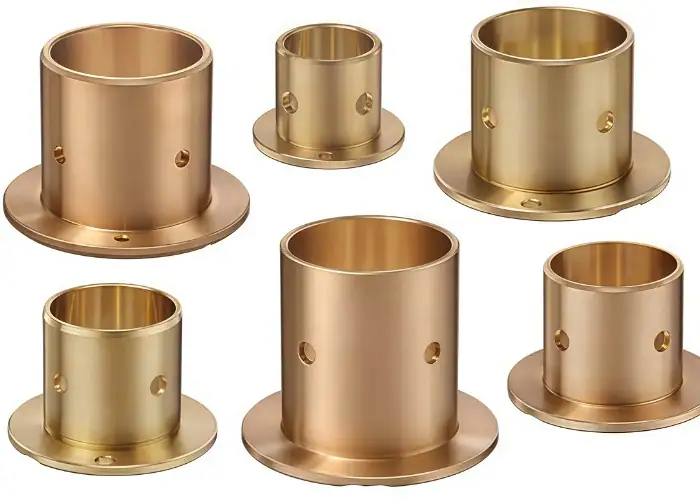
The main advantages of bronze are good wear resistance, high strength, corrosion resistance, low friction, and long service life in sliding applications. These benefits make it suitable for mechanical parts under load.
Bronze can perform well in bushings, bearings, gear components, pump parts, marine hardware, and industrial valves. Belmont Metals notes that engineers often choose bronze for corrosion, wear, and sustained mechanical contact applications such as thrust washers, worm gears, and bushings.
For CNC machined components, bronze is often a good choice when part durability is more important than the lowest material cost or fastest machining time.
Disadvantages Of Bronze
The main disadvantages of bronze are higher cost, more difficult machining, and lower formability compared with many brass alloys. Some bronze grades are also harder to source in specific shapes or sizes.
Bronze can place more load on cutting tools, especially hard grades such as aluminum bronze or phosphor bronze. It may require slower cutting speeds, sharper tools, better coolant, and stronger fixturing.
If the application only requires decorative appearance, simple fittings, or easy machining, brass may be more economical and efficient than bronze.
Advantages And Disadvantages Of Brass
The advantages and disadvantages of brass come from its machinability, ductility, appearance, and zinc-based composition. Brass is easy to machine and attractive, but it may not match bronze in wear resistance or harsh-environment durability.
Advantages Of Brass
The main advantages of brass are excellent machinability, good ductility, attractive yellow-gold appearance, reasonable corrosion resistance, and relatively low cost compared with many bronze grades.
Brass is commonly selected for CNC milling, CNC turning, drilling, threading, knurling, and precision finishing. Free-cutting brass can support high production efficiency and clean surface quality.
For products that require appearance and function, brass is often a strong choice. It can be polished, plated, brushed, or finished for hardware, decorative components, fittings, and visible precision parts.
Disadvantages Of Brass
The main disadvantages of brass are lower wear resistance than bronze, possible stress corrosion cracking in some conditions, and possible dezincification in certain water environments.
Brass may not be the best choice for high-load bushings, heavy sliding contact, marine shafts, or components exposed to severe wear. In these cases, bronze often provides better long-term durability.
Some brass grades contain lead for machinability, which may create restrictions in drinking water, food-contact, medical, or environmentally regulated applications. Lead-free brass or alternative materials may be required.
How Are Bronze And Brass Made?
Bronze and brass are made by melting copper with different alloying elements. Bronze is typically made by adding tin or other elements to copper, while brass is made by adding zinc to copper.
Does Copper Turn Into Bronze?
Copper turns into bronze when it is alloyed with tin or other bronze-forming elements under controlled melting and processing conditions. Copper does not naturally become bronze without alloying.
This means bronze is not just aged copper. It is an engineered copper alloy with a specific composition and performance purpose.
For example, adding tin to copper can improve hardness, wear resistance, and corrosion behavior. Adding phosphorus, aluminum, or silicon can further change the final alloy’s performance.
How Bronze Is Produced
Bronze is produced by melting copper and adding tin or other alloying elements to achieve the required grade. The molten alloy is then cast, formed, or processed into usable shapes.
Common forms include bars, rods, tubes, plates, bushings, castings, and billets for machining. After solidification, bronze may be heat treated, machined, ground, or finished depending on the application.
For precision components, material certification is important. The correct bronze grade must be confirmed before CNC machining, especially for bearings, marine parts, and wear-resistant components.
How Brass Is Produced
Brass is produced by melting copper and adding zinc in a controlled ratio. Other elements may be added to improve machinability, corrosion resistance, strength, or forming behavior.
The brass can then be cast, extruded, rolled, drawn, forged, or machined into final product forms. Bars and rods are commonly used for CNC turning and milling.
Because zinc content affects color and mechanical behavior, brass grade selection should be based on application requirements rather than appearance alone.
Common Applications Of Bronze And Brass
Common applications of bronze and brass include industrial parts, decorative products, fittings, valves, bearings, bushings, connectors, musical instruments, marine hardware, and CNC machined components. The best material depends on load, wear, corrosion, appearance, and cost.
Industrial Applications Of Bronze
Industrial applications of bronze include bushings, bearings, gears, worm wheels, pump components, marine hardware, thrust washers, valve parts, wear plates, and heavy-duty sliding components.
Bronze is useful where metal surfaces must move against each other under load. Its low friction and wear resistance help protect shafts and mating parts.
For CNC machining, bronze is often used when dimensional accuracy, strength, and service life are more important than the fastest machining speed.
Industrial Applications Of Brass
Industrial applications of brass include fittings, valves, connectors, fasteners, inserts, electrical terminals, plumbing parts, decorative hardware, instrument parts, and precision turned components.
Brass is widely used because it machines well, finishes cleanly, and provides a balance of corrosion resistance and cost. It can be polished or plated for improved appearance.
For high-volume production, brass is often more efficient than bronze because it can reduce tool wear, cycle time, and finishing work.
Everyday Uses Of Bronze And Brass
Everyday uses of bronze and brass include hardware, handles, locks, decorative items, instruments, fittings, sculptures, coins, jewelry, cookware-related items, and household components.
Brass is often used where a bright gold appearance is desired. Bronze is often used where an antique, warm, or darker appearance is preferred.
For consumer products, material choice may depend on appearance, cost, corrosion resistance, touch feel, surface finish, and expected wear.
Brass Vs Bronze Jewelry
Brass vs bronze jewelry differs mainly in color, durability, skin reaction risk, and surface aging. Brass usually looks brighter and more yellow-gold, while bronze usually looks darker and more reddish-brown.
Brass jewelry is often chosen for a gold-like appearance at lower cost. Bronze jewelry is often chosen for an antique, warm, or handcrafted look.
Both materials can tarnish and may cause skin discoloration or irritation depending on alloy composition, plating, sweat, and user sensitivity. Surface coating can help reduce these issues.
Bronze Vs Brass Utensils
Bronze vs brass utensils differ in composition, traditional use, appearance, and safety requirements. Both materials have been used historically in household and cultural items, but modern food-contact use must follow material and coating standards.
Brass can contain zinc and sometimes lead, while bronze may contain tin and other alloying elements. The exact alloy matters when the utensil contacts food, water, or acidic ingredients.
For food-contact products, buyers should not rely only on the material name. Compliance, coating, certification, and intended use should be confirmed before use.
Bronze Vs Brass Fittings And Valves
Bronze vs brass fittings and valves should be selected based on water chemistry, pressure, corrosion, dezincification risk, standards, and cost. Brass is common for many plumbing and general fittings, while bronze is often preferred for tougher corrosion or marine service.
Brass valves can be cost-effective and easy to machine. Bronze valves may provide better long-term performance in seawater, steam, or demanding industrial environments.
For regulated applications, lead content, drinking water standards, pressure rating, and material certification must be checked before production or purchase.
Bronze Vs Brass In CNC Machining
Bronze vs brass in CNC machining mainly differs in cutting behavior, tool wear, surface finish, and production efficiency. Brass is usually easier to machine, while bronze often provides better wear performance after machining.
Which Is Easier To Machine?
Brass is generally easier to machine than bronze. Free-cutting brass grades are especially suitable for high-speed CNC machining, small chips, smooth threads, and clean surface finish.
Bronze is often harder and more wear resistant, which can make it more demanding on tools. It may require lower cutting speeds, sharp carbide tools, rigid fixturing, and proper coolant.
However, bronze is still machinable and is widely used for precision bushings, bearings, sleeves, and wear components. The exact difficulty depends on the bronze grade.
Bronze Vs Brass Strength In Machined Parts
Bronze vs brass strength in machined parts depends on alloy grade, but bronze is often stronger and more wear resistant than brass in load-bearing or sliding applications.
Bronze can provide better durability for bushings, bearings, gears, and components exposed to friction. It is often chosen when the part must resist wear over time.
Brass may provide enough strength for fittings, connectors, valve bodies, and decorative precision parts. If the load is moderate and machinability matters, brass can be more practical.
Surface Finish And Dimensional Stability
Surface finish and dimensional stability depend on material grade, tool geometry, cutting parameters, and part design. Brass usually produces cleaner chips and smoother finishes more easily than bronze.
Bronze can achieve good dimensional accuracy, but harder or more abrasive bronze grades may increase tool wear and surface variation if parameters are not controlled.
For tight-tolerance CNC parts, tool sharpness, coolant, workholding, and inspection are important for both materials. The right cutting strategy can reduce burrs, chatter, and dimensional drift.
When To Choose Bronze For CNC Machining
Choose bronze for CNC machining when the part requires wear resistance, low friction, high durability, good corrosion resistance, or reliable performance under sliding contact.
Bronze is suitable for bushings, bearings, gears, sleeves, thrust washers, marine parts, pump components, valve parts, and heavy-duty mechanical components.
Although bronze may cost more and machine slower than brass, it can provide better long-term performance in demanding applications. For high-load or high-wear parts, bronze is often the safer engineering choice.
When To Choose Brass For CNC Machining
Choose brass for CNC machining when the part requires excellent machinability, good surface finish, moderate strength, attractive appearance, and cost-effective production.
Brass is suitable for fittings, connectors, threaded inserts, valve bodies, fasteners, decorative parts, electrical components, and high-volume turned components.
If the application does not require heavy wear resistance or marine-level corrosion resistance, brass may provide a better balance of cost, machining efficiency, and appearance.
Bronze Vs Brass Vs Copper
Bronze vs brass vs copper compares one pure base metal with two copper alloys. Copper is mostly valued for electrical and thermal conductivity, while brass and bronze are alloyed to improve specific mechanical or manufacturing properties.
Main Difference Between Bronze, Brass, And Copper
The main difference between bronze, brass, and copper is composition. Copper is a pure metal, brass is mainly copper and zinc, and bronze is mainly copper and tin.
Copper provides the best electrical and thermal conductivity among the three. Brass offers easier machining and better decorative appearance than pure copper in many cases. Bronze offers better wear resistance and durability for sliding or heavy-duty components.
This is why electrical contacts may use copper, fittings may use brass, and bushings may use bronze.
When To Choose Copper Instead Of Bronze Or Brass
Choose copper instead of bronze or brass when electrical conductivity, thermal conductivity, or high-purity copper performance is the main requirement.
Copper is often selected for busbars, heat exchangers, electrical contacts, conductive parts, grounding components, and thermal transfer applications.
However, copper is softer and can be more difficult to machine cleanly than free-cutting brass. If the part needs better machinability or wear resistance, brass or bronze may be more suitable.
How To Identify Brass Vs Bronze?
To identify brass vs bronze, compare color, weight, application, surface aging, spark behavior, and material documentation. However, the most reliable method is composition testing or supplier certification.
How To Tell Brass Vs Bronze By Color
You can often tell brass vs bronze by color because brass is usually brighter yellow-gold and bronze is usually darker reddish-brown. This is a useful first check.
Brass has a more gold-like appearance because of its zinc content. Bronze usually has a warmer copper-brown appearance because of tin and other alloying elements.
However, color can change due to polishing, oxidation, patina, plating, or lighting. For critical applications, color should be supported by material testing.
How To Test Brass Vs Bronze
You can test brass vs bronze by using material certification, XRF analysis, chemical composition testing, hardness testing, or application-based inspection. XRF testing is one of the fastest non-destructive methods for alloy identification.
A simple magnet test can confirm that the material is likely non-ferrous, but it cannot reliably separate brass from bronze. Both are usually non-magnetic.
For CNC machining projects, the safest approach is to request material certificates from the supplier and confirm the alloy grade before production.
How To Avoid Misidentification In Material Selection
To avoid misidentification in material selection, always specify the exact alloy grade, material standard, and required performance instead of only writing “brass” or “bronze.”
For example, C360 brass, phosphor bronze, aluminum bronze, and bearing bronze have very different machinability and service performance. Using the wrong alloy can cause tool wear, corrosion failure, weak threads, poor wear resistance, or cost overruns.
Drawings, purchase orders, and inspection documents should include grade, composition, tolerance, heat treatment if required, and certification expectations.
How To Choose Between Bronze And Brass?
Choose between bronze and brass by comparing strength, corrosion resistance, machinability, appearance, cost, and application environment. The right material depends on what the part must do in service.
Choose By Strength Requirement
Choose bronze when the part needs higher strength, better wear resistance, and better durability under load. Bronze is often better for bushings, bearings, gears, and sliding components.
Choose brass when moderate strength is enough and the part needs easier machining, threading, or forming. Brass is commonly used for fittings, inserts, connectors, and hardware.
Strength should be judged by the exact alloy grade, not by the general material name alone.
Choose By Corrosion Resistance
Choose bronze when the part will be exposed to seawater, outdoor moisture, friction, or demanding corrosion environments. Many bronze grades perform well in marine and industrial service.
Choose brass for general indoor, plumbing, decorative, and light industrial environments where corrosion exposure is moderate and the correct brass grade is used.
For water systems, dezincification risk should be considered. DZR brass or bronze may be required depending on standards and service conditions.
Choose By Machinability
Choose brass when machinability, fast production, clean threads, and smooth surface finish are the main priorities. Free-cutting brass is one of the easiest copper alloys to machine.
Choose bronze when final performance is more important than machining speed. Bronze may machine slower, but it can provide better wear resistance and longer service life.
For CNC production, machinability affects cycle time, tool life, burr control, surface finish, and total part cost.
Choose By Appearance
Choose brass when a bright yellow-gold appearance is desired. Brass is often used for decorative hardware, instruments, visible fittings, and polished components.
Choose bronze when a darker, warmer, antique, or reddish-brown appearance is preferred. Bronze is common in sculptures, architectural details, and classic decorative products.
If appearance is critical, surface finish, polishing, plating, coating, and patina behavior should be considered during design.
Choose By Cost
Choose brass when cost control and production efficiency are important. Brass is often less expensive than bronze and easier to machine, which can reduce total part cost.
Choose bronze when higher material cost is justified by wear resistance, corrosion resistance, or heavy-duty performance. Bronze vs brass price should be evaluated by both raw material cost and service life.
A cheaper material is not always lower cost if it fails early. For wear-critical parts, bronze may reduce replacement and maintenance costs.
Choose By Application Environment
Choose the material according to the application environment, including load, movement, moisture, chemicals, temperature, appearance, and regulatory requirements.
Bronze is better for marine components, bearings, bushings, wear plates, and sliding mechanical parts. Brass is better for fittings, connectors, decorative parts, low-friction production machining, and moderate-duty components.
For special environments, confirm grade-specific corrosion data, material standards, and supplier certification before production.
FAQs
How To Identify Brass Vs Bronze?
You can identify brass vs bronze by checking color, composition, weight, surface aging, and material certification. The most visible brass and bronze difference is appearance: brass usually looks brighter yellow-gold because it contains copper and zinc, while bronze is often darker, reddish-brown, or antique-looking because it usually contains copper and tin. However, brass vs bronze color is only a first reference. For CNC machining, fittings, valves, or precision parts, the safest method is XRF testing or supplier material certification.
When To Use Brass Vs Bronze?
Use brass when you need excellent machinability, clean threads, attractive yellow-gold appearance, moderate corrosion resistance, and cost-effective production. Brass is common for fittings, connectors, fasteners, valve bodies, decorative parts, brass vs bronze jewelry comparisons, and precision turned components. Use bronze when you need better bronze vs brass strength, higher load capacity, low-friction sliding performance, or stronger corrosion resistance in marine or harsh environments. Bronze is better for bushings, bearings, gears, sleeves, pump parts, and wear components.
What Is More Expensive, Bronze Or Brass?
Bronze is usually more expensive than brass because it often contains tin or specialty alloying elements, and many bronze grades are designed for higher wear resistance, corrosion resistance, or load-bearing performance. Brass is often more economical because copper-zinc alloys are easier to machine and widely available. However, bronze vs brass price and brass vs bronze cost both depend on alloy grade, form, size, quantity, market price, and machining difficulty. For wear-critical parts, bronze may reduce long-term replacement cost.
What Metal Should Not Touch Copper?
Metals such as aluminum, carbon steel, galvanized steel, and zinc should be carefully separated from copper in wet or conductive environments because galvanic corrosion can occur. When comparing brass vs bronze vs copper in assemblies, copper and copper alloys are relatively noble, so nearby aluminum or zinc may corrode faster if moisture acts as an electrolyte.
Conclusion
Bronze and brass are both useful copper-based alloys, but they solve different engineering problems. Bronze is usually better for wear resistance, corrosion resistance, low-friction sliding contact, and heavy-duty components. Brass is usually better for machinability, ductility, decorative appearance, electrical parts, fittings, connectors, and cost-effective production. Understanding the brass and bronze difference helps engineers and buyers choose the right alloy based on composition, strength, corrosion resistance, machinability, price, and application environment.
At TiRapid, we provide precision CNC machining services for custom metal and plastic components. If your project involves brass, bronze, copper alloys, fittings, bushings, bearings, connectors, prototypes, or low-volume production parts, our team can support material review, machining feasibility, tolerance control, surface finishing, and production-ready manufacturing solutions.