18-8 Vs 18-10 Vs 18-0 Stainless Steel are common stainless steel names based on chromium and nickel content. The first number usually refers to about 18% chromium, while the second number refers to the approximate nickel content. This difference affects corrosion resistance, magnetism, durability, surface finish, cost, and application suitability.
In this guide, we compare 18-8vs18-10vs18-0 stainless steel by composition, corrosion resistance, durability, machinability, magnetic behavior, surface finish, cost, and uses.
What Do 18-8, 18-10, And 18-0 Stainless Steel Mean?
18-8, 18-10, and 18-0 stainless steel mean stainless steels with about 18% chromium and different nickel levels. In simple terms, 18-8 has about 8% nickel, 18-10 has about 10% nickel, and 18-0 has little or no nickel.
The Meaning Behind The Numbers
The numbers behind 18-8, 18-10, and 18-0 describe the approximate chromium and nickel content in the stainless steel. The “18” usually means about 18% chromium, while “8,” “10,” and “0” refer to nickel content.
Chromium is important because it helps stainless steel form a protective passive layer on the surface. This layer improves resistance to rust, staining, oxidation, and general corrosion.
Nickel improves corrosion resistance, toughness, ductility, surface brightness, and austenitic structure. This is why 18-10 and 18-8 are usually less magnetic and more corrosion resistant than 18-0 stainless steel.
Chromium And Nickel Content Explained
Chromium and nickel content explain most of the difference between 18-8, 18-10, and 18-0 stainless steel. Chromium protects the surface, while nickel improves corrosion resistance, ductility, and surface quality.
18-8 stainless steel usually contains about 18% chromium and 8% nickel. 18-10 stainless steel usually contains about 18% chromium and 10% nickel. 18-0 stainless steel usually contains about 18% chromium and almost no nickel.
Because nickel is expensive and improves corrosion performance, 18-10 is often considered more premium, 18-8 is a balanced option, and 18-0 is usually more cost-effective and magnetic.
What Is Stainless Steel?
Stainless steel is an iron-based alloy that contains enough chromium to resist corrosion better than ordinary carbon steel. Most stainless steels contain at least about 10.5% chromium, and many also contain nickel, molybdenum, manganese, or other alloying elements.
How Is Stainless Steel Made?
Stainless steel is made by melting iron with chromium and other alloying elements such as nickel, manganese, molybdenum, carbon, or nitrogen. The molten metal is then refined, cast, rolled, forged, or processed into usable forms.
For 18-8 and 18-10 stainless steel, nickel is added to support austenitic structure, toughness, and corrosion resistance. For 18-0 stainless steel, nickel is reduced or removed, making the material usually more magnetic and more affordable.
After production, stainless steel may be hot rolled, cold rolled, annealed, pickled, polished, machined, stamped, welded, or formed depending on the final product.
What Is Stainless Steel Used For?
Stainless steel is used for cookware, cutlery, fasteners, medical tools, food equipment, machine parts, architectural products, automotive components, chemical equipment, and CNC machined parts.
Its main value is the combination of corrosion resistance, strength, clean appearance, hygiene, durability, and formability. These properties make stainless steel useful in both consumer products and industrial systems.
In manufacturing, stainless steel is often selected when the part must resist rust, maintain a clean surface, support repeated cleaning, or perform reliably in humid, food-contact, medical, or industrial environments.
What Is 18-8 Stainless Steel?
18-8 stainless steel is a stainless steel that usually contains about 18% chromium and 8% nickel. It is one of the most common stainless steel descriptions used for food-grade products, hardware, fasteners, and general corrosion-resistant parts.
18-8 Stainless Steel At A Glance
18-8 stainless steel is a balanced stainless steel option with good corrosion resistance, good durability, and wide availability. It is commonly used when performance and cost must be balanced.
It is usually non-magnetic or only weakly magnetic in annealed condition because it is typically austenitic. However, cold working or forming may make it slightly magnetic.
For many products, 18-8 stainless steel offers enough corrosion resistance without the higher cost of 18-10 or 316 stainless steel. This makes it practical for fasteners, kitchenware, brackets, fittings, and CNC machined parts.
Composition Of 18-8 Stainless Steel
The composition of 18-8 stainless steel is typically about 18% chromium and 8% nickel, with iron as the balance. It may also contain small amounts of carbon, manganese, silicon, phosphorus, sulfur, or nitrogen depending on the exact grade.
The chromium supports passivation and corrosion resistance, while the nickel improves toughness, ductility, and surface stability. This combination gives 18-8 good all-around performance.
Because 18-8 is a general composition label, exact material certification is important. For precision machining, the supplier should confirm whether the material is 304, 304L, or another stainless steel grade.
Key Characteristics Of 18-8 Stainless Steel
The key characteristics of 18-8 stainless steel are good corrosion resistance, good durability, moderate cost, good formability, and a clean surface finish. It is widely used because it performs well in many everyday and industrial environments.
18-8 stainless steel resists rust better than 18-0 because it contains nickel. It also maintains a better appearance under normal washing, handling, and moisture exposure.
For CNC machining, 18-8 can produce accurate stainless steel components, but it requires proper tools, coolant, chip control, and cutting parameters because austenitic stainless steels can work harden.
Advantages Of 18-8 Stainless Steel
The advantages of 18-8 stainless steel include good corrosion resistance, wide availability, food-contact suitability, reasonable cost, and reliable mechanical performance. It is often the best balanced option among the three.
It is strong enough for many fasteners, hardware parts, kitchenware, brackets, and machined components. It also offers a cleaner appearance than many lower-cost stainless steels.
Compared with 18-0, 18-8 usually provides better rust resistance and durability. Compared with 18-10, it is often more economical while still providing strong general performance.
Disadvantages Of 18-8 Stainless Steel
The disadvantages of 18-8 stainless steel are that it is not as corrosion resistant as higher-nickel or molybdenum-containing stainless steels, and it may be harder to machine than free-machining materials.
In chloride-rich, marine, acidic, or harsh chemical environments, 18-8 may not be enough. 316 stainless steel or another grade may be needed for stronger pitting corrosion resistance.
During machining, 18-8 can work harden and generate heat. Poor cutting conditions may cause burrs, tool wear, rough surfaces, or dimensional instability.
Typical Applications Of 18-8 Stainless Steel
Typical applications of 18-8 stainless steel include flatware, cookware, food equipment, fasteners, bolts, nuts, screws, brackets, fittings, washers, springs, housings, and CNC machined parts.
It is widely used when the part needs corrosion resistance, clean appearance, moderate strength, and good durability. It is also common in general industrial and consumer products.
For TiRapid-type CNC projects, 18-8 or 304 stainless steel can be suitable for prototypes, custom brackets, enclosures, shafts, spacers, and precision parts used in moderate corrosion environments.
What Is 18-10 Stainless Steel?
18-10 stainless steel is a stainless steel that usually contains about 18% chromium and 10% nickel. It is often used when better corrosion resistance, brighter surface appearance, and premium product quality are required.
18-10 Stainless Steel At A Glance
18-10 stainless steel is a higher-nickel stainless steel option used for better corrosion resistance and surface appearance. It is often found in premium flatware, cookware, kitchen tools, and food-service products.
It usually has good resistance to rust, staining, and surface dulling under normal kitchen and indoor conditions. The added nickel can also improve formability and polish quality.
In the question “18 8 vs 18 10 stainless steel which is better,” 18-10 is usually better for corrosion resistance and finish, while 18-8 is often better for cost-performance balance.
Composition Of 18-10 Stainless Steel
The composition of 18-10 stainless steel is typically about 18% chromium and 10% nickel, with iron as the balance. Small amounts of carbon, manganese, silicon, sulfur, phosphorus, or nitrogen may also be present depending on the exact grade.
The higher nickel content helps stabilize the austenitic structure and improve corrosion resistance. It also helps produce a bright and attractive surface finish.
Because 18-10 is a composition label rather than a complete grade, the exact stainless steel standard should be confirmed for industrial or CNC machined parts.
Key Characteristics Of 18-10 Stainless Steel
The key characteristics of 18-10 stainless steel are better corrosion resistance, better shine, good durability, good toughness, and strong suitability for premium food-contact products.
It resists staining and rust better than 18-0 and often slightly better than 18-8. This makes it useful for cookware, cutlery, utensils, kitchen appliances, and visible stainless steel products.
For machined parts, 18-10 can provide good corrosion performance and surface quality, but machining must control heat, work hardening, tool wear, and burr formation.
Advantages Of 18-10 Stainless Steel
The advantages of 18-10 stainless steel include higher nickel content, better corrosion resistance, premium appearance, good durability, and strong resistance to staining in many everyday environments.
It is often chosen for products that need long service life and attractive surface finish. Premium flatware, cookware, kitchen tools, and food-service components commonly use 18-10 stainless steel.
Compared with 18-8, 18-10 may offer better long-term appearance. Compared with 18-0, it is usually much better for resisting rust and maintaining a clean finish.
Disadvantages Of 18-10 Stainless Steel
The disadvantages of 18-10 stainless steel are higher cost, limited magnetic response, and possible machining difficulty compared with lower-nickel or ferritic stainless steels. The higher nickel content can increase material price.
For applications that do not require premium corrosion resistance or appearance, 18-10 may be over-specified. 18-8 may provide similar practical performance at lower cost.
In CNC machining, 18-10-like austenitic stainless steels may work harden during cutting. Proper coolant, sharp tooling, rigid setup, and suitable feeds and speeds are important.
Typical Applications Of 18-10 Stainless Steel
Typical applications of 18-10 stainless steel include premium flatware, cookware, kitchen utensils, serving tools, food-service equipment, appliance parts, decorative components, and selected corrosion-resistant machined parts.
It is often selected when appearance, hygiene, and corrosion resistance matter more than lowest cost. The material is common in products that need frequent cleaning and long-term surface quality.
For industrial use, formal grade confirmation is still required. If a part needs strong chloride resistance, 316 stainless steel may be more appropriate than simply requesting 18-10.
What Is 18-0 Stainless Steel?
18-0 stainless steel is a stainless steel that usually contains about 18% chromium and little or no nickel. It is typically more affordable and more magnetic than 18-8 or 18-10 stainless steel.
18-0 Stainless Steel At A Glance
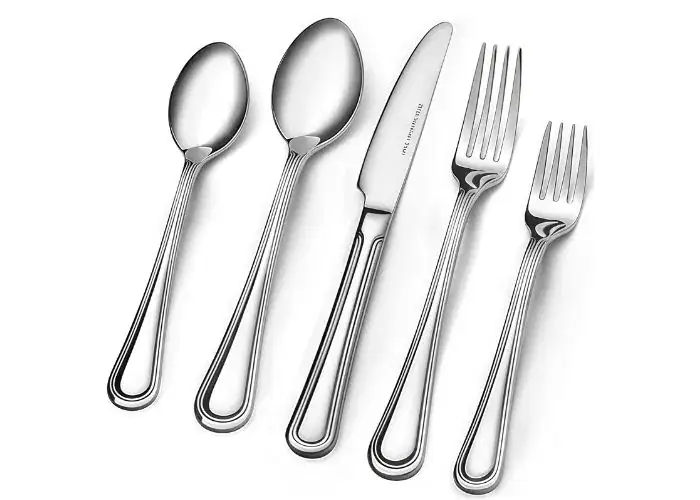
18-0 stainless steel is a low-nickel or nickel-free stainless steel option with moderate corrosion resistance and good cost control. It is commonly used in budget flatware, magnetic kitchenware, appliance panels, and some consumer products.
Because it contains little or no nickel, 18-0 is generally magnetic. This makes it useful for induction-compatible cookware bases and applications where magnetic attraction is desired.
Its main limitation is corrosion resistance. In dishwashers, humid storage, salt exposure, acidic foods, or marine environments, 18-0 may stain or rust more easily than 18-8 or 18-10.
Composition Of 18-0 Stainless Steel
The composition of 18-0 stainless steel is typically about 18% chromium and 0% nickel or nearly no nickel. Iron makes up most of the remaining composition, with small amounts of carbon, manganese, silicon, and other elements.
The chromium content still allows stainless behavior, but the lack of nickel reduces corrosion resistance, ductility, and austenitic stability. This is why 18-0 is usually ferritic and magnetic.
Because 18-0 can refer to different ferritic stainless steel grades, exact material certification should be reviewed before machining, forming, or using it in a regulated product.
Key Characteristics Of 18-0 Stainless Steel
The key characteristics of 18-0 stainless steel are lower cost, magnetic behavior, moderate corrosion resistance, and lower nickel content. It is practical when price and magnetism matter more than premium corrosion resistance.
18-0 is often used in flatware, kitchen tools, appliance parts, and induction cookware bases. It can perform well in dry or mild environments if cleaned and dried properly.
However, it is more likely to show rust spots, staining, or discoloration under harsh cleaning, chloride exposure, or long soaking. For better corrosion performance, 18-8 or 18-10 is usually preferred.
Advantages Of 18-0 Stainless Steel
The advantages of 18-0 stainless steel include lower cost, magnetic properties, nickel-free composition, and practical performance for basic stainless steel products. It is useful when affordability is a major priority.
Its magnetic behavior can be valuable for induction cookware or magnetic applications. It also avoids nickel content, which may be useful for buyers concerned about nickel sensitivity.
For simple products used in mild environments, 18-0 can be a practical and economical stainless steel choice. It is not the premium option, but it can be suitable when requirements are moderate.
Disadvantages Of 18-0 Stainless Steel
The disadvantages of 18-0 stainless steel are lower corrosion resistance, higher staining risk, reduced shine, and lower durability in wet, salty, acidic, or dishwasher-heavy environments.
Without nickel, 18-0 does not maintain the same corrosion stability as 18-8 or 18-10. It may need more careful cleaning and drying to prevent rust spots.
For CNC machined parts exposed to moisture, chemicals, food acids, or salt, 18-0 may not be the best choice. A nickel-containing stainless steel or a higher-grade alloy may be safer.
Typical Applications Of 18-0 Stainless Steel
Typical applications of 18-0 stainless steel include budget flatware, magnetic stainless steel products, appliance panels, induction cookware bases, kitchen tools, decorative parts, and light-duty components.
It is suitable when cost control and magnetism are important. Many consumer products use 18-0 because it offers stainless appearance at a lower price.
For industrial parts, 18-0 should be selected only when the service environment is mild and corrosion resistance requirements are not demanding.
18-8 Vs 18-10 Vs 18-0 Stainless Steel: Key Comparison
18-8 vs 18-10 vs 18-0 stainless steel comparison mainly depends on nickel content, corrosion resistance, magnetism, cost, and application environment. 18-10 usually offers the best corrosion resistance, 18-8 offers balanced performance, and 18-0 offers lower cost and magnetism.
Composition Difference
The composition difference is that 18-8 has about 18% chromium and 8% nickel, 18-10 has about 18% chromium and 10% nickel, and 18-0 has about 18% chromium and little or no nickel.
This composition difference changes the stainless steel structure and performance. 18-8 and 18-10 are usually austenitic, while 18-0 is usually ferritic.
The added nickel in 18-8 and 18-10 improves corrosion resistance, ductility, and surface appearance. The absence of nickel in 18-0 lowers cost but reduces corrosion performance.
Corrosion Resistance Difference
The corrosion resistance difference is that 18-10 usually performs best, 18-8 performs well, and 18-0 performs lower in wet, salty, or acidic environments. Nickel helps improve corrosion stability.
18-10 is often preferred for premium flatware, cookware, and kitchen products that need long-term shine and resistance to staining. 18-8 is also reliable for many general uses.
18-0 can resist mild corrosion, but it may rust or discolor more easily after dishwasher cycles, salt exposure, acidic food contact, or humid storage.
Durability Difference
The durability difference is that 18-10 and 18-8 generally provide better long-term surface stability than 18-0. 18-10 may offer the best appearance retention because of higher nickel content.
Durability depends not only on composition but also on thickness, forming quality, surface finish, cleaning method, and environment. A thin 18-10 part may not feel more durable than a well-made 18-8 part.
For industrial parts, durability must include strength, wear, corrosion, fatigue, and machining quality. Do not choose only by the 18-8, 18-10, or 18-0 label.
Magnetism Difference
The magnetism difference is that 18-0 is usually magnetic, while 18-8 and 18-10 are usually non-magnetic or only weakly magnetic. This is caused by the difference between ferritic and austenitic structures.
18-0 stainless steel usually has a ferritic structure because it lacks nickel. Ferritic stainless steel is generally magnetic.
18-8 and 18-10 stainless steels usually have an austenitic structure, which is normally non-magnetic. However, cold working, bending, stamping, or machining can sometimes make them slightly magnetic.
Mechanical Properties Difference
The mechanical properties difference depends on the exact grade, but 18-8 and 18-10 usually offer good ductility, toughness, and formability, while 18-0 is generally less ductile and more magnetic.
18-8 and 18-10 are better for applications that require forming, deep drawing, polished finish, and repeated cleaning. They also perform well in many food-contact and general industrial environments.
18-0 can be useful for rigid, low-cost, magnetic products, but it may not be as suitable for demanding corrosion or forming requirements.
Formability And Workability Difference
The formability and workability difference is that 18-8 and 18-10 are generally easier to form and work than 18-0 because nickel improves ductility and austenitic stability.
This makes 18-8 and 18-10 suitable for formed cookware, stamped parts, drawn shapes, polished surfaces, and kitchen products. They can handle more forming before cracking in many applications.
18-0 can still be formed, but it may have more limitations depending on grade and thickness. For complex forming or premium finish, 18-8 or 18-10 is usually safer.
Surface Finish Difference
The surface finish difference is that 18-10 usually provides the brightest and most premium appearance, 18-8 offers a clean stainless finish, and 18-0 may appear slightly duller over time.
Nickel helps improve surface stability and polish quality. This is why higher-nickel stainless steels are often used for premium flatware and visible kitchen products.
For CNC machined parts, surface finish also depends on tool geometry, cutting speed, coolant, polishing, passivation, and post-processing. Material choice is only one part of final appearance.
Staining Susceptibility Difference
The staining susceptibility difference is that 18-0 is more likely to stain or discolor, while 18-8 and 18-10 are more resistant. Nickel improves resistance to corrosion-related staining.
Dishwasher detergents, salt, acidic foods, long soaking, and humid storage can increase staining risk. Even stainless steel can stain if it is abused or left wet for too long.
Proper cleaning, drying, and avoiding harsh scrubbers can help all three materials last longer. For harsh use, 18-10 or 18-8 is usually better than 18-0.
Cost Difference
The cost difference is that 18-0 is usually the lowest-cost option, 18-8 is mid-range, and 18-10 is usually more expensive. Nickel content is a major reason for the price difference.
18-0 avoids nickel, so it is more economical. 18-8 provides a good balance of price and performance. 18-10 costs more because of higher nickel content and premium positioning.
For product design, cost should be judged with performance. A cheaper material may not be lower cost if it stains, rusts, or fails earlier in the application.
18-8 Vs 18-10 Vs 18-0 Stainless Steel In CNC Machining
18-8 vs 18-10 vs 18-0 stainless steel in CNC machining differs mainly in work hardening, chip behavior, tool wear, surface finish, and corrosion performance after machining. 18-8 and 18-10 are usually austenitic, while 18-0 is usually ferritic.
Machinability
Sharp carbide tools, stable fixturing, proper coolant, and controlled feed rates help reduce tool wear and surface problems. Avoid rubbing cuts because they can harden the surface and make machining more difficult.
18-0 may be easier to cut in some cases, but its grade, hardness, and product form still matter. Always match cutting parameters to the confirmed stainless steel grade.
Cutting Performance
Cutting performance depends on stainless steel grade, hardness, tool material, coolant, feed rate, speed, and part geometry. 18-8 and 18-10 often need stronger process control than mild steel or aluminum.
Common issues include work hardening, built-up edge, heat generation, burrs, and tool wear. These problems can affect tolerance, surface finish, and thread quality.
For precision CNC machining, process planning should include rigid clamping, sharp tools, suitable chip evacuation, and inspection of critical dimensions after machining.
Surface Finish Control
Surface finish control is important because stainless steel parts often require clean appearance, smooth contact surfaces, and corrosion-resistant finishes. 18-8 and 18-10 can achieve good finish with the right machining and post-processing.
Polishing, brushing, passivation, bead blasting, and electropolishing can improve surface quality depending on the application. Food-contact and medical parts may require smoother surfaces to reduce contamination risk.
For 18-0, surface finish must also consider staining and corrosion risk. A good finish can improve appearance, but it cannot fully replace material corrosion resistance.
Corrosion Performance After Machining
Corrosion performance after machining depends on material grade, surface condition, heat input, contamination, and passivation. Stainless steel can lose corrosion resistance if the surface is damaged or contaminated.
Machined stainless parts should be cleaned carefully to remove cutting oil, tool residue, embedded iron, and burrs. Passivation may be used to restore or improve the protective chromium oxide layer.
For harsh environments, 18-8, 18-10, or 18-0 labels may not be enough. Engineers may need 316, 316L, duplex stainless steel, or other grades depending on exposure.
Weldability And Fabrication
Weldability and fabrication depend on the exact stainless steel grade, carbon content, thickness, heat input, and required corrosion performance. 18-8 and 18-10-type stainless steels can often be welded, but proper filler and post-weld cleaning may be needed.
18-0 stainless steel can also be fabricated, but ferritic stainless steels have different welding behavior and may require more attention to brittleness, grain growth, and distortion.
For welded parts, drawings should specify grade, filler material, weld requirements, surface finishing, and whether passivation or cleaning is required after welding.
Heat Treatment Considerations
Heat treatment considerations differ because 18-8 and 18-10 are usually austenitic stainless steels and are not hardened by normal heat treatment. They are strengthened mainly by cold working.
18-0 ferritic stainless steels are also not hardened like martensitic stainless steels. Their properties depend on composition, processing, and forming history.
For CNC machined stainless parts, heat treatment is usually less important than material grade selection, stress control, surface finish, and corrosion protection unless a specific stainless grade requires special processing.
Common Applications Of 18-8, 18-10, And 18-0 Stainless Steel
Common applications of 18-8, 18-10, and 18-0 stainless steel include kitchenware, cutlery, cookware, fasteners, hardware, appliance parts, medical components, food equipment, decorative products, and CNC machined parts.
Kitchenware And Cutlery
Kitchenware and cutlery commonly use 18-8, 18-10, and 18-0 stainless steel because these materials provide corrosion resistance, hygiene, and attractive appearance. The grade affects durability and shine.
18-10 is often used for premium flatware and utensils. 18-8 is a common balanced option. 18-0 is used for lower-cost flatware or magnetic products.
For long-term appearance, proper cleaning and drying are still important. Even quality stainless steel can stain if exposed to salt, acids, or moisture for too long.
Cookware And Food-Contact Products
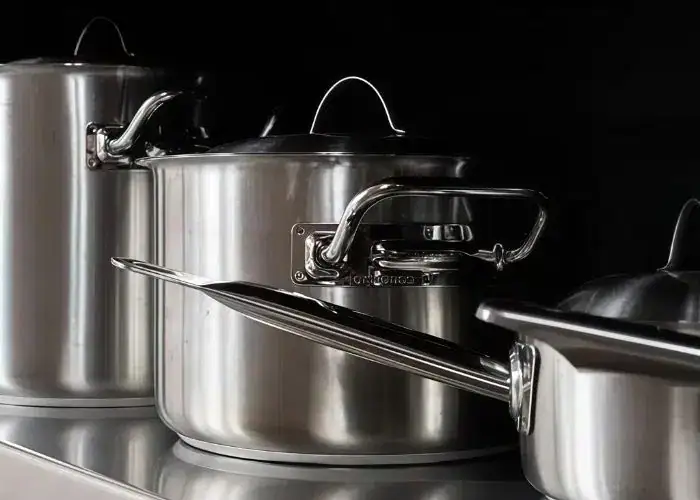
Cookware and food-contact products use stainless steel because it resists corrosion, handles cleaning, and provides a safe contact surface when made to proper standards. 18-8 and 18-10 are common in cookware surfaces and utensils.
18-10 is often preferred for high-quality cookware and kitchen tools because of its higher nickel content and better appearance retention. 18-8 is also widely used for reliable food-contact performance.
18-0 is often used in induction-compatible layers or budget products because it is magnetic. However, it may need more care to avoid rusting or staining.
Fasteners And Hardware
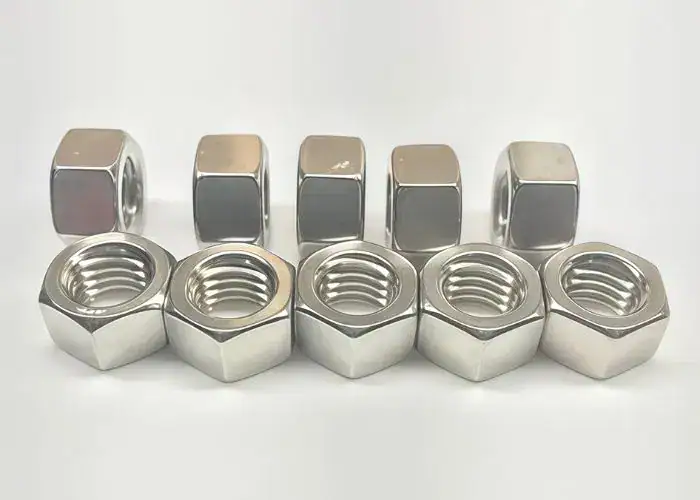
Fasteners and hardware often use 18-8 stainless steel because it provides good corrosion resistance, strength, and availability. Screws, nuts, bolts, washers, and threaded inserts are common examples.
18-8 stainless fasteners are widely used in general industrial, food equipment, marine-light, and outdoor applications. For harsher chloride environments, 316 may be required.
18-0 is less common for high-performance fasteners because corrosion resistance and ductility may be lower. 18-10 is less commonly specified as a fastener label than formal grades such as 304 or 316.
Medical And Laboratory Components
Medical and laboratory components often require stainless steel with corrosion resistance, cleanability, and stable surface finish. 18-8 or 18-10-type stainless steels may be used in selected non-implant components.
Common examples include trays, tools, housings, brackets, fixtures, lab hardware, and equipment parts. However, medical applications often require exact standards and certification.
For critical medical components, designers should not rely only on 18-8 or 18-10 labels. Formal grades, surface finish, passivation, traceability, and biocompatibility requirements must be confirmed.
Industrial Parts And CNC Machined Components
Industrial parts and CNC machined components use stainless steel when corrosion resistance, strength, heat resistance, or clean surface quality is required. 18-8-type stainless steels are common in machined parts.
Parts may include shafts, spacers, brackets, fittings, connectors, housings, valve components, food equipment parts, and precision hardware. CNC machining can create tight tolerances and functional features.
For demanding environments, exact grade selection is important. 18 8 vs 18 10 vs 304 stainless steel should be clarified because 304 is a formal grade, while 18-8 and 18-10 are composition descriptions.
Decorative And Consumer Products
Decorative and consumer products use 18-8, 18-10, and 18-0 stainless steel because they offer metallic appearance, corrosion resistance, and durability. Surface finish is often very important.
18-10 is often chosen for premium shine. 18-8 is used for reliable mid-range products. 18-0 is used for lower-cost magnetic items.
Finishes such as polishing, brushing, blasting, coating, and electropolishing can change final appearance. Material choice should match both cost and expected product life.
How To Choose Between 18-8, 18-10, And 18-0 Stainless Steel?
Choose between 18-8, 18-10, and 18-0 stainless steel by comparing corrosion resistance, nickel content, magnetism, durability, cost, application environment, and manufacturing process. The right choice depends on what the part must do.
Choose 18-8 For Balanced Performance
Choose 18-8 for balanced performance when the part needs good corrosion resistance, moderate cost, good durability, and broad availability. It is often the practical default for many stainless steel products.
18-8 works well for fasteners, kitchenware, brackets, fittings, housings, and machined components used in normal indoor or moderate outdoor environments.
It is usually a better choice than 18-0 when corrosion resistance matters, and it can be more cost-effective than 18-10 when premium finish is not required.
Choose 18-10 For Better Corrosion Resistance
Choose 18-10 for better corrosion resistance when the part needs premium surface appearance, long-term shine, and better resistance to staining. It is especially suitable for quality kitchenware and food-contact products.
The higher nickel content improves corrosion performance compared with 18-8 in many everyday environments. It can also improve polish quality and product feel.
However, 18-10 is not always necessary. If the part is hidden, low-cost, or used in mild conditions, 18-8 may provide better value.
Choose 18-0 For Lower Cost And Magnetic Properties
Choose 18-0 for lower cost and magnetic properties when the product is used in mild environments and does not require premium corrosion resistance. It is common in budget flatware and induction-compatible product layers.
The lack of nickel reduces cost and creates magnetic behavior. This can be useful for induction cookware bases and magnetic applications.
However, 18-0 should be used carefully in wet, salty, acidic, or dishwasher-heavy environments because it is more likely to stain or rust than 18-8 or 18-10.
Choose By Application Environment
Choose by application environment because moisture, salt, acids, heat, detergents, and cleaning cycles strongly affect stainless steel performance. The harsher the environment, the more important corrosion resistance becomes.
For dry indoor use, 18-0 may be acceptable. For general kitchenware or industrial parts, 18-8 is often reliable. For premium food-contact or corrosion-sensitive products, 18-10 may be better.
For marine, chemical, medical, or chloride-rich environments, formal grades such as 316 or 316L may be safer than any simple 18-8, 18-10, or 18-0 label.
Choose By Cost And Durability Requirement
Choose by cost and durability requirement because the lowest-cost stainless steel is not always the best long-term choice. 18-0 costs less, but may require more care and may not last as long in corrosive environments.
18-8 offers a practical balance of price and durability. 18-10 costs more but may provide better finish and corrosion resistance.
For manufactured parts, total cost should include material price, machining cost, finishing, inspection, maintenance, and replacement risk.
Choose By Machining And Fabrication Needs
Choose by machining and fabrication needs because stainless steels behave differently during cutting, forming, welding, and finishing. Austenitic grades such as 18-8 and 18-10-type materials can work harden.
If the part requires tight tolerance, threads, holes, polished surfaces, or welded assemblies, material grade and process planning must be confirmed early.
For CNC machining, engineers should consider tool wear, coolant, burr control, passivation, and whether the final part must meet corrosion, food-contact, or appearance requirements.
How To Care For Stainless Steel And Make It Last?
Stainless steel lasts longer when it is cleaned, dried, and protected from harsh chemicals, long soaking, salt, and abrasive damage. Proper care helps maintain the passive chromium oxide layer.
Dry It Right Away
Dry stainless steel right away to reduce water spots, staining, and corrosion risk. Moisture left on the surface can create deposits, especially in hard water or salty environments.
This is especially important for 18-0 stainless steel because it is more vulnerable to staining than 18-8 or 18-10. Dishwashers can leave moisture and detergent residues if parts are not dried.
For machined parts, drying after cleaning can also reduce surface oxidation and improve long-term appearance.
Watch The Soak Time
Watch the soak time because long exposure to water, salt, acids, or detergents can damage stainless steel surfaces. Prolonged soaking may increase the risk of staining or pitting.
Cookware and utensils should not be left in salty or acidic liquids for long periods. This is especially true for lower-nickel stainless steels.
For industrial parts, chemical exposure time should be reviewed during material selection. If a part will be exposed continuously, the exact stainless grade must be chosen carefully.
Avoid Harsh Scrubbers
Avoid harsh scrubbers because they can scratch stainless steel and damage the surface finish. Scratches can trap dirt, moisture, salt, or chemicals and increase staining risk.
Soft cloths, non-abrasive pads, and proper cleaners are better for maintaining stainless steel appearance. Brushed finishes should be cleaned along the grain direction when possible.
For precision parts, abrasive cleaning can affect surface roughness, dimensions, and functional contact areas. Cleaning methods should match part requirements.
Use Proper Cleaning Methods
Use proper cleaning methods to protect the passive layer and maintain corrosion resistance. Mild detergent, warm water, and soft cleaning tools are usually enough for everyday stainless steel products.
Avoid bleach, harsh chloride cleaners, steel wool, and aggressive acids unless the material and process are approved. These can damage the surface or cause contamination.
For CNC machined stainless steel, cleaning may include degreasing, ultrasonic cleaning, passivation, or controlled surface finishing depending on industry requirements.
Prevent Staining And Surface Damage
Prevent staining and surface damage by keeping stainless steel clean, dry, and free from chloride contamination. Salt, acid, moisture, and metal particles can all create surface problems.
18-10 usually resists staining best, followed by 18-8, while 18-0 needs more careful maintenance. However, all stainless steels benefit from proper cleaning and storage.
For industrial components, surface damage prevention should be part of the manufacturing plan. Packaging, handling, deburring, and passivation can all affect final quality.
FAQs
Which Is Better, 18-8 Or 18-10 Stainless Steel?
18-10 stainless steel is usually better for corrosion resistance and premium surface appearance because it contains about 10% nickel, while 18-8 contains about 8% nickel. However, 18-8 is often better for cost-performance balance. For kitchenware and general stainless parts, both can work well. Choose 18-10 for premium finish and better staining resistance; choose 18-8 when reliable performance and cost control are both important.
Is 18-0 Stainless Steel Good Quality?
18-0 stainless steel can be good quality for the right application, but it is not as corrosion resistant as 18-8 or 18-10. It usually contains about 18% chromium and little or no nickel, making it magnetic and more affordable. It is suitable for budget flatware, magnetic kitchen products, and mild environments. However, it may stain or rust more easily in dishwashers, salt exposure, acidic foods, or humid storage.
Which Is More Corrosion Resistant, 18-8, 18-10, Or 18-0 Stainless Steel?
18-10 stainless steel is usually the most corrosion resistant of the three, followed by 18-8 and then 18-0. The difference mainly comes from nickel content. 18-10 has about 10% nickel, 18-8 has about 8% nickel, and 18-0 has little or no nickel. More nickel generally improves resistance to rust, staining, and corrosion. For severe chloride or marine exposure, 316 stainless steel may be a better choice.
Will 18/0 Stainless Steel Rust?
18/0 stainless steel can rust or stain more easily than 18/8 and 18/10 because it contains about 18% chromium but little or no nickel. Chromium helps form a protective oxide layer, but without nickel, corrosion resistance is lower. In dry indoor use, 18/0 can perform well. In dishwashers, humid storage, salt exposure, acidic foods, or long soaking, rust spots may appear. Proper cleaning, drying, and avoiding harsh detergents can reduce the risk.
Conclusion
18-8, 18-10, and 18-0 stainless steel are all useful materials, but they serve different cost and performance needs. 18-10 offers better corrosion resistance and premium appearance, 18-8 provides balanced durability and value, and 18-0 offers lower cost and magnetic properties. Understanding composition, nickel content, corrosion behavior, magnetism, machinability, surface finish, and application environment helps engineers and buyers choose the right stainless steel more confidently.
At TiRapid, we provide precision CNC machining services for custom metal and plastic components used in industrial, electronic, automotive, medical, aerospace, and consumer product applications. If your project requires stainless steel machining, material selection support, tight-tolerance parts, functional prototypes, or low-volume production, our team can help turn your design into reliable, production-ready components.