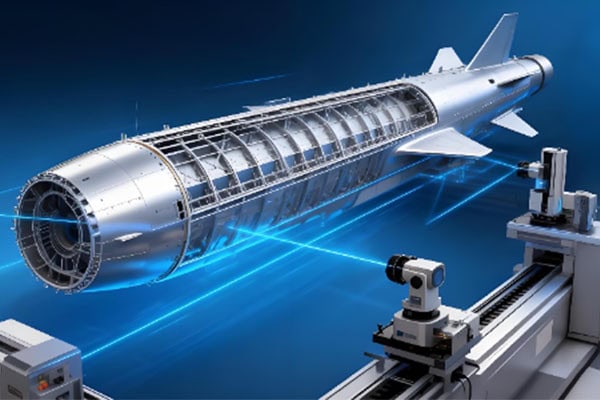
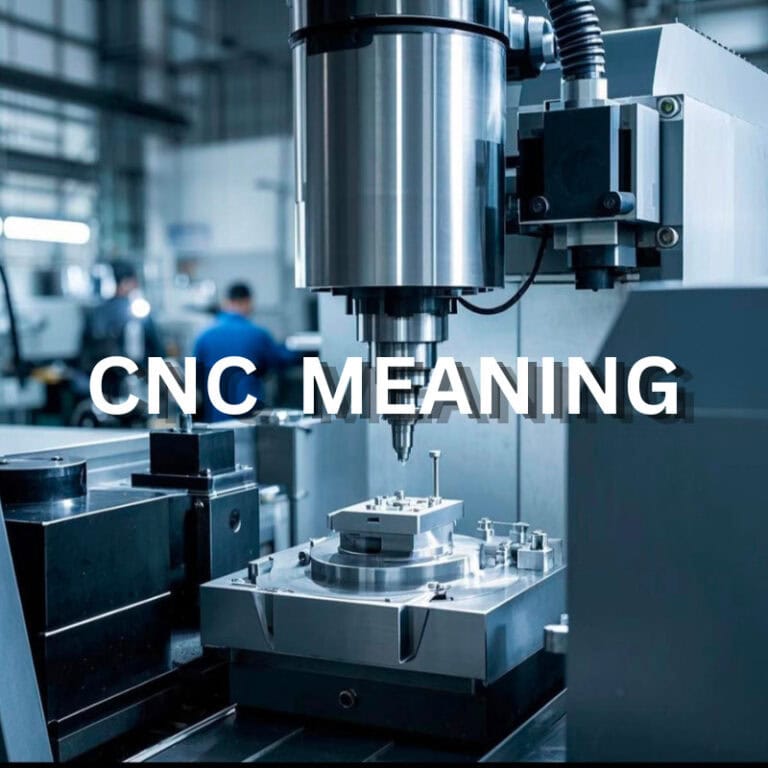
Aerospace equipment has high requirements for component weight, strength, precision, and reliability. As aircraft, drones, satellites, and other aerospace equipment continue to develop toward lightweight and high-performance designs, traditional structural designs may no longer meet the requirements of complex operating conditions. Through CNC precision machining, 5-axis machining, and lightweight structural design, manufacturers can reduce component weight while maintaining sufficient mechanical strength, providing a reliable solution for aerospace component manufacturing. TiRapid offers 3-axis, 4-axis, and 5-axis CNC machining capabilities and supports materials such as aluminum alloys and titanium alloys for customized aerospace components.
Get 20% offf
Your First Order
Need custom metal and plastic parts?
Key Requirements for Aerospace Lightweight Parts Machining
Reducing Component Weight
Weight is a critical consideration in aerospace equipment. By optimizing wall thickness, removing material from non-load-bearing areas, and designing reinforcing ribs and internal structures, manufacturers can reduce material usage while maintaining the required strength. For brackets, housings, connectors, mounting bases, and other components, lightweight designs can help reduce the overall structural weight.
Maintaining Structural Strength
Lightweighting does not simply mean removing material. It requires a balance between weight and structural strength. Aerospace components may be exposed to vibration, impact, temperature changes, and long-term mechanical loads. Therefore, suitable materials and machining parameters need to be selected according to the component structure and application requirements.
Machining Complex Geometries
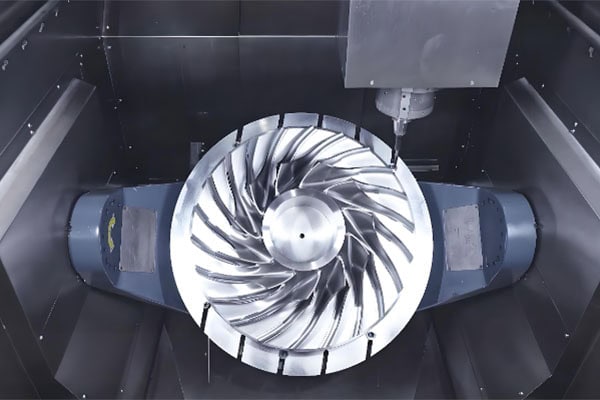
Many aerospace components feature thin walls, deep cavities, curved surfaces, angled holes, and other complex geometries. Conventional machining may require multiple setups, which can reduce efficiency and increase positioning errors. 5-axis CNC machining can reduce the number of setups while improving the machining capability for complex surfaces and multi-sided structures.
Common Materials for Aerospace Lightweight Parts
Material selection directly affects the weight, strength, and machining performance of aerospace components. Common materials include aluminum alloys, titanium alloys, and high-performance engineering plastics.
Material
Main Characteristics
Typical Applications
Aluminum Alloy
Lightweight, strong, and easy to machine
Brackets, housings, connectors
7075 Aluminum
High strength and low weight
Aerospace structures, high-strength supports
Titanium Alloy
High strength, corrosion resistance, and heat resistance
Engine and high-performance structural components
PEEK
Lightweight, temperature-resistant, and chemically resistant
Insulating components, supports, precision parts
Engineering Plastics
Low density and flexible processing
Lightweight non-load-bearing components
TiRapid supports more than 80 materials and provides metal and plastic CNC machining services. Materials can be selected according to component strength, weight, temperature resistance, and operating environment.
CNC Machining Solutions for Aerospace Lightweight Parts
5-Axis CNC Machining for Complex Components
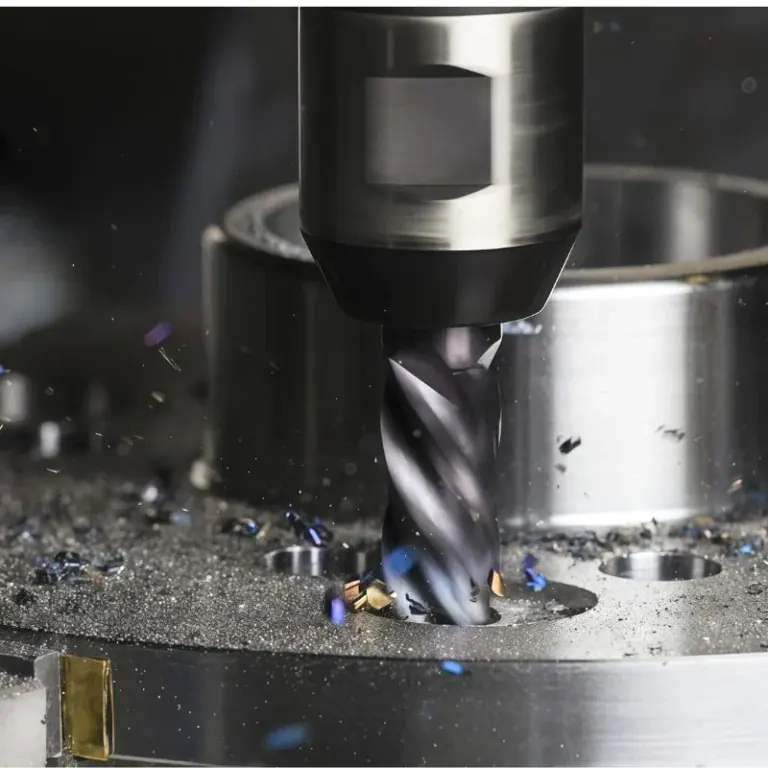
For aerospace components with complex surfaces, multi-angle holes, and deep cavities, 5-axis CNC machining can complete multiple machining surfaces with fewer setups. This helps reduce errors caused by repeated positioning while improving machining efficiency for complex geometries.
Precision Machining of Thin-Wall Components
Thin-wall structures are an important part of aerospace lightweight design. However, thin-wall components are more susceptible to deformation, vibration, and dimensional deviations during machining. Proper tool paths, cutting parameters, and fixturing methods are therefore required to control deformation while maintaining machining efficiency.
DFM Design Optimization
Lightweight component manufacturing should not focus only on the machining stage. Conducting Design for Manufacturability (DFM) analysis during the design stage can help identify problems such as excessively thin walls, inaccessible machining areas, and difficult-to-machine deep cavities. The structure can then be optimized for better manufacturability. TiRapid provides DFM support to help engineering teams evaluate manufacturability based on original CAD files.
Quality Control for Aerospace Lightweight Parts
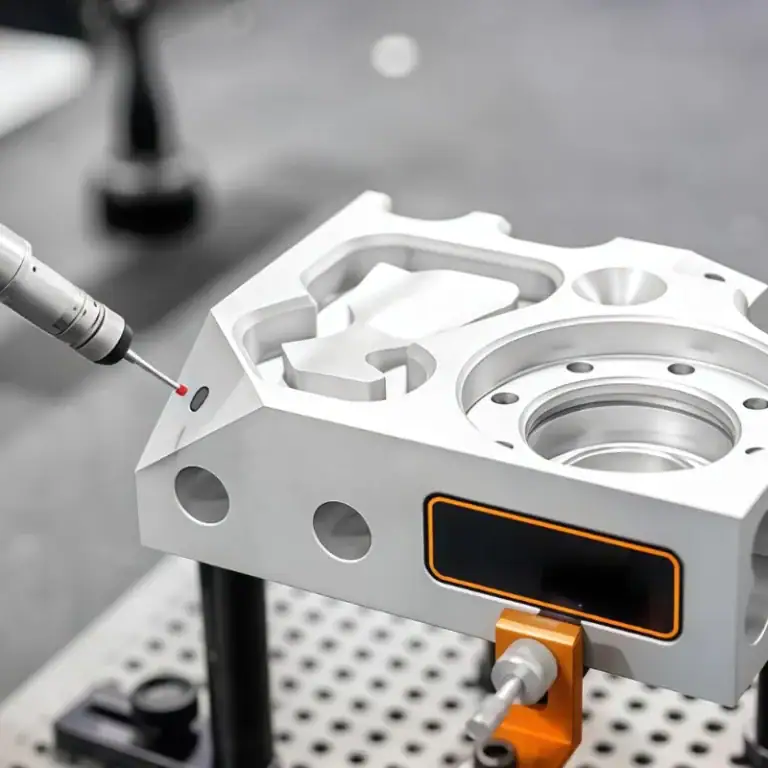
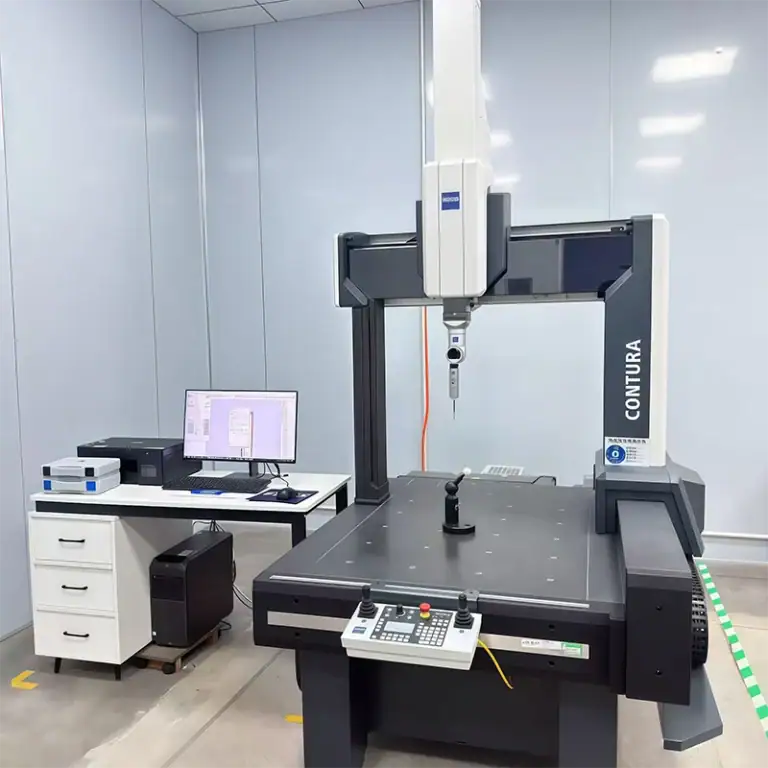
Lightweight components often feature complex structures and tight dimensional requirements. After machining, dimensional accuracy, geometric tolerances, and surface quality should be inspected according to the component specifications. Depending on the requirements, CMM inspection, dimensional measurement, and surface quality inspection can be used to verify critical dimensions and assembly locations.
TiRapid operates under an ISO 9001 quality system and provides precision CNC machining and 5-axis CNC machining services. Its CNC machining capabilities can achieve tolerances down to approximately ±0.01 mm for certain applications, making it suitable for customized components requiring high precision and consistency.
Aerospace Components Suitable for Lightweight CNC Machining
Aerospace lightweight CNC machining solutions can be applied to a wide range of components, including aircraft structural brackets, equipment mounting bases, lightweight housings, connectors, auxiliary engine components, UAV structural parts, and precision satellite components.
For new product development, rapid prototyping and low-volume CNC machining can be used to validate component designs. Once the design enters production, machining processes can be further optimized according to production volume and precision requirements, creating a smooth transition from prototypes to small-batch manufacturing. TiRapid provides services covering prototype development through production machining, including 3-axis, 4-axis, 5-axis, and large CNC machining.
Why Choose TiRapid for Aerospace Lightweight Parts Machining?
Aerospace lightweight components require more than machining precision. A capable machining partner should also have expertise in complex structures, material selection, and engineering optimization. With more than 16 years of CNC machining experience, TiRapid provides 5-axis CNC machining, precision machining, metal machining, and plastic machining services, along with DFM design support.
For aerospace manufacturers, coordinating material selection, structural optimization, CNC machining, and quality inspection can help achieve better control over component weight, precision, cost, and delivery time.
Through a professional aerospace lightweight parts machining solution, manufacturers can select appropriate materials, machining equipment, and processing methods according to different structural and application requirements. This makes it possible to reduce component weight while maintaining the required strength and dimensional accuracy. For complex surfaces, thin-wall structures, and high-precision aerospace components, TiRapid’s 5-axis CNC machining and DFM support can provide flexible manufacturing solutions for product development and low-volume production.
Author
Galen Director and Founder
Committed to ensuring we provide the best possible service in the manufacturing industry.
Limits, fits and tolerances define the acceptable dimensional variation and assembly relationships between mating mechanical components. Limits establish the maximum and minimum permitted sizes, tolerances define the allowable variation, and
Ejector pins are small mold components, but they play a major role in whether an injection molded part can leave the mold cleanly and consistently. After plastic cools around the
A machined housing can have a flat mounting face, a deep pocket, a bearing seat, and threaded holes. A shaft may need finished diameters, grooves, and an axial bore. Each
CNC plastic machining is a subtractive manufacturing process that uses computer-controlled cutting tools to produce precision components from engineering plastics. It is widely used for prototypes, custom housings, bushings, gears,
A flat mounting face, a deep pocket, and a curved mold surface call for different cutting approaches. Choosing a milling cutter starts with understanding the feature to be produced, then
Aluminum is a weakly paramagnetic metal, meaning it responds slightly to an external magnetic field but does not behave like iron or ordinary carbon steel. A typical refrigerator magnet will
Stiffness and strength are often treated as if they describe the same material behavior, but they answer different engineering questions. Stiffness tells you how much a material or part deforms
CNC machining is used to manufacture precise metal and plastic components for automotive, medical, aerospace, industrial equipment, and electronic products. It transforms raw material into functional parts through computer-controlled milling,
A shaft must enter its mating bore, a bearing must stay seated, and a cover must locate correctly on its housing. Each function permits some dimensional variation. The engineering task
SFM machining uses surface feet per minute to measure the cutting speed between a rotating tool and the workpiece. It helps machinists calculate suitable spindle speeds, control cutting conditions, and
CNC is one of the core technologies behind modern manufacturing. It allows machines to follow programmed instructions and produce parts with controlled dimensions, repeatable movements, and less dependence on manual
A machined housing can have correctly sized holes and still fail to assemble if those holes are in the wrong locations. Checking each diameter tells you only part of the