Aerospace components often feature complex structures, tight dimensional tolerances, high-strength materials, and demanding machining requirements. Aircraft structural components, engine parts, aerospace blades, mounting brackets, and precision UAV components may contain complex curved surfaces, deep cavities, angled holes, thin walls, and multi-angle features.
When processing these components, conventional 3-axis machining may require multiple setups and repeated changes to the machining direction. This can increase production time and introduce positioning errors. Aerospace 5-axis machining solutions use multi-axis coordinated movement to adjust the cutting tool and workpiece orientation, providing a more flexible and efficient approach to precision manufacturing for complex aerospace components.
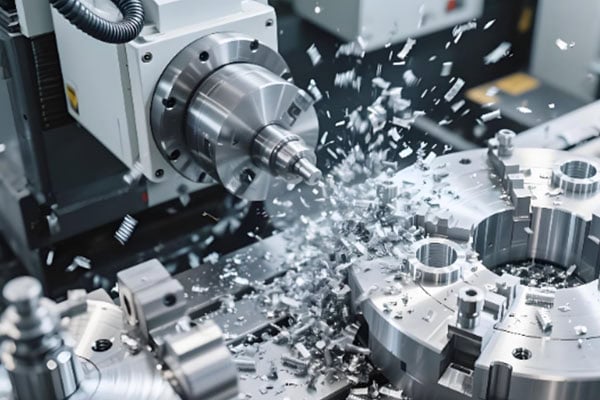
Why Are Aerospace Components Suitable for 5-Axis Machining?
Greater Flexibility for Complex Surface Machining
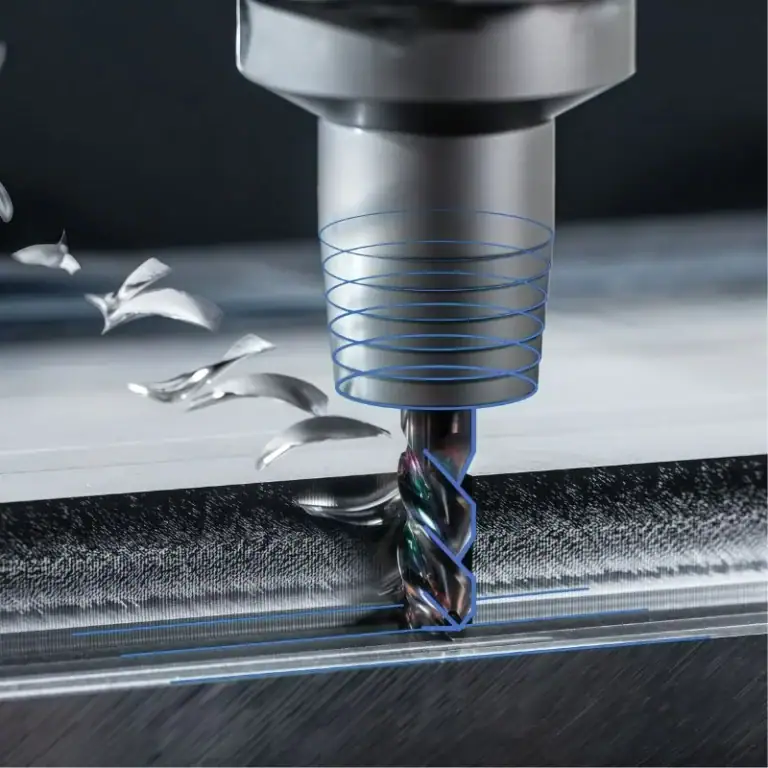
Aerospace components often feature streamlined and integrated designs, making complex curved surfaces an important structural characteristic. 5-axis CNC machining can adjust the tool orientation along multiple axes, allowing the cutting tool to approach the workpiece from a more suitable angle.
For components such as aerospace blades, curved housings, and complex structural parts, 5-axis machining can reduce segmented machining operations and provide more continuous machining of complex contours.
Fewer Repeated Setups
When machining complex aerospace components with 3-axis equipment, the workpiece may need to be repositioned several times to access different surfaces. Each additional setup can introduce positioning errors.
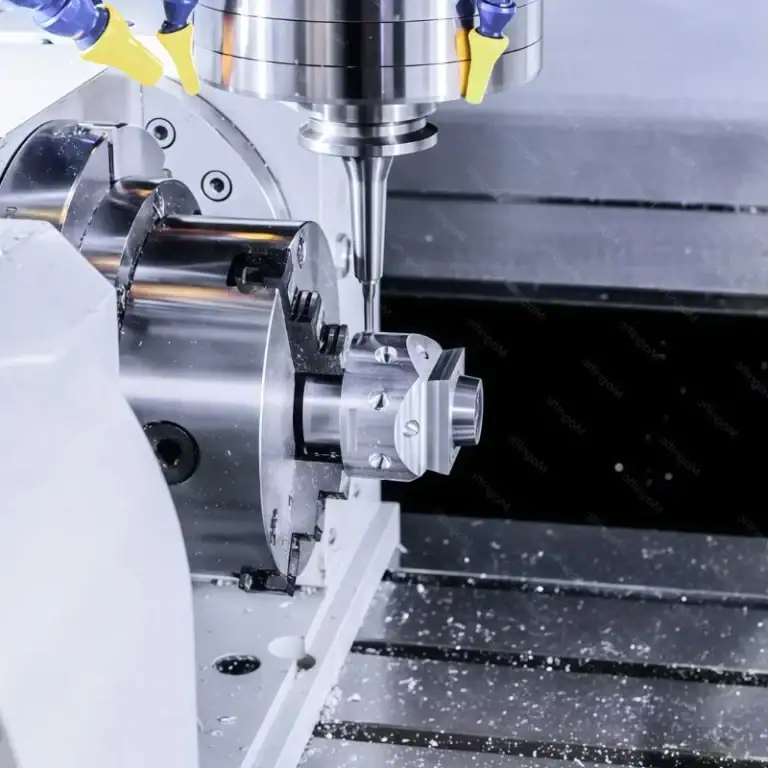
5-axis machining can complete multiple machining operations from different directions in a single setup. This reduces the need for repeated repositioning and helps improve the positional consistency between different features.
Improved Machining Efficiency
5-axis equipment can adjust the tool orientation according to the component geometry, making it possible to machine areas that may be difficult to access with conventional equipment.
Reducing workpiece repositioning and setup operations can also shorten the overall machining cycle and improve production efficiency.
Main Applications of Aerospace 5-Axis Machining
Aircraft Engine Components
Engine components are exposed to high temperatures, high speeds, and complex loads, resulting in demanding requirements for machining accuracy and surface quality. 5-axis CNC machining is suitable for manufacturing engine components with complex curved surfaces and multi-angle structures.
Aerospace Blade Machining
Aerospace blades typically have complex three-dimensional surfaces. Their manufacturing process requires precise control of tool orientation and cutting paths.5-axis machining can continuously adjust the tool direction, allowing the cutting tool to better follow the curved surface and improve machining flexibility.
Aircraft Structural Components
Aircraft structural components need to balance strength and weight. They often feature lightweight designs with deep cavities, thin walls, and complex ribs.5-axis machining can reduce the number of setups required for these components while providing access to features from different directions.
Aerospace Precision Brackets and Connectors
Brackets, connectors, and mounting components often contain multiple precision holes, angled surfaces, and positioning features.5-axis machining can reduce the need to change the workpiece orientation during production and help improve the relative positional accuracy of multiple machining features.
Common Materials for Aerospace 5-Axis Machining
Aerospace applications have demanding requirements for material weight, strength, corrosion resistance, and high-temperature performance. 5-axis machining can be applied to a wide range of aerospace metal materials.
| Material | Key Characteristics | 5-Axis Machining Applications |
| Aluminum Alloy | Lightweight and highly machinable | Structural components, housings, brackets |
| Titanium Alloy | High strength, corrosion resistance, high-temperature performance | Engine components, connectors |
| Stainless Steel | High strength and corrosion resistance | Structural components, shafts |
| Nickel-Based Alloy | High-temperature resistance and high strength | High-temperature engine components |
Different materials have different cutting characteristics. When machining titanium alloys and nickel-based alloys in particular, cutting speed, feed rate, and cutting depth need to be carefully controlled. Tool wear and machining temperature should also be closely monitored.
How Does 5-Axis Machining Ensure Aerospace Part Accuracy?
Optimize Tool Orientation
Tool orientation directly affects cutting efficiency and surface quality. For complex curved surfaces, appropriate tool angles and machining paths should be planned according to the geometry of the component.Proper tool orientation can help reduce overcutting, undercutting, and excessive localized tool loads.
Plan the Machining Sequence
Aerospace components may include thin walls, deep cavities, and complex ribs. An inappropriate machining sequence can cause deformation.The machining allowance should therefore be distributed appropriately between roughing and finishing operations while machining stresses are carefully controlled.
Control Workholding and Positioning
Although 5-axis machining can reduce the number of setups, fixtures and positioning references remain important.Stable workholding helps reduce vibration and movement during machining and provides a reliable foundation for subsequent finishing operations.
Strengthen Dimensional Inspection
After 5-axis machining, critical dimensions, hole positions, contours, and geometric tolerances should be inspected according to component requirements.Effective quality control throughout the machining process helps identify deviations and allows subsequent production processes to be optimized.
Production Requirements Suitable for Aerospace 5-Axis Machining
5-axis CNC machining is suitable not only for mass production of aerospace components but also for prototypes and small-batch customized parts during product development.
During new product development, aerospace manufacturers may need to produce different component versions to validate structural designs. 5-axis CNC machining does not require complex molds and can adapt machining programs according to CAD models and engineering drawings, allowing different component designs to be manufactured efficiently.
For small-batch aerospace components, 5-axis machining can also reduce complex workholding and auxiliary operations, making production more flexible. This is particularly useful for high-value precision metal components with complex geometries.
TiRapid Aerospace 5-Axis Machining Solutions
TiRapid provides precision CNC machining services and can develop machining solutions based on aerospace customers’ engineering drawings, 3D models, material requirements, and dimensional tolerances.For aerospace components featuring complex curved surfaces, thin-wall structures, multi-angle holes, and deep cavities, TiRapid can utilize 5-axis machining processes to support precision manufacturing.
In terms of materials, TiRapid supports the machining of aluminum alloys, titanium alloys, stainless steel, and other metal materials. Cutting tools and machining parameters can be adjusted according to the characteristics of different materials.
For complex aerospace structural components, brackets, housings, connectors, and other customized parts, 5-axis machining can reduce repeated setups and improve machining flexibility.
From prototype components during product development to small-batch precision component manufacturing, TiRapid can develop machining processes according to customer drawings and technical requirements, providing flexible aerospace 5-axis CNC machining support.
The complex structures and tight precision requirements of aerospace components place demanding requirements on machining equipment and manufacturing processes. Aerospace 5-axis machining solutions use multi-axis coordinated movement, flexible tool orientation, and fewer workpiece setups to help improve machining efficiency, dimensional consistency, and surface quality.
For aerospace blades, engine components, aircraft structural parts, precision brackets, and other complex metal components, the appropriate application of 5-axis CNC machining can improve manufacturing flexibility while providing reliable support for aerospace prototype development, small-batch production, and customized component manufacturing.