In CNC milling, scrap is usually not caused by a single step, but by the combined effects of drawing interpretation, material condition, program preparation, clamping method, and in-process inspection. For customers, scrapped parts not only extend lead times and increase costs, but may also affect batch consistency and even interfere with subsequent assembly and overall machine performance. To truly reduce losses, the key is not repeated rework after the fact, but shifting risks as far upstream as possible so that every process becomes more stable, more controllable, and easier to trace.
Controlling Risks at the Source Is the Only Way to Truly Reduce Scrap Rates
If you want defect rates to keep declining, the first step is to resolve problems as early as possible in the machining process rather than waiting until the finished part is completed.
Drawing Confirmation Must Be Thorough to Avoid Discovering Problems Only After Machining
Drawing confirmation is the first checkpoint in CNC milling. Only by verifying dimensions, tolerances, and technical requirements before production begins can directional deviations be avoided later in the process. Many parts do not fail during machining itself; instead, they are produced incorrectly because the initial understanding was incomplete, and the issue is only discovered after the entire batch has been completed.
- Before production starts, confirm dimensional tolerances, datum positions, and surface requirements to avoid batch rework caused by drawing interpretation errors.
- For critical areas such as hole locations, slot depths, thin walls, and mating surfaces, confirm machining priorities with the customer in advance to reduce later disputes.
- If the drawing contains unclear markings or missing information, technical communication should be completed before programming rather than waiting until the first article is produced.
Resolving drawing issues early usually saves more time than reworking parts later and is also more effective in reducing defect rates.
Material Condition Must Be Stable, So Raw Material Does Not Drag Down Yield
The stability of raw material condition directly determines whether parts can maintain consistent machining performance during CNC milling. Differences between material batches in hardness, internal stress, and surface condition all affect cutting stability, especially in aluminum alloys, stainless steel, and engineering plastics. Incoming inspection should focus on deformation, cracks, oxide layers, and machining allowance to prevent nonconforming materials from entering production directly. For materials prone to deformation, prior aging treatment or process pre-treatment can significantly reduce the risk of warping and dimensional drift after machining. Only by keeping material condition stable can subsequent machining proceed more smoothly, and yield will improve accordingly.
The Process Route Must Be Reasonable to Reduce Errors Caused by Repeated Clamping
Whether the process route is designed reasonably directly affects positioning accuracy and dimensional consistency during machining. For complex parts, if the process sequence is not arranged properly, repeated clamping will not only increase errors but also raise the risk of tool collisions and scrap.
- If a part can be completed in one clamping, it should not be split into multiple machining setups, because every additional clamping increases dimensional deviation and scrap risk.
- Rough machining, semi-finishing, and finishing should be arranged in layers to avoid improper allowance distribution that may cause local overcutting or deformation.
- Planning the machining sequence for complex parts in advance can reduce interference, tool collisions, and cumulative errors, making the CNC milling process more controllable.
A reasonable process route can eliminate many potential problems early in the machining stage, thereby significantly reducing defect rates.
Choosing the Right Program and Tooling Can Prevent Many Scrap Parts in Advance
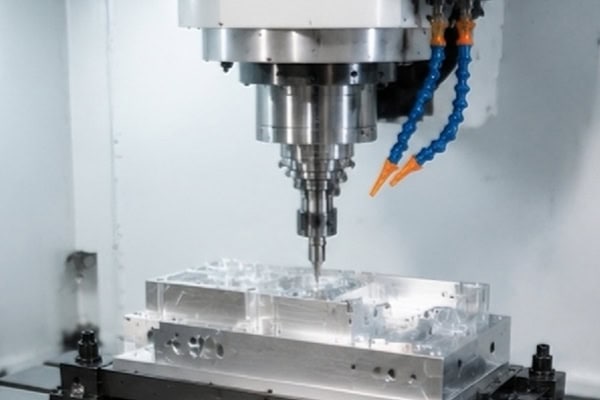
Programs and tools are the core factors that determine machining results. If they are selected correctly from the beginning, many problems later in the process will naturally decrease.
Program Simulation and First Article Trial Cutting Cannot Be Skipped
Program verification is an important step in avoiding machining mistakes, especially for complex and high-precision parts, where any toolpath error may directly cause scrap. Through simulation and first article trial cutting, risks can be exposed as much as possible before formal batch production begins.
- Before formal machining, toolpath simulation can be used to identify collisions, overcutting, missed machining, and unreasonable paths in advance.
- During first article trial cutting, key dimensions and machining boundaries should be checked carefully, and batch production should begin only after confirmation.
- For parts with complex structures or tight tolerances, the more thorough the program verification, the lower the subsequent defect rate usually is.
Thorough program verification often prevents many unnecessary losses at the source.
Tool Selection Must Match the Material and Structure
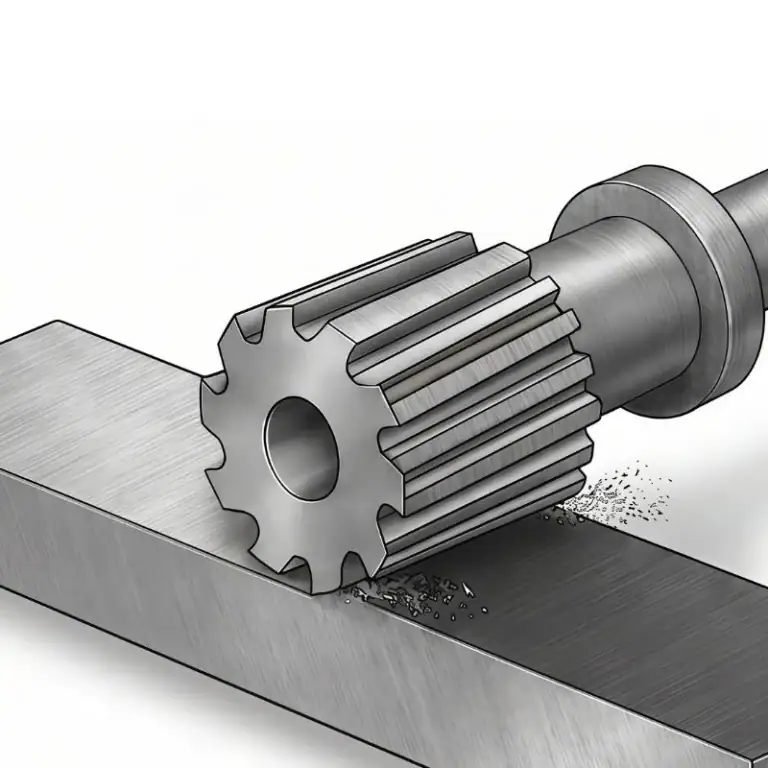
Whether a tool is suitable directly affects cutting efficiency, surface quality, and tool life. Different materials and structures require different tooling. If the tool selection does not match the application, vibration, edge chipping, and increased burrs are likely to occur, ultimately affecting part yield.
- Different materials require different tools, and the choice of carbide tools, coated tools, and special-purpose tools directly affects surface quality and tool life.
- When machining thin walls, deep cavities, or high-hardness materials, insufficient tool rigidity can easily cause chatter, edge chipping, and loss of dimensional control.
- If a tool continues to be used after wear has occurred, it will not only increase burrs but also gradually cause dimensions to drift away from the standard, eventually creating batch scrap.
Selecting the right tool and monitoring wear in time is one of the most direct and effective ways to reduce defect rates.
Cutting Parameters Must Be Stable, Not Just Fast
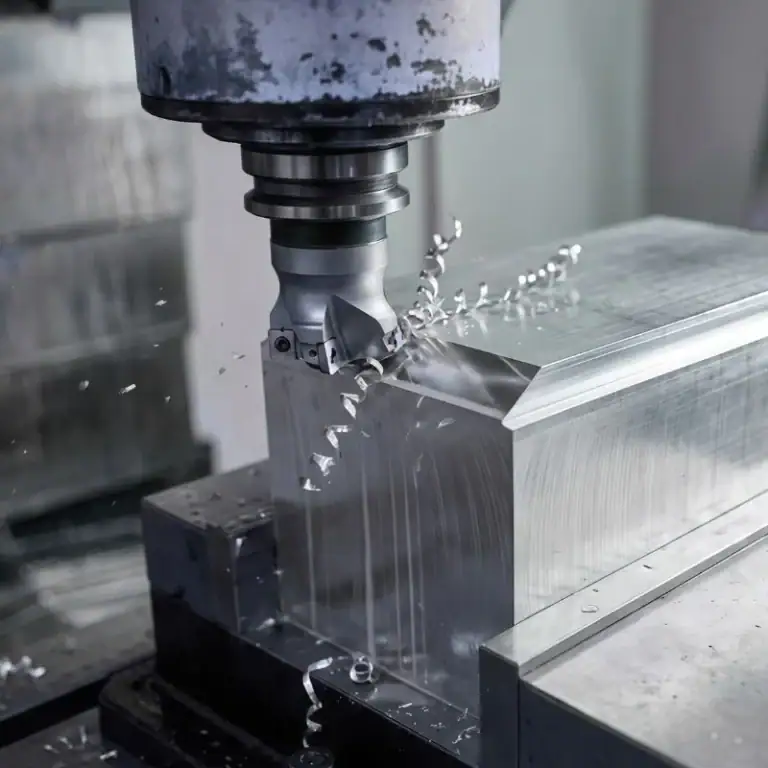
Whether cutting parameters are set reasonably determines whether the machining process is a stable output or a continuous source of risk. Many machining problems are not caused by insufficient speed, but by overly aggressive parameters that lead to heat buildup, deformation, poor surface finish, and abnormal tool wear.
- Cutting speed, feed rate, and depth of cut must be matched to the material characteristics; overly aggressive parameters can easily cause heat buildup, deformation, and rough surfaces.
- For materials prone to sticking to the tool, proper control of cooling and chip evacuation is more important than simply increasing spindle speed.
- Stable parameter settings can reduce abnormal tool wear and make part dimensions more consistent, which is especially suitable for batch CNC milling production.
Stable cutting parameters not only improve machining quality but also make batch production more reliable and controllable.
Fixtures, Equipment, and Shop-Floor Management Determine Whether Machining Is Truly Stable
The stability of the machining environment often determines whether all the process planning above can truly be implemented.
Clamping Methods Must Be Reliable to Prevent Part Deformation During Machining
Whether the clamping method is appropriate directly affects part stability during cutting. For thin-walled parts, long parts, and small precision components, if clamping is not secure, the part can easily shift, deform, or even be scrapped under cutting forces.
- Thin-walled parts, long parts, and small precision components can easily shift or deform under cutting forces if clamping is unstable.
- Soft jaws, vacuum adsorption, and dedicated fixtures can be selected flexibly according to part characteristics to reduce clamping damage and deformation.
- Confirming that the positioning datum is consistent before clamping can effectively reduce repeated positioning errors.
A reliable clamping method keeps the part stable during machining and therefore reduces scrap generation.
Equipment Condition Must Be Kept in Good Shape, and Accuracy Problems Cannot Be Forced Through by Experience Alone
The precision and stability of the equipment itself are the foundation for whether CNC milling can continuously produce qualified parts. If the machine remains unstable for a long time, it is difficult to produce consistent parts even when the program and process are correct. Spindle runout, guideway wear, screw backlash, and tool magazine abnormalities all affect machining accuracy, and in severe cases can directly cause scrap. Regular equipment calibration, tool offset checks, and cooling system maintenance are basic tasks for ensuring CNC milling stability. If the machine is operated in a faulty condition for a long time, it is difficult to produce stable and qualified parts even if the program is correct. The more thoroughly equipment maintenance is performed, the more stable the machining process becomes, and the lower the defect rate naturally is.
In-Process Inspection Must Be Moved Forward, Not Wait Until the Entire Batch Is Finished
The role of in-process inspection is not only to find problems, but more importantly to stop them from spreading in time. Many batch scrap incidents are not caused by the problem itself being large, but by discovering it too late, allowing a small deviation to turn into a full-batch loss.
- First article inspection, patrol inspection, and spot checks of critical dimensions can detect deviations in time and prevent small issues from becoming batch scrap.
- For high-value parts, it is recommended to inspect once after rough machining and again after finishing so that tool offsets and process parameters can be corrected in time.
- By recording defect causes and rework data, processes can be continuously optimized so that subsequent batches become more stable.
Moving inspection forward into the machining process allows abnormalities to be detected earlier and defect rates to be controlled more effectively.
Turning Experience into Standards Is the Only Way to Keep Scrap Rates Falling
Only by accumulating machining experience over time can defect rate reduction become more than a short-term improvement.
Establish Problem Records to Identify the Real High-Frequency Mistake Points
If experience cannot be turned into standards, it is difficult to truly reduce long-term defect rates. Every scrap and rework event is actually an opportunity for process optimization, and the key is whether the problem is recorded and continuously analyzed.
- Every scrap event should be recorded with its cause, whether it is a tool issue, program issue, material issue, or clamping issue, rather than simply saying the part was “made wrong.”
- By analyzing high-frequency defects, the most worthwhile process steps to optimize can be identified quickly, allowing resources to be used where they are most effective.
- The more complete the experience accumulation, the higher the machining stability of similar parts will be later on.
Only by organizing scattered experience into actionable standards can defect rates truly continue to decline.
Let Process, Programming, and Quality Inspection Form a Closed Loop
If process engineering, programming, and quality inspection each work independently, information gaps are likely to occur, causing the same problems to repeat. Only by forming a closed-loop management system can problems remain consistent from detection to analysis to correction.Process engineers, operators, and quality inspectors should share the same standards to avoid repeated mistakes caused by information gaps.When a part shows deviation, the program, tooling, and fixture should be traced back immediately rather than only making up for it at the finished-part stage.This closed-loop management approach allows CNC milling to evolve from “making parts” to “making them correctly and consistently.”Once the loop is formed, problems will decrease and production will become more stable.
Reduce Risks to the Lowest Possible Level Before Batch Production
The validation stage before batch production is the most critical window for controlling defect rates. If many systemic problems can be discovered during small-batch trial production, larger losses during formal batch production can be avoided.
- The small-batch trial stage is the best time to verify process stability and can reveal systemic problems that may appear in batch production in advance.
- For customers, spending a little more time on validation early on is often far cheaper and faster than large-scale rework later.
- A truly mature machining solution is not the fastest one, but the one with the lowest scrap rate and the most stable delivery.
Compressing risks as much as possible before batch production is the most reliable way to reduce defect rates.
Conclusion
Reducing CNC milling scrap rates depends on front-loading control of drawings, materials, programs, tools, fixtures, and inspection rather than relying on after-the-fact correction. As long as each step is properly controlled, scrap, rework, and delivery delays will be significantly reduced, and part quality will become more stable and reliable. If you are looking for a more stable CNC milling solution, TiRapid can provide one-stop support from process review to batch delivery.