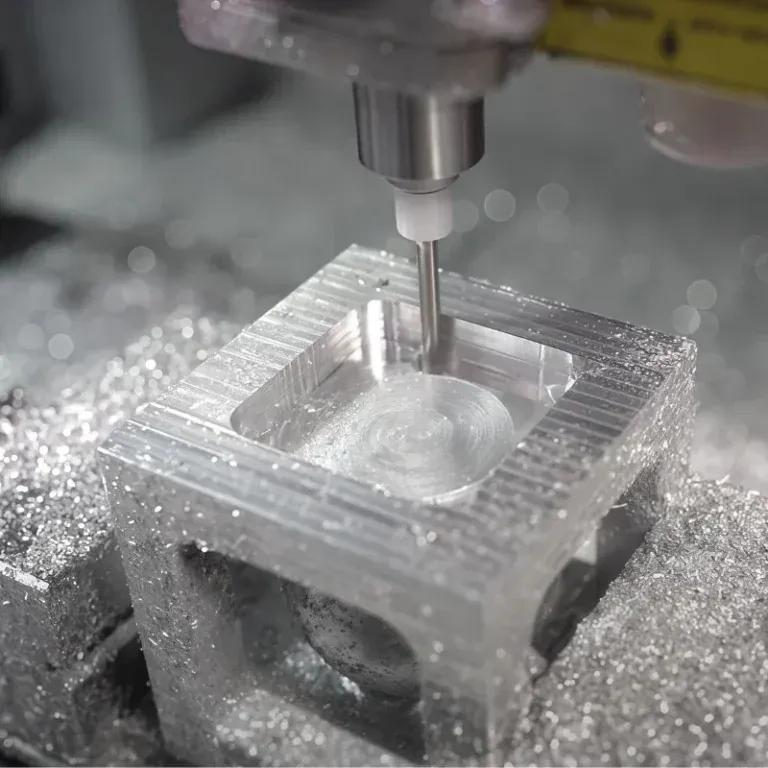
Delrin machining is widely used for precision plastic parts that require low friction, good wear resistance, stable dimensions, and clean CNC machining performance. Delrin is often selected for gears, bushings, rollers, spacers, and moving mechanical components.
Compared with many engineering plastics, Delrin cuts cleanly and holds tight tolerances well when the right tools and machining strategy are used. This guide explains Delrin properties, CNC machining methods, design tips, common applications, and how to avoid machining defects.
What Is Delrin?
Delrin is a brand name for acetal homopolymer, also known as POM-H or polyoxymethylene homopolymer. It is a strong, stiff, and wear-resistant engineering plastic commonly used for precision machined components. Because it combines low friction with good dimensional stability, Delrin is widely used as a metal replacement in many mechanical assemblies.
Unlike softer plastics that deform easily under load, Delrin maintains better rigidity and shape consistency during repeated movement. This makes it suitable for functional parts that need accurate fit, smooth sliding, and stable performance over time. In CNC machining, Delrin is especially useful when parts require clean edges, precise holes, and consistent surface quality.
Delrin is often compared with acetal copolymer, nylon, HDPE, and other engineering plastics. Its main advantages include excellent machinability, low moisture absorption, good fatigue resistance, and strong wear performance. However, material grade, part geometry, tolerance, and working environment should still be reviewed before choosing Delrin for a project.
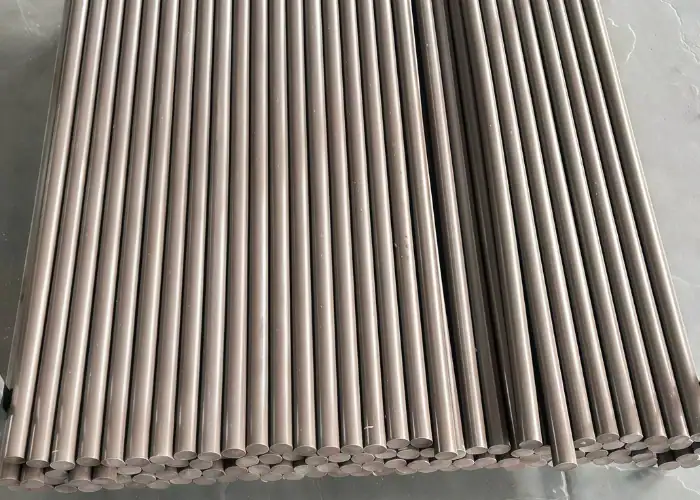
Why Is Delrin Good for CNC Machining?
Delrin is considered one of the easiest engineering plastics to CNC machine because it cuts cleanly and produces stable chips. Its balance of stiffness and toughness allows manufacturers to machine precise features with less deformation compared with softer plastics. This helps improve tolerance control during milling, turning, drilling, boring, and threading operations.
Another reason Delrin is popular is its excellent friction and wear behavior. It can work well in moving parts such as gears, bushings, rollers, sliding blocks, and guide components. The low-friction surface helps reduce mechanical noise and wear, making Delrin a practical choice for repeated-motion assemblies in automation and industrial equipment.
Delrin also offers good dimensional stability because it absorbs very little moisture compared with materials such as nylon. This is important for precision CNC parts used in humid or changing environments. When the design requires stable fit, smooth motion, and cost-effective machining, Delrin often provides a strong balance between performance and manufacturability.
Delrin Material Properties
Delrin offers a practical combination of strength, stiffness, wear resistance, and machining stability. It is not the highest-temperature plastic, but it performs very well in moderate industrial environments where low friction, durability, and dimensional accuracy are more important than extreme thermal resistance.
The material’s low moisture absorption helps maintain stable dimensions after machining and during use. This is one reason Delrin is often selected for close-fitting mechanical parts, bearing surfaces, sliding components, and precision plastic assemblies. It can also provide a smoother surface finish than many softer plastics when machined with sharp tools.
However, Delrin has limitations. It can creep under constant load, it may be affected by certain aggressive chemicals, and it should not be used in applications that exceed its thermal capability. Engineers should evaluate load, temperature, chemical exposure, tolerance, and mating materials before confirming Delrin for production.
| Property | Delrin Performance |
| Material Type | Acetal homopolymer |
| Machinability | Excellent |
| Wear Resistance | Excellent |
| Friction Performance | Low friction |
| Dimensional Stability | Very good |
| Moisture Absorption | Very low |
| Impact Resistance | Good |
| Fatigue Resistance | Good |
| Chemical Resistance | Good for many oils and fuels |
| Heat Resistance | Moderate |
| Typical Color | Natural white, black, custom colors |
Common Delrin Grades for Machining
Different Delrin grades are available depending on mechanical performance, wear behavior, compliance requirements, and application environment. Standard Delrin is suitable for many general precision parts, while filled or modified grades may improve friction, wear resistance, stiffness, or food-contact suitability.
PTFE-filled Delrin is often used when sliding performance and low wear are more important. Glass-filled acetal grades can improve stiffness and dimensional stability, but they may increase tool wear during machining. FDA-compliant acetal grades may be selected for food-contact or medical-related applications when proper certification is required.
Choosing the right grade is just as important as choosing Delrin itself. A general-purpose grade may work well for spacers or housings, but a sliding bearing or food-contact component may need a more specific material. For RFQs, it is helpful to specify the exact grade, color, compliance requirement, and operating environment.
Standard Delrin
Standard Delrin is widely used for general CNC machined plastic parts requiring strength, stiffness, and good wear resistance. It is commonly supplied as sheets, rods, and blocks, making it suitable for milling, turning, drilling, and other subtractive machining processes.
This grade is a practical choice for gears, bushings, rollers, spacers, mechanical guides, and precision fixture parts. It machines cleanly and can produce accurate dimensions when the design is suitable for plastic machining. For many industrial components, standard Delrin provides a good balance of performance and cost.
Standard Delrin is usually selected when the part does not require special additives, extreme wear resistance, or certification. If the working environment involves food contact, high load, continuous sliding, or unusual chemicals, a modified or certified grade may be a better option.
PTFE-Filled Delrin
PTFE-filled Delrin is designed to improve low-friction and wear performance. The added PTFE helps reduce sliding resistance, making this grade suitable for bearings, bushings, guide rails, wear pads, and other parts that operate with repeated contact against mating surfaces.
This grade is useful when lubrication is limited or when the part must maintain smoother movement over time. It can help reduce friction-related wear and mechanical noise in certain assemblies. For automation equipment and industrial motion systems, PTFE-filled Delrin can improve long-term operating stability.
However, PTFE-filled grades may have different mechanical behavior than standard Delrin, so designers should review strength, stiffness, and tolerance requirements before selection. It is best used when improved sliding performance is more important than maximum structural strength.
Glass-Filled and FDA-Compliant Grades
Glass-filled acetal grades are used when higher stiffness and better dimensional stability are needed. These materials can be useful for more rigid mechanical components, but the glass reinforcement may make machining more abrasive and can increase tool wear. Sharp carbide tools and proper machining control are important for consistent quality.
FDA-compliant acetal grades may be selected for food-processing equipment, packaging machinery, and certain medical or laboratory components. Compliance should always be confirmed with material certificates, supplier documentation, and final application requirements because not every Delrin or acetal grade is suitable for regulated use.
For precision CNC machining, the grade choice affects cost, tool life, surface finish, and part performance. Before production, engineers should define whether the part needs standard mechanical performance, enhanced wear resistance, improved stiffness, color control, or specific certification.
Delrin CNC Machining Methods
Delrin can be machined using several CNC processes, including milling, turning, drilling, boring, threading, and reaming. The best method depends on part shape, tolerance, quantity, surface finish, and whether the component is made from sheet, rod, or block stock.
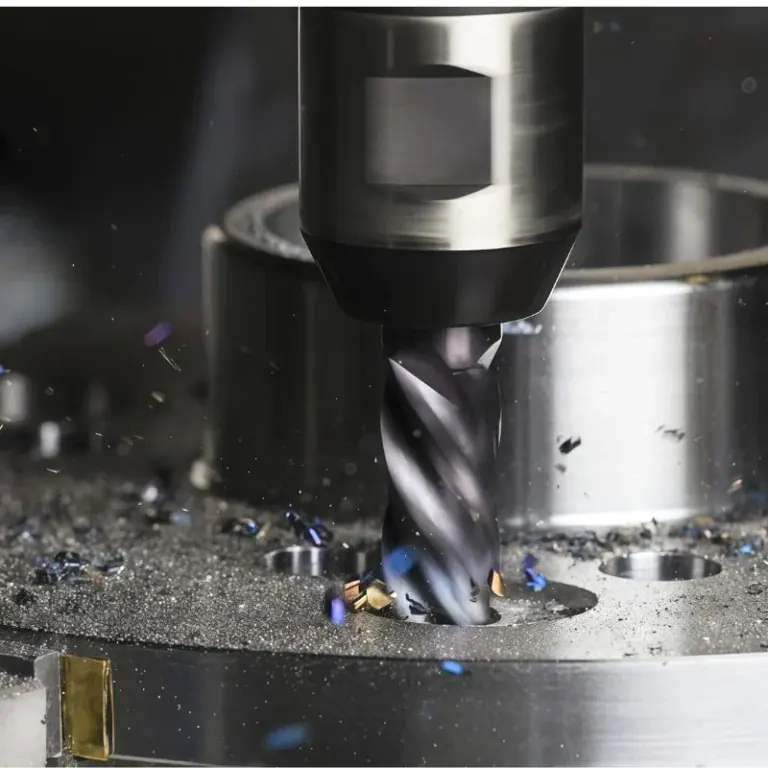
Because Delrin is easier to machine than many engineering plastics, it supports both prototype and production manufacturing. Even so, good machining practice is still important. Sharp tools, stable fixturing, proper chip evacuation, and controlled cutting heat help maintain tight tolerances and clean surfaces.
For TiRapid-style custom parts, the machining plan should be based on the drawing rather than the material alone. Thin walls, small holes, deep pockets, long shafts, and tight fits may require special process planning to avoid deformation, chatter, burrs, or dimensional variation.
CNC Milling for Delrin Parts
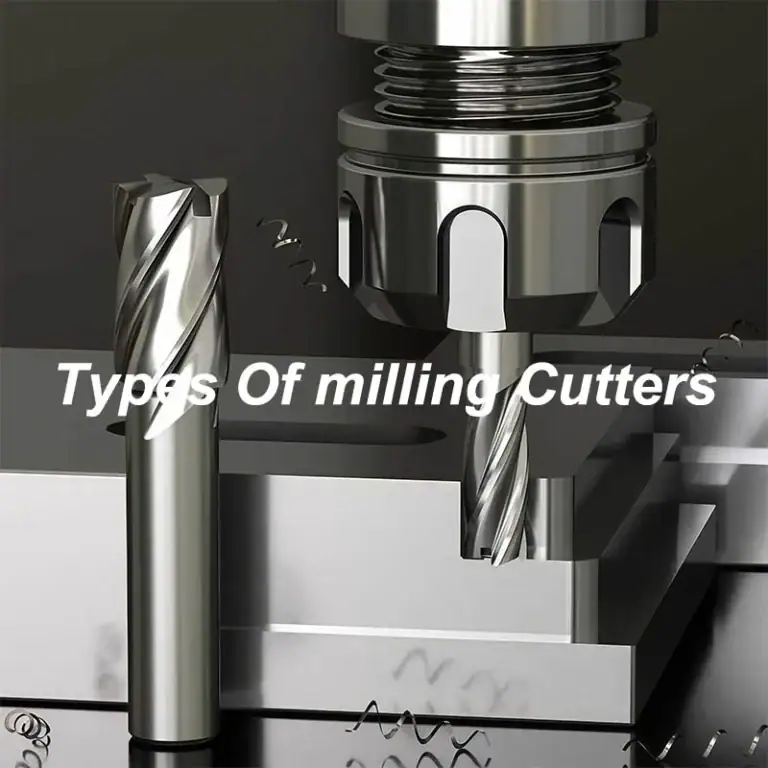
CNC milling is commonly used to produce Delrin blocks, plates, housings, brackets, guides, spacers, and complex prismatic components. Delrin’s stable cutting behavior allows accurate pockets, slots, holes, counterbores, chamfers, and surface features when the part is properly supported during machining.
Because Delrin is still a plastic material, excessive clamping force should be avoided. Too much pressure may deform the workpiece and cause dimensional errors after the part is released from the fixture. Balanced workholding is especially important for thin plates, large flat parts, and components with tight parallelism or flatness requirements.
During milling, sharp cutters and good chip evacuation help reduce heat buildup and surface smearing. If the tool is dull or the feed strategy is poor, burrs or rough edges may appear. A controlled finishing pass can improve surface quality and help maintain consistent dimensions on precision Delrin parts.
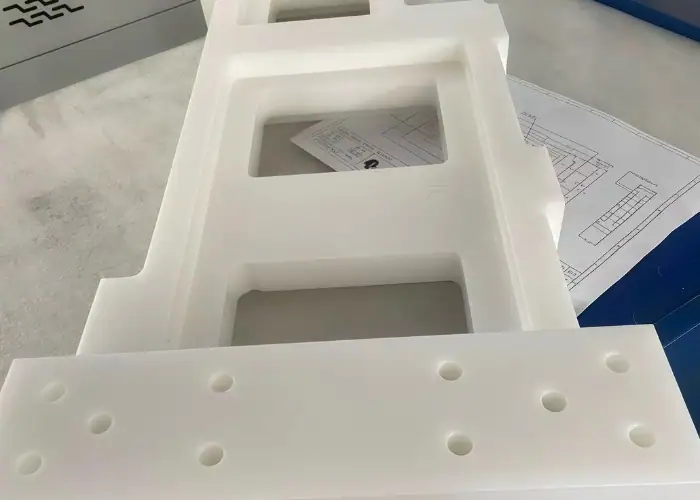
5-Axis CNC Machining for Complex Delrin Parts
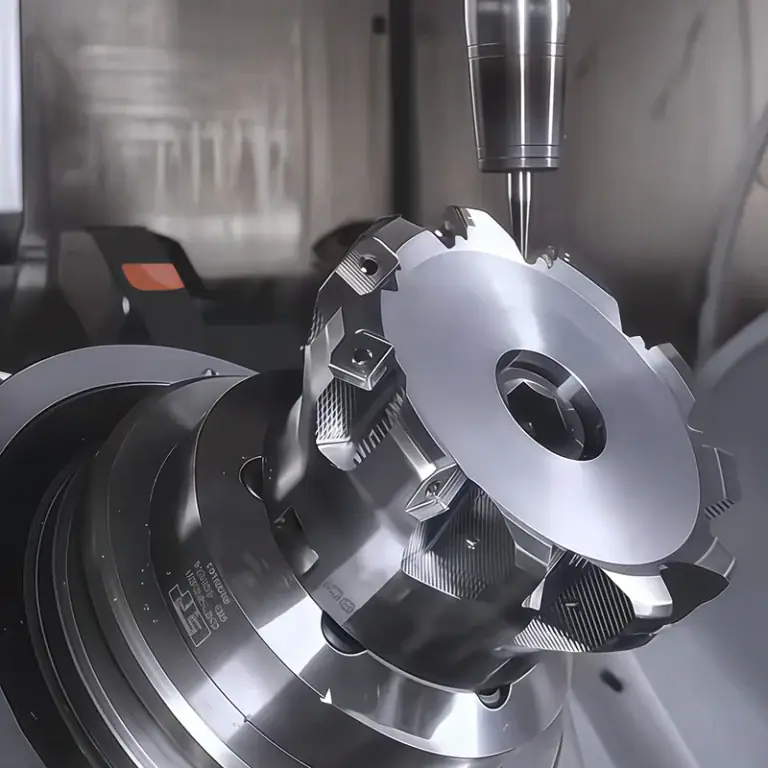
5-axis CNC machining can be useful for Delrin components with angled surfaces, complex contours, undercuts, multi-face features, or difficult tool access. It allows manufacturers to machine more surfaces in fewer setups, which can improve alignment accuracy and reduce handling errors between operations.
For complex plastic parts, reducing the number of setups can help maintain feature-to-feature accuracy. This is especially useful for Delrin parts used in automation, electronics, medical devices, and industrial assemblies where multiple holes, slots, and mounting surfaces must align correctly.
Although not every Delrin part needs 5-axis machining, it can be valuable when geometry is complex or tolerances are tight. The decision should consider part design, production quantity, inspection requirements, and whether multi-axis machining can reduce overall risk compared with multiple conventional setups.
CNC Turning for Delrin Parts
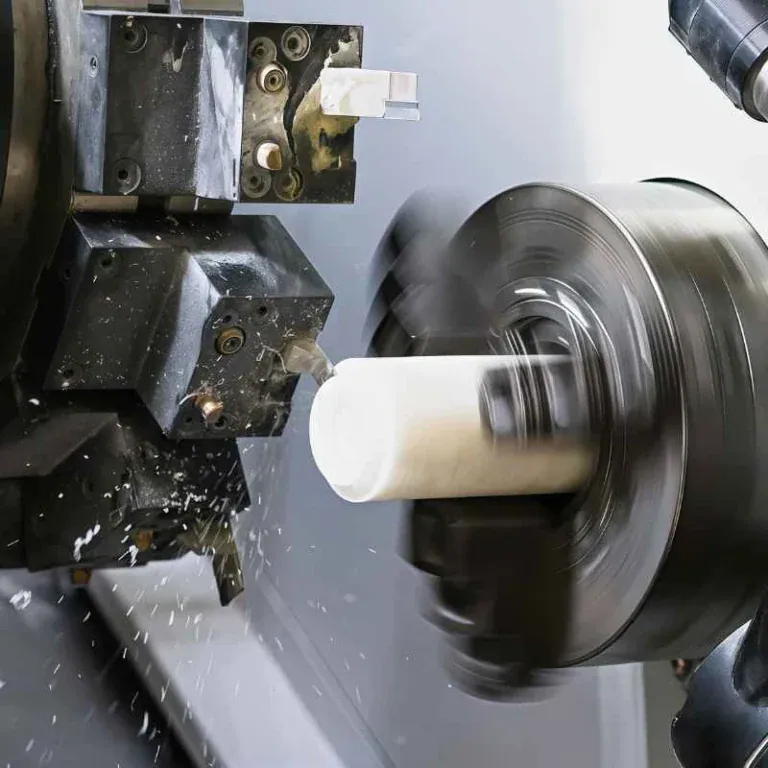
CNC turning is ideal for Delrin rods, bushings, rollers, collars, sleeves, pulleys, spacers, and other round components. Delrin’s low friction and stable machinability make it suitable for producing smooth cylindrical surfaces, precise diameters, grooves, threads, and internal bores.
When turning long or slender Delrin parts, support is important to prevent vibration or whipping. Steady rests, tailstock support, and controlled cutting parameters can help improve roundness and surface finish. Proper chip control also prevents material buildup around the tool or workpiece.
Delrin can produce a very clean turned surface when sharp tools and suitable feeds are used. For bearing surfaces, sliding diameters, or mating features, the final pass should be planned carefully to control size, finish, and roundness. Inspection should focus on both dimensional accuracy and functional fit.
Common Challenges in Delrin Machining
Although Delrin is highly machinable, several issues can still appear if the process is not controlled properly. Common problems include burr formation, melting, deformation, chatter, dimensional drift, and inconsistent surface finish. These issues are usually related to heat, tools, clamping, or part geometry.
Burrs often occur when tools are dull or the cutting strategy does not support clean shearing. Melting or smearing may happen when chips are not removed quickly or the tool rubs instead of cutting. Deformation can occur when the part is clamped too tightly or when thin features are not properly supported.
The best solution is to plan machining around the part’s functional requirements. Tool selection, fixture design, roughing strategy, finishing passes, and inspection sequence should all support the final tolerance and surface quality. Experienced plastic machining helps reduce rework and improve production consistency.
Common Applications of Delrin Machined Parts
Delrin machined parts are used across many industries because the material offers low friction, wear resistance, dimensional stability, and reliable mechanical performance. It is especially suitable for moving components that require smooth operation and repeatable fit in moderate-temperature environments.
In automation and industrial equipment, Delrin is used for gears, rollers, bushings, wear strips, guide blocks, spacers, and conveyor components. Its low friction helps reduce wear and mechanical noise, while its machinability supports custom shapes, holes, slots, and mounting features.
Delrin is also used in electronics, communications, robotics, aerospace, medical devices, automotive, consumer products, and food-processing equipment. Application requirements may differ, but the common reason for choosing Delrin is usually the same: reliable movement, precise machining, and stable long-term function.
Automation and Industrial Equipment
Automation systems often use Delrin for moving parts that need low friction and consistent operation. Gears, rollers, bushings, guides, and sliding blocks can benefit from Delrin’s wear resistance and dimensional stability. These parts help improve motion smoothness and reduce maintenance in repeated-cycle equipment.
Industrial equipment also uses Delrin for spacers, fixtures, valve parts, seals, and conveyor components. Because Delrin machines cleanly, it can be customized for specific machine layouts, mounting patterns, and assembly requirements. This makes it useful for low-volume and custom industrial manufacturing.
For these applications, engineers should review load, speed, temperature, and mating material before final selection. Delrin works well in many motion systems, but high heat, aggressive chemicals, or heavy continuous load may require a different engineering plastic or modified Delrin grade.
Electronics, Communications, and Robotics
Electronics and communications equipment may use Delrin for insulators, connectors, precision spacers, adjustment components, rollers, and small mechanical parts. Its dimensional stability helps maintain accurate fit in assemblies where small movements or alignment errors can affect performance.
Robotics applications often require lightweight parts that move smoothly and resist wear. Delrin can be a good choice for guide elements, bushings, small gears, and custom plastic fixtures. Its low friction can reduce noise and improve movement stability in compact mechanical systems.
For these industries, part cleanliness, surface quality, and tolerance control are important. If the component has small holes, fine features, or mating surfaces, the machining process should be carefully planned to avoid burrs and maintain repeatable assembly performance.
Aerospace, Medical, Automotive, and Consumer Products
Aerospace applications may use Delrin for lightweight mechanical components, non-structural bushings, spacers, guides, and interior mechanism parts. It can help reduce weight and provide good wear behavior, but material certification and application temperature should be reviewed carefully.
Medical and laboratory devices may use suitable Delrin or acetal grades for housings, handles, guides, and mechanical components. If the part requires sterilization, biocompatibility, or food-contact compliance, grade selection and material documentation are especially important.
Automotive and consumer products use Delrin for gears, clips, rollers, switches, fasteners, and small precision parts. Its combination of strength, low friction, and machinability makes it useful for functional prototypes and production components that need reliable mechanical performance.
Delrin Machining Cost Factors
The cost of Delrin machining depends on material grade, stock size, part geometry, tolerance, surface finish, quantity, and inspection requirements. Delrin is not the cheapest plastic, but its excellent machinability can help reduce machining time compared with harder or more difficult engineering plastics.
Simple parts made from standard rod or sheet stock are usually more economical. Complex parts with thin walls, tight tolerances, many setups, deep pockets, threaded features, or cosmetic requirements may cost more because they require additional machining time and process control.
To reduce cost, designers should use standard stock sizes, avoid unnecessary tight tolerances, keep wall thickness practical, and clearly define only the critical features. A DFM review can help identify where the design can be simplified without affecting function.
How to Choose Delrin for Your Project?
Choose Delrin when the part requires low friction, wear resistance, stable dimensions, good machinability, and moderate mechanical strength. It is especially suitable for gears, bushings, rollers, spacers, guides, fixtures, and precision moving components used in industrial and automation systems.
Do not choose Delrin only because it is easy to machine. The working environment still matters. If the part must handle high temperatures, strong acids, continuous heavy load, or special compliance requirements, engineers should review whether standard Delrin is suitable or whether another plastic would perform better.
For best results, send the supplier a complete RFQ package, including 2D drawings, 3D files, material grade, color, tolerance, surface finish, quantity, and operating conditions. This allows the machining team to review risks, suggest suitable process steps, and provide a more accurate quotation.
FAQs
Is Delrin suitable for tight-tolerance CNC machined parts?
Yes. Delrin is suitable for many tight-tolerance CNC machined parts because it has good stiffness, low moisture absorption, and stable machining behavior. However, final tolerance depends on part size, wall thickness, geometry, workholding, and inspection conditions.
How can burrs or melting be avoided when machining Delrin?
Burrs and melting can usually be reduced by using sharp tools, proper feeds and speeds, stable workholding, and good chip evacuation. Excessive cutting heat, dull tools, and too much clamping pressure are common causes of poor edge quality and dimensional variation.
When should I choose Delrin instead of nylon or HDPE?
Choose Delrin when the part needs better dimensional stability, lower moisture absorption, cleaner machining, and smoother motion. Nylon may be better for toughness, while HDPE may be better for chemical resistance and lower cost, but Delrin is often stronger for precision moving parts.
What should I include in a Delrin machining RFQ?
A clear Delrin machining RFQ should include 2D drawings, 3D files, material grade, color, quantity, tolerance, surface finish, and working conditions. If the part needs food-contact compliance, low-friction performance, or tight inspection requirements, these details should also be included.
Conclusion
Delrin machining is a reliable solution for precision plastic parts that require low friction, wear resistance, dimensional stability, and clean CNC machining performance. With the right grade, design, tooling, and machining strategy, Delrin can produce durable parts for automation, industrial equipment, electronics, robotics, medical devices, and custom mechanical assemblies.
At TiRapid, we provide precision CNC machining services for Delrin and other engineering plastics. Send us your 2D drawings, 3D files, material requirements, and quantities, and our team can help review the best machining solution for your project.