Tirapid

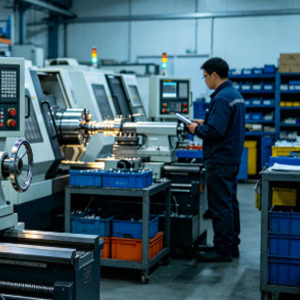
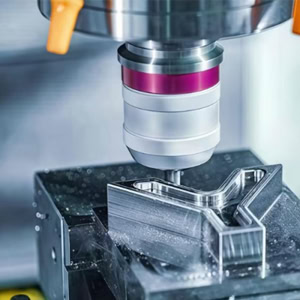
CNC machining centers perform precision milling on aluminum alloy parts.

Why Is Precision Machining Becoming More Important?

As manufacturing continues evolving toward higher performance, miniaturization, and greater structural complexity, traditional machining methods are increasingly unable to meet modern industrial demands for accuracy, stability, and complex geometries. Industries such as new energy vehicles, aerospace, medical devices, and intelligent equipment all rely heavily on high-precision components to ensure performance and reliability. In this context,

Why Is Precision Machining Becoming More Important? Read More »
Automobile machining drawing

What Are the Advantages of Automatic Turning Processes?

Automatic turning processes are becoming increasingly popular in the modern machining industry, especially in the production of automotive parts, electronic components, hardware fittings, medical devices, and precision shaft components. Compared with traditional manual turning, automatic turning not only improves machining efficiency but also enhances dimensional stability and batch production consistency. With the continuous development of

What Are the Advantages of Automatic Turning Processes? Read More »

Uncertainty in size during mechanical car machining

How to Deal with Dimensional Instability in Turning Operations

Dimensional instability during turning is a common quality issue, especially in batch production, precision component machining, and long-duration continuous machining. Fluctuating workpiece dimensions directly affect assembly accuracy and increase scrap rates. This issue is usually related to machine condition, tool wear, cutting parameters, clamping method, and thermal deformation. When these factors are not well controlled,

How to Deal with Dimensional Instability in Turning Operations Read More »

PEEK vs Delrin Raw Material Sheet Comparison

PEEK vs Delrin: Key Differences Explained

Choosing between PEEK and Delrin depends on your specific manufacturing needs. PEEK is ideal for projects that require high heat resistance, superior chemical stability, or biocompatibility, making it a preferred option for industries like aerospace, medical, and automotive. On the other hand, Delrin is a more cost-effective choice, providing excellent machinability, dimensional stability at room

PEEK vs Delrin: Key Differences Explained Read More »

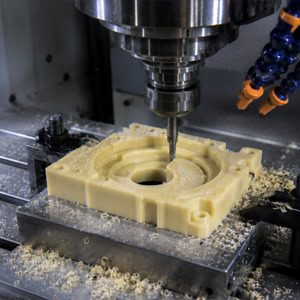
CNC machine tool machining of nylon plastic parts

How to solve the problem of excessive vibration when CNC machining plastics?

In the CNC machining of plastics, equipment vibration is one of the most significant issues affecting machining quality. Many factories encounter problems such as obvious tool marks, increased edge burrs, unstable dimensions, rough surfaces, and even workpiece deformation when machining plastic parts. These problems are often related to machining vibration. This is especially true when

How to solve the problem of excessive vibration when CNC machining plastics? Read More »

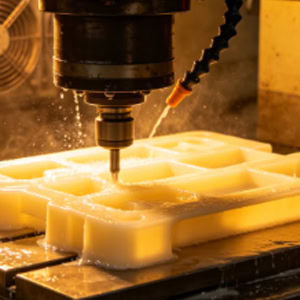
CNC machining site for plastic parts

How to Maintain Stability of CNC-Machined Plastic Parts in High-Temperature Environments?

In industrial equipment, electronic systems, automotive structural components, medical equipment, and aerospace applications, many plastic parts need to operate in high-temperature environments for extended periods. Compared to ordinary operating environments, high temperatures pose greater challenges to CNC-machined plastic parts, leading to issues such as dimensional expansion, structural deformation, strength reduction, surface aging, and even cracking.

How to Maintain Stability of CNC-Machined Plastic Parts in High-Temperature Environments? Read More »

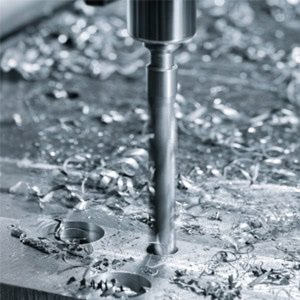
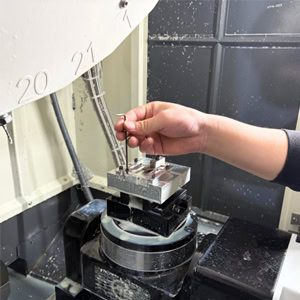
Image of a CNC machining center drilling a metal workpiece.

Analysis of the characteristics of CNC milling machining of aluminum alloy

In the context of modern manufacturing’s continuous pursuit of lightweight, high precision, and high efficiency, aluminum alloys have become one of the most frequently used materials in CNC milling. Compared to some high-hardness metals, aluminum alloys can achieve higher cutting speeds during machining while maintaining both machining efficiency and surface quality, thus occupying an important

Analysis of the characteristics of CNC milling machining of aluminum alloy Read More »

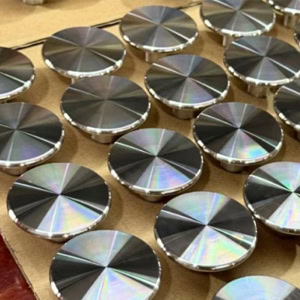
CD pattern processing

How Does Precision Machining Achieve High-Consistency Production?

In high-end manufacturing, the real challenge is no longer “whether a part can be made,” but “whether every single part can be made exactly the same.” In precision machining, even micron-level deviations, batch variations, and assembly mismatches can directly affect product performance and stability. As industries such as aerospace, medical devices, and automotive precision components

How Does Precision Machining Achieve High-Consistency Production? Read More »

Five-axis machining center with a rotatable worktable

Advantages of 5-Axis CNC Precision Machining

As high-end manufacturing continues to evolve toward more complex geometries and higher precision requirements, traditional 3-axis machining is increasingly limited by restricted tool access, multiple setups, and insufficient capability for complex surface processing. 5-axis CNC precision machining has become a key enabling technology in this transition. By adding two rotational axes, the tool can approach

Advantages of 5-Axis CNC Precision Machining Read More »

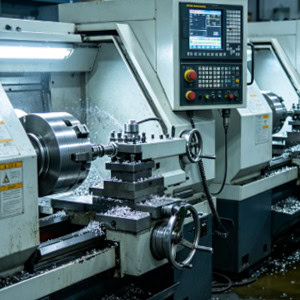
CNC lathe machining aluminum part for small batch cnc machining

A Practical Guide To Small Batch CNC Machining

Small batch CNC machining is a practical manufacturing solution for projects that require precision parts without moving directly into mass production. It combines fast turnaround, flexible quantity control, and reliable machining quality, making it well suited for prototyping, pilot runs, spare parts, and custom production. In this guide, you will learn the key processes, material

A Practical Guide To Small Batch CNC Machining Read More »

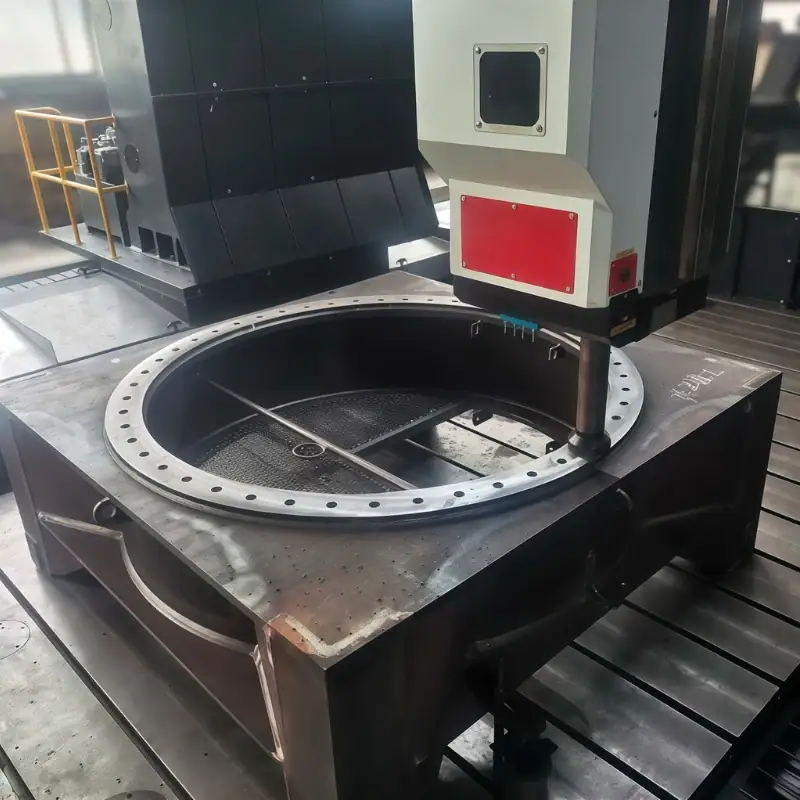
Large gantry CNC boring and milling machine for rough machining of large shell parts

Rough CNC Machining: Process, Strategies, and Finishing

Rough CNC machining is the first major cutting stage in many CNC manufacturing projects. It removes excess material quickly from raw stock and creates the near-final shape of a part before finishing operations control final tolerance, surface quality, and functional features. For manufacturers, roughing is not only about cutting faster. It affects tool life, machining

Rough CNC Machining: Process, Strategies, and Finishing Read More »

Scroll to Top
Simplified Table

To ensure successful upload, please compress all files into one .zip or .rar file before uploading.
Upload CAD files (.igs | .x_t | .prt | .sldprt | .CATPart | .stp | .step | .pdf).