Tirapid

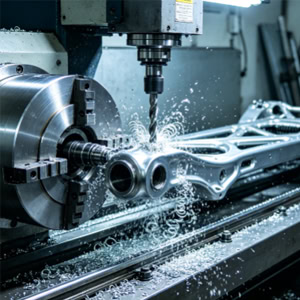
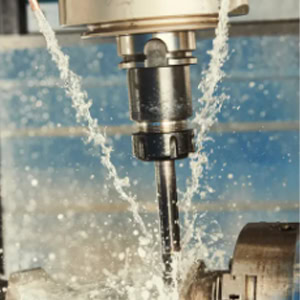
Cylinder block cutting

Why do high-end equipment rely on CNC machining?

In high-end equipment manufacturing—such as aerospace, medical devices, semiconductor equipment, and precision molds—there are extremely strict requirements for component accuracy, stability, and consistency. These products typically feature complex structures, fine functions, and very tight tolerances, where even minor deviations can affect overall system performance. As product complexity continues to increase, traditional manual, experience-based machining methods

Why do high-end equipment rely on CNC machining? Read More »
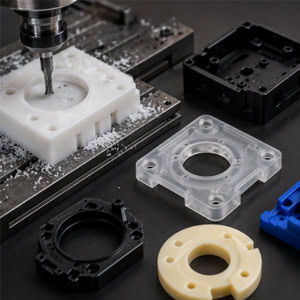
Types of Surface Finishing for CNC Machined Plastic Parts

Types of Surface Finishing for CNC Machined Plastic Parts

After CNC machining, plastic parts already have accurate dimensions and structures, but the surface often retains tool marks, minor burrs, or machining traces. For products such as electronic device housings, medical equipment components, optical assemblies, and industrial equipment parts, meeting dimensional requirements alone is not enough. Surface quality also affects product appearance, assembly performance, and

Types of Surface Finishing for CNC Machined Plastic Parts Read More »

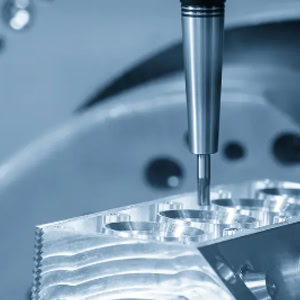
3D CNC milling machine for metal processing

Why Do Aerospace Components Require High-Precision Machining?

In aerospace manufacturing, even the slightest dimensional deviation in a single component can be greatly amplified under high-speed, high-pressure, and high-temperature operating conditions, ultimately affecting overall aircraft performance and even flight safety. During operation, aircraft must withstand extreme loads, continuous vibration, and temperature fluctuations, which place extremely strict requirements on dimensional accuracy, structural consistency, and

Why Do Aerospace Components Require High-Precision Machining? Read More »

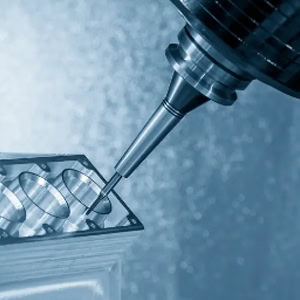
Three-axis CNC milling machine

How to Choose the Right Materials for Precision Machining?

In modern manufacturing systems, the quality of precision machining does not depend solely on equipment capabilities. Material selection is a more fundamental and critical factor. With the same drawing, using different materials can lead to significant differences in dimensional stability, surface quality, and service life. Especially in high-precision components, medical devices, and aerospace structural parts,

How to Choose the Right Materials for Precision Machining? Read More »

Which Material Is the Easiest for CNC Turning?

Which Material Is the Easiest for CNC Turning?

In the field of CNC turning, different materials exhibit significantly different machining characteristics. Material hardness, thermal conductivity, toughness, chip formation behavior, and wear resistance all influence machining efficiency and tool life. Some materials allow high-speed cutting while achieving excellent surface finishes, whereas others require lower cutting speeds and specialized tooling. For manufacturers, selecting materials that

Which Material Is the Easiest for CNC Turning? Read More »

h59-brass-milling-cnc-machining-hardware-parts-mass-production

Climb Milling vs Conventional Milling: Principles, Differences And Application Guide

Climb milling and conventional milling are two common milling methods used in CNC machining. They are known for their different cutter rotation directions, feed directions, chip formation methods, cutting force behavior, and effects on surface finish, tool life, machining stability, and dimensional accuracy. These differences explain why both methods are widely used in rough machining,

Climb Milling vs Conventional Milling: Principles, Differences And Application Guide Read More »

What Are the Applications of CNC Turning in Automotive Manufacturing

What Are the Applications of CNC Turning in Automotive Manufacturing?

The automotive manufacturing industry places extremely high demands on component accuracy, production efficiency, and product consistency. From engine systems and transmission assemblies to chassis structures and new energy vehicle components, a large number of automotive parts rely on precision machining technologies for production. As vehicles continue to evolve toward lightweight construction, intelligent systems, and electrification,

What Are the Applications of CNC Turning in Automotive Manufacturing? Read More »

Five-axis CNC milling machine

Precautions for Mass Production in Precision Machining

In today’s manufacturing industry, which is continuously moving toward higher precision and larger-scale production, precision machining has become a core capability for ensuring product quality stability and mass production efficiency. As order volumes increase, even minor process fluctuations can be amplified in batch production, affecting product consistency and delivery stability. To maintain a competitive edge,

Precautions for Mass Production in Precision Machining Read More »

品质检测仪器

Precision Machining Techniques for Thin-Walled Parts

Thin-walled parts are a typical high-difficulty workpiece type in precision machining. Their main characteristics include thin wall thickness, low structural rigidity, high sensitivity to deformation under force, and strong susceptibility to vibration, cutting force fluctuations, and thermal effects. In actual production, common issues include dimensional instability, surface waviness, machining chatter, post-release springback, and local deformation.

Precision Machining Techniques for Thin-Walled Parts Read More »

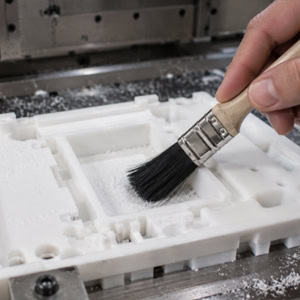
What are the cleaning methods after CNC plastic machining

What are the cleaning methods after CNC plastic machining?

After CNC plastic parts are machined, their surfaces are usually left with cutting chips, coolant residue, electrostatically adsorbed dust, and slight oil contamination. If these residues are not cleaned in time, they may affect assembly accuracy, appearance quality, and bonding performance. In industries such as electronics, medical devices, and optics, cleanliness can even directly influence

What are the cleaning methods after CNC plastic machining? Read More »

Images of CNC metal turning operations.

What Factors Affect CNC Milling Quality?

In the precision manufacturing industry, machining quality has always been one of the most critical indicators for businesses. Whether it is aerospace components, medical device parts, automotive accessories, or industrial equipment structures, product quality directly impacts performance, assembly effectiveness, and market competitiveness. For parts produced using CNC milling processes, machining quality not only determines dimensional

What Factors Affect CNC Milling Quality? Read More »

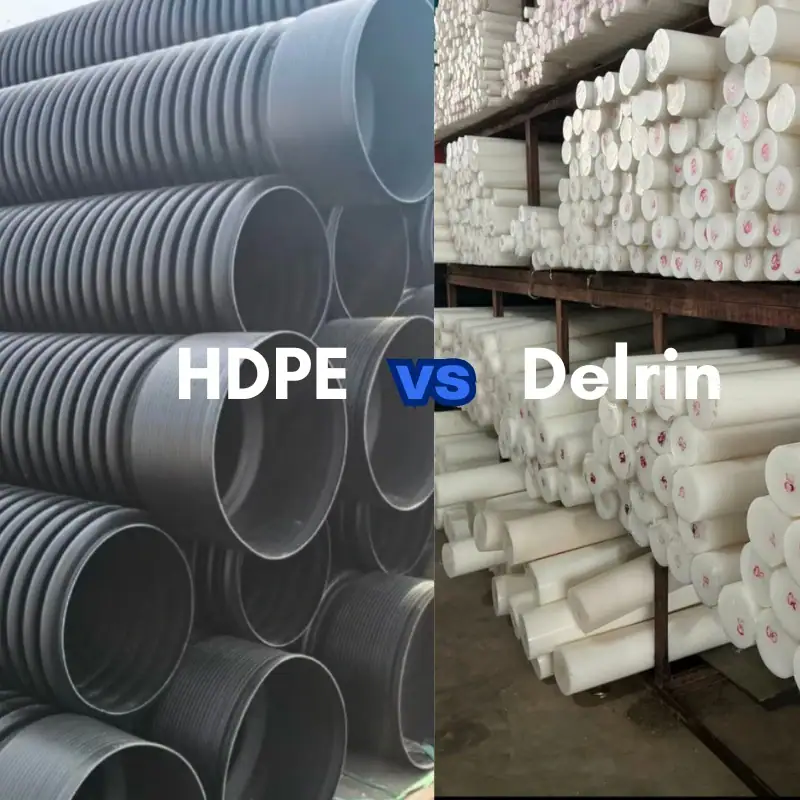
HDPE Municipal Drainage Corrugated Pipe vs Delrin Precision Machined Rods

HDPE vs Delrin: Properties and CNC Machining Guide

HDPE and Delrin are two common engineering plastics used in CNC machining, but they are not designed for the same type of application. HDPE is lightweight, chemical-resistant, and cost-effective, while Delrin offers better stiffness, dimensional stability, wear resistance, and precision machining performance. Choosing between HDPE and Delrin depends on your part’s load, tolerance, friction, operating

HDPE vs Delrin: Properties and CNC Machining Guide Read More »

Scroll to Top
Simplified Table

To ensure successful upload, please compress all files into one .zip or .rar file before uploading.
Upload CAD files (.igs | .x_t | .prt | .sldprt | .CATPart | .stp | .step | .pdf).