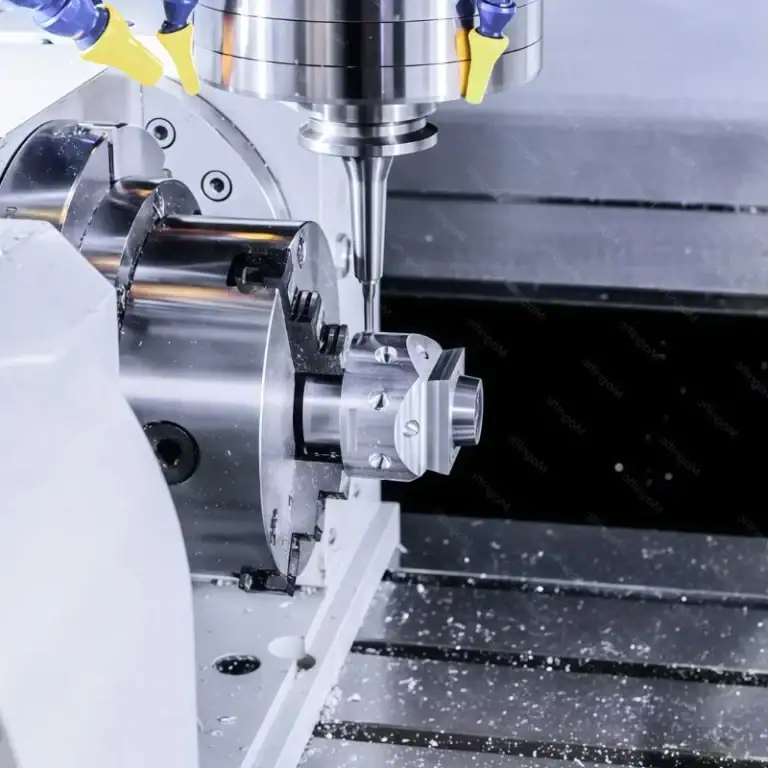
After CNC plastic parts are machined, their surfaces are usually left with cutting chips, coolant residue, electrostatically adsorbed dust, and slight oil contamination. If these residues are not cleaned in time, they may affect assembly accuracy, appearance quality, and bonding performance. In industries such as electronics, medical devices, and optics, cleanliness can even directly influence product performance. Therefore, post-machining cleaning is an important step before plastic parts are delivered.
Basic understanding of CNC plastic post-machining cleaning
Plastic materials easily generate static electricity during CNC machining, causing chips to adhere to holes, grooves, and curved surfaces, making them difficult to remove naturally. In addition, some cooling methods may leave slight moisture or oil residues, resulting in surface contamination. If parts directly enter assembly, problems such as poor fitting, surface scratching, or weak bonding may occur.The purpose of cleaning is not only to remove visible debris, but also to stabilize surface conditions, improve appearance consistency, and ensure reliability of subsequent processes. Different plastics have different resistance to cleaning methods. For example, ABS and POM have good chemical resistance, while PC and PMMA are more sensitive to solvents. Therefore, cleaning processes must be selected according to material properties.Cleaning is usually integrated with deburring, inspection, and packaging processes to form a complete post-processing chain. Higher cleaning quality leads to better consistency and improved yield.
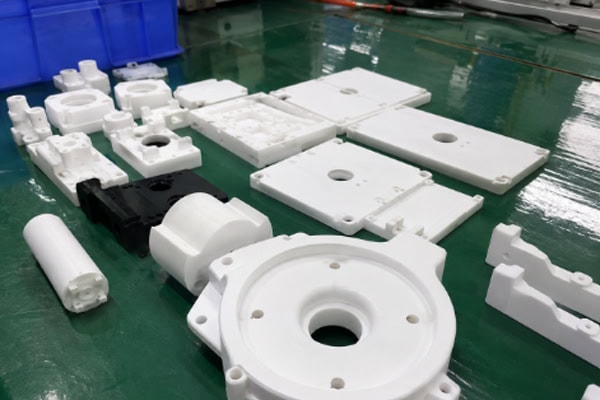
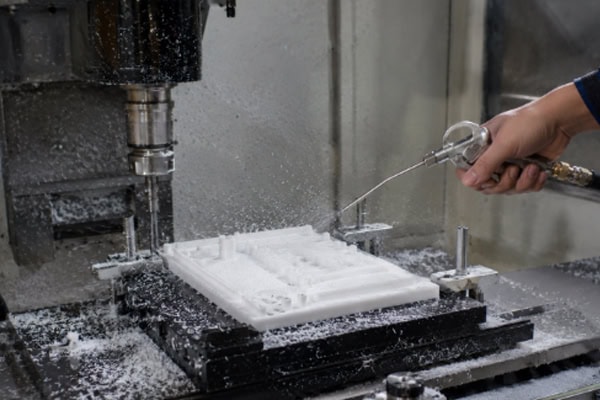
Basic cleaning and air blow chip removal
The first cleaning step after machining focuses mainly on removing surface debris, typically using airflow cleaning combined with basic brushing. The goal is to quickly remove loose particles rather than perform deep cleaning, so efficiency is prioritized.
Common methods include:
- High-pressure air gun to blow off chips
- Soft brush cleaning of grooves
- Electrostatic dust removal tools
- Zoning cleaning of workbenches
During air blowing, air pressure must be controlled to avoid deformation of thin-walled parts or scattering of small components. For complex structures, airflow direction needs to be adjusted from multiple angles to ensure hidden areas are cleaned effectively.For micro holes or deep cavities, air blowing alone is insufficient, and fine brushes or dedicated cleaning sticks are often used. Hard tools should be avoided to prevent surface scratches. Although this step is simple, it significantly affects final cleaning quality. Poor chip removal may increase cleaning difficulty and affect appearance consistency.
Water washing and neutral cleaning solution process
When parts contain oil stains or strong electrostatic adsorption, air blowing alone is not enough. In such cases, water washing or neutral cleaning solutions are required to remove firmly attached contaminants.
Typical process includes:
- Soaking parts in neutral cleaning solution
- Gently shaking or soft brushing
- Rinsing with warm water to remove residue
- Natural drying or low-temperature air drying
Cleaning agents must avoid strong acids or alkalis to prevent stress cracking or surface clouding of plastics. For transparent materials such as PC and PMMA, temperature and chemical concentration must be carefully controlled to avoid affecting light transmission.In industrial applications, ultrasonic cleaning is sometimes used. High-frequency vibration generates microbubbles that detach fine particles, making it effective for complex structures that are difficult to clean manually.After cleaning, parts must be fully dried to avoid water spots that may affect appearance or further processing.
Drying and anti-static treatment process
Drying after cleaning is equally important. Residual moisture in holes or gaps may cause dimensional deviation or local defects during assembly. Drying methods are selected based on material heat resistance.
Common methods include:
- Room-temperature air drying
- Low-temperature hot air circulation drying
- Vacuum drying
- Wiping with absorbent cloth
For heat-sensitive plastics, drying temperature must be strictly controlled to avoid deformation or stress release. Thin-walled parts are especially prone to dimensional changes under high temperatures, so low-temperature long-duration drying is preferred.In addition to moisture control, static electricity treatment is also critical. Plastic parts easily generate static during cleaning and handling, attracting dust and affecting surface quality. Therefore, some products undergo anti-static spraying or ionized air neutralization after drying.After this stage, the surface becomes cleaner and more stable, making it suitable for inspection and packaging.
Final inspection and cleanliness verification
The inspection stage ensures that parts meet delivery standards. This step checks not only appearance but also cleanliness level for application requirements.Common inspection items include:
- Whether residual chips remain on the surface
- Whether water marks or oil films exist
- Whether internal holes are clean
- Whether surface scratches are present
Whether transparent materials show cloudingFor high-precision parts, magnifiers or microscopic inspection tools may be used to ensure even tiny contaminants are detected.After passing inspection, parts proceed to packaging. Packaging typically uses dust-proof bags, anti-static bags, or customized foam structures to prevent secondary contamination or mechanical damage during transportation. This step marks the final stage of the cleaning process and directly affects final delivery quality.
Q&A
Does cleaning CNC plastic parts affect dimensional accuracy?
Many customers worry whether cleaning affects part dimensions, especially for high-precision components. In general, properly controlled cleaning does not affect dimensional accuracy. However, improper temperature control or drying methods may cause slight deformation in some materials.For example, materials such as PC and PMMA are sensitive to temperature and may experience minor stress changes under high-temperature washing or drying conditions. Therefore, industrial cleaning typically uses low-temperature cleaning, neutral detergents, and staged drying to ensure dimensional stability.With proper process control, cleaning not only avoids damage but can also improve assembly smoothness and appearance consistency.
Conclusion
From basic chip removal to water washing, followed by drying and anti-static treatment, every step affects final delivery quality. Inadequate cleaning may lead to assembly issues, surface defects, or functional problems. Different materials require different cleaning methods, and different structures require tailored processing strategies.Simple parts can be cleaned quickly with air blowing, while precision or transparent parts require more careful cleaning and drying control. Considering cleaning requirements early helps optimize structural design and reduce post-processing costs. In mass production, establishing a stable cleaning process also improves consistency and yield.By properly controlling each cleaning step, CNC plastic parts can achieve more stable performance and higher-quality surface appearance in final delivery.