In the field of CNC turning, different materials exhibit significantly different machining characteristics. Material hardness, thermal conductivity, toughness, chip formation behavior, and wear resistance all influence machining efficiency and tool life. Some materials allow high-speed cutting while achieving excellent surface finishes, whereas others require lower cutting speeds and specialized tooling. For manufacturers, selecting materials that are easy to machine can improve productivity, reduce tool wear, and lower operating costs. Understanding the machining properties of common materials helps companies choose suitable raw materials and optimize overall manufacturing performance.
Brass Is Considered the Easiest Metal to Machine
Among various metallic materials, brass has long been recognized as one of the most machinable materials for CNC turning. Brass offers excellent ductility and low cutting resistance, producing stable chips during machining while minimizing built-up edge formation. For companies engaged in large-scale production of precision parts, brass can significantly improve manufacturing efficiency while maintaining excellent product quality.
Extremely Low Cutting Resistance
Brass has a stable material structure, which allows cutting tools to experience relatively low cutting loads during machining. Even at high cutting speeds, brass maintains excellent machining performance. Many precision machining companies choose brass for prototype development and mass production because its stability helps reduce machine setup time and production risks.
- Reduced tool wear
- Faster machining speeds
- Easy chip evacuation
- High production efficiency
- Stable dimensional control
- Lower machine load
Low cutting resistance enables manufacturers to increase productivity while reducing machining costs.
Excellent Surface Finish Performance
Brass parts often achieve outstanding surface finishes after CNC turning, reducing the need for secondary polishing operations. For connectors, valve components, and instrumentation parts, superior surface quality enhances product value and performance.
- Low surface roughness
- Excellent appearance quality
- Stable precision
- Uniform machining marks
- Simplified post-processing
- High product consistency
Superior surface quality makes brass an ideal material for high-precision components.
Widely Used in Precision Manufacturing
Brass components are extensively used in electronics, electrical equipment, communication devices, automation machinery, and precision instrument manufacturing. Because brass combines good electrical conductivity, corrosion resistance, and exceptional machinability, it is often selected for products requiring high-precision machining.
- Electrical connectors
- Instrument components
- Valve assemblies
- Automation equipment parts
- Precision nuts
- Connector products
As industries continue to expand, demand for precision brass components remains strong.
Aluminum Alloys Offer Extremely High Machining Efficiency
Aluminum alloys are among the most frequently used materials in modern CNC turning operations. Their lightweight properties, excellent thermal conductivity, and low cutting resistance allow high-speed machining and efficient production. Industries including aerospace, automotive manufacturing, and consumer electronics widely utilize aluminum alloys for precision component production.
Suitable for High-Speed Machining
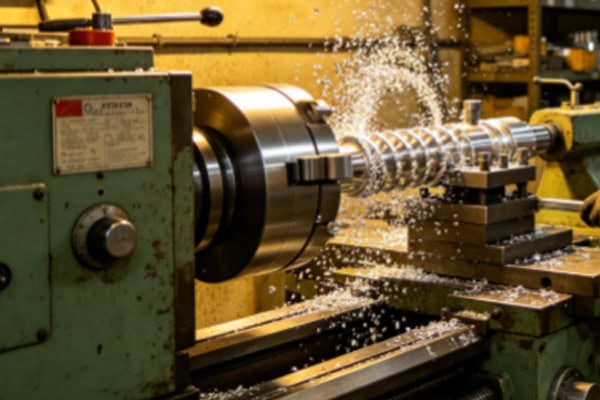
Aluminum alloys can withstand high cutting speeds while effectively dissipating heat generated during machining. This helps prevent excessive tool temperatures and contributes to stable production.
- High cutting speeds
- Smooth chip removal
- Rapid heat dissipation
- Long tool life
- Short machining cycles
- Outstanding productivity
High-speed machining capabilities significantly improve machine utilization and shorten delivery times.
Easy to Achieve High Dimensional Accuracy
Because cutting forces are relatively low, aluminum alloys are less likely to experience deformation during machining. This characteristic is particularly beneficial for precision machining applications involving thin-wall components, complex geometries, and tight-tolerance parts.
- Stable dimensions
- High precision
- Reduced machining errors
- Lower rework rates
- Higher yield rates
- Suitable for precision applications
Consistent dimensional control makes aluminum a preferred material for precision manufacturing.
Ideal for Lightweight Product Manufacturing
Lightweight design has become an important trend across modern industries.
- Aerospace structural components
- Automotive parts
- Communication equipment housings
- Medical device components
- Drone parts
- Consumer electronics products
Aluminum alloys offer significant advantages in lightweight manufacturing applications.
Low Carbon Steel Provides Excellent Overall Machinability
Low carbon steel combines affordability with good machinability, making it one of the most commonly used materials in mechanical manufacturing. Compared with harder steels, low carbon steel is easier to machine while maintaining stable processing performance.
Stable Machining Performance
Low carbon steel features a uniform microstructure and relatively low impurity content, allowing stable cutting conditions during CNC turning.
- Reduced tool wear
- Stable machining process
- Easy dimensional control
- Balanced cutting performance
- Suitable for continuous production
- Mature manufacturing technology
Reliable machining characteristics help improve productivity and quality consistency.
Relatively Low Material Cost
Material costs directly affect product pricing and profitability in large-scale manufacturing projects. Thanks to its mature supply chain and stable market pricing, low carbon steel remains one of the preferred choices for many manufacturers.
- Sufficient raw material supply
- Reasonable purchasing cost
- Reduced production budgets
- Suitable for large-scale manufacturing
- Wide procurement channels
- Strong economic benefits
Its affordability makes low carbon steel highly attractive for volume production.
Broad Industrial Applications
Low carbon steel satisfies the requirements of a wide range of mechanical products.
- Machine shafts
- Structural brackets
- Flanges
- Coupling components
- Industrial equipment parts
- Automation equipment components
Its versatility ensures continuous demand across manufacturing industries.
POM Engineering Plastic Is Easier to Machine Than Some Metals
In addition to metals, engineering plastics are widely used in CNC turning applications. Among them, POM (Polyoxymethylene) is highly valued for its excellent machinability and dimensional stability.
Extremely Smooth Cutting Performance
POM offers moderate hardness, uniform internal structure, excellent mechanical properties, and dimensional stability.
- Low cutting resistance
- Reduced tool wear
- Excellent chip evacuation
- High machining efficiency
- Outstanding surface quality
- Stable machine operation
Excellent machinability improves productivity while lowering maintenance costs.
Outstanding Dimensional Stability
POM has a low moisture absorption rate and maintains dimensional stability even under changing temperature and humidity conditions.
- Stable precision
- Resistant to deformation
- Excellent assembly performance
- High product consistency
- Suitable for precision components
- Long-term stability
Its dimensional stability makes POM a popular choice for precision mechanical applications.
Typical Applications
POM is widely used for manufacturing high-precision components.
- Gears
- Guide rollers
- Bushings
- Automation equipment parts
- Conveyor components
- Precision mechanical assemblies
The growing automation industry continues to drive demand for POM components.
Material Selection Should Match Product Requirements
Although brass and aluminum alloys are generally considered the easiest materials to machine, actual material selection should always be based on product application, performance requirements, and cost objectives. Machinability is only one factor among many.
Selecting Materials Based on Performance Requirements
Different products require different material properties.
- Strength requirements
- Weight requirements
- Wear resistance
- Corrosion resistance
- Electrical conductivity
- Operating environment
Proper material selection improves product performance and service life.
Evaluating Materials Based on Production Costs
Material prices and machining costs directly influence production budgets and profitability.
- Raw material costs
- Tooling costs
- Machining efficiency costs
- Equipment operating costs
- Labor management costs
- Post-processing costs
Comprehensive cost analysis helps manufacturers identify the most cost-effective production solutions.
Optimizing Solutions Based on Machining Objectives
Different projects require different combinations of materials and machining processes.
- Improve production efficiency
- Reduce machining difficulty
- Enhance product quality
- Control manufacturing costs
- Shorten delivery times
- Increase market competitiveness
Selecting materials according to product requirements and manufacturing conditions allows companies to fully utilize the advantages of CNC turning while achieving both quality and efficiency improvements.