What Is Annealing Plastic?
Annealing Plastic is a heat treatment process in which plastic parts are heated to a specific temperature, held at that temperature for a period of time, and then cooled slowly under controlled conditions. The main purpose of this process is to reduce or eliminate internal stress created during molding, extrusion, machining, or other manufacturing steps, so the part can achieve better dimensional stability and more reliable long-term performance.
Annealing plastic is commonly used to improve:
- Dimensional stability
- Stress relief
- Resistance to cracking or warping
- Long-term part reliability
8 Methods Of Plastic Annealing
There are several annealing plastic methods, and the right choice depends on the material type, part geometry, surface requirements, and production target. Different methods vary in temperature control, heating efficiency, equipment cost, and stress-relief effect, so they can influence both part performance and service life in different ways.
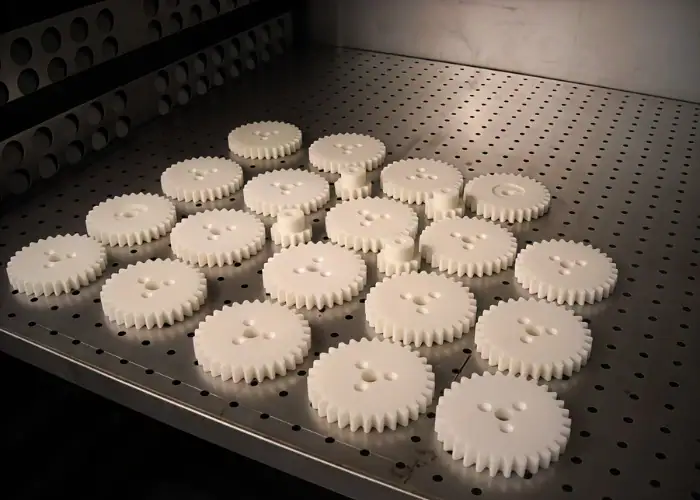
Below are some of the most common annealing plasticmethods used in modern manufacturing. Each one has its own process characteristics and is better suited to certain materials, part structures, or application conditions:
Air Annealing
Air annealing is the most common and widely used annealing method. It works by placing plastic parts in a controlled air environment, heating them to a specific temperature, and then cooling them slowly to release internal stress.
This method is often chosen because it has relatively simple equipment requirements and is easy to apply in large-scale production. For example, polycarbonate can be annealed at about 120°C for 1 to 2 hours, which may reduce internal stress by about 35% to 45% and improve dimensional stability.
Typical advantages of air annealing include:
- Simple operation
- Lower equipment cost
- Easy scale-up for batch production
- Good suitability for general-purpose plastic parts
Vacuum Annealing
Vacuum annealing is performed in an oxygen-free environment to reduce oxidation and thermal damage during heating. It is especially suitable for plastic parts that require very high surface quality or better optical performance.
For nylon materials, a typical vacuum annealing condition is about 110°C for around 4 hours. Under those conditions, internal stress may be reduced by roughly 40% to 50%, while surface smoothness and appearance quality can also improve.
This method is especially useful when the part needs:
- Reduced oxidation risk
- Better surface quality
- Lower chance of discoloration
- Improved optical appearance
Humidified Annealing
Humidified annealing is carried out in a controlled humidity environment so that moisture can help reduce thermal cracking and improve toughness. In this process, water molecules help polymer chains move more smoothly, which supports stress relief and lowers brittleness.
For PET, treatment at about 60°C for 2 to 3 hours in a humidified environment can reduce cracking by around 30% to 40% and improve tensile toughness by about 20% to 30%. This makes the method useful when better toughness and crack resistance are required.
Humidified annealing is often selected for:
- Toughness improvement
- Crack reduction
- Better chain mobility during heating
- Moisture-sensitive stress relief applications
Stage Annealing
Stage annealing controls temperature in steps rather than heating or cooling in one single transition. This helps the material adapt gradually to thermal change, which can reduce thermal shock and improve shape and dimensional accuracy.
For ABS, a staged temperature range of about 80°C to 120°C with about 1 hour at each stage can help release stress more evenly and keep dimensional accuracy within about ±0.05mm. This approach is especially useful for complex parts with strict dimensional requirements.
It is commonly used when a part requires:
- Controlled dimensional accuracy
- Lower deformation risk
- Gradual temperature adaptation
- More uniform stress release
Liquid Medium Annealing
Liquid medium annealing uses a liquid such as oil or brine to surround the plastic part and provide more uniform heat transfer. It is especially suitable for parts with complex shapes or uneven wall thickness where temperature consistency is important.
For high-performance polymers such as PEEK, annealing at about 150°C for around 2 hours can reduce internal stress by about 45% to 55%. Because the liquid medium transfers heat efficiently, it helps reduce local overheating and improves overall processing consistency.
This method is well suited to:
- Complex geometries
- Uneven wall thickness
- Faster and more uniform heating
- High-performance engineering plastics
Infrared Annealing
Infrared annealing uses infrared radiation to heat the surface of plastic parts quickly and efficiently. It is particularly suitable for thin-walled products because it can shorten processing time and reduce overall energy use.
For thin-walled plastic parts around 1 to 2mm thick, treatment at about 130°C to 140°C for 3 to 5 minutes can reduce internal stress by around 30% to 40%. This makes infrared annealing attractive when production speed and energy efficiency are important.
Its main strengths are:
- Fast heating speed
- Short cycle time
- Better energy efficiency
- Good suitability for thin-walled parts
Salt Bath Annealing
Salt bath annealing immerses plastic parts in a high-temperature salt bath to achieve rapid and uniform heating. Because the salt bath has high thermal conductivity, it can reduce surface stress concentration and help the part reach the target annealing temperature more evenly.
This method is often used for high-performance engineering plastics. A typical temperature range is about 150°C to 200°C for 1 to 2 hours, which may reduce internal stress by around 40% to 60% while improving dimensional stability and mechanical properties.
Salt bath annealing is usually preferred for:
- High thermal uniformity
- Faster heat transfer
- Better stress control in demanding parts
- High-performance plastic components
Microwave Annealing
Microwave annealing uses a high-frequency electromagnetic field to heat plastic parts rapidly from within. It offers fast processing, improved efficiency, and lower energy consumption compared with some traditional annealing methods.
For polyimide, microwave annealing at 2.45GHz for about 5 to 10 minutes can reduce internal stress by roughly 35% to 45%, while energy use may drop by about 30% to 40%. This method is especially attractive for high-performance plastics and energy-conscious production.
Microwave annealing stands out for:
- Internal rapid heating
- Higher processing efficiency
- Energy-saving potential
- Good suitability for advanced plastic materials
Materials Suitable For Annealing Plastic Process
Annealing plastic is especially useful for materials that tend to retain internal stress after molding, extrusion, or machining. Different plastics respond differently to heat treatment because their molecular structure, thermal behavior, and stress sensitivity are not the same. For that reason, the annealing process should always be matched to the specific material rather than applied in a uniform way.
ABS Plastic
ABS is a thermoplastic copolymer made from acrylonitrile, butadiene, and styrene. Each component contributes a different property: acrylonitrile improves chemical resistance and rigidity, butadiene improves toughness and impact resistance, and styrene improves processability and surface appearance. Because of this balanced structure, ABS is widely used in molded plastic parts that need a combination of strength, toughness, and manufacturing flexibility.
In practical annealing applications, ABS often develops noticeable internal stress after injection molding, especially in parts with complex geometry or uneven wall thickness. Annealing at about 80°C to 100°C for 2 to 4 hours can help release that stress more evenly. Based on the reference information you provided, this treatment can improve tensile strength by about 10% to 15% and increase bending strength by about 8% to 12%, which helps the part resist deformation and damage during use. This makes annealed ABS especially useful in automotive interior parts and other products where shape retention and mechanical reliability matter.
Polycarbonate
Polycarbonate is mainly produced through the condensation polymerization of bisphenol A and diphenyl carbonate, and its molecular chain contains carbonate groups. This structure gives the material high transparency, good toughness, strong dimensional stability, and excellent overall mechanical performance. Because of these properties, polycarbonate is widely used in optical, electronic, and protective applications.
When polycarbonate is used in optical parts, residual stress control becomes especially important because internal stress can affect light transmission and optical clarity. Annealing at about 120°C to 130°C for 1 to 3 hours is commonly used to reduce that stress and improve part stability. According to the reference content, this treatment can increase light transmittance by about 5% to 8%. In optical lenses and optical discs, that improvement can lead to clearer imaging, more stable dimensions, and better overall product performance.
Polyethylene
Polyethylene is a thermoplastic formed by the polymerization of ethylene monomers, and it is commonly divided into types such as LDPE and HDPE depending on density and molecular structure. Its molecular chain is mainly composed of carbon-carbon single bonds, which gives the material good chemical stability and broad industrial usefulness. Polyethylene is widely used in pipes, containers, films, and other engineering or utility products.
In long-term service environments, unannealed polyethylene may show more obvious environmental stress cracking, especially in outdoor or pressure-related applications. Annealing at about 70°C to 90°C for 1.5 to 3 hours can help reduce that risk by releasing stress and improving structural stability. Based on your reference information, annealed polyethylene pipes may achieve a service life increase of about 20% to 30% in demanding infrastructure applications. This makes annealing particularly valuable in pipe systems, municipal engineering, and other products where long-term durability is critical.
Bakelite
Bakelite, or phenolic plastic, is mainly based on phenolic resin formed by the condensation of phenols and aldehydes such as formaldehyde. Its structure is a three-dimensional cross-linked network containing phenolic hydroxyl groups and methylene bridges. This highly cross-linked structure gives the material good hardness, dimensional stability, insulation performance, and heat resistance, which is why it is commonly used in electrical and industrial components.
Annealing phenolic plastic is usually carried out at a higher temperature than many other thermoplastics. According to the reference information, treatment at about 150°C to 180°C for 3 to 5 hours can make the cross-linked structure more stable, increase hardness by about 10% to 15%, and improve heat resistance. This is especially useful in insulating parts for electronic and electrical products, where stable performance under elevated temperature is important. In such applications, annealed phenolic plastic can help reduce the risk of insulation failure, thermal damage, or performance loss during long-term use.
| Material | Typical Annealing Temperature | Typical Annealing Time | Main Improvement |
|---|---|---|---|
| ABS | 80°C–100°C | 2–4 hours | Lower stress, higher tensile and bending strength |
| Polycarbonate | 120°C–130°C | 1–3 hours | Residual stress relief, better optical clarity |
| Polyethylene | 70°C–90°C | 1.5–3 hours | Reduced stress cracking, longer service life |
| Bakelite | 150°C–180°C | 3–5 hours | Higher hardness, improved heat resistance |
Overall, these materials are suitable for annealing plastic because they can gain meaningful performance improvements when internal stress is reduced and their structure becomes more stable. However, the right annealing conditions still depend on the exact grade, part geometry, processing history, and final application requirements. That is why annealing plastic should be treated as a material-specific optimization step rather than a general heating process.
Advantages Of Plastic Annealing
Annealing Plastic offers several important advantages in plastic processing, especially when a product requires better mechanical performance, more stable dimensions, and lower defect risk. In practical manufacturing, annealing is not only a stress-relief step, but also a process improvement method that helps plastic parts perform more reliably during assembly and long-term use.
It is commonly used to improve:
- Mechanical performance
- Dimensional stability
- Crack resistance
- Production consistency
Performance Improvements
Annealing can improve the mechanical performance of many plastic parts by reducing internal stress and making the material structure more stable. When stress is better distributed inside the part, the plastic is often able to perform more reliably under load, pressure, or repeated use.
For example, PET bottle preforms may show a tensile strength increase of about 12% to 18% after annealing, which helps them withstand higher filling pressure during production and use. In plastic gears, annealing may increase tooth surface hardness by about 9% to 12%, while wear resistance also improves, allowing service life to extend by roughly 30% to 35%. These improvements make annealed plastic parts more suitable for demanding applications where strength, durability, and long-term performance are important.
Enhanced Dimensional Stability
Annealing also has a strong effect on dimensional stability, which is especially important for precision plastic parts. Many molded or machined plastics contain residual stress after processing, and that stress can later cause dimensional drift, warping, or poor fit during assembly.
For example, unannealed ABS housings may show dimensional deviation of about ±0.6mm or more, which can create problems in precision electronic assembly. After proper annealing, that deviation may be reduced to around ±0.08mm, greatly improving assembly accuracy and reducing the risk of fit-related defects. This is one of the key reasons annealing is often used for plastic components that require tighter tolerances and more stable shape control.
Reduced Cracking Risk
Annealing can also reduce the risk of cracking, especially in thick-walled or stress-sensitive plastic products. In many molded parts, internal stress remains trapped after cooling, and that stress may later cause cracks during storage, assembly, or service.
In injection molded thick-wall plastic products, the crack rate of unannealed parts may be around 12% to 18%. With proper annealing treatment, that level may be reduced to about 3% to 6%. This can significantly lower scrap rates, improve product consistency, and reduce overall production loss. For manufacturers, this means better product quality, higher yield, and stronger process stability.
| Advantage | Typical Effect |
|---|---|
| Better mechanical performance | Improved strength, hardness, and wear resistance |
| Higher dimensional stability | Reduced warping and tighter dimensional control |
| Lower crack risk | Fewer defects in molded or stressed parts |
| Better production consistency | Higher yield and more stable product quality |
Limitations Of Plastic Annealing
Although annealing plastic offers many benefits, it also has some limitations that should be considered before it is used in production. The process adds extra time, energy use, and process control requirements, so it is not always the most efficient choice for every plastic part.
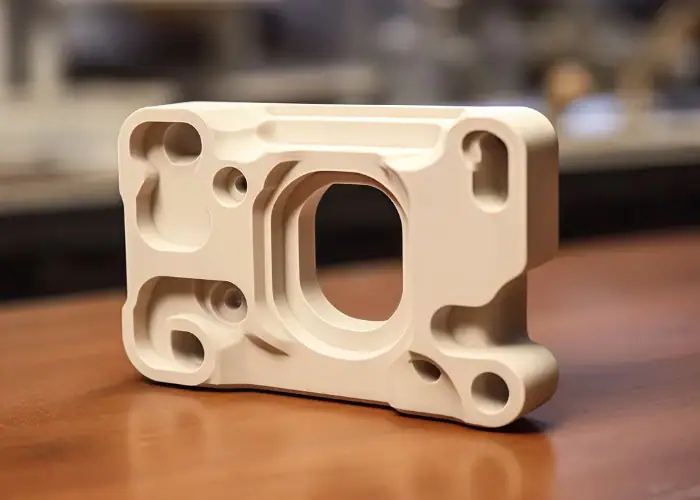
Its main limitations may include:
- Additional processing time
- Higher energy consumption
- Risk of deformation if conditions are poorly controlled
- Different results depending on material type and geometry
Increased Processing Time
Annealing adds an extra step after molding, extrusion, or machining, which increases the total production cycle. For parts that already have short lead time requirements or very high production volume, this additional time may affect overall manufacturing efficiency.
Higher Process Sensitivity
Annealing plastic must be controlled carefully. If the temperature is too high, the part may soften, deform, or lose dimensional accuracy. If the temperature is too low or the holding time is too short, internal stress may not be relieved effectively. This means the process window can be narrow for some materials.
Added Production Cost
Annealing also increases energy use, equipment needs, and handling requirements. Even when the process improves part quality, it still adds cost. For low-risk parts or products without strict stability requirements, the added expense may not always be justified.
Not Necessary For Every Plastic Part
Not every plastic component needs annealing. Some parts may already perform well enough in the as-molded condition, especially when wall thickness is uniform, stress levels are low, and dimensional precision is not critical. In these cases, annealing may offer limited practical benefit.
Application Areas Of Plastic Annealing
Annealing plastic is widely used in many industries because it helps improve the stability, durability, and long-term reliability of plastic parts. By reducing internal stress and improving the material structure, annealing allows plastic products to perform more consistently under mechanical load, temperature change, humidity variation, and long-term service conditions.
Automotive Industry
In the automotive industry, annealing plastic is commonly used for interior and functional plastic parts that must withstand vibration, temperature change, and repeated mechanical stress. Many automotive components are made from engineering plastics such as ABS, PC, or blends of these materials, and annealing helps reduce the risk of cracking, warping, or dimensional instability after molding.
For example, ABS dashboard components annealed at about 80°C to 100°C for 1 to 2 hours may show an impact strength increase of about 15% to 20%. This helps reduce the chance of cracking or damage caused by vibration, handling, or minor impact during vehicle use. In automotive applications, that improvement can directly support better part durability and more stable long-term performance.
Medical Equipment Field
In the medical equipment field, annealing plasticis important for parts that require long-term dimensional stability, lower internal stress, and reliable mechanical performance. This is especially relevant for high-performance engineering plastics such as PEEK, which are often used in demanding medical environments.
For medical implants and precision medical components, internal stress can increase the risk of cracking or dimensional change during long-term use. Annealing helps reduce this risk by making the internal structure more stable. As a result, the process is often used to improve the reliability of components that must perform safely and consistently in the body or in high-precision medical systems.
Food Packaging Industry
In the food packaging industry, annealing plastic can improve the flexibility, dimensional stability, and reliability of packaging materials. PET film is one common example, since packaging materials often need to adapt to shape changes during sealing, handling, transport, and storage without tearing or losing stability.
According to your reference data, annealing PET film at about 50°C to 60°C for 2 to 3 hours can improve ductility by more than 30%. This allows the material to better follow the shape of packaged food and reduces the risk of rupture during packaging operations. In practical terms, this can improve package reliability and lower defect rates in production.
Electronic And Electrical Field
In the electronic and electrical field,annealing plastic is widely used for housings, covers, and structural plastic parts that need to remain dimensionally stable under changing temperature and humidity conditions. Many electronic enclosures are made from plastics such as polycarbonate, and internal stress may lead to warping or reduced fit accuracy over time if the part is not stabilized properly.
Annealing helps reduce this risk by improving dimensional consistency and lowering deformation sensitivity. For example, polycarbonate monitor housings can benefit from annealing because the process helps reduce warping caused by temperature changes, which in turn supports better protection for internal electronic components and more reliable product assembly.
Toy Industry
In the toy industry, annealing plastic is mainly valued for improving toughness, durability, and resistance to cracking or breakage. Toys are often exposed to repeated impact, bending, dropping, and general rough handling, so mechanical reliability is closely tied to product quality and safety.
For example, ABS toy vehicle parts may become less likely to crack or break after annealing because the process reduces internal stress and improves overall toughness. This can help extend product life and reduce the chance of damage during normal use, which is especially important for children’s products where safety and durability are both critical.
Construction Industry
In the construction industry,annealing plastic is used for building materials and interior plastic products that must remain stable under long-term environmental change. Common examples include plastic flooring, window frame components, and other plastic-based decorative or structural materials used indoors.
For PVC plastic flooring, proper annealing treatment may improve wear resistance by about 20% to 30%, according to your reference content. In addition to improving wear performance, annealing can also help reduce cracking or deformation caused by temperature and humidity fluctuations. This makes the material more stable in service and better suited to long-term building use.
| Industry | Typical Plastic Material | Main Benefit Of Annealing |
|---|---|---|
| Automotive | ABS, PC | Better impact resistance and lower crack risk |
| Medical Equipment | PEEK | Lower stress cracking and better long-term stability |
| Food Packaging | PET | Higher ductility and lower rupture risk |
| Electronics And Electrical | PC | Better dimensional stability and less warping |
| Toy Industry | ABS | Improved toughness and impact resistance |
| Construction | PVC | Better wear resistance and dimensional stability |
Overall, the application areas of annealing plastic continue to expand because modern plastic parts are expected to do more than simply hold shape. In many industries, they must also resist cracking, remain dimensionally stable, and perform reliably under demanding service conditions. Annealing helps support these goals by turning processed plastic parts into more stable and dependable products.
Annealing Plastic vs. Other Technologies
Annealing plasticis often compared with natural aging and thermoforming post-processing because all three methods can influence internal stress, dimensional stability, and final part quality. In practical manufacturing, however, annealing plastic is often the more balanced option because it can reduce internal stress effectively within a shorter time while keeping equipment cost and process complexity at a manageable level.
Comparison of Annealing Plastic with Natural Aging and Thermoforming Post-Processing
| Comparative Item | Natural Aging | Thermoforming Post-Processing | Annealing Plastic Technology |
|---|---|---|---|
| Internal Stress Relief Efficiency | Internal stress is reduced by about 30%, and the process may take about 6 months | Stress relief is effective, but it depends on high temperature and more complex process control | Internal stress can be reduced by about 40%–50% within 2–3 hours |
| Space Occupancy | Requires large storage space and increases site cost | Does not require long storage time, but equipment often occupies a larger area | Small footprint and faster processing |
| Time Cost | Long cycle time and lower production efficiency | Shorter cycle, but includes more complex processing steps | Short cycle time and faster product turnaround |
| Equipment Cost | No major additional equipment investment | Higher investment cost, around 500,000 yuan | Lower investment cost, around 100,000 yuan |
| Operational Complexity | Simple operation | Requires skilled technicians and tighter process control | Easier operation and simpler maintenance |
| Quality Stability | Stress may not be fully eliminated, increasing the risk of later defects | Stable quality, but strongly dependent on equipment and process precision | More complete stress relief and improved quality consistency |
| Application Example | PVC doors and window profiles left to age naturally | Plastic pallets processed with expensive equipment and more complex procedures | Plastic pallets annealed with lower equipment cost and competitive quality |
| Product Performance | More risk of deformation caused by residual stress | Tensile strength can reach about 20–25MPa | Tensile strength can also reach about 20–25MPa |
| Market Competitiveness | Slower production response and longer product cycle | Stable but costly, often better suited to higher-end applications | Faster production response and stronger market flexibility |
Overall, annealing plastic stands out because it offers a practical middle ground. It is faster than natural aging, simpler and less expensive than more equipment-heavy post-processing methods, and still provides meaningful improvements in internal stress control and product stability. For many plastic manufacturers, that balance is one of its biggest advantages.
FAQs
When Is It Necessary To Anneal Plastics?
Annealing plastic is usually necessary when a part develops internal stress after molding, machining, or extrusion and may later show warping, cracking, or dimensional instability. It is especially useful for precision parts and for applications with high requirements in medical, automotive, optical, or engineering products.
Does The Annealing Process Change The Color Of The Material?
Under normal and well-controlled processing conditions, annealing does not usually change the color of the material. However, if the temperature is too high, the holding time is too long, or the environment is poorly controlled, discoloration may still occur.
What Is The Annealing Temperature Range For Different Plastics?
The annealing temperature range depends on the plastic type and the application target. For example, ABS is often annealed at about 80–100°C, while PET may be annealed at around 50–60°C. The correct range should always be selected according to material properties and part requirements.
What Is The Difference Between Annealing And Hardening?
Annealing is mainly used to reduce internal stress, improve stability, and support toughness or dimensional reliability. Hardening, by contrast, is aimed more at increasing hardness and strength. The two processes serve different purposes and are based on different material responses.
Does Annealing Steel Reduce Its Tensile And Yield Strength?
Not necessarily. With a properly controlled annealing process, steel can maintain a practical balance between strength, toughness, and ductility. The final effect depends on the steel grade, annealing method, and process conditions rather than on annealing alone.
Why Is Annealing Performed?
Annealing is performed to reduce internal stress, improve dimensional stability, enhance toughness, and make the material more reliable during later use or processing. In both plastic and metal manufacturing, it is often used to improve part quality and reduce the risk of defects.
Conclusion
Annealing plastic is a heat treatment process that helps plastic parts achieve lower internal stress, better dimensional stability, and more reliable long-term performance. It is a practical choice for plastic components that need improved toughness, reduced cracking risk, and more stable service behavior in demanding applications.
At TiRapid, we support custom plastic part manufacturing with material selection, machining, and post-processing solutions based on real application needs. If you have a drawing or specific processing requirement, our team can help evaluate the right annealing method for your project.